
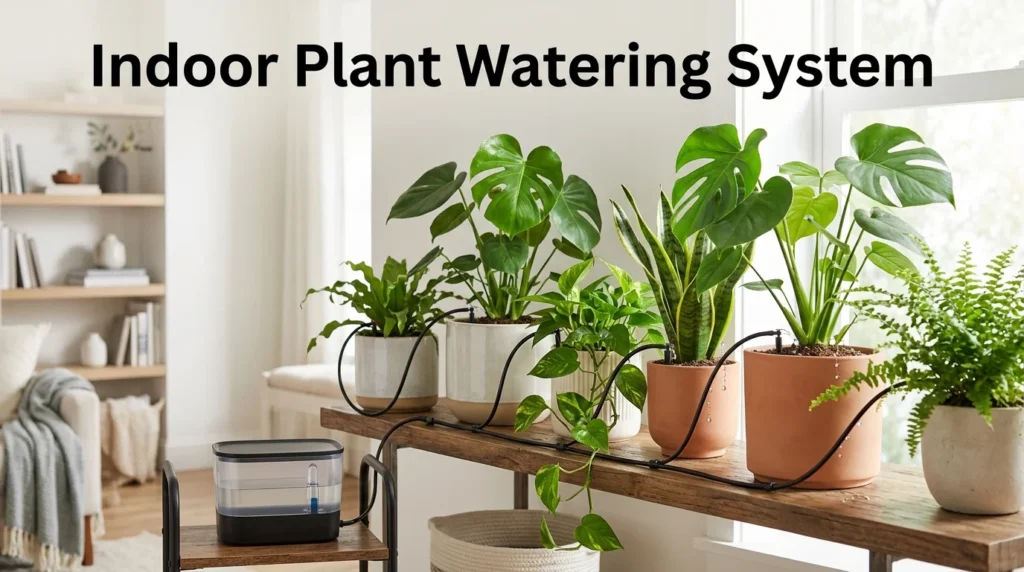
An indoor plant watering system automates or simplifies hydration for houseplants, delivering consistent soil moisture whether you are away on vacation or managing a large indoor collection. From passive self-watering globes and capillary wicks to automated drip irrigation pumps and self-watering planters, choosing the right system depends on your plant species, container sizes, potting media porosity, and the duration of your absence.
Proper hydration is the single most critical factor in indoor plant survival. While manual watering with a traditional can works well for a few pots, an automated or semi-automated indoor plant watering system eliminates human error, prevents underwatering stress, and reduces the risk of root rot caused by sudden overwatering. By regulating water volume at the root zone, these systems keep tropical foliage, indoor trees, and delicate vines consistently hydrated with minimal effort.
This master guide covers the mechanics of indoor irrigation, compares top self-watering technologies, provides step-by-step installation instructions, and troubleshoots common automation issues.
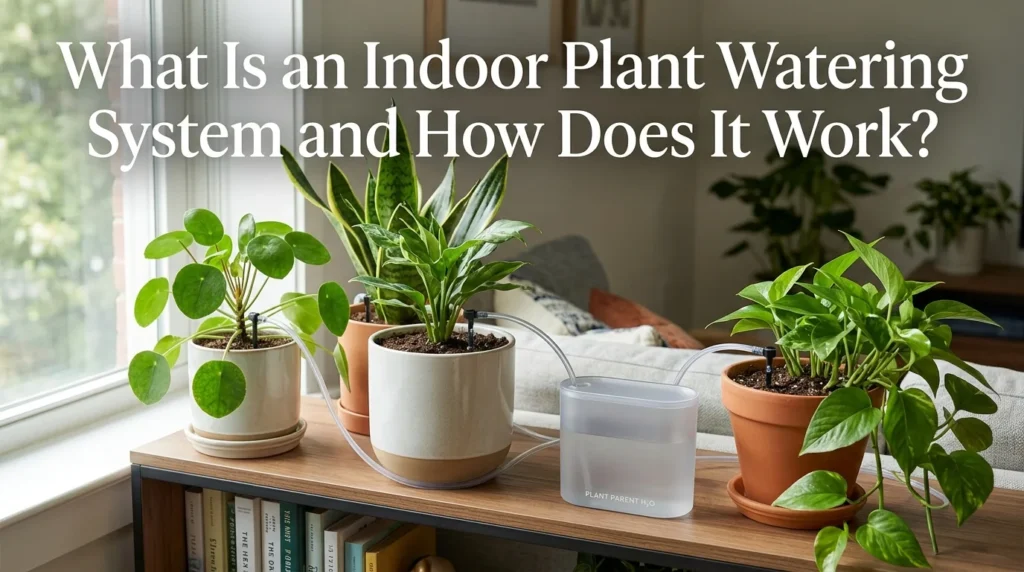
What Is an Indoor Plant Watering System and How Does It Work?
An indoor plant watering system regulates moisture delivery to potted plants using one of three primary mechanics:
- Capillary Action (Passive Wicking): Water travels upward or laterally from a sub-irrigation reservoir into dry potting soil using cotton or synthetic cords. Soil physics dictates water flow as plant roots absorb moisture and the soil dries, capillary tension draws more water into the root zone automatically.
- Gravity-Fed Drip Delivery: Elevated water bladders or terracotta stakes use head pressure to trickle water gradually into the substrate. As water seeps through porous clay or adjustable drip emitters, it saturates the soil at a slow, steady rate.
- Active Pump Irrigation: Micro-pumps connected to digital timers or soil moisture sensors pump precise volumes of water from a hidden reservoir through distribution tubing and stakes directly into multiple pots simultaneously.
Types of Indoor Plant Watering Systems Compared
Matching the right irrigation technology to your plant species, collection size, and lifestyle ensures optimal plant health without overflow accidents.
| System Type | Operating Mechanism | Ideal For | Best Plant Types | Max Vacation Duration | Pros & Limitations |
| Capillary Wicks | Passive capillary action via absorbent cord | Small to medium pots; budget self-watering | Ferns, Calatheas, African Violets, Peace Lilies | 7–14 Days | Pros: Low cost, no electricity needed. Cons: Limited flow rate for large pots. |
| Terracotta Spikes & Bottles | Porous clay seepage fed by inverted bottles | Single medium-to-large floor pots | Monsteras, Ficus, Philodendrons, Palms | 5–10 Days | Pros: Regulates moisture naturally. Cons: Glass bottles can tip; clay can clog over time. |
| Sub-Irrigated Planters (SIPs) | Built-in water reservoir with capillary indicator | Permanent indoor setups & sleek decor | Pothos, Snake Plants, ZZ Plants, Tropicals | 14–30 Days | Pros: Clean aesthetic, overflow protection. Cons: Higher initial cost; requires porous potting mix. |
| Automated Micro-Drip Pump | Programmable electronic pump with distribution tubing | Large collections (5–15+ pots); long trips | Mixed indoor jungle, tropical trees, indoor herbs | 14–30+ Days | Pros: Fully customizable timing & volume. Cons: Requires batteries/power; risk of line detachment. |
| Watering Globes & Bulbs | Vacuum-sealed glass neck in soil | Decorative single-plant hydration | Small ferns, Pothos, Syngoniums | 3–7 Days | Pros: Attractive, quick setup. Cons: Quick to empty in loose soil; easily clogged with dirt. |
How to Install an Automated Drip Watering System
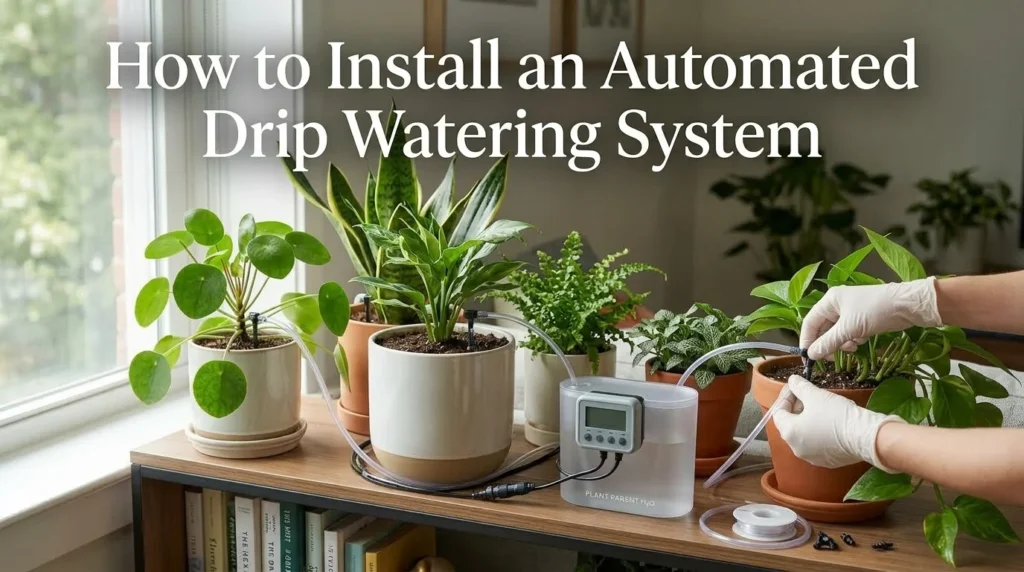
Installing a micro-drip indoor plant watering system for a multi-plant collection takes less than 30 minutes. Follow these steps for a leak-free setup:
1.Set Up the Primary Water Reservoir:Select a container large enough for your absence duration.
Fill a clean 5-gallon bucket or decorative ceramic urn with ambient-temperature, filtered water. Position the reservoir on a stable surface near your plants.
2.Cut and Lay Mainline Distribution Tubing:Measure distance from reservoir to each potted plant.
Unroll flexible 1/4-inch silicone or vinyl tubing. Route the main supply line from the pump inside the reservoir along the backs of your plant shelves or plant stands.
3.Connect T-Joints and Drip Stakes:Position stakes deep into the root zone without damaging main roots.
Cut the tubing near each pot, insert plastic T-connectors, and attach branch lines leading to individual adjustable drip emitters or pressure-compensating stakes inserted into the soil.
4.Elevate Reservoir Below Plant Level:Prevent siphoning accidents where water flows continuously.
Ensure the top water line in your reservoir rests slightly lower than your highest plant emitters, or install an anti-siphon valve to prevent gravity from draining the bucket.
5.Program the Controller and Calibrate:Run a manual test cycle to verify flow rates.
Set the digital timer (e.g., 30 seconds every 24 hours). Run a test cycle with measuring cups under each stake to ensure equal water volume distribution across all pots.
Horticultural Factors: Soil Media, Light, and Water Demand
An automated indoor plant watering system must be calibrated according to key horticultural factors to avoid root rot:
1. Substrate Aeration and Porosity
Automated and self-watering systems require potting media with high capillary movement and superior aeration.
- Ideal Mix: Combine 50% quality potting soil, 30% coarse perlite or pumice, and 20% coco coir or fine orchid bark.
- Avoid: Heavy garden clay or pure fine peat moss, which compacts under continuous moisture and starves roots of oxygen.
2. Light Levels and Seasonal Adjustments
- High Light (South/West Windows, Grow Lights): Plants receiving bright indirect light or full-spectrum grow light exposure photosynthesize rapidly, requiring higher daily water volumes.
- Low Light & Winter Dormancy: In low-light corners or during winter, plant metabolism slows significantly. Reduce irrigation frequency or shorten pump runtimes by 50% to prevent anaerobic soil conditions.
3. Nutrient Delivery (Fertigation)
- Do not add concentrated organic fertilizers directly to automated water reservoirs. Organic nutrients decompose rapidly in stagnant water, creating foul odors and clogging micro-drip emitters with bacterial biofilm.
- Instead, use a highly refined, water-soluble mineral fertilizer diluted to quarter-strength, or apply slow-release top-dressing granules directly to the soil surface.
The Microclimate Setup for Irrigation Automation
To maximize efficiency and eliminate flooding risks indoors, integrate these microclimate and placement safeguards:
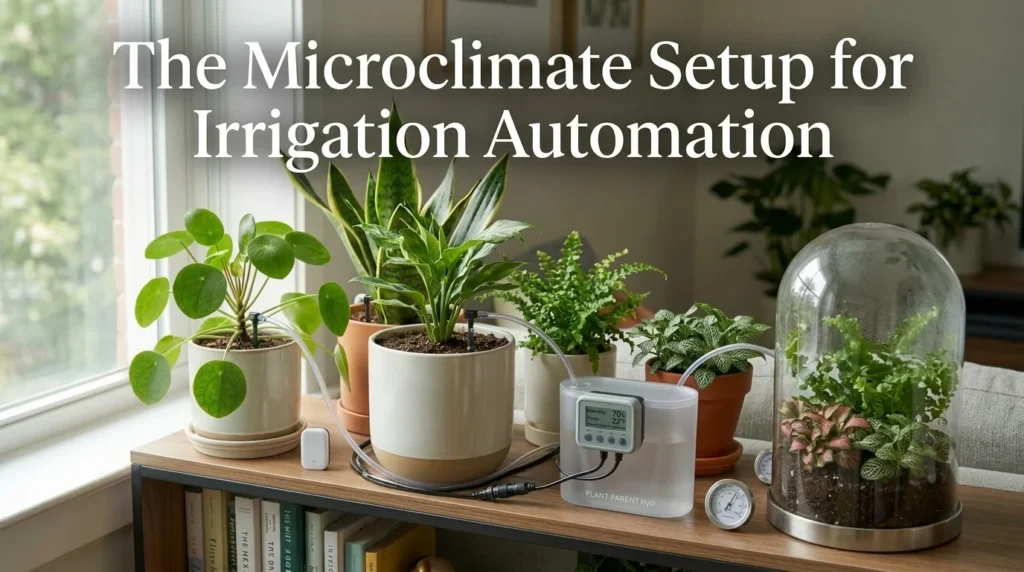
- Trays & Spill Containment: Always place pots connected to active drip systems inside waterproof saucer trays or decorative cachepots with no bottom holes. A secondary catch tray prevents floor damage if an emitter shifts.
- Humidity Buffering: Automated self-watering pots create localized microclimates of ambient humidity (45%–60% RH) through gentle soil evaporation, reducing dry leaf margins on tropical species like Calatheas and Ferns.
- Tubing Securing & Aesthetic Concealment: Secure distribution lines along plant stands using green plant ties or cable clips to prevent pet disturbance and maintain a clean interior aesthetic.
Troubleshooting Indoor Plant Watering Systems
Diagnose and fix common automated watering issues with this reference table:
| Problem | Cause | What to Check | Solution |
| Reservoir empties completely in 24 hours, flooding pots | Gravity siphon effect occurring because reservoir is higher than emitters | Reservoir water height relative to drip stake height | Lower the reservoir below pot level or install an inline anti-siphon check valve |
| Water drips from first pot but fails to reach end pots | Water pressure drop along long tubing line; clogged emitters | Pump wattage rating and tubing end-caps | Use pressure-compensating emitters; shorten main line or use a higher-head pump |
| Yellowing leaves and mushy stems despite automatic watering | Overwatering from excessive timer frequency or dense soil | Soil moisture depth; root firmness and drainage | Reduce pump runtime frequency; mix coarse perlite into soil to increase aeration |
| Drip stakes clogged with mineral crust or algae | Hard tap water mineral deposits or organic fertilizer build-up | Emitter nozzles and tube interiors | Soak clogged emitters in white vinegar for 30 minutes; flush lines with clean distilled water |
| Soil stays dry despite active pump operation | Water channeling through dry soil gaps straight out drainage holes | Soil surface absorption rate | Hydro-prime soil manually first; add a wetting agent or adjust drip rate to a slower trickle |
Conclusion
Implementing a reliable indoor plant watering system is one of the most effective upgrades you can make to your home garden setup, offering peace of mind whether you are managing a busy schedule or traveling on vacation. By matching the right irrigation technology such as passive capillary wicks for smaller tropicals, sub-irrigated planters for high-transpiration foliage, or automated micro-drip pumps for extensive collections you ensure that every plant receives steady, targeted hydration directly at the root zone.
Long-term success with indoor irrigation depends on balancing automated water delivery with proper horticultural fundamentals. Pairing your watering system with a well-aerated potting mix rich in perlite and bark prevents soil compaction and root rot. Additionally, safeguarding your setup against common mechanical issueslike elevating pots above reservoirs to prevent siphoning and using catch trays keeps both your plants and your home protected.
At GrowIndoorly.com, our goal is to help you build resilient, self-sustaining green spaces using practical, science-backed horticultural solutions. By automating your watering routine and tailoring moisture levels to your plants’ seasonal needs, you can maintain a thriving, healthy indoor jungle year-round with complete confidence.
Test Your Knowledge: Indoor Plant Watering System Quiz
Question 1
What physical mechanism allows capillary wick watering systems to draw water from a reservoir into dry potting soil?
- A) Gravitational pull.
- B) Capillary action driven by soil moisture tension.
- C) Photosynthetic root suction.
- D) Magnetic particle orientation.
Question 2
Why should you avoid placing an automated water reservoir higher than the drip emitters on your plants?
- A) The pump will burn out immediately.
- B) Gravity creates a continuous siphon effect, causing the reservoir to empty uncontrollably and flood your pots.
- C) Water turns acidic when stored above plant level.
- D) Light cannot reach the water.
Question 3
Which type of potting substrate blend is best suited for self-watering pots and capillary wick systems?
- A) Heavy outdoor clay soil.
- B) Coarse, well-aerated soil mixed with perlite, pumice, and coco coir.
- C) Pure sand without organic matter.
- D) Compacted peat moss with no drainage additives.
Question 4
Why is it risky to add organic fish emulsion fertilizer directly into an automated drip irrigation reservoir?
- A) Fish emulsion turns into plastic under pressure.
- B) Organic material decomposes in stagnant water, creating foul odors and clogging tiny drip nozzles with bacterial biofilm.
- C) Organic fertilizer neutralizes soil perlite.
- D) It stops the pump motor from turning.
Question 5
What is the best way to adjust an automated indoor plant watering system during winter dormancy?
- A) Double the watering frequency to make up for cold air.
- B) Turn off light fixtures completely.
- C) Reduce pump runtimes or watering frequency to match reduced plant metabolism in lower light.
- D) Replace all soil with dry sand.
(Answer Key: 1-B, 2-B, 3-B, 4-B, 5-C)
Frequently Asked Questions
Can an indoor plant watering system overwater my plants?
Yes. If timers are programmed for excessive frequency or if soil lacks perlite and drainage, automated systems can keep root zones saturated, leading to root rot. Always calibrate runtimes based on actual soil drying rates.
How long can a self-watering system keep plants alive while on vacation?
Depending on reservoir size, plant size, and room temperature, passive capillary systems last 7 to 14 days, while multi-gallon automated pump systems can keep collections hydrated for 3 weeks to a month.
Do self-watering pots work for succulents and cacti?
Generally no. Succulents and cacti require distinct wet-to-dry soil cycles and prefer their root zones to dry out completely between waterings. Continuous sub-irrigation usually leads to stem rot in desert species.
What kind of water should I put in an automated watering system reservoir?
Use clean, filtered, or distilled ambient-temperature water. Avoid hard tap water high in mineral salts, as calcium scale can clog fine drip emitters and build up on foliage.
How do I prevent algae growth inside a transparent water reservoir?
Algae requires light to grow. Use opaque or dark-colored reservoirs, or cover clear containers with a cloth or decorative sleeve to block light from entering the water.
What is the difference between a sub-irrigated planter (SIP) and a drip irrigation system?
Sub-irrigated planters hold water in a bottom reservoir built into the pot itself, delivering moisture via bottom-up capillary action. Drip irrigation systems use external pumps or gravity lines to deliver top-down water directly onto the soil surface.
Can I run an indoor plant watering system on batteries during power outages?
Yes. Most modern indoor micro-drip kits operate on rechargeable lithium batteries or standard AA batteries charged via USB, ensuring continuous operation even during power interruptions.

Megan Foster is the founder and lead writer of GrowIndoorly.com, where she shares practical, easy-to-follow advice for growing healthy indoor plants. She is passionate about helping beginners and experienced plant lovers build thriving indoor gardens with confidence. Megan writes about houseplants, indoor herbs, succulents, hydroponics, grow lights, plant propagation, watering, soil care, and everyday plant maintenance.
She enjoys researching trusted gardening techniques and transforming them into simple, actionable guides that readers can easily apply at home. Her goal is to make indoor gardening more enjoyable and accessible by providing clear, reliable information that helps people keep their plants healthy throughout the year. Whether you’re caring for your first houseplant or expanding your indoor plant collection, Megan’s practical tips are designed to help you grow with confidence.


