
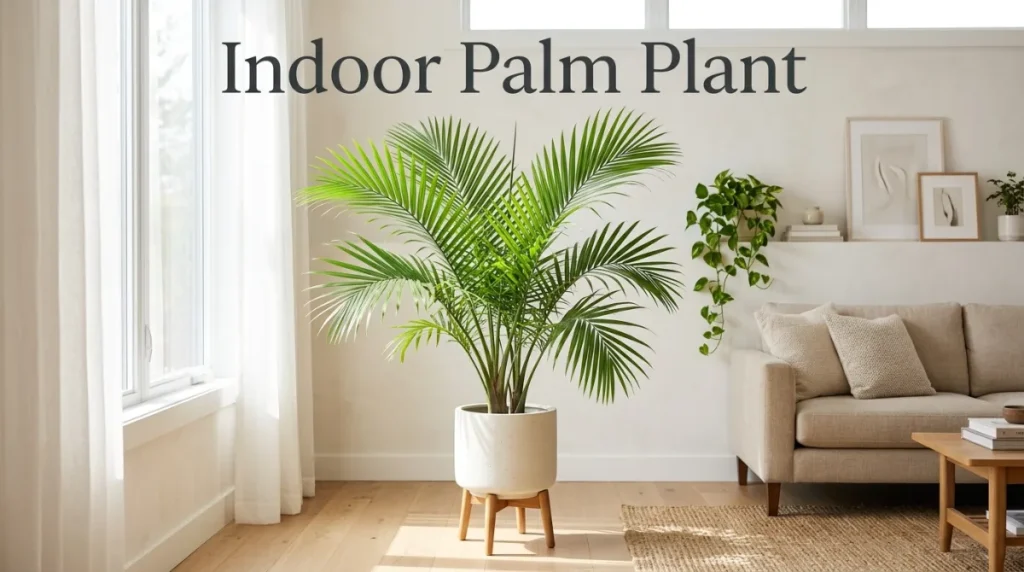
Indoor palm plants bring an instant tropical elegance to homes and offices with their striking fronds, graceful arching silhouettes, and lush greenery. Beyond their aesthetic appeal, palms are long-lived house plants that thrive for years when given the right balance of light, water, and soil conditions.
However, many indoor gardeners struggle with common palm problems, such as browning leaf tips, scale insects, or root rot caused by improper watering.
This comprehensive guide covers everything you need to know about selecting, growing, and maintaining healthy indoor palms, including detailed care requirements, expert troubleshooting, and the best species for every lighting condition.
Choosing the Best Indoor Palm Species
Not all palms adapt well to life indoors. While true palms belong to the Arecaceae family, they vary significantly in their tolerance for low light, humidity levels, and indoor temperatures. Selecting the right species for your specific room conditions is the first step toward long-term success.
Top Indoor Palm Varieties
| Palm Species | Common Name | Growth Rate | Light Requirement | Best For |
| Chamaedorea elegans | Parlor Palm | Slow | Low to Medium Bright Light | Beginners, Small Spaces, Desks |
| Dypsis lutescens | Areca Palm (Butterfly Palm) | Medium | Bright, Indirect Light | Living Rooms, Large Spaces |
| Howea forsteriana | Kentia Palm | Slow | Low to Bright Indirect Light | Low Light, Executive Offices |
| Rhapis excelsa | Lady Palm | Slow | Medium to Low Light | Entryways, Low-Humidity Rooms |
| Chamaedorea cataractarum | Cat Palm | Medium | Bright, Indirect Light | Near Sunny Windows |
| Ravenea rivularis | Majesty Palm | Fast | Very Bright Light + High Moisture | Sunrooms, High-Maintenance Care |
Key Differences in Palm Form and Architecture
Understanding a palm’s growth structure helps you anticipate its space requirements over time:
- Feather Palms (Pinnate Leaves): Featuring delicate, fern-like fronds branching off a central stem, feather palms like the Areca, Parlor, and Kentia offer a traditional, soft tropical look.
- Fan Palms (Palmate Leaves): Species like the Lady Palm (Rhapis excelsa) bear broad, fan-shaped leaflets split into segments, adding structural texture and bold geometry to interior decor.
- Clumping vs. Single-Trunk Palms: Areca and Cat palms form multi-stemmed clusters that spread outward, whereas Kentia palms generally grow with single trunks (often planted together in nursery pots to create a full appearance).
Lighting Requirements: Natural vs. Artificial Light
Light is the single most important factor determining whether an indoor palm flourishes or declines. In their native habitats, most indoor palm species grow beneath tropical forest canopies, making them adapted to filtered, dappled sunlight rather than harsh direct rays.
       [ Window (Bright Light Source) ]
                    |
                    v
   [ Direct Sun Zone ] ---> Intense Heat & Scorching (Avoid)
  (0 to 2 feet from window)
                    |
                    v
  [ Bright Indirect ] ---> Ideal for Areca, Majesty, Cat Palms
  (3 to 6 feet from window)
                    |
                    v
 [ Medium Indirect ] ---> Ideal for Parlor, Kentia, Lady Palms
 (6 to 10 feet from window)
Finding the Right Intensity
- Bright, Indirect Light: Placed 3 to 6 feet away from an unobstructed east, south, or west-facing window. This light level is bright enough to cast a soft shadow and supports steady growth in Areca, Cat, and Majesty palms.
- Medium to Low Light: Located 6 to 10 feet from a window or in a north-facing room. Parlor Palms and Kentia Palms excel in these conditions, making them top picks for dimly lit living areas or office interiors.
- Direct Sun Hazard: Direct afternoon sunlight shining through window glass scorches palm fronds, turning them bleached, yellow, or crisp brown. Always filter direct light with sheer curtains or position palms out of the direct beam.
Using Supplemental LED Grow Lights
If natural light is insufficient especially during winter months full-spectrum LED grow lights provide an effective alternative:
- Duration: Keep lights illuminated for 12 to 14 hours daily to simulate natural day length.
- Distance: Position full-spectrum LED fixtures 18 to 24 inches above the crown to avoid heat stress while providing adequate photosynthetically active radiation (PAR).

Watering and Moisture Management
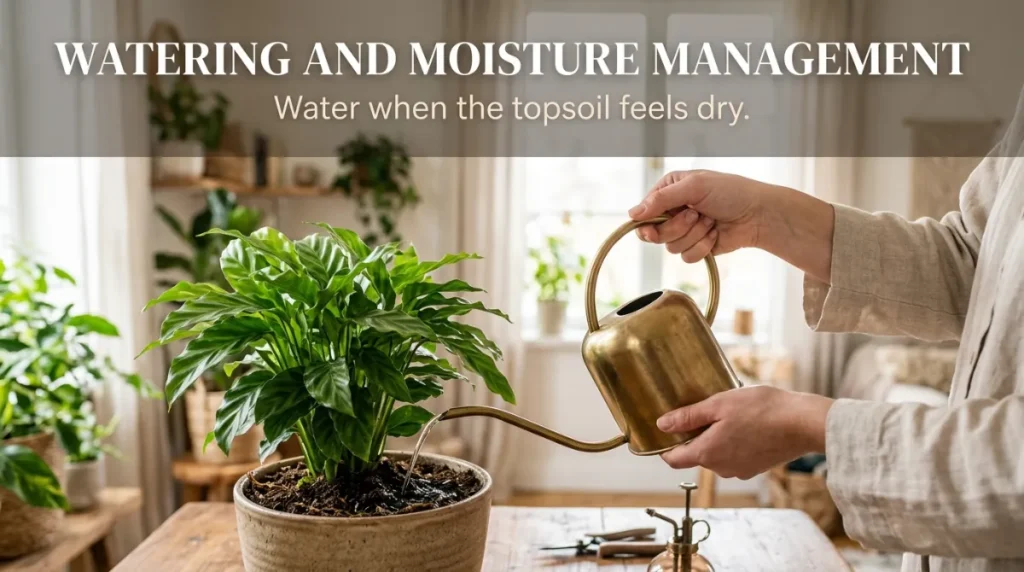
Watering mistakes cause more indoor palm deaths than all pests and diseases combined. Palms require consistent soil moisture during active growth, but their root systems are exceptionally sensitive to oxygen deprivation caused by waterlogging.
The Golden Rule of Palm Watering
Instead of watering on a strict calendar schedule, always test the soil moisture level first:
- Insert your finger 1 to 2 inches into the topsoil.
- If the topsoil feels dry, apply room-temperature water thoroughly until it drains freely from the pot’s bottom drainage holes.
- If the topsoil still feels cool and damp, wait 2 to 3 days and test again.
+-------------------------------------------------------------------+
|                     PALM WATERING DIRECTIVE                       |
+-------------------------------------------------------------------+
|                                                                   |
|   Active Growth (Spring / Summer)                                 |
|   +-----------------------------------------------------------+   |
|   | Allow top 1-2 inches of soil to dry before rewatering.    |   |
|   +-----------------------------------------------------------+   |
|                                                                   |
|   Dormancy Period (Fall / Winter)                                 |
|   +-----------------------------------------------------------+   |
|   | Allow top 50% of root ball to dry between waterings.      |   |
|   +-----------------------------------------------------------+   |
|                                                                   |
+-------------------------------------------------------------------+
Water Quality Considerations
Palms are highly sensitive to fluoride, chlorine, and soluble mineral salts found in tap water. Tap water chemical buildup often manifests as brown leaf tips or yellowing margins.
- Best Options: Rainwater, distilled water, or reverse osmosis water.
- Tap Water Tip: If using municipal tap water, allow it to sit in an open container for 24 hours to let dissolved chlorine gas off, though note that this process will not remove fluoride or chloramines.
Soil Mix, Aeration, and Potting Requirements
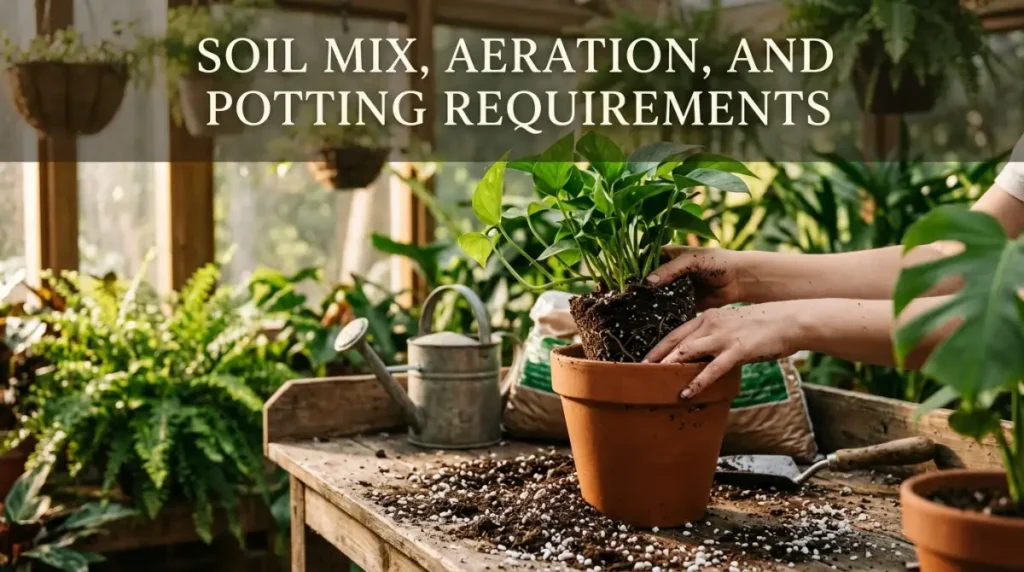
Standard potting soils designed for outdoor garden beds or heavy houseplants hold too much moisture for palm roots. Palms demand a well-aerated, free-draining growth medium that retains moderate moisture without becoming compacted.
Custom Soil Mix Recipe for Palms
For optimal root health, mix a well-draining soil blend using the following ratio:
- 3 Parts High-quality peat moss or coconut coir (for moisture retention)
- 2 Parts Perlite or coarse pumice (for drainage and aeration)
- 1 Part Pine bark chips or orchid bark (for structural texture and root airflow)
- 1 Handful Horticultural charcoal (to absorb impurities and prevent souring)
+-------------------------------------------------------------------+
|               OPTIMAL POTTING MEDIUM COMPOSITION                  |
+-------------------------------------------------------------------+
|                                                                   |
|   [====================================] 50% Peat Moss / Coir     |
|   [====================] 33% Perlite / Coarse Pumice              |
|   [==========] 17% Pine Bark Chips                                |
|                                                                   |
+-------------------------------------------------------------------+
Container Selection and Drainage
Never plant an indoor palm in a container without functional drainage holes. Water accumulating at the base of the pot cuts off oxygen to the root zone, triggering anaerobic bacterial growth and root rot.
Choose pots made from terra cotta or glazed ceramic. Terra cotta allows air and moisture exchange through its porous walls, helping prevent accidental overwatering. Select a container only 2 inches wider in diameter than the current root ball; oversized pots hold excess soil that remains wet for too long.
Temperature, Humidity, and Seasonal Adjustments
Because indoor palms originate from tropical and subtropical regions, maintaining steady ambient temperatures and high relative humidity is essential for vibrant fronds.
Temperature Ranges
- Ideal Daytime Temperature: 70°F to 80°F (21°C to 27°C)
- Ideal Nighttime Temperature: 60°F to 65°F (15°C to 18°C)
- Minimum Threshold: Keep palms away from environments below 55°F (13°C). Cold drafts from open windows, exterior doors, or air conditioning vents cause sudden leaf drop and frond discoloration.
Humidity Management
Most homes maintain indoor relative humidity levels between 30% and 40%, especially during winter when central heating is active. Palms thrive in humidity levels of 50% to 60%.
- Effective Humidity Boosts: Place a pebble tray filled with water beneath the pot (ensuring the pot base rests above the water line), group multiple tropical plants together to create a humid microclimate, or run a cool-mist room humidifier nearby.
- Misting Myth: Misting fronds with a spray bottle provides only a temporary spike in humidity (lasting minutes) and can encourage fungal foliage spots if air circulation is poor.
Fertilization and Nutrient Requirements
Palms are light to moderate feeders during their active growing season (spring through early autumn). Because they are prone to specific micronutrient deficiencies, choosing the right fertilizer blend is crucial.
Nutrient Balance
Look for a specialized palm fertilizer with an N-P-K ratio around 3-1-2 or 8-2-12, containing added magnesium (Mg), manganese (Mn), and iron (Fe).
- Nitrogen (N): Supports deep green, lush frond development.
- Potassium (K): Essential for overall structural vigor; deficiency causes spotty yellowing on older fronds followed by necrotic margins.
- Manganese (Mn): Prevents “frizzle top,” a condition where new emerging fronds appear stunted, distorted, and withered.
Application Guidelines
- Frequency: Apply a liquid palm fertilizer diluted to half-strength once every 4 to 6 weeks from April through September.
- Dormancy: Cease fertilization completely during fall and winter when plant growth naturally slows down.
- Salt Flush: Every 3 to 4 months, flush the potting medium with generous amounts of clean water to leach out accumulated fertilizer salts that burn root tips.
Maintenance, Pruning, and Repotting
Proper maintenance keeps indoor palms looking vibrant while preventing insect infestations and mechanical damage.
+-------------------------------------------------------------------+
|                    PALM PRUNING DECISION TREE                     |
+-------------------------------------------------------------------+
|                                                                   |
|   Is the frond completely brown and dry down to the stem base?   |
|                                                                   |
|       YES ---> Cut off near the trunk using sanitized shears.     |
|                                                                   |
|       NO  ---> Is it partially yellow or green?                   |
|                  |                                                |
|                  +---> LEAVE IT ALONE. The palm is reabsorbing    |
|                        nutrients (potassium/magnesium) from it.   |
|                                                                   |
+-------------------------------------------------------------------+
Pruning Best Practices
Pruning palms requires a restrained approach. Unlike broadleaf tropical plants, palms cannot regenerate branches from latent buds once cut back.
- Prune Only Fully Dead Fronds: Remove only entirely brown, dried fronds by cutting them clean near the central stem using disinfected pruning shears.
- Leave Yellowing Fronds Intact: Do not cut fronds that are only partially yellow or speckled. The plant actively reabsorbs valuable mobile nutrients (especially potassium) from older fronds to nourish new spear growth at the top.
- Never Cut the Growing Tip: Trimming the central top growth point (terminal bud or spear) stops all future frond production on that trunk, effectively killing the stem.
Repotting Procedures
Palms dislike root disturbance and should be repotted infrequently typically once every 2 to 3 years, or only when roots completely fill the pot and lift the root ball upward.
- Timing: Repot in early spring when active growth resumes.
- Handling: Carefully slide the palm out of its pot. Do not forcefully pry or tear the delicate root mass apart.
- Placement: Set the root ball into the new container at the exact same depth it was growing previously. Burying the stem deeper than its original soil line causes trunk rot.
- Post-Care: Settle the soil with water and keep the palm in medium light for 2 weeks to recover from transplant stress.
Practical Troubleshooting Guide
When your indoor palm shows signs of decline, systematic diagnostics help identify the root cause before severe damage occurs.
Problem ---> Cause ---> Check ---> Solution
1. Brown Leaf Tips
- Cause: Dry ambient air, chemical sensitivity (fluoride/chlorine), or inconsistent watering.
- Check: Test humidity levels around the plant and evaluate tap water quality or soil moisture history.
- Solution: Boost room humidity above 50%, switch to distilled or rainwater, and maintain a consistent watering routine. Trim dry brown ends with sharp scissors, following the natural angle of the leaf blade.
2. Yellowing Lower Leaves
- Cause: Natural aging, overwatering, or nitrogen/potassium deficiency.
- Check: Inspect the lower soil profile for standing water or foul odors. If soil moisture is normal, review your fertilization schedule.
- Solution: Adjust watering if the soil is waterlogged. If the medium is healthy, apply a balanced palm fertilizer containing micronutrients during spring or summer.
3. Frond Wilting and Root Rot
- Cause: Anaerobic root decay from poor drainage or overwatering.
- Check: Unpot the plant to inspect the roots. Healthy roots are firm and tan-white; decayed roots are dark, soft, mushy, and foul-smelling.
- Solution: Trim away rotted roots with sterile shears. Wash off infected soil, repot into a clean container with fresh, well-draining soil mix, and reduce watering frequency.
Common Pest Identification and Control
Indoor palms with soft fronds in warm, dry home environments are susceptible to sap-sucking pests. Early detection prevents widespread damage.
+-------------------------------------------------------------------+
|                     COMMON PALM PEST DIAGNOSTICS                  |
+-------------------------------------------------------------------+
|                                                                   |
|  [ Spider Mites ]                                                 |
|  Fine webbing under leaves, speckled stippling, dust-like pests.  |
|  ---> Treat: Increase humidity, wash fronds, spray Neem/Insecticide|
|                                                                   |
|  [ Scale Insects ]                                                |
|  Small shell-like brown bumps along frond stems, sticky honeydew. |
|  ---> Treat: Wipe with isopropyl alcohol, apply systemic granules |
|                                                                   |
|  [ Mealybugs ]                                                    |
|  Cottony white clusters in frond joints and leaf undersides.     |
|  ---> Treat: Dab with rubbing alcohol cotton swab, use insecticidal soap|
|                                                                   |
+-------------------------------------------------------------------+
Spider Mites
- Signs: Fine silky webbing between leaf segments, yellow speckling (stippling) on fronds, and a dry, dusty appearance.
- Treatment: Rinse the palm thoroughly in a shower with lukewarm water to physically wash away mites and webs. Apply insecticidal soap or neem oil spray every 7 days for 3 consecutive weeks, making sure to coat the undersides of all fronds.
Scale Insects and Mealybugs
- Signs: Scale appears as raised, motionless brown discs along stems; mealybugs look like tiny white cottony masses tucked into leaf joints. Both produce sticky honeydew drops that attract black soot mold.
- Treatment: Dip a cotton swab in 70% isopropyl alcohol and dab each insect directly to dissolve their protective wax layer. For severe infestations, apply a systemic indoor plant insecticide into the soil.
Frequently Asked Questions
1. Why are the leaf tips on my indoor palm turning brown?
Brown leaf tips are usually caused by low indoor humidity, tap water chemicals (fluoride or chlorine), or letting the soil dry out too much between waterings. Using filtered or distilled water and placing a humidifier nearby helps prevent new browning.
2. How often should I water my indoor palm plant?
Water whenever the top 1 to 2 inches of soil feel dry to the touch. Depending on humidity, light exposure, and season, this usually equates to once every 7 to 10 days during spring and summer, and every 10 to 14 days during winter dormancy.
3. Do indoor palms clean or purify indoor air?
Yes. Studies on indoor environmental quality show that popular palms such as the Areca Palm, Lady Palm, and Parlor Palm effectively filter common volatile organic compounds (VOCs) like formaldehyde, benzene, and xylene from interior air.
4. Which indoor palm is easiest for beginners?
The Parlor Palm (Chamaedorea elegans) is the easiest indoor palm for beginners. It tolerates low light, handles inconsistent watering better than most species, stays compact, and grows well in standard home humidity levels.
5. Should I cut off yellow or light brown palm leaves?
No, do not cut leaves off while they still contain yellow or green coloration. Palms transfer mobile nutrients from aging fronds to feed new top growth. Wait until the frond turns completely brown and dry before trimming it off near the stem.
6. Are indoor palm plants safe for pets like cats and dogs?
True palms including the Parlor Palm, Areca Palm, Kentia Palm, and Lady Palm—are non-toxic to cats and dogs according to the ASPCA. However, be cautious with the Sago Palm (Cycas revoluta); despite its common name, it is a cycad, not a true palm, and is extremely toxic to pets if ingested.
7. Why is my palm plant not growing new leaves?
Slow or stalled growth usually stems from insufficient light exposure, cold room temperatures (below 65°F / 18°C), or lack of active fertilization during the spring and summer season. Moving the palm closer to a bright window often restarts leaf production.
8. Can indoor palms live in windowless rooms or windowless offices?
Yes, provided they receive sufficient artificial light. Species like the Kentia Palm or Parlor Palm can survive in windowless spaces if placed directly under full-spectrum LED fluorescent or grow lighting for 12 to 14 hours per day.
Educational Self-Assessment
Test your knowledge of indoor palm plant care with these self-assessment questions:
1. What is the primary cause of brown, crispy leaf tips on an indoor palm?
A) Over-fertilizing with nitrogen
B) Low humidity and mineral buildup from hard tap water
C) Insufficient root room in the pot
D) Too much indirect LED light
- Correct Answer: B Low humidity combined with fluoride or mineral buildup from tap water is the main cause of crispy brown tips on palm leaves.
2. Why should you avoid cutting off fronds that are only partially yellow?
A) Yellow fronds produce flowers later in the season
B) The plant absorbs essential mobile nutrients like potassium from yellowing fronds to feed new growth
C) Cutting partial fronds forces the plant to stop growing entirely
D) Yellow fronds absorb more light than green fronds
- Correct Answer: B Palms move mobile nutrients from aging fronds down into the core to support new frond spears. Removing partially yellow fronds deprives the plant of stored nutrients.
3. Which of the following indoor plants is NOT a true palm and is highly toxic to pets?
A) Chamaedorea elegans (Parlor Palm)
B) Howea forsteriana (Kentia Palm)
C) Cycas revoluta (Sago Palm)
D) Dypsis lutescens (Areca Palm)
- Correct Answer: C — The Sago Palm is a cycad, not a member of the Arecaceae family, and contains potent cycasin toxins dangerous to animals and humans.
4. How far from a bright window should an Areca Palm be placed to avoid direct leaf scorch?
A) Directly touching the window glass
B) 3 to 6 feet away, or behind a sheer curtain
C) 15 to 20 feet away in a dark corner
D) In a closet without lighting
- Correct Answer: B Placing the palm 3 to 6 feet away from the glass provides bright indirect light while protecting leaves from harsh direct sun rays.
5. What soil drainage characteristic is essential when potting an indoor palm?
A) Dense, heavy clay that stays wet for several weeks
B) A light, aerated mix containing perlite, peat/coir, and bark with functional drainage holes
C) Pure sand with no organic material
D) A sealed pot with no bottom drainage holes
- Correct Answer: B Palms require an aerated, fast-draining potting mix that allows excess water to escape freely to prevent root rot.
Conclusion
Indoor palms are among the most rewarding tropical houseplants you can grow, bringing timeless elegance, architectural texture, and air-purifying benefits to any living space. While they have a reputation for being finicky, success ultimately comes down to mimicking their natural understory environment: bright, indirect light, a well-draining soil mix, consistent soil moisture, and high ambient humidity.
By choosing a species tailored to your room’s conditions such as a resilient Parlor Palm for lower light or a dramatic Areca Palm for bright spaces and staying attentive to early signs of stress, you can keep your indoor palm thriving for decades. Avoid the common pitfalls of overwatering, harsh direct sun, and premature frond trimming, and your palm will continue to produce lush, vibrant green fronds year after year.

Megan Foster is the founder and lead writer of GrowIndoorly.com, where she shares practical, easy-to-follow advice for growing healthy indoor plants. She is passionate about helping beginners and experienced plant lovers build thriving indoor gardens with confidence. Megan writes about houseplants, indoor herbs, succulents, hydroponics, grow lights, plant propagation, watering, soil care, and everyday plant maintenance.
She enjoys researching trusted gardening techniques and transforming them into simple, actionable guides that readers can easily apply at home. Her goal is to make indoor gardening more enjoyable and accessible by providing clear, reliable information that helps people keep their plants healthy throughout the year. Whether you’re caring for your first houseplant or expanding your indoor plant collection, Megan’s practical tips are designed to help you grow with confidence.


