Struggling to find houseplants that combine spectacular foliage patterns with vibrant indoor flowers? Growing begonias as indoor plants brings an unbelievable array of colors, metallic textures, and architectural leaf shapes right into your living space.
Beginners often hesitate because these tropical beauties have earned an unfair reputation for being finicky about moisture and humidity. Choosing begonias as indoor plants without understanding their specific root structures frequently leads to crisp leaf edges, powdery mildew, or stem rot.
Mastering their basic care takes the mystery out of growing them successfully inside your home. With the right balance of filtered sunlight, airy potting soil, and sensible watering habits, these plants thrive happily for years.
In this practical guide, you will learn how to care for begonias as indoor plants with confidence. We will cover top varieties, humidity management, propagation, and troubleshooting so your home collection stays healthy and lush.
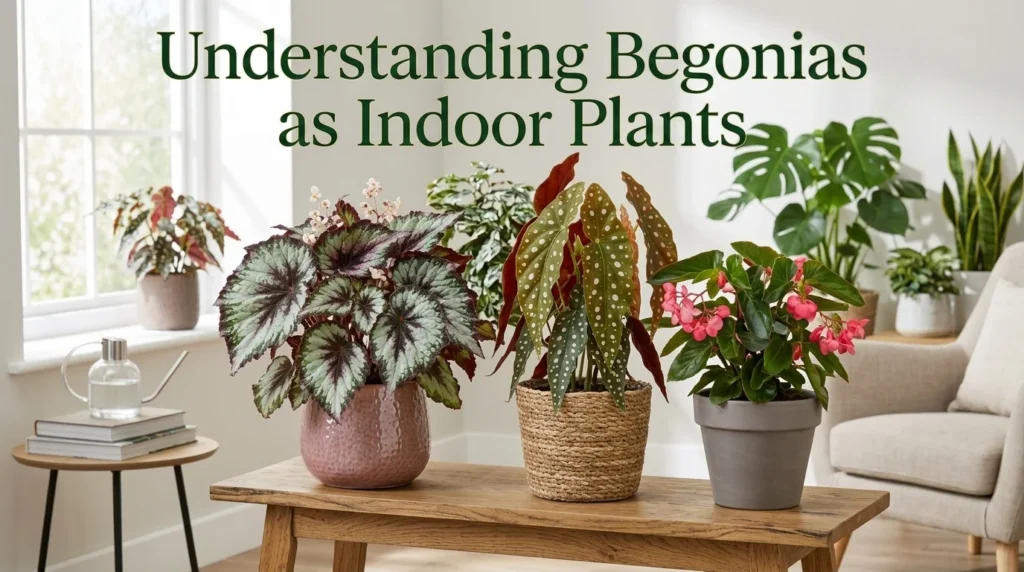
Understanding Begonias as Indoor Plants
Begonias represent one of the largest and most diverse plant families in the botanical world, with over 2,000 species originating from subtropical and tropical forests across Asia, Africa, and Central South America. In their wild habitats, they grow under dense forest canopies, clinging to damp rocks, rich leaf mold, and shaded forest floors.
Understanding where they come from explains why they make exceptional indoor companions. They are naturally adapted to warm, frost-free environments and dappled sunlight. Rather than craving direct sun, they flourish under standard home temperatures provided you mimic their native humic soil and humid air.
Why Cultivating Begonias Indoors Matters
Bringing begonias inside transforms your indoor plant collection from standard green foliage to an artistic display. Many species feature swirling leaf patterns, silvery metallic sheen, deep burgundy undersides, and raised textures that rival any artificial home decor.
Beyond their visual impact, growing them deepens your horticultural skills. Because different begonia types grow from distinct root systems such as fibrous roots, rhizomes, or tubers learning their care teaches you how soil aeration, humidity control, and watering balance work together across various plant species.
Benefits and Advantages of Growing Begonias
Adding begonias to your interior spaces brings clear advantages for plant lovers of all skill levels:
- Unrivaled Leaf Diversity: Enjoy metallic silver, deep red, forest green, and spiral patterns that look painted by hand.
- Year-Round Indoor Blooms: Fiber-rooted and cane-type varieties bloom continuously indoors under proper light.
- Adaptable to Indoor Light: They thrive under indirect window light and modern full-spectrum LED grow lights.
- Compact Footprint: Most varieties stay neatly contained in small to medium pots, fitting easily on windowsills, plant stands, and desks.
- Simple Leaf Propagation: Many varieties propagate easily from single leaf cuttings in water or damp perlite.
Different Types and Growing Approaches
Begonias are generally categorized by their growth habits and root structures. Knowing which type you own dictates how you care for it:
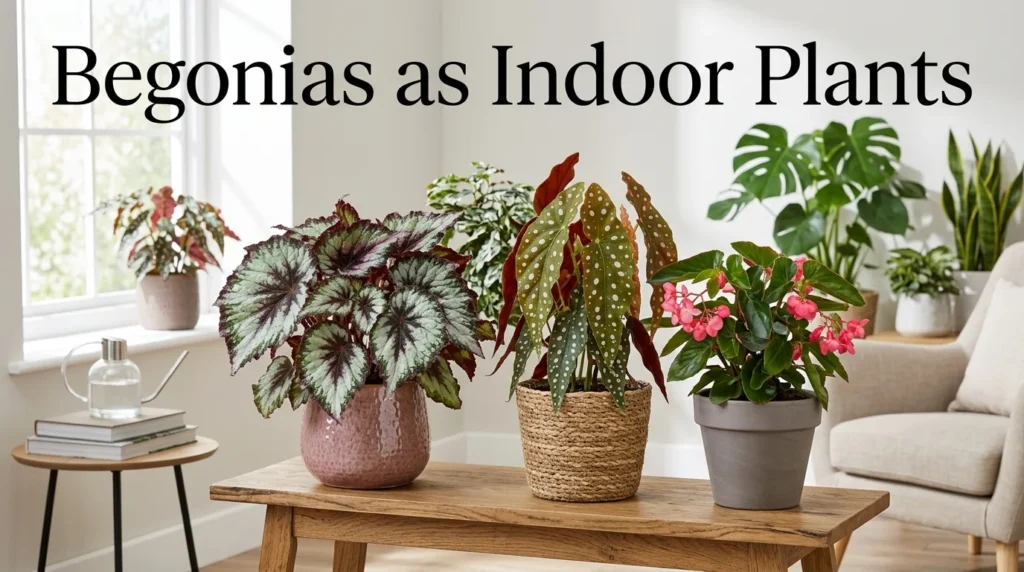
- Cane-Type Begonias (Angel Wing): Known for tall, bamboo-like stems and asymmetric leaves dotted with silver spots. They produce heavy clusters of dangling pink, red, or white flowers and tolerate lower humidity better than other types.
- Rhizomatous Begonias: Grown primarily for stunning foliage textures and colors. They spread horizontally via creeping underground stems (rhizomes) and store water efficient in their thick stems.
- Rex Begonias: A specialized subgroup of rhizomatous begonias prized for incredible leaf colors and metallic patterns. They require higher humidity and consistent ambient moisture.
- Tuberous Begonias: Famous for massive, rose-like flowers. They grow from underground tubers and go dormant in winter, making them more common as seasonal indoor or outdoor patio plants.
Essential Tools and Equipment Required
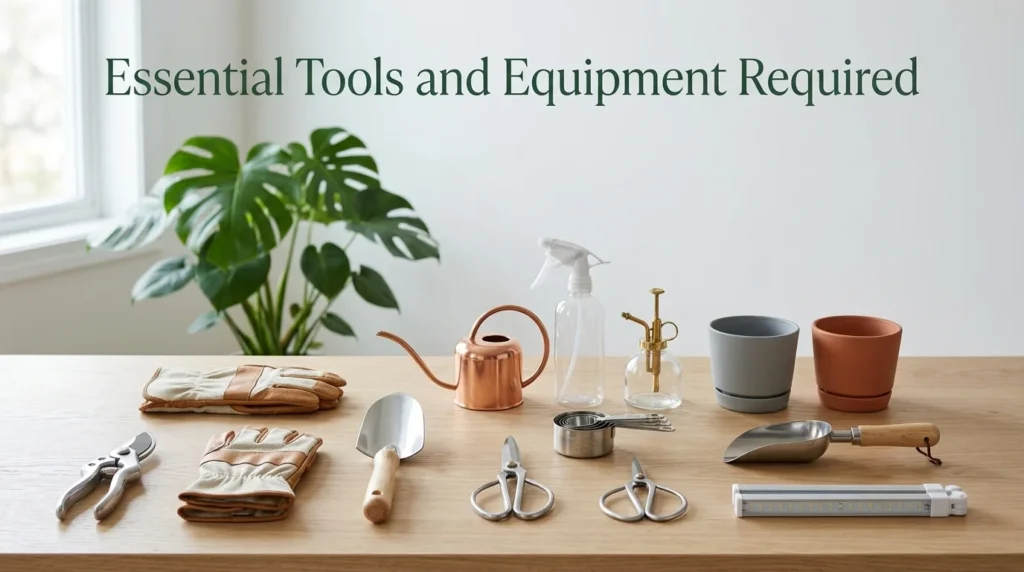
Having clean, specialized tools makes begonia care straightforward:
- Pots with Generous Drainage: Terra cotta or breathable plastic pots with bottom drainage holes prevent standing water around delicate roots.
- Long-Spout Watering Can: Allows you to pour water directly onto the topsoil without wetting leaves, preventing fungal spots.
- Cool-Mist Room Humidifier: Raises relative humidity around sensitive Rex and rhizomatous varieties during dry winter months.
- Perlite and Sphagnum Moss: Essential lightweight media for rooting leaf cuttings and building airy potting mixes.
- Full-Spectrum LED Grow Light: Supplements natural light in dim rooms to keep foliage colors vibrant and encourage blooming.
Top Begonia Varieties for Beginners
If you are just starting out, these proven varieties offer high success rates indoors:
Begonia maculata (Polka Dot Begonia)
A famous cane begonia featuring dark olive green leaves covered in crisp white polka dots and vivid crimson undersides. It grows quickly and produces clusters of delicate white flowers.
Begonia ‘Rex’ Cultivars
Featuring endless color combinations, Rex varieties like ‘Snail’ (with spiral leaves) or ‘Red Kiss’ bring metallic magenta, silver, and black tones into your living space.
Begonia erythrophylla (Beefsteak Begonia)
A classic rhizomatous variety with glossy, rounded green leaves and blood-red undersides. It is extremely hardy, handles lower humidity, and produces sprays of light pink spring flowers.
Begonia ‘Lucerna’
An heirloom Angel Wing variety known for giant, silver-spotted leaves and clusters of deep pink blooms. It grows vigorously and tolerates minor care oversights.
Lighting Requirements for Vibrant Foliage
Light directly influences leaf color intensity and blooming capability. Finding the sweet spot prevents leaf scorch while preventing leggy growth.
- Bright, Indirect Sunlight: East-facing windows or set back 2 to 3 feet from south or west windows offer ideal light. Bright filtered light keeps metallic leaf sheens bright and encourages flower production.
- Direct Sun Risks: Intense, unfiltered sun scorches thin leaves, turning margins brown and bleaching leaf colors.
- Artificial Grow Lights: Position full-spectrum LED fixtures 12 to 18 inches above foliage. Run grow lights for 10 to 12 hours daily to maintain steady growth in low-light rooms.
Proper Watering Methods
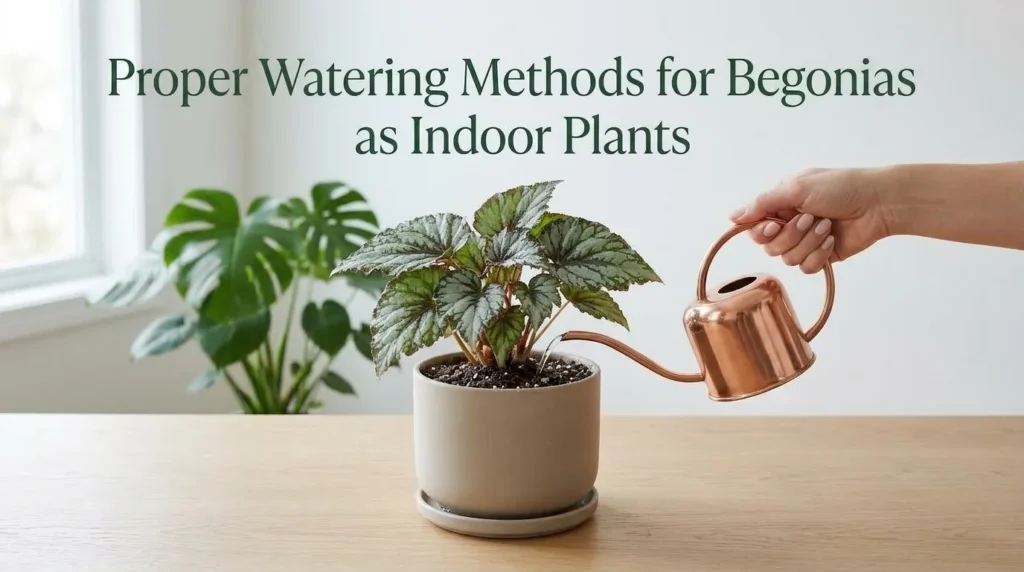
Begonias have fine, shallow root systems that rot quickly in waterlogged soil but dry out fast if neglected.
- The Soil Surface Test: Check the top inch of soil with your finger. Water when the top inch feels dry, but the deeper soil remains slightly damp.
- Avoid Wetting Foliage: Always apply water directly to the soil. Wetting leaves especially fuzzy or textured Rex varieties invites powdery mildew and bacterial leaf spot.
- Bottom Watering: Place the pot in a shallow saucer of water for 15 to 20 minutes, allowing roots to soak up moisture through drainage holes. Drain all standing water afterward.
Selecting the Ideal Soil Medium
Standard potting soil holds too much moisture and compacts over time, suffocating fine begonia roots. They require an airy, porous, peat-rich substrate that drains rapidly.
Blend an ideal custom begonia mix using:
- 40% Peat Moss or Coconut Coir: Retains light moisture and maintains low pH.
- 30% Perlite or Pumice: Ensures rapid drainage and creates oxygen pockets for root respiration.
- 20% Coarse Orchid Bark: Adds physical structure to prevent soil compaction.
- 10% Worm Castings: Provides gentle, organic nutrients.
Temperature Control for Healthy Growth
Hailing from tropical environments, begonias thrive in warm room settings.
Keep ambient temperatures between 65°F and 75°F (18°C to 24°C). Avoid temperatures below 55°F (13°C), which cause leaf drop and dormancy. Shield plants from cold winter window drafts, air conditioners, and direct heat vents.
Controlling Humidity Levels
Low indoor humidity is the primary reason Rex and rhizomatous begonias develop brown, crispy leaf edges.
Aim for relative humidity between 50% and 70%. Elevate humidity using these practical methods:
- Room Humidifiers: Position a cool-mist humidifier near your plant collection during winter.
- Pebble Trays: Place pots on trays filled with river stones and water, keeping the pot base above the waterline.
- Terrariums or Cloches: Enclose delicate miniature varieties inside glass containers to lock in moist air naturally.
- Avoid Direct Leaf Misting: Misting leaves with a spray bottle increases fungal risk without meaningfully raising room humidity.
Fertilizer and Nutrient Demands
Begonias are moderate feeders that benefit from continuous, low-dose nutrients during active growth.
Feed every two to three weeks in spring and summer using a balanced, liquid organic houseplant fertilizer diluted to half strength. Switch to a higher-phosphorus formula if you want to promote heavier blooms on cane varieties. Pause fertilizing completely in autumn and winter when growth naturally rests.

Daily and Monthly Maintenance Routines
Simple care habits keep your plants clean and healthy:
- Pinch Back Stems: Pinch off growing tips on cane begonias to encourage bushy, branching growth rather than single tall stems.
- Deadhead Faded Flowers: Remove spent blooms and fallen leaves promptly from topsoil to prevent gray mold (Botrytis).
- Rotate Pots: Give pots a quarter-turn weekly so all sides receive balanced light, keeping plants upright and uniform.
Seasonal Care Shifts
Adjust your care as natural daylight and room conditions change:
- Spring & Summer: Active growth phase. Increase watering frequency, feed regularly, prune leggy growth, and propagate fresh cuttings.
- Autumn & Winter: Resting phase. Growth slows due to shorter daylight. Reduce watering frequency, pause fertilizers, boost ambient humidity, and move plants closer to windows to capture soft winter sun.
Common Mistakes Beginners Make
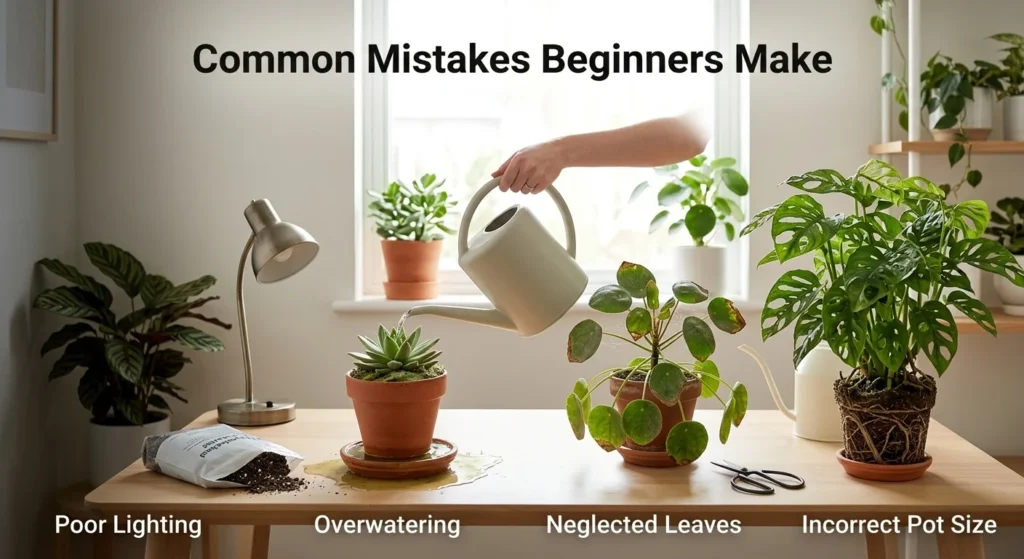
Avoid these common beginner errors:
- Overwatering Out of Love: Keeping soil soaking wet causes root rot, leading to wilting stems that beginners mistake for underwatering.
- Misting the Leaves: Spraying water directly on leaves creates ideal conditions for powdery mildew fungal outbreaks.
- Using Pots That Are Too Large: Plant roots prefer snug containers. Oversized pots hold excess wet soil that rots small root systems.
- Ignoring Drafts: Exposing plants to cold winter window panes or blast heating causes sudden leaf loss.
Troubleshooting Common Problems
Diagnose and resolve common issues with this guide:
- Crispy Brown Leaf Margins: Caused by low room humidity, dry soil, or tap water chemical buildup. Increase humidity and use filtered water.
- White Powdery Patches on Leaves: Powdery mildew fungal infection caused by stagnant air and wet foliage. Improve air circulation, cut off affected leaves, and spray with organic fungicide.
- Sudden Leaf Drop: Triggered by sudden cold drafts, severe underwatering, or root rot from overwatering. Check root health immediately.
- Stem Rot at Soil Line: Caused by overwatering and overly dense soil. Take clean stem cuttings above the rot line to re-root the plant before it dies.
One of the costliest habits new growers bring to begonias is watering on a fixed schedule instead of checking the soil first. Begonia roots are fine and fleshy, so they rot quickly when the top inch of mix stays soggy, yet the plants also sulk if the root ball dries out completely. Check the top inch with your finger every two or three days and water only when it feels dry, pouring until water drains freely, then empty the saucer within half an hour. A second frequent error is misting the leaves to raise humidity: water sitting on begonia foliage invites powdery mildew and bacterial leaf spot, so use a pebble tray or a small humidifier beside the pot instead.
Beginner Tips for Long-Term Success
Start your begonia journey with these simple practices:
- Begin with Angel Wing Varieties: Varieties like Begonia maculata or ‘Lucerna’ tolerate drier indoor air and are much easier for beginners than delicate Rex varieties.
- Keep Roots Snug: Only repot when roots fill the pot entirely, and only move up one pot size (e.g., from a 4-inch pot to a 5-inch pot).
- Use Filtered Water: Let tap water sit out overnight or use filtered water to prevent chemical salts from crisping sensitive leaf tips.
Advanced Recommendations for Experienced Growers
Ready to expand your skills? Try these advanced begonia techniques:
- Foliar Leaf Cuttings: Propagate Rex begonias by cutting major leaf veins and pinning the leaf flat onto damp sphagnum moss inside a enclosed plastic bin. New plantlets will sprout along every cut vein.
- Semi-Hydroponic Cultivation: Grow cane begonias in LECA (expanded clay pebbles) paired with sub-irrigation to eliminate soil pests while supplying consistent moisture.
- Enclosed Terrarium Displays: Create mini glass terrariums for rare, humidity-loving Asian species (like Begonia dracopelta) that require 80%+ humidity to survive.
Propagating Begonias at Home
Multiplying your favorite begonia is one of the most satisfying parts of growing them, and the method depends on the type you own. Cane-like begonias root easily from stem cuttings: snip a four-inch section with two or three nodes, remove the lower leaves, and place it in water or moist perlite where it usually roots within two to three weeks. Rhizomatous types such as rex begonias multiply best by division, so when you repot, gently tease the thick rhizome apart so each piece keeps at least one growth eye and a few roots, then plant the divisions at the same depth they grew before.
Leaf cuttings work well for rex and rhizomatous begonias and let you start many plants from a single leaf. Cut a healthy mature leaf from the plant, trim the stem to about an inch, and press the stem end into damp seed-starting mix, or lay the leaf flat and pin the veins onto the surface with small stones. Cover the pot with a clear plastic bag to hold humidity, keep it in bright indirect light, and you should see tiny plantlets forming at the vein cuts within four to six weeks. Wait until the babies have two or three leaves of their own before potting them up separately, and keep the mix lightly moist but never waterlogged while they establish.
Conclusion
Growing begonias indoors brings unmatched color, intricate leaf patterns, and delicate blooms into your home space. By matching your plant type to proper indirect light, using well-draining soil mixes, watering intentionally, and maintaining moderate humidity, you can keep these tropical treasures thriving year-round.
Pay attention to subtle signals like leaf texture and soil moisture, and treat early care adjustments as part of the learning experience. For more step-by-step guides, indoor growing tutorials, and plant care advice, explore our full library of resources at GrowIndoorly.com.
Knowledge Check
Test your understanding of indoor begonia care with these questions:
Which begonia category includes the famous silver-spotted Angel Wing varieties with tall, bamboo-like stems?
A) Tuberous Begonias
B) Cane-Type Begonias
C) Rhizomatous Begonias
D) Rex Begonias
What is the main cause of powdery mildew on begonia leaves?
A) Bright indirect sun
B) Wet foliage combined with stagnant air
C) Soil containing perlite
D) Low fertilizer application
How should you check if your indoor begonia needs watering?
A) Water on a strict schedule every Monday
B) Check if the top inch of soil feels dry
C) Mist leaves daily until saturated
D) Wait until all leaves drop
True or false: Begonias contain insoluble calcium oxalates and are toxic to cats and dogs.
A) True
B) False
Which soil component is added to begonia potting mixes specifically to improve drainage and prevent soil compaction?
A) Garden topsoil
B) Heavy clay
C) Perlite
D) Moisture-retention crystals
Answer Key
- Question 1: B)
- Question 2: B)
- Question 3: B)
- Question 4: A)
- Question 5: C)
Frequently Asked Questions
Are begonias easy to grow as indoor plants?
Cane-type begonias (like Angel Wing varieties) and hardy rhizomatous types are very easy to grow indoors. They adapt well to standard room temperatures and bright indirect light. Rex begonias require slightly more care because they demand higher humidity to prevent crispy leaf edges.
How often should I water indoor begonias?
Water your begonia when the top inch of potting soil feels dry to the touch. Pour water directly onto the soil until it drains out the bottom holes, and empty the saucer after 20 minutes. Avoid watering on a rigid calendar schedule, as light and humidity dictate moisture loss.
Do begonias need direct sunlight indoors?
No, begonias do not like direct sunlight. Direct sun burns their thin leaves and bleaches vibrant leaf colors. They grow best in bright, indirect light near an east-facing window or set back a few feet from south or west windows.
Why are the leaves on my begonia turning brown and crispy?
Crispy brown leaf edges are typically caused by low room humidity, dry soil, or minerals in hard tap water. Increase ambient moisture using a cool-mist humidifier, keep soil consistently moist, and water with filtered or standing tap water.
Are begonias safe for households with pets?
No, begonias contain insoluble calcium oxalates that are toxic to cats and dogs according to ASPCA standards. The highest concentration of toxins resides in the underground roots and stems. Keep plants on high shelves or hanging stands away from curious pets.
How do I get my indoor begonia to bloom?
To encourage flowers, provide bright indirect light or 12 hours of full-spectrum LED grow lights daily. Feed the plant with a balanced liquid fertilizer every two weeks during spring and summer, and pinch back stem tips to encourage branching growth.
Can I propagate begonias from a single leaf?
Yes, many rhizomatous and Rex begonias propagate easily from leaf cuttings. Insert a single leaf stem into damp soil or water, or make small cuts along the main veins on the leaf underside and pin it flat against damp sphagnum moss to sprout new plantlets.
How do I prevent powdery mildew on begonia leaves?
Prevent powdery mildew by keeping foliage completely dry when watering, maintaining good airflow around the pot with a small fan, and avoiding overcrowding. Remove any infected leaves immediately and treat the plant with organic neem oil or copper fungicide.

Megan Foster is the founder and lead writer of GrowIndoorly.com, where she shares practical, easy-to-follow advice for growing healthy indoor plants. She is passionate about helping beginners and experienced plant lovers build thriving indoor gardens with confidence. Megan writes about houseplants, indoor herbs, succulents, hydroponics, grow lights, plant propagation, watering, soil care, and everyday plant maintenance.
She enjoys researching trusted gardening techniques and transforming them into simple, actionable guides that readers can easily apply at home. Her goal is to make indoor gardening more enjoyable and accessible by providing clear, reliable information that helps people keep their plants healthy throughout the year. Whether you’re caring for your first houseplant or expanding your indoor plant collection, Megan’s practical tips are designed to help you grow with confidence.