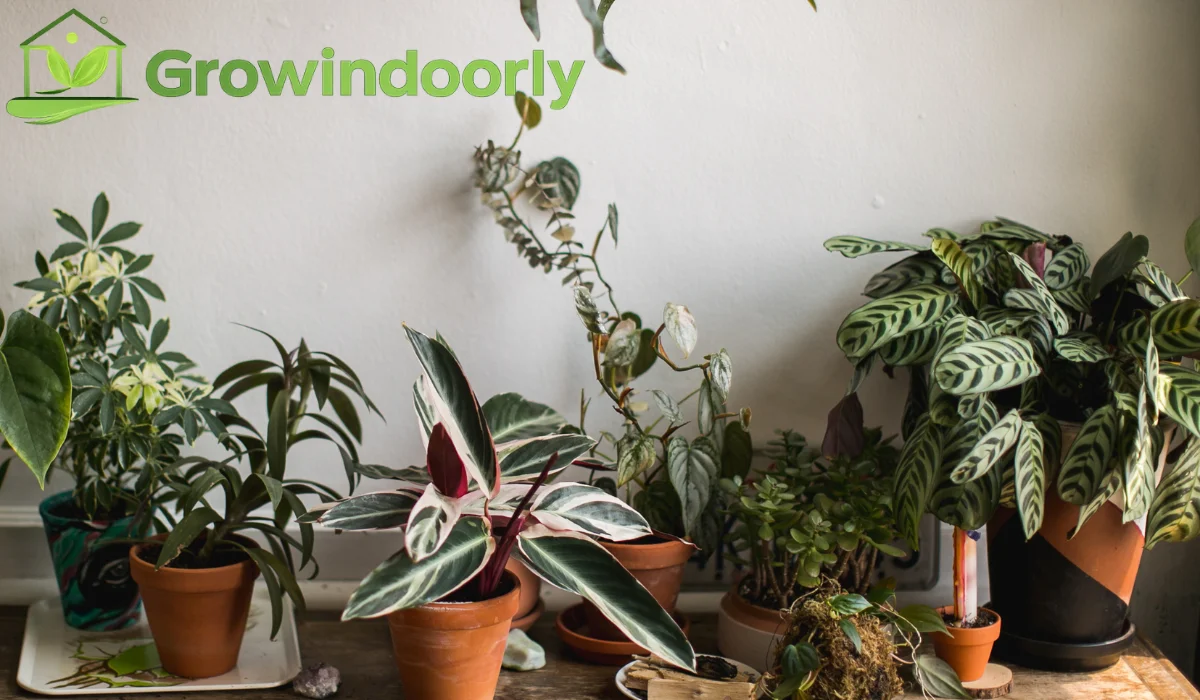
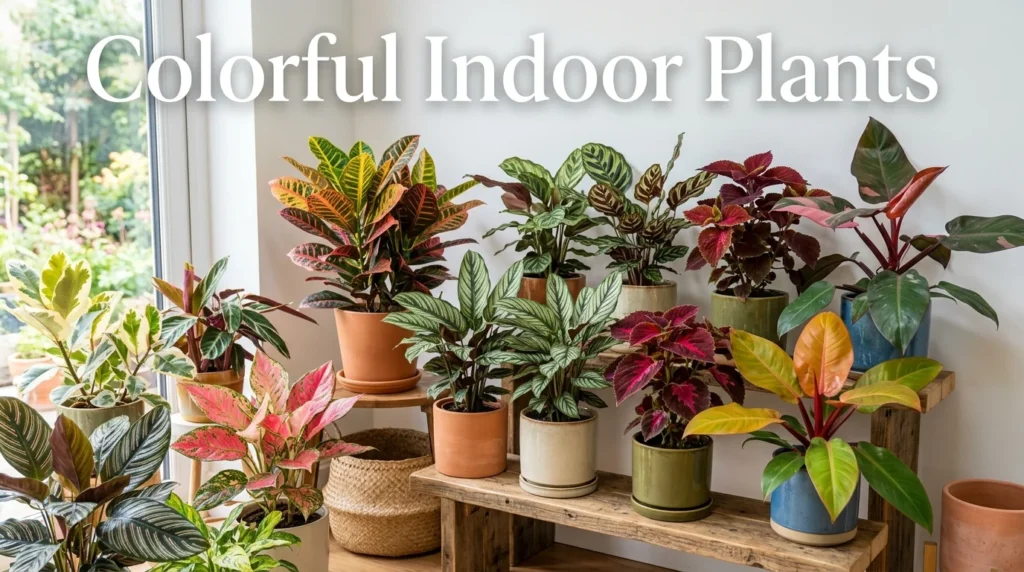
Adding vibrant greenery to your home is rewarding, but incorporating colorful indoor plants elevates interior design to an entirely new level. Instead of relying solely on solid green foliage, plants with pink, red, purple, neon, and multi-patterned leaves create natural focal points, brighten dim rooms, and add dynamic contrast to your indoor garden.
Integrating colorful indoor plants into your living space does more than satisfy an aesthetic goal. It offers a practical way to layer textures and visual warmth throughout your home without relying on artificial decor. From forgiving pink Aglaonemas that suit beginners to dramatic Calatheas that thrive in high-humidity nooks, there is a vivid variety tailored to every lighting condition and skill level.
However, sustaining intense pigmentation indoors requires a clear understanding of light physics, pigment science, and watering mechanics. Unlike all-green houseplants that produce maximum chlorophyll to absorb available light, plants with red, pink, or purple leaves rely on anthocyanins and carotenoids that need specific light thresholds to maintain their brightness.
Choosing the right colorful indoor plants comes down to matching your home’s natural light levels with your personal maintenance routine. By understanding how light exposure, soil aeration, and atmospheric humidity interact with leaf pigments, you can keep your indoor foliage vibrant, healthy, and structurally sound year-round.
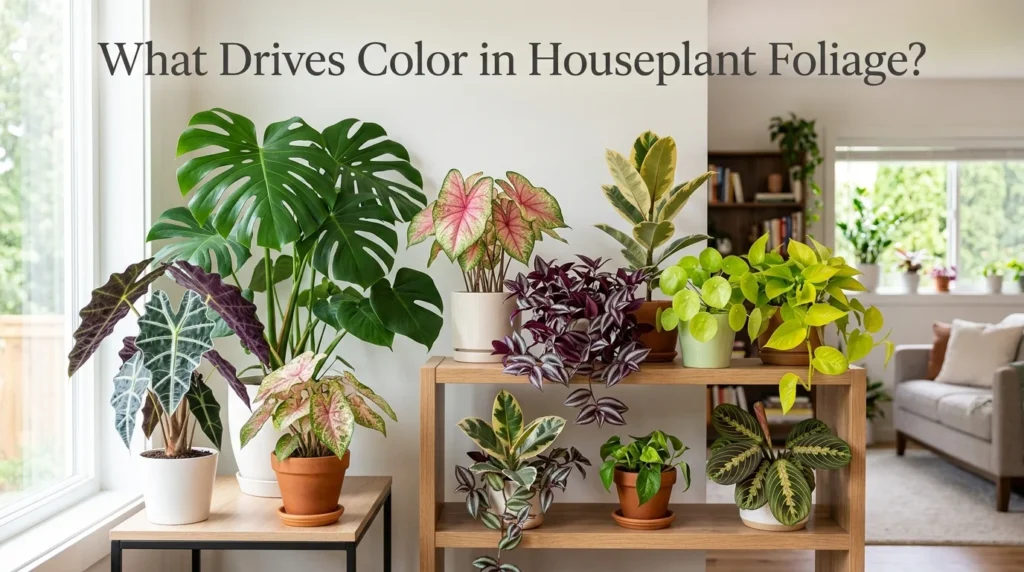
What Drives Color in Houseplant Foliage?
To successfully cultivate colorful houseplants, it helps to understand why their leaves display non-green hues:
- Anthocyanins: These pigments produce red, pink, purple, and deep violet shades. They protect plant tissue from excessive light intensity and environmental stress.
- Carotenoids: These pigments produce yellow, orange, and bronze tones. They work alongside chlorophyll to capture light energy.
- Variegation Types:
- Genetic (Chimeral) Variegation: Random white, cream, or yellow patches caused by a cellular mutation that prevents chlorophyll production in certain tissue zones (e.g., Pothos ‘N’ Joy’).
- Reflective (Pattern) Variegation: Microscopic air pockets between leaf layers that reflect light, creating silvery or metallic patterns (e.g., Scindapsus pictus).
12 Top Colorful Indoor Plants at a Glance
The table below outlines twelve popular colorful houseplants grouped by leaf color, light requirements, maintenance level, and recommended placement.
1. Pink Chinese Evergreen (Aglaonema ‘Lady Valentine’ or ‘Siam Aurora’)
Aglaonema varieties with pink or red leaf margins are among the most resilient colorful plants available.
- Light Needs: Tolerates low light exceptionally well, though medium indirect light keeps the pink tones vibrant.
- Watering Strategy: Allow the top 50% of the soil mixture to dry before watering deeply. Highly forgiving if a watering is missed.
- Soil & Potting: Thrives in a standard, well-draining houseplant potting mix enriched with perlite.
2. Coleus (Plectranthus scutellarioides)
Traditionally grown outdoors, Coleus makes an exceptionally vibrant indoor foliage plant when provided with sufficient light.
- Light Needs: Requires bright indirect light to direct morning sunlight. Low light causes stems to stretch (etiolate) and colors to fade to dull green.
- Watering Strategy: Keep soil consistently moist, but not waterlogged. Pinch off blue flower spikes as they appear to direct energy into leaf production.
- Maintenance: Pinch back growing tips regularly to encourage a bushy, compact growth habit.
3. Triostar Stromanthe (Stromanthe thalia ‘Triostar’)
A relative of the Maranta family, the Triostar displays artistic splashes of cream, green, and hot pink on top of the leaf, with deep magenta undersides.
- Light Needs: Medium to bright indirect light. Direct sunlight burns the delicate variegated foliage.
- Watering Strategy: Use distilled or filtered water to avoid leaf-tip browning caused by tap water minerals (fluoride and chlorine).
- Humidity Needs: Requires 55%+ relative humidity to prevent crisp edges.
4. Croton (Codiaeum variegatum ‘Petra’)
Known for its fiery shades of orange, red, and yellow, Croton offers unmatched color intensity when given proper light.
- Light Needs: High light is essential. Requires 4 to 6 hours of direct sunlight near a South or West window to maintain bright leaf pigments.
- Watering Strategy: Water when the top 1 to 2 inches of soil feel dry. Dropping green leaves is a primary indicator of sudden environmental drafts or under-watering.
- Pest Control: Susceptible to spider mites in dry air; wipe leaves regularly with a damp cloth.
5. Purple Passion Plant (Gynura aurantiaca)
Features soft, velvety purple hairs over dark green leaves, giving the plant an iridescent purple sheen when light hits the canopy.
- Light Needs: Bright indirect light maximizes the purple color density.
- Watering Strategy: Water at the base of the plant to avoid trapping moisture on the velvety leaves, which can lead to fungal issues.
- Growth Habit: Semi-trailing habit makes it an ideal candidate for hanging baskets or high shelving.
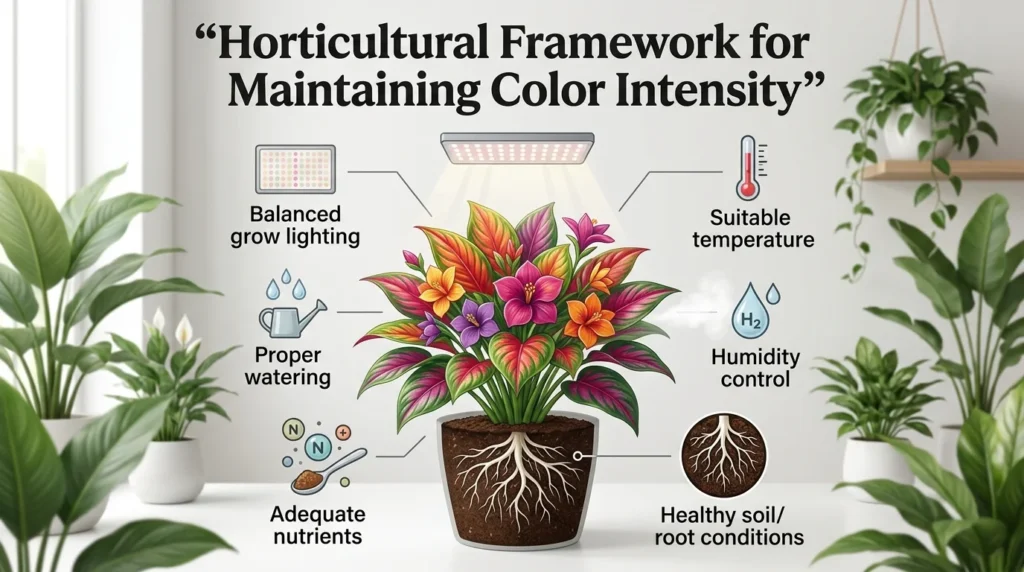
Horticultural Framework for Maintaining Color Intensity
1. Light Management for Pigment Retention
The single biggest mistake plant owners make with colorful houseplants is placing them in deep shade, assuming they care for themselves like all-green varieties.
- The Light Trade-off: Non-green foliage contains less chlorophyll. To compensate, the plant needs brighter ambient light to produce sufficient energy through photosynthesis.
- Direct Sun vs. Indirect Light: While plants like Crotons and Coleus thrive with direct sun, delicate variegated plants like Stromanthe or Calathea will scorch under direct sun rays. Position delicate variegated varieties 3 to 5 feet back from sunny windows or behind sheer curtains.
2. Soil Aeration and Mix Ratios
Colorful plants with sensitive root systems (such as Begonias and Calatheas) require a loose, well-aerated potting media to prevent root rot (hypoxia).
3. Humidity & Temperature Standards
Most vibrant foliage plants originate from tropical understory environments and require stable indoor climates:
- Relative Humidity: Maintain between 50% and 65%. Low humidity leads to crisp brown edges on variegated leaves.
- Temperature: Keep indoor temperatures between 65°F and 80°F (18°C–27°C). Avoid placement near cold drafts, air conditioning units, or heat registers.
Watering Mechanics & Drainage Protocols
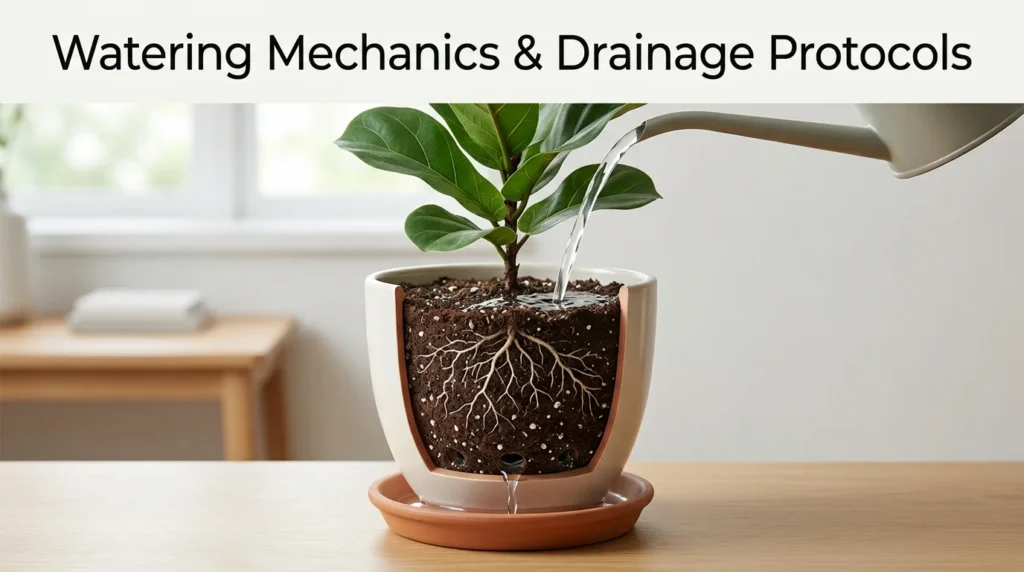
Watering colorful houseplants requires a balanced approach. Because non-green foliage contains less chlorophyll, overwatered or oxygen-deprived roots (hypoxia) fail rapidly, causing delicate pink, purple, and variegated leaf tissues to yellow or drop.
The Deep Drench & Drain Method
Never apply small, frequent “sips” of water to colorful plants. This leads to salt buildup at the top of the soil while leaving deeper roots dry.
- Apply water evenly over the entire soil surface until it runs freely from the bottom drainage holes.
- Allow the pot to drain completely for 20 to 30 minutes, then discard any standing water from the saucer.
How to Gauge Soil Moisture
Relying on a strict weekly schedule often leads to overwatering, especially during seasonal shifts.
- The Wooden Dowel Test: Insert a long wooden skewer or dowel deep into the root ball. If it comes out clean and dry, it is time to water. If dark soil particles stick to the wood, delay watering for a few more days.
- The Weight Test: Lift or tilt the pot slightly before and after watering to feel the difference between wet and dry soil.
Light Requirements: Natural & Artificial Rules
Providing the correct light spectrum and intensity is the most critical factor in preserving bright pink, deep purple, fiery red, and high-contrast variegation in indoor plants. Without adequate light energy, colorful foliage plants lose their vivid pigmentation and revert to solid green as the plant produces extra chlorophyll to survive.
Natural Light Positioning & Foot-Candles
Matching your plant’s leaf density and color pigments to the right window orientation ensures strong growth without burning sensitive foliage.
Artificial Lighting Rules for Pigment Retention
When natural window light falls short especially during winter months or in inner room spaces supplemental electric lighting is essential to prevent leaf fade (reversion).
- Spectrum Selection: Use full-spectrum LED grow lights (6000K–6500K daylight equivalent). Full-spectrum light supplies both red wavelengths (vital for photosynthesis) and blue/violet wavelengths (essential for triggering anthocyanin production that produces pink and purple leaf tones).
- Distance & Placement: Position LED grow lights 12 to 24 inches directly above the top canopy. Placing fixtures too close can cause leaf scorch, while placing them too far away reduces light intensity below usable levels.
- Photoperiod Duration: Keep artificial lights on a consistent daily schedule of 12 to 14 hours per day using an automated plug-in timer.
Troubleshooting Common Issues in Colorful Plants
- Problem: Pink or red leaves fading to pale green
- Cause: Insufficient ambient light intensity.
- Check: Measure light levels at the plant’s position or check window distance.
- Solution: Move the plant closer to a bright window or add a 20W–30W full-spectrum LED grow light.
- Problem: Brown, crispy leaf edges on variegated foliage
- Cause: Low humidity or high mineral content in tap water.
- Check: Measure room humidity with a digital hygrometer. Check for white salt deposits on soil surface.
- Solution: Switch to filtered or rainwater and run a cool-mist humidifier nearby.
- Problem: Stems growing long, thin, leggy, and leaning dramatically toward window light sources
- Cause: Insufficient ambient light intensity (etiolation), causing the plant to stretch toward the nearest light source.
- Check: Observe if new leaf growth is smaller, pale, and spaced far apart along the stretched stems.
- Solution: Relocate the plant closer to a brighter window or install a dedicated LED grow light overhead. Rotate the container 90 degrees weekly to maintain balanced, upright growth.
Conclusion
Incorporating vibrant foliage into your home is an effective way to enhance your living environment with natural texture and color. By matching plant species to your indoor environment, providing well-drained soil, and ensuring appropriate light levels, you can maintain colorful foliage season after season. Treat your plants as dynamic design elements, and enjoy the lasting impact of living color in your space.
Educational Knowledge Check
1. Why do pink or purple leaf areas require brighter indirect light than solid green leaves?
- A) Pink areas absorb water twice as fast.
- B) Non-green leaf tissue lacks chlorophyll, requiring remaining green areas to receive ample light for photosynthesis.
- C) Pink pigments absorb oxygen directly from the air.
- D) Bright light turns pink leaves into stems.
2. What type of water is recommended for sensitive colorful plants like Stromanthe and Calathea?
- A) Cold tap water with extra salt.
- B) Distilled, rain, or filtered water to prevent mineral edge-burn.
- C) Boiled water applied hot.
- D) Carbonated mineral water.
3. Which colorful plant requires direct sunlight to maintain its vivid red, orange, and yellow foliage?
- A) Pink Aglaonema
- B) Calathea Ornata
- C) Croton (Codiaeum variegatum)
- D) Neon Pothos
4. What is the primary cause of leggy, stretched stems in indoor Coleus plants?
- A) Too much perlite in the soil.
- B) Insufficient light exposure causing etiolation.
- C) High humidity levels.
- D) Over-pruning root tips.
5. What purpose does coarse orchid bark serve in a potting mix for colorful houseplants?
- A) It changes leaf colors to blue.
- B) It adds structural space to prevent soil compaction and root suffocation.
- C) It repels all indoor insects naturally.
- D) It lowers room temperature around the plant.
(Answer Key: 1-B, 2-B, 3-C, 4-B, 5-B)
Frequently Asked Questions
What is the easiest colorful indoor plant for absolute beginners?
The Pink Aglaonema (Chinese Evergreen) and Neon Pothos are the most beginner-friendly colorful options. They tolerate low light levels, survive inconsistent watering schedules, and maintain their colors without high humidity requirements.
Can colorful plants live in low-light rooms?
Some varieties, such as Aglaonema and Neon Pothos, adapt well to lower light. However, most highly variegated or red-leaved plants like Crotons and Coleus require bright indirect light to maintain their color intensity. In dark spaces, supplement with a full-spectrum LED grow light.
Why are my variegated leaves turning completely green?
This process is called reversion. When light levels are too low, the plant produces more chlorophyll to compensate, causing green pigment to overpower the non-green zones. Prune back completely green stems and move the plant to a brighter spot to encourage variegated growth.
Are colorful indoor plants safe for pets?
Safety varies by species. Plants like Calathea, Stromanthe, and Peperomia are non-toxic to dogs and cats. Conversely, plants like Aglaonema, Croton, and Coleus are toxic if ingested and should be kept out of reach of pets.
How often should I fertilize colorful foliage plants?
Feed colorful plants every 2 to 4 weeks during spring and summer using a balanced, liquid houseplant fertilizer diluted to half-strength. Avoid over-fertilizing with high-nitrogen formulas, as excess nitrogen can promote rapid green growth over variegated coloring.

Megan Foster is the founder and lead writer of GrowIndoorly.com, where she shares practical, easy-to-follow advice for growing healthy indoor plants. She is passionate about helping beginners and experienced plant lovers build thriving indoor gardens with confidence. Megan writes about houseplants, indoor herbs, succulents, hydroponics, grow lights, plant propagation, watering, soil care, and everyday plant maintenance.
She enjoys researching trusted gardening techniques and transforming them into simple, actionable guides that readers can easily apply at home. Her goal is to make indoor gardening more enjoyable and accessible by providing clear, reliable information that helps people keep their plants healthy throughout the year. Whether you’re caring for your first houseplant or expanding your indoor plant collection, Megan’s practical tips are designed to help you grow with confidence.