Caring for indoor bonsai plants often feels intimidating when fragile leaves start dropping within days of bringing your tree home. Start by placing your tree in its ideal light spot and resist the urge to move it — stability is the fastest way to stop leaf drop.
Finding success with indoor bonsai plants requires understanding that these miniature living sculptures need consistent light, moisture, and airflow. Master those three basics first, and the artistic styling becomes far more enjoyable.
Nurturing indoor bonsai plants transforms any windowsill or desk into a serene living sanctuary while connecting you deeply to ancient horticultural traditions. Even a few minutes of daily observation builds the instincts that keep trees thriving.
In this practical guide, you will learn species selection, custom soil blending, root maintenance, proper watering techniques, seasonal care routines, pruning and styling methods, and simple troubleshooting steps.
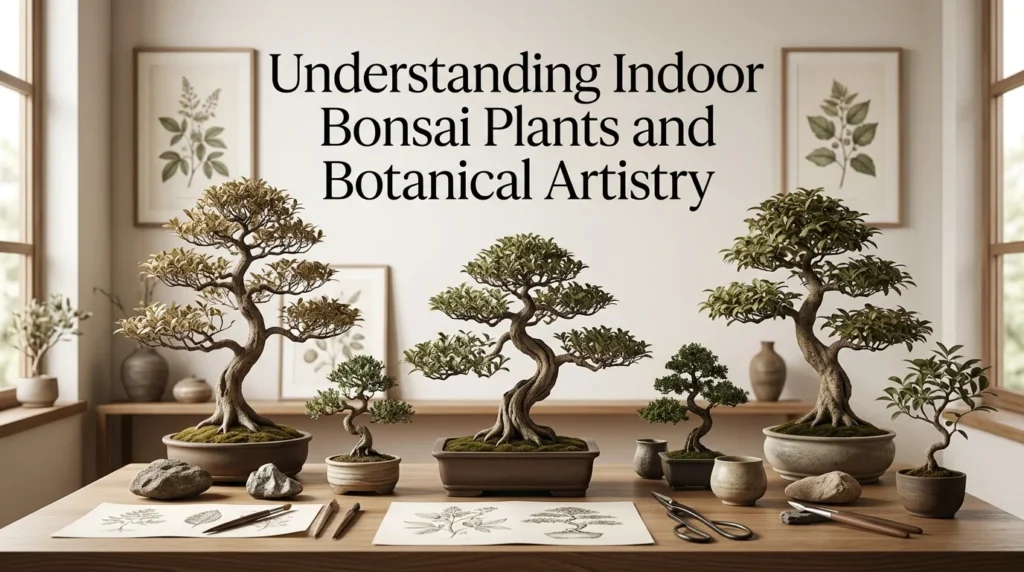
Understanding Indoor Bonsai Plants and Botanical Artistry
Bonsai is not a genetic species of dwarf tree. Instead, bonsai is an ancient horticultural art form that miniaturizes full-sized tree species through careful root pruning, branch training, and container restriction.
When practicing this art inside residential homes, it is vital to distinguish between outdoor and indoor tree types. Temperate species such as junipers and maples need freezing winter dormancy and will slowly decline in heated living rooms.
True indoor varieties originate from tropical and subtropical climates where seasonal freezing temperatures never occur. Because they grow year-round, they adapt well to the steady warmth of homes and apartments.
Why Cultivating Bonsai Indoors is Important and Rewarding
Bringing miniature trees into indoor living spaces creates a unique intersection between living home decor and horticultural craftsmanship. A well-placed bonsai becomes a daily source of calm and a conversation piece.
Cultivating miniature trees indoors brings distinct personal advantages:
- Mindful Meditation: Pruning leaves, wiring branches, and inspecting soil daily encourages a slow, reflective routine that lowers daily stress and restores mental focus.
- Living Artistry: A trained tree serves as a striking visual focal point, adding architectural grace, natural beauty, and depth to home offices and living rooms.
- Space-Saving Horticulture: Bonsai trees offer the fulfillment of growing full-sized tree species within a compact footprint suitable for apartments and small desks.
- Long-Term Botanical Companionship: With proper maintenance, indoor trees can outlive human owners, becoming cherished living heirlooms passed down through generations.
Benefits and Advantages of Indoor Bonsai
Growing tropical tree species inside your home offers practical environmental and psychological benefits:
- Improved Indoor Air Quality: Large-leafed tropical bonsai varieties actively filter indoor air, absorbing airborne dust and releasing clean oxygen during daylight hours.
- Year-Round Active Growth: Because indoor rooms maintain steady warm temperatures, tropical species do not undergo long, bare winter dormant states, maintaining lush foliage through every season.
- Controlled Environment: Growing indoors allows you to shield delicate root systems from unexpected outdoor frosts, severe hail, torrential rain, and harsh winds.
- Accessibility: Indoor trees make the art of bonsai accessible to urban residents who lack private outdoor yards, balconies, or garden beds.
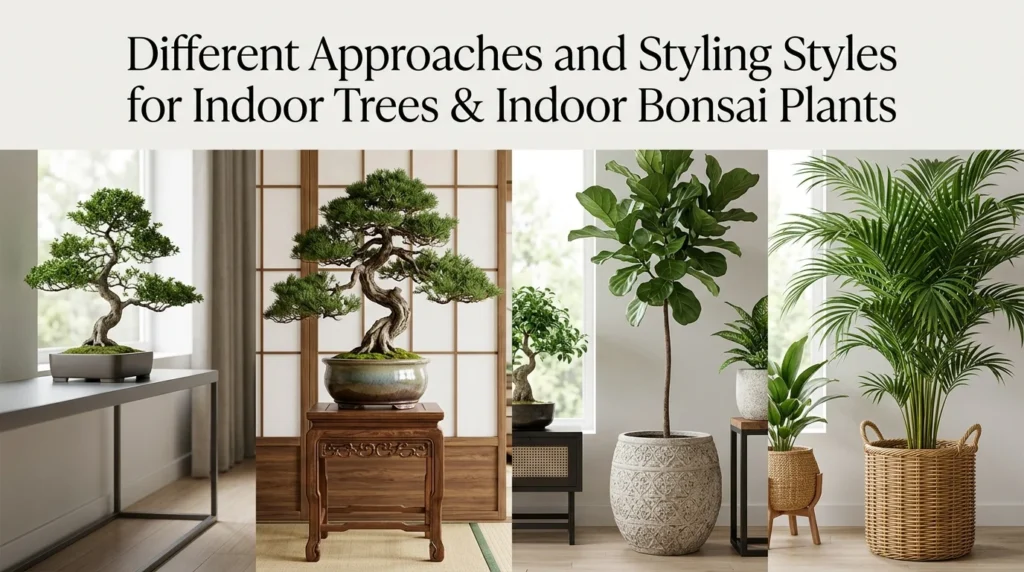
Different Approaches and Styling Styles for Indoor Trees
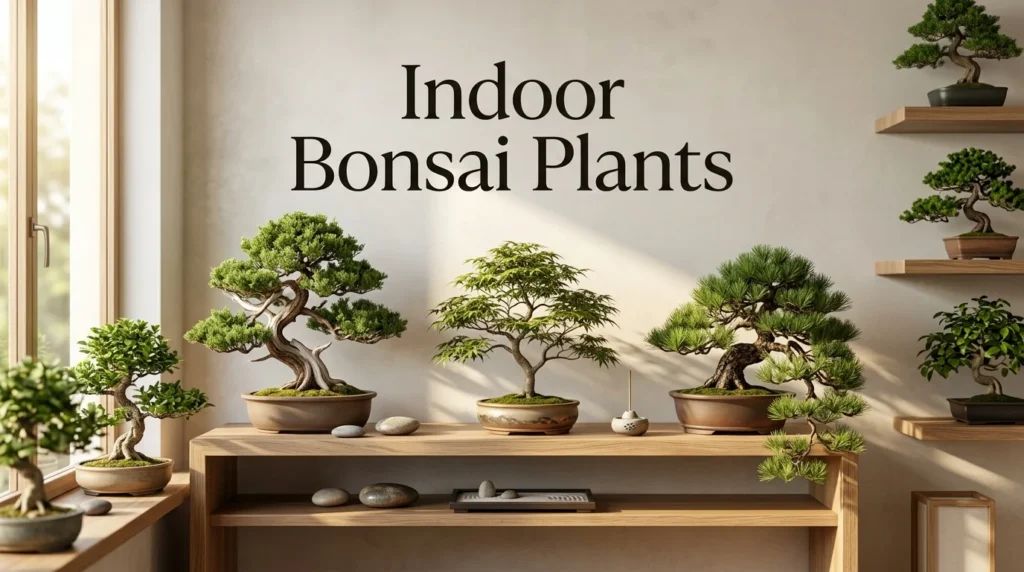
Bonsai artists use established structural styles to guide the growth of miniature trees. You do not need to master them all — start with one style that suits your tree’s natural shape:
Chokkan (Formal Upright)
The trunk grows completely straight and upright, tapering gradually from a broad root base to a thin apex at the top. Branches are arranged symmetrically, extending outward horizontally.
Moyogi (Informal Upright)
The trunk curves gracefully in gentle “S” shapes as it rises upward, though the apex remains positioned directly above the center of the base root flare. This is the most popular and forgiving style for indoor beginners.
Shakan (Slanting)
The trunk emerges from the soil at a deliberate angle, leaning sharply to the left or right, mimicking a tree shaped by continuous ocean winds or growing along a steep mountain cliff.
Kengai and Han-Kengai (Cascade and Semi-Cascade)
The trunk grows outward and then bends downward sharply, dropping below the bottom rim of the container. This dramatic style imitates wild trees growing over steep canyon ledges.
Essential Tools and Equipment Required
Using proper tools prevents stem crushing, speeds up callus healing, and makes fine detailed pruning much easier:
- Bonsai Concave Cutters: Essential for removing branches flush against the trunk without leaving unsightly raised bumps. The hollow concave cut allows bark to heal smooth and flat.
- Bonsai Shears: Ultra-sharp, long-handled scissors designed for precise leaf trimming, soft stem thinning, and delicate root trimming during repotting.
- Wire Cutters and Anodized Aluminum Wire: Used for wrapping stems and branches to bend and hold them in graceful, artistic positions.
- Root Rake or Chopstick: Gently teases dense, compacted soil away from fragile root systems without tearing taproots during repotting.
- Fine-Mesh Soil Sieve: Filters out tiny dust particles from potting substrate, ensuring water drains freely without clogging drainage holes.
- Drainage Mesh Screens: Plastic mesh covers placed over pot drainage holes to keep bonsai soil inside while allowing excess water to run out.
Best Tree Species for Indoor Environments
Selecting a resilient tropical species is the single most critical decision for beginner success. Here are the top species proven to thrive inside homes:
Ficus Species (Ginseng Ficus, Ficus Retusa, Ficus Benjamina)
Ficus trees are widely considered the most durable indoor species available. They tolerate minor watering mistakes, adapt well to low humidity, produce striking aerial roots, and feature thick, glossy leaves that recover quickly from heavy pruning.
Dwarf Jade (Portulacaria Afra)
Native to South Africa, Dwarf Jade features thick, fleshy succulent leaves and woody stems. It stores water within its stem tissue, making it exceptionally forgiving if you occasionally forget to water. It thrives under bright natural sun or grow lights.
Hawaiian Umbrella Tree (Schefflera Arboricola)
Highly popular for its umbrella-shaped leaf clusters and rapid growth rate. It tolerates partial shade better than most tropical trees and forms thick aerial root structures in humid rooms.
Sweet Plum (Sageretia Theezans)
A popular Chinese species featuring small, delicate light green foliage, scaly multicolored bark, and fine branching patterns. It prefers consistent moisture and bright, indirect light exposure.
Chinese Elm (Ulmus Parvifolia)
Features tiny serrated leaves and intricate branch structures. While often grown outdoors in temperate climates, subtropical strains of Chinese Elm adapt well indoors if given high light levels and cool winter windowsills.
Mastering Lighting Requirements: Sun Windows vs. Grow Lights
Insufficient light is the primary reason indoor trees weaken, lose leaves, and suffer pest attacks. Trees need abundant photon energy to fuel cell division and maintain leaf density. If growth looks leggy or pale, light is the first variable to fix.
Natural Light Placement
Place your tree directly on the sill or within 12 inches of an unobstructed south-facing or west-facing window. Indoor trees require 4 to 6 hours of direct sunlight or at least 8 hours of bright indirect daylight every day. If your window is shaded by outside buildings or dense trees, natural light alone will not be enough.
Supplemental LED Grow Lights
When bright sunny windows are unavailable, full-spectrum LED grow lights easily bridge the gap. Position LED panels or bulbs 6 to 12 inches above the canopy, running them on a timer for 12 to 14 hours daily. Target a Photosynthetic Photon Flux Density (PPFD) between 250 and 400 micromoles per square meter per second for continuous healthy leaf development.
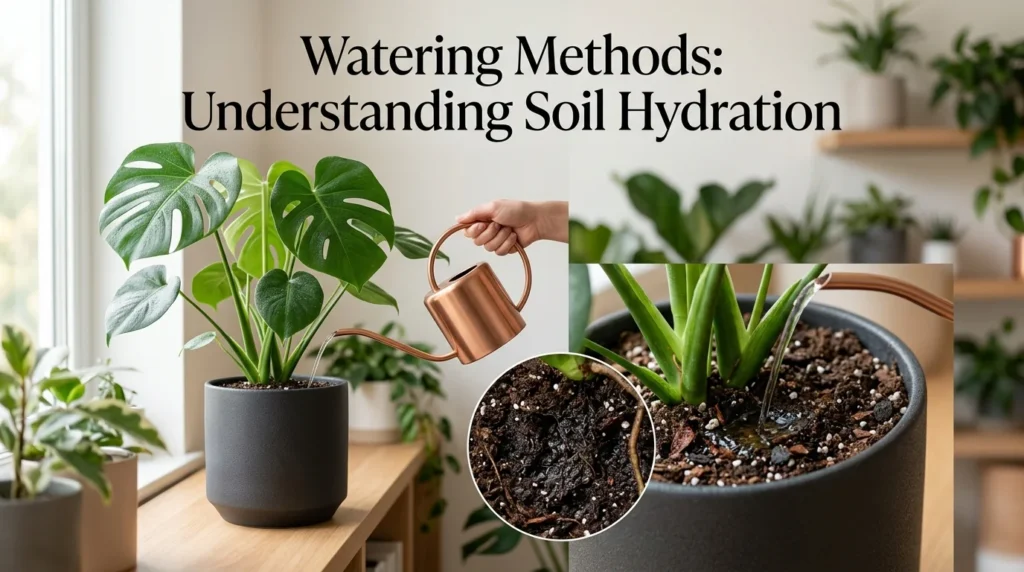
Watering Methods: Understanding Soil Hydration
Watering a miniature tree growing in a shallow pot requires a completely different approach than watering standard large houseplants. Small soil volumes dry out fast, so check moisture daily rather than weekly.
The Submersion (Dunking) Method
Fill a clean basin or shallow sink with room-temperature water. Submerge the entire bonsai container into the water up to the lower trunk base. Leave the pot submerged for 5 to 10 minutes until air bubbles stop rising to the surface. Lift the pot out, let all excess water drain out completely, and place it back on its saucer. This method ensures every inch of dry inner soil is thoroughly saturated.
Top-Watering with a Fine Rose Spray
Use a specialty bonsai watering can equipped with a microscopic mesh spray nozzle (rose). Gently rain water over the leaves and soil surface, wait two minutes for the initial layer to soak in, then repeat until liquid runs freely out of the bottom drainage holes.
When to Water
Never water on a rigid calendar schedule. Check your tree daily by pushing a wooden chopstick or your finger half an inch into the soil medium. If the top soil layer feels damp and cool, wait. When the top surface feels slightly dry to the touch, water thoroughly.
Soil and Growing Medium Requirements
Standard commercial potting soil or dense backyard dirt will destroy a bonsai tree’s root system. Shallow pots demand a highly porous, well-draining substrate that holds structural space for oxygen while retaining micro-moisture around fine root hairs.
Components of an Ideal Soil Blend
- Akadama: Mined volcanic clay from Japan that holds moisture and nutrients without collapsing. It breaks down slowly, signaling when repotting is needed.
- Pumice: Porous white volcanic rock that holds water, absorbs nutrients, and provides light aeration.
- Lava Rock (Scoria): Hard red or black volcanic rock that creates structural space, drainage, and root splitting.
- Organic Pine Bark: Added in small amounts (10–20%) for tropical indoor species to retain moisture in dry air environments.
A reliable mix for indoor Ficus or Hawaiian Umbrella trees consists of 40% Akadama, 30% Pumice, 20% Lava Rock, and 10% Fine Pine Bark.
Temperature Control and Draft Prevention
Tropical indoor trees thrive within consistent warmth and suffer when exposed to rapid temperature shifts. Keep them between 65°F and 80°F (18°C–27°C) year-round, and move pots away from drafty windows and air-conditioning vents.
- Ideal Temperature Range: Maintain indoor room temperatures between 65°F and 80°F (18°C to 27°C) year-round.
- Minimum Threshold: Never expose tropical species to temperatures below 55°F (13°C). Exposure to freezing temperatures will kill tropical species within hours.
- Draft Hazards: Keep pots away from open winter windows, exterior doorways, drafty air conditioning vents, and direct heat streams from space heaters or radiator units.
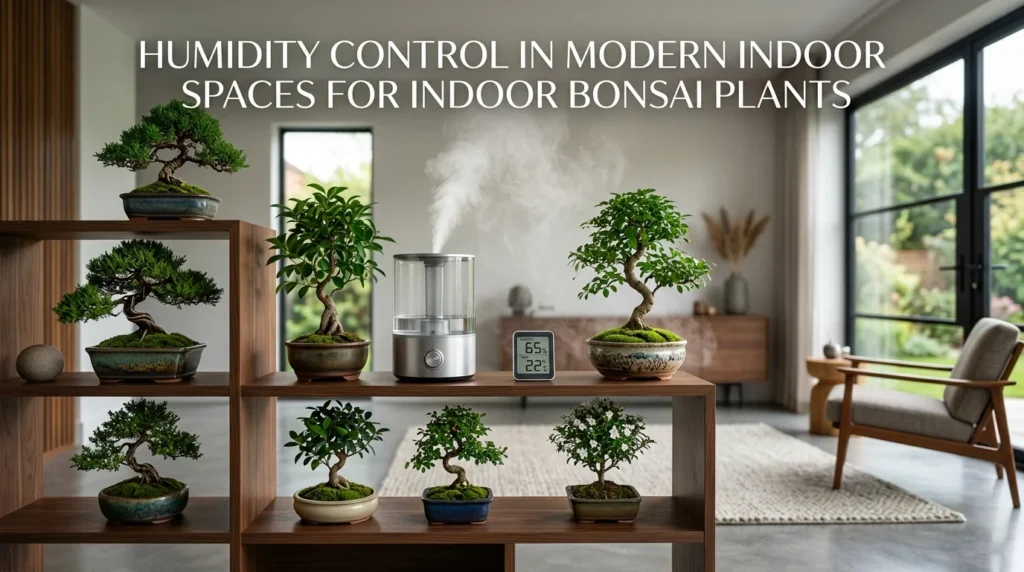
Humidity Control in Modern Indoor Spaces
Modern home heating and cooling systems extract moisture from indoor air, dropping humidity levels below the 50% to 70% range that keeps tropical foliage lush and healthy. Dry air shows up as crispy brown leaf tips and edges.
Effective Ways to Elevate Humidity
- Humidity Trays: Place shallow plastic or ceramic trays filled with decorative gravel and water directly under the pot. Ensure the container bottom rests above the water level on top of the stones so roots do not sit in water.
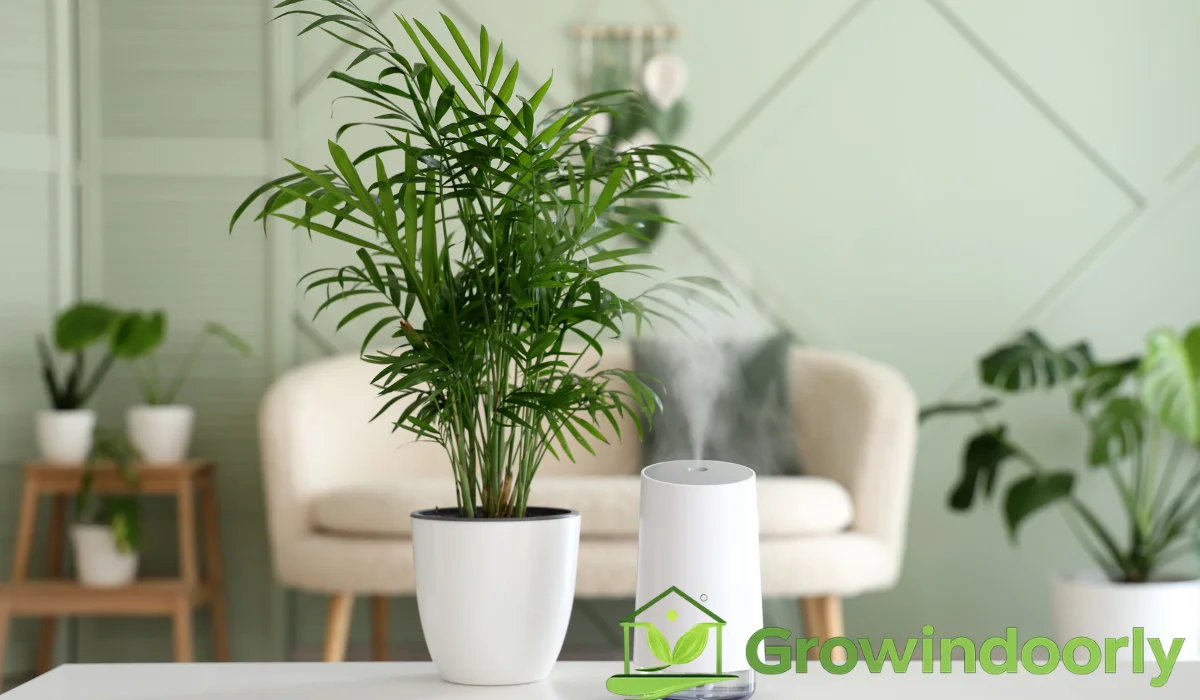
- Ultrasonic Room Humidifiers: Position a cool-mist humidifier 3 to 5 feet from your tree display to maintain consistent moisture in the surrounding air.
- Plant Grouping: Group multiple indoor houseplants together to create a humid microclimate through natural leaf transpiration.
Avoid spraying foliage with hand spray bottles; misting only raises humidity for a few minutes and wets the foliage, which promotes fungal leaf-spot diseases.
Fertilizer Protocols for Shallow Containers
Because bonsai pots hold very small amounts of soil, regular watering washes essential nutrients out through the drainage holes. Feed lightly but consistently during the growing season to replace what watering removes.
Fertilizer Types and Application
Use a balanced, organic liquid fertilizer (such as 5-5-5 or 10-10-10 NPK ratio) enriched with micronutrients like iron, manganese, and zinc. Dilute the liquid fertilizer to half the strength recommended on the product label.
Apply liquid fertilizer every two weeks from early spring through autumn. During winter, reduce feeding to once a month, since growth naturally slows.
Complete Maintenance Routine: Structural Pruning, Wiring, and Root Care
Maintaining miniature trees involves three core techniques: leaf trimming, branch wiring, and root repotting. Tackle them in that order of frequency — trimming is ongoing, wiring is seasonal, and repotting happens every few years.
Structural and Maintenance Pruning
- Maintenance Pruning: Trim back long extension shoots to 1 or 2 original leaf pairs whenever a branch grows beyond the intended canopy outline. This forces the tree to push energy inward, creating dense, fine branching (ramification).
- Structural Pruning: Performed in spring using concave cutters. Remove thick, misplaced, downward-pointing, or crossing branches to clean up the primary skeleton of the tree.
Branch Wiring Steps
- Select anodized aluminum wire thickness equal to roughly one-third the thickness of the branch you intend to bend.
- Anchor the wire securely around the main trunk or an opposing stable branch at a 45-degree angle.
- Wrap the wire smoothly around the branch, keeping coils evenly spaced.
- Gently bend the wired branch into your desired artistic curve using your thumbs as support.
- Remove wire after 3 to 6 months before it bites into expanding bark tissue.
Repotting and Root Trimming
Repot tropical indoor trees every 2 to 3 years in late spring. Carefully remove the tree from its pot, tease away old soil, trim back about one-third of the root mass, and replant in fresh bonsai mix.
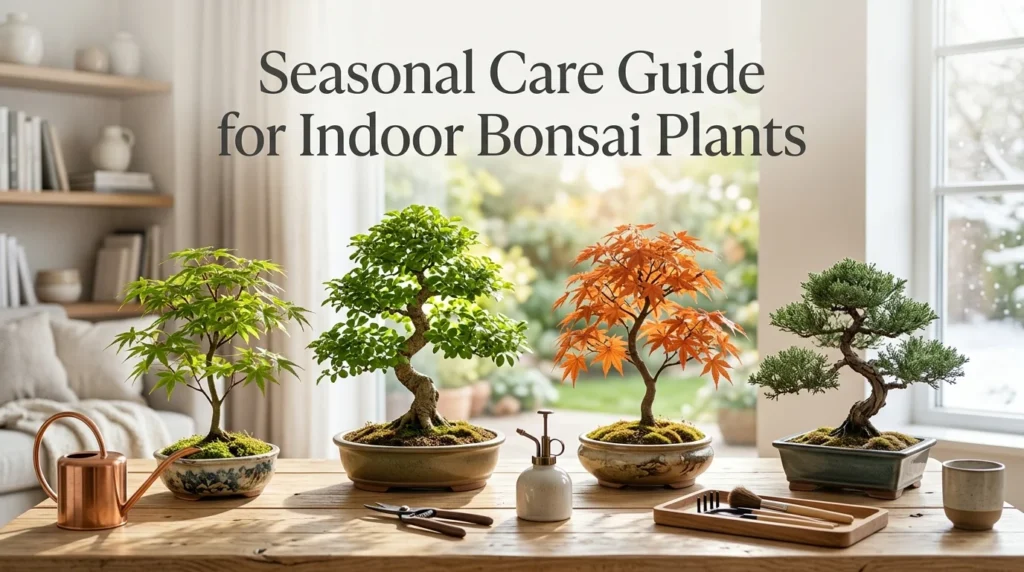
Seasonal Care Guide for Indoor Cultivation
Even indoors, tropical trees respond to subtle seasonal changes in light duration and natural home temperatures:
Spring Care Routine
- Move trees closer to sunny windows or increase grow light photoperiods.
- Resume regular bi-weekly feeding schedules as new bud shoots emerge.
- Perform structural repotting and root pruning before peak summer growth begins.
Summer Care Routine
- Check soil moisture daily; warm rooms cause fast evaporation.
- Rotate pots a quarter-turn weekly to ensure all sides receive equal sunlight exposure.
- Monitor foliage carefully for summer insect pests.
Autumn Care Routine
- Slowly reduce fertilizer applications as natural daylight hours shorten.
- Clean leaves gently with damp microfiber cloths to clear accumulated house dust.
- Seal leaky window drafts near your display setup before winter chills arrive.
Winter Care Routine
- Move pots away from cold glass window panes on freezing nights.
- Turn on supplemental LED grow lights to compensate for short daylight hours.
- Cut back watering frequency, checking soil depth before adding fresh water.
Common Beginner Mistakes to Avoid
- Over-Watering Soil: Keeping soil constantly waterlogged prevents oxygen from reaching roots, causing anaerobic root rot and rapid leaf loss.
- Keeping Temperate Trees Indoors: Buying outdoor Junipers or Pines and keeping them inside heated rooms year-round kills the trees due to lack of winter dormancy.
- Using Standard Potting Soil: Planting small trees in thick, heavy potting soil holds excessive water, suffocates fine roots, and causes root rot.
- Neglecting Direct Sunlight: Placing trees in dark room corners far from windows or light fixtures leads to weak, elongated stems and heavy leaf drop.
- Leaving Wire On Too Long: Forgetting to remove styling wire allows metal to cut into growing stems, creating permanent scars along the bark.
Troubleshooting Common Problems
| Symptoms | Root Cause | Practical Fix |
| Leaves turning yellow and falling off rapidly | Over-watering or insufficient natural light | Allow top soil layer to dry out slightly before watering; move closer to bright window or grow light. |
| Crispy, dry brown leaf tips | Low humidity levels or underwatering | Set pot on a water-filled humidity tray; check soil daily for moisture. |
| Long, leggy stems with massive leaves | Severe lack of light exposure | Increase grow light photoperiod to 14 hours daily; move tree to a south window. |
| Fine webbing under leaves | Spider mite pest infestation | Wipe foliage clean with wet cloth; spray leaves thoroughly with insecticidal neem oil soap. |
| White cottony spots on stem joints | Mealybug infestation | Dab pests directly using a cotton swab dipped in rubbing alcohol; monitor weekly. |
Advanced Expert Recommendations
- Inorganic Soil Sifting: Always sift fresh volcanic soil components through fine wire mesh screens to remove small dust particles before potting. Dust settles into concrete-like layers at the bottom of shallow pots, blocking air circulation.
- Anchor Wiring: Always secure your tree into the pot by threading soft copper wire through the bottom drainage holes, looping over major roots, and twisting tight. If a freshly repotted tree moves inside the pot, delicate new root hairs will snap before establishing.
- Microbial Inoculation: Add beneficial mycorrhizal fungi spores directly to fresh root surfaces during repotting. These beneficial fungi form symbiotic bonds with tree roots, increasing nutrient and water absorption by up to 300%.
Conclusion
Mastering the care of indoor bonsai plants is a deeply satisfying journey that blends horticultural science with living artistry. Stay consistent with light, water, and feeding, and your tree will reward you with decades of beauty.
Pet Safety
Bonsai species vary widely in pet safety, so know your tree before letting animals near it. Ficus bonsai contain milky latex sap that can cause drooling, mouth irritation, vomiting, and skin rashes in cats and dogs, while dwarf jade (Portulacaria afra) is listed as non-toxic to pets. Display Ficus and other sap-producing species on high shelves or in rooms pets cannot access, and choose naturally pet-safe species like dwarf jade for low tables. If your pet chews bark or leaves, remove plant material from its mouth, offer fresh water, and call your veterinarian promptly.
Knowledge Check
1. Which species is suitable for growing indoors year-round?
A) Japanese Mountain Maple
B) Ficus Retusa
C) Scots Pine
D) Outdoor Juniper
2. What is the most reliable way to determine when your tree needs water?
A) Water once every Monday morning
B) Check if the top half-inch of soil surface feels dry
C) Wait until all leaves drop to the floor
D) Water only when the calendar changes months
3. Why do temperate species like Junipers die when kept indoors continuously?
A) Indoor air contains too much oxygen
B) Pots are usually too deep
C) They require a cold outdoor winter dormancy period
D) They dislike volcanic Akadama soil
4. What is the main purpose of using concave branch cutters?
A) To cut thick copper anchoring wire
B) To make hollow cuts flush against the trunk for smooth bark healing
C) To scrape moss off decorative surface rocks
D) To dig aeration holes into dense soil
5. Which window exposure provides the best natural light for tropical indoor trees?
A) North-facing window
B) South-facing window
C) Window blocked by heavy outdoor trees
D) Windowless interior basement wall
6. What relative humidity range keeps tropical indoor trees healthy?
A) 10% to 20%
B) 25% to 35%
C) 50% to 70%
D) 90% to 100%
Answer Key
- B
- B
- C
- B
- B
- C
Frequently Asked Questions
Can any tree be turned into an indoor bonsai?
No, only tropical and subtropical species like Ficus, Dwarf Jade, and Hawaiian Umbrella trees can live indoors year-round. Temperate outdoor species like Pines, Maples, and Junipers require freezing winter cold periods to survive long-term and will die if kept inside continuously.
How often should I water my indoor bonsai tree?
Water your tree whenever the top half-inch of soil feels slightly dry to the touch, rather than following a fixed schedule. Use the soak-and-drain or full submersion method to ensure all volcanic soil particles are completely saturated every time you water.
Do indoor bonsai trees need grow lights?
If you lack a bright south-facing window receiving at least 4 to 6 hours of direct sunlight daily, supplemental LED grow lights are necessary. Run full-spectrum lights 6 to 12 inches above the canopy for 12 to 14 hours daily to maintain dense foliage.
Why are the leaves falling off my new indoor Ficus bonsai?
Ficus trees react to sudden environmental changes by dropping leaves. Moving your tree to a new room, light shifts, drafty locations, or over-watering all trigger leaf loss. Place your tree in a bright, stable spot and maintain consistent watering to encourage new growth.
How do I trim my indoor bonsai tree to keep its small shape?
Trim new growth back using sharp bonsai shears whenever a stem grows past the intended canopy profile. Cut stems back to leave just 1 or 2 pairs of original leaves, which encourages the tree to produce finer, denser interior branching.
What is the best soil mix for an indoor bonsai?
The best medium is an inorganic, fast-draining blend of 40% Akadama, 30% Pumice, 20% Lava Rock, and 10% Fine Organic Pine Bark. Avoid using standard dense garden soil or heavy potting mixes that trap water and suffocate root systems.
How often do indoor bonsai trees need repotting?
Young, actively growing indoor trees generally need repotting every 2 years, while older mature trees can go 3 to 5 years. Repot in late spring when roots circle tight around the bottom perimeter of the pot container.
Are indoor bonsai trees safe for households with pets?
Some species like Ficus contain milky latex sap that can cause mild stomach upset or skin irritation in dogs and cats if chewed. Succulent species like Dwarf Jade (Portulacaria afra) are non-toxic to pets. Keep toxic varieties on elevated shelves out of reach.

Megan Foster is the founder and lead writer of GrowIndoorly.com, where she shares practical, easy-to-follow advice for growing healthy indoor plants. She is passionate about helping beginners and experienced plant lovers build thriving indoor gardens with confidence. Megan writes about houseplants, indoor herbs, succulents, hydroponics, grow lights, plant propagation, watering, soil care, and everyday plant maintenance.
She enjoys researching trusted gardening techniques and transforming them into simple, actionable guides that readers can easily apply at home. Her goal is to make indoor gardening more enjoyable and accessible by providing clear, reliable information that helps people keep their plants healthy throughout the year. Whether you’re caring for your first houseplant or expanding your indoor plant collection, Megan’s practical tips are designed to help you grow with confidence.