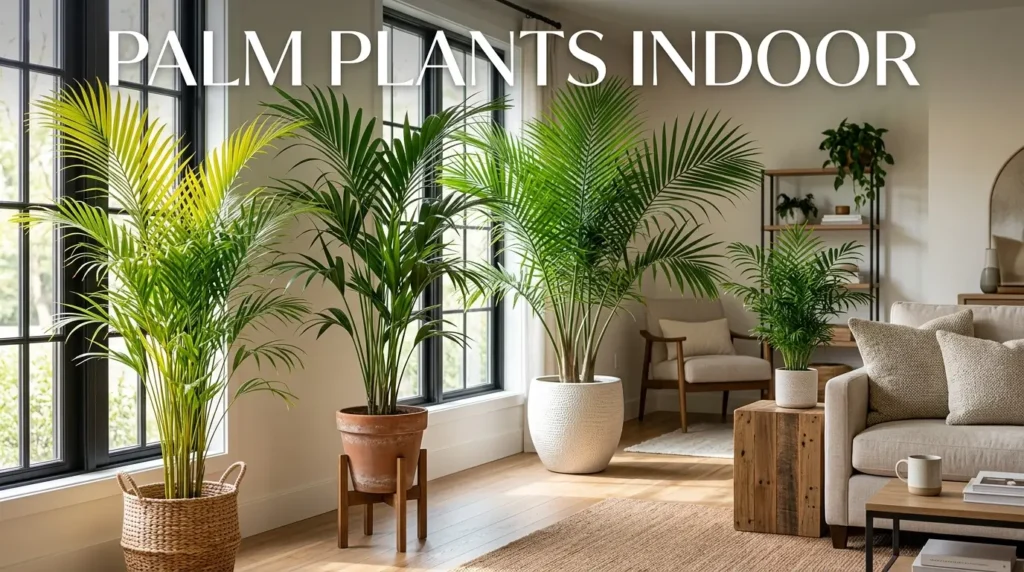
Bringing lush tropical leaves into your home is one of the quickest ways to transform any room. Adding palm plants indoor spaces instantly creates a relaxing, resort-like atmosphere.
However, keeping these tropical beauties vibrant inside a modern house can feel tricky. Many beginner plant parents struggle with browning leaf tips, sudden leaf drop, and persistent indoor pests.
Choosing the right palm plants indoor environments actually tolerate is the key to long-term success. Not all palms enjoy indoor living, but selecting low-maintenance varieties makes caring for them significantly easier.
In this ultimate guide, you will learn how to light, water, and feed palm plants indoor setups require so your leafy companions thrive for years.
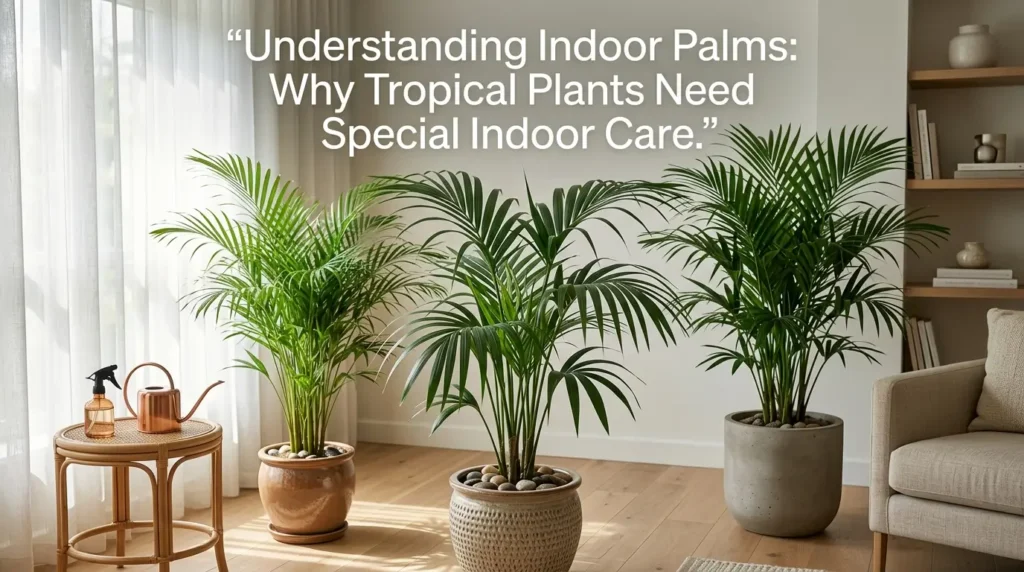
Understanding Indoor Palms: Why Tropical Plants Need Special Indoor Care
Indoor palms belong to the Arecaceae botanical family. In their native habitats ranging from tropical rainforest understories to sunny coastal regions they enjoy abundant warmth, high ambient humidity, bright filtered light, and moist, extremely well-draining soil.
When brought indoors, these plants experience a drastically different environment. Indoor air is naturally drier due to HVAC systems, light levels drop significantly, and air circulation is reduced. Understanding this native origin helps explain why tropical foliage reacts so quickly to environmental stress.
Unlike many standard foliage houseplants like pothos or philodendrons, palms have a unique growing structure. Most palms grow from a single central growing tip called an apical meristem or “crown.” If this central crown is damaged by rot, extreme cold, or harsh pruning, the stem cannot regenerate new leaves. This makes proper foundational care essential from day one.
Benefits of Growing Palms Inside Your Home
Integrating living greenery into your interior design offers far more than simple aesthetic value.
- Instant Architectural Elevation: Palms offer towering stems, dramatic fan-shaped or feather-like fronds, and deep green textures that instantly fill empty corners, frame furniture, and soften sharp structural room angles.
- Natural Indoor Humidification: Through transpiration, large-fronded palms pull water up from their root systems and release moisture vapor into dry indoor air, naturalizing room humidity.
- Biophilic Stress Reduction: Surrounding living space with vibrant tropical foliage helps reduce mental fatigue, supports focus, and creates a calming atmosphere.
- Non-Toxic Pet Options: Many popular indoor varieties, such as the Parlor Palm and Majesty Palm, are non-toxic to cats and dogs, making them safe choices for pet owners.
Best Palm Varieties for Indoor Growing
Choosing the right species determines your success. Here are the top palm varieties that adapt best to living indoors:
Parlor Palm (Chamaedorea elegans)
- Lighting Needs: Low to medium indirect light.
- Growth Rate: Slow-growing, rarely exceeding 4 to 6 feet indoors.
- Why Choose It: Exceptionally forgiving, highly tolerant of low light and dry room air, making it the ideal starter palm for beginners.
Areca Palm (Dypsis lutescens)
- Lighting Needs: Bright, indirect light.
- Growth Rate: Moderate growth, reaching 6 to 8 feet indoors.
- Why Choose It: Features arching, feathery fronds that form lush clumps. Works well in living rooms with ample natural light.
Lady Palm (Rhapis excelsa)
- Lighting Needs: Low to bright indirect light.
- Growth Rate: Very slow, reaching 4 to 6 feet indoors.
- Why Choose It: Broad, fan-shaped dark green leaves with segmented lobes. Highly tolerant of lower light levels and temperature fluctuations.
Kentia Palm (Howea forsteriana)
- Lighting Needs: Medium to bright indirect light; tolerates low light.
- Growth Rate: Slow, growing up to 8 to 10 feet indoors over many years.
- Why Choose It: Elegant arching fronds with an extremely durable nature. Highly tolerant of neglect and low humidity.
Ponytail Palm (Beaucarnea recurvata)
- Lighting Needs: Bright indirect to direct sunlight.
- Growth Rate: Slow.
- Why Choose It: Botanically a succulent rather than a true palm, this plant stores water in its swollen trunk base, making it virtually unkillable by underwatering.
Majesty Palm (Ravenea rivularis)
- Lighting Needs: Bright indirect light to partial direct sun.
- Growth Rate: Moderate.
- Why Choose It: Features classic, deep green tropical fronds, but requires abundant light, consistent moisture, and high humidity to prevent leaf browning.
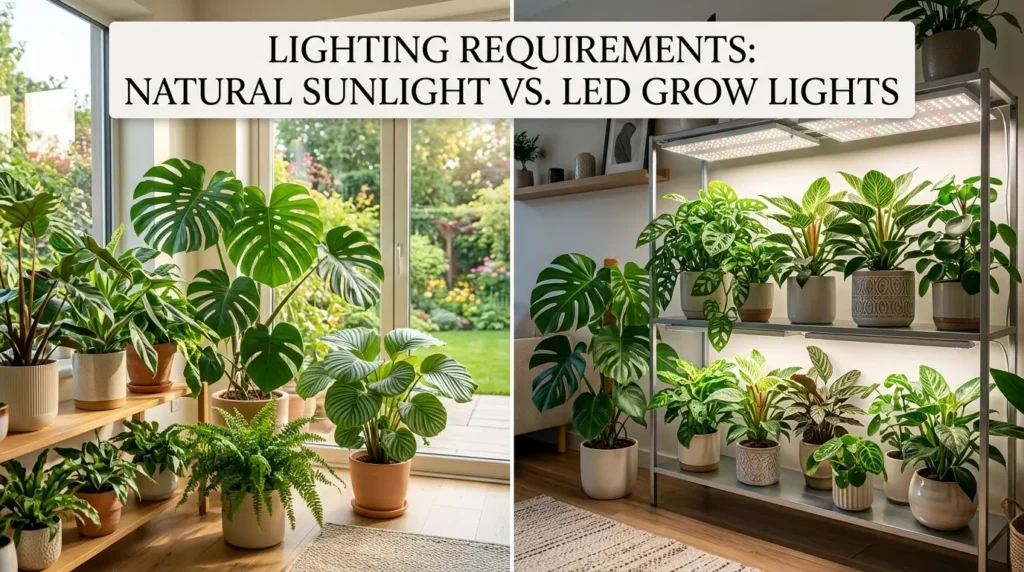
Lighting Requirements: Natural Sunlight vs. LED Grow Lights
Light is the fuel that keeps fronds green and vibrant. Without proper light, your plant cannot photosynthesize efficiently, leading to weak stem growth and leaf yellowing.
Natural Sunlight Guidelines
- Bright, Indirect Light: Most indoor species prefer a spot within 3 to 5 feet of a bright East or South-facing window, filtered through a sheer curtain. Direct sun will scorch delicate fronds, turning them yellow or bleached white.
- Low Light Tolerance: Species like the Parlor Palm and Lady Palm can survive near North-facing windows or further back into a room, though their growth rate will slow significantly.
Supplemental LED Grow Lights
When natural window light is inadequate especially during winter months full-spectrum LED grow lights provide an excellent lighting solution.
- Light Quality: Select full-spectrum LEDs (5000K–6500K color temperature) to mimic natural daylight.
- Distance: Position LED fixtures 12 to 24 inches above the uppermost fronds to prevent heat stress.
- Duration: Run grow lights for 12 to 14 hours daily using a regular light timer to maintain consistent photosynthetic activity.
Mastering Watering Techniques
Watering mistakes are the leading cause of palm failure indoors. Overwatering causes root rot, while severe underwatering causes dry, brown leaves. Always water in the morning so excess moisture evaporates during the day, and empty the saucer within 30 minutes so roots never sit in standing water.
The Touch-Test Rule
Before watering, check the soil moisture. Insert your finger 2 inches down into the potting mix.
- Moist Soil: Wait a few days before checking again.
- Dry Soil: Water thoroughly until excess liquid drains freely from the bottom drainage holes.
How to Water Correctly
- Drench thoroughly: Apply water evenly across the entire soil surface until water drains from the bottom holes.
- Discard Drain Water: Never allow the container bottom to sit directly in standing tray water. Drain trays completely after 20 minutes to prevent root asphyxiation.
- Water Quality: Palms are sensitive to heavy tap water additives like fluoride, chlorine, and excess minerals, which burn leaf tips. Use filtered water, rainwater, or distilled water whenever possible.
Ideal Potting Mix and Soil Requirements
Palms require root aeration. Dense, cheap potting soils retain excessive water around roots, leading to anaerobic conditions and root rot.
Potting Mix Formula
Create an ideal, well-draining palm soil by mixing:
- 40% High-quality peat moss or coco coir (for light moisture retention)
- 30% Coarse perlite or pumice (for continuous aeration)
- 20% Fine pine bark mini-nuggets (for structural drainage)
- 10% Worm castings (for natural slow-release organic nutrients)
Container Selection
Always select containers featuring generous bottom drainage holes. Terracotta, heavy glazed ceramic, and sturdy plastic planters work well, provided excess water escapes easily.
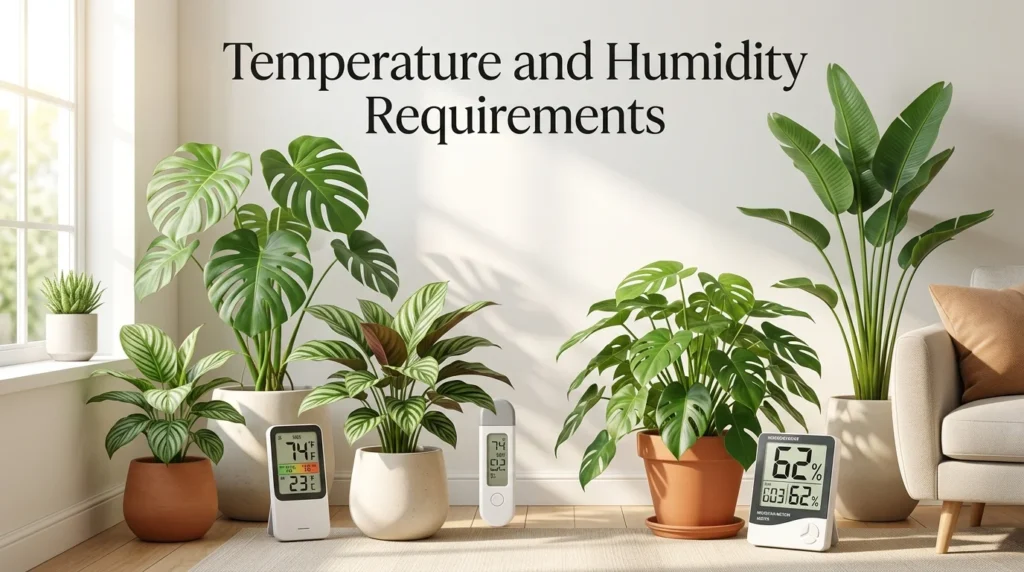
Temperature and Humidity Requirements
Because indoor palms originate in tropical climates, indoor climate control plays an important role in long-term health. Keep palms away from heating vents, radiators, and cold entryways, where sudden blasts of hot or dry air scorch frond tips and trigger leaf drop.
Temperature Ranges
- Ideal Range: Keep indoor temperatures between 65°F and 85°F (18°C–29°C).
- Cold Stress: Keep plants away from exterior doors, drafty windows, and air conditioning vents. Temperatures dropping below 50°F (10°C) can cause foliage cold damage.
Humidity Optimization
Most homes sit at 30% to 40% relative humidity, whereas tropical palms thrive best at 50% to 70% humidity.
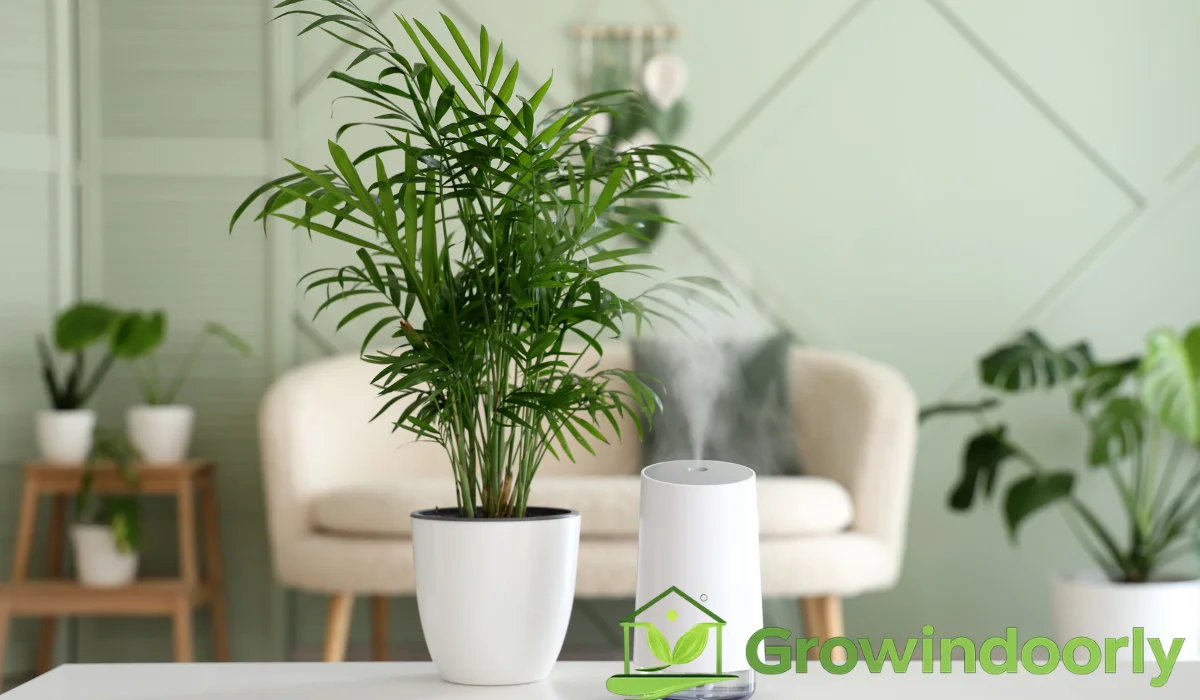
- Ultrasonic Humidifiers: Place a room humidifier 3 to 4 feet away from your plants.
- Pebble Trays: Fill a shallow tray with decorative stones, pour in water just below the stone tops, and set the pot directly on top of the stones.
- Grouping Plants: Grouping multiple houseplants creates a humid microclimate through collective transpiration.
Fertilizer and Nutrient Management
Palms require balanced, consistent nutrition during active growth, but over-fertilizing causes root damage and burnt leaf margins. If you notice a white crust forming on the soil surface, flush the pot thoroughly with filtered water to wash away accumulated fertilizer salts.
Recommended Fertilizer Specs
Use a specialized palm fertilizer formulated with a 3-1-3 or 3-1-2 N-P-K ratio that includes micro-nutrients like magnesium, manganese, and iron.
- Spring and Summer: Apply liquid palm fertilizer at half-strength every 4 weeks, or use a slow-release granular fertilizer once in early spring.
- Autumn and Winter: Cease fertilizing completely when plant growth slows down naturally during shorter days.
Essential Routine Maintenance
Keeping foliage clean and well-maintained maximizes light absorption and keeps pests away.
- Dusting Fronds: Microscopic dust coats frond surfaces over time, blocking light absorption. Wipe down fronds monthly using a damp cloth or give small pots a gentle warm-water shower.
- Pruning Rules: Only trim leaves that are completely brown, dry, and dead. Trim near the stem base using disinfected pruning shears. Avoid cutting off yellowing leaves prematurely, as the plant pulls mobile nutrients from older foliage to support new center growth.
- Rotating Pots: Rotate your pot 90 degrees every two weeks to prevent asymmetric growth toward light sources.
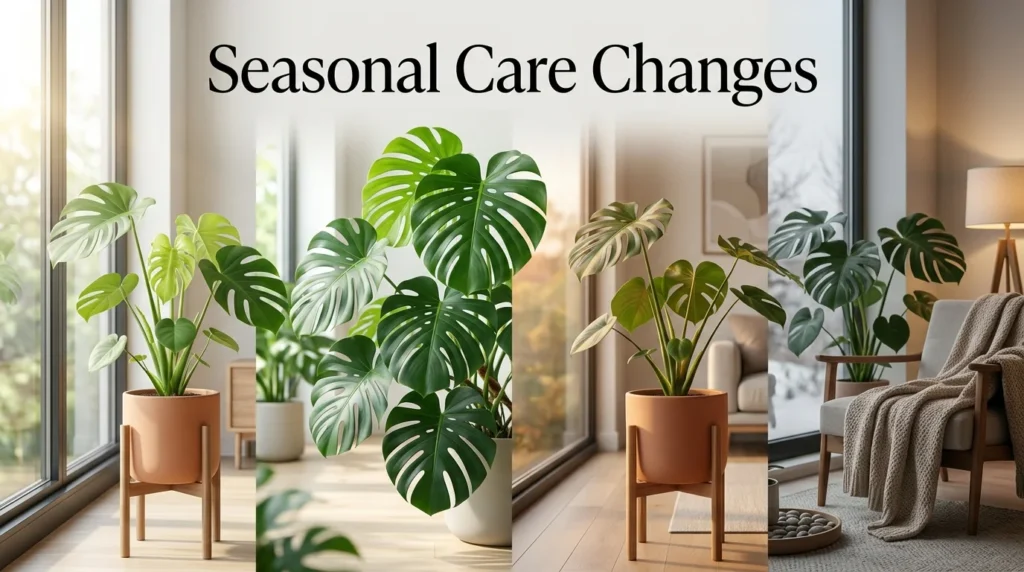
Seasonal Care Changes
As natural sunlight levels shift throughout the year, care routines must adapt accordingly.
Spring and Summer Care
- Increased Water: Soil dries faster during warm days; inspect moisture levels twice weekly.
- Active Feeding: Maintain regular fertilizer schedules to support new frond formation.
- Growth Inspections: Look out for rapid growth surges and repot if roots crowd the pot bottom.
Autumn and Winter Care
- Reduced Water Requirements: Cooler temperatures and shorter days slow water evaporation. Cut watering frequency by roughly half.
- Zero Fertilizing: Stop applying nutrients entirely to avoid soil salt accumulation.
- Heating Adjustments: Keep foliage away from active space heaters, radiators, and warm air vents.
Common Beginner Mistakes to Avoid
- Using Containers Without Drainage: Planting directly into sealed pots traps standing water, rotting roots quickly.
- Over-Pruning Partially Brown Fronds: Trimming away leaves that are still half-green deprives your plant of vital photosynthetic energy.
- Placing Palms in Direct Sunlight: Exposing indoor foliage to unfiltered, harsh midday sunlight burns leaf tissue.
- Repotting Too Frequently: Palms prefer slightly tight root conditions. Only repot when roots completely fill the container, typically every 2 to 3 years.
- Ignoring Tap Water Quality: Using heavily chlorinated tap water repeatedly leads to scorched, browning frond tips.
Troubleshooting Indoor Palm Problems
| Symptom | Primary Cause | Immediate Solution |
| Brown Leaf Tips | Dry air, tap water chemicals, underwatering | Raise room humidity, use filtered water, keep soil evenly moist. |
| Yellowing Lower Fronds | Overwatering, lack of light, natural aging | Allow top 2 inches of soil to dry out, increase indirect light. |
| Wilting & Drooping | Severe underwatering or root rot from overwatering | Check root mass health; adjust moisture balance based on root condition. |
| Webbing under Fronds | Spider Mite infestation | Wipe fronds clean, spray foliage with insecticidal soap or neem oil. |
| White Cottony Spots | Mealybug infestation | Wipe insects away using rubbing alcohol swabs; apply neem oil treatment. |
Advanced Expert Tips for Lush Growth
- Flush Potting Soil: Every four months, run clear filtered water through the pot for several minutes to leach out built-up mineral salts from fertilizers.
- Root Aeration: Gently poke a thin chopstick 3 to 4 inches into the soil once a month to break up compaction without damaging major roots.
- Dynamic Air Flow: Use an oscillating fan set to low across the room. Subtle air movement strengthens plant stalks and prevents fungal spores from settling on wet foliage.
Conclusion
Growing vibrant indoor palms comes down to consistent, mindful plant care and understanding their unique needs. By matching your home’s natural lighting with an adaptable variety such as the sturdy Parlor Palm or elegant Kentia Palm you immediately set your indoor garden up for long-term success without unnecessary frustration.
Creating the right foundation is essential for continuous growth. Keep potting soil light, airy, and well-draining to prevent root issues. Water thoroughly only when the top two inches of soil feel dry to the touch, and maintain warm room temperatures alongside comfortably elevated ambient humidity levels.
Protecting delicate foliage requires everyday attention to daily habits. Avoid over-pruning green tissue, as plants draw essential nutrients from aging leaves.
With these simple care steps, your home will thrive with lush, tropical foliage all year long. Bringing nature inside transforms your living areas, boosting mood and creating a peaceful atmosphere. Consistent attention to lighting, moisture, and maintenance ensures your tropical collection remains vibrant and beautiful for years to come.
Pet Safety
Most true indoor palms are reassuringly pet-friendly: parlor palm, areca palm, majesty palm, kentia palm, lady palm, and ponytail palm are all listed as non-toxic to cats and dogs. The dangerous exception is the sago palm (Cycas revoluta), which is not a true palm at all — every part of it, especially the seeds, is highly toxic and can cause liver failure in pets, so never bring one into a home with curious animals. Even with non-toxic varieties, discourage chewing, since swallowed fronds can still cause mild stomach upset, and keep freshly fertilized or treated plants out of reach until any products have been fully watered in.
Knowledge Check
Test your understanding of indoor palm care with these quick questions:
1. What is the most common cause of dry, browning leaf tips on indoor palms?
A) Excess fertilizer
B) Low humidity and tap water chemicals
C) Too much pot space
D) Over-pruning lower leaves
2. How far down should the potting soil dry before watering your palm plant?
A) The soil should remain completely soaked at all times
B) Dry out completely to the bottom of the pot
C) The top 2 inches of soil should feel dry
D) Only water once every three months
3. Which indoor palm variety is renowned for surviving well in lower light conditions?
A) Majesty Palm
B) Parlor Palm
C) Coconut Palm
D) Date Palm
4. Why should you avoid cutting off fronds that are only partially yellow?
A) Yellow fronds protect plants from indoor pests
B) Cutting fronds stops water absorption completely
C) The plant extracts remaining mobile nutrients from them to fund new growth
D) Yellow fronds store extra soil minerals
5. What is the ideal N-P-K fertilizer ratio for feeding established indoor palms?
A) 1-1-1
B) 10-30-10
C) 3-1-3 or 3-1-2
D) 0-10-10
6. Where does new leaf growth originate on an indoor palm plant?
A) The central growing tip (apical meristem/crown)
B) The ends of old leaf tips
C) Underground root tips
D) Side stem nodes
7. Which indoor pest commonly creates fine webbing on the underside of palm fronds?
A) Fungus gnats
B) Spider mites
C) Earthworms
D) Aphids
8. What type of lighting do most indoor palm plants prefer?
A) Harsh direct midday sun
B) Complete darkness
C) Bright, indirect light
D) Direct artificial red light only
9. Why should indoor palm containers always have bottom drainage holes?
A) To let air flow into the leaves
B) To prevent trapped water from rotting the root system
C) To allow roots to grow out into the room
D) To make the pot lighter to carry
Answer Key:
- B
- C
- B
- C
- C
- A
- B
- C
- B
Frequently Asked Questions
Why are the tips of my indoor palm leaves turning brown?
Brown frond tips are usually caused by low ambient humidity, dry air from indoor heating, underwatering, or mineral buildups from hard tap water. Boost humidity using a room humidifier, keep soil consistently damp, and switch to filtered water.
How often should I water my indoor palm plant?
Water whenever the top 2 inches of potting soil feel dry to the touch. This usually means watering every 7 to 10 days during active spring and summer growth, and every 14 to 21 days during cold winter months.
Do indoor palms need direct sunlight?
No, most indoor palm species prefer bright, indirect sunlight. Direct midday sunlight burns delicate foliage fronds, while low light slows growth. Place your plant near an East or South-facing window filtered with sheer curtains.
Is the Parlor Palm safe for indoor cats and dogs?
Yes, the Parlor Palm (Chamaedorea elegans) is completely non-toxic to cats and dogs according to ASPCA standards, making it an excellent choice for pet owners.
How do I get rid of spider mites on indoor palm plants?
Treat spider mites by wiping down the underside of fronds with a damp cloth, washing the plant with warm water, and applying organic neem oil or insecticidal soap sprays every 7 days until pests are gone.
Should I cut off yellow or brown palm fronds?
Cut off fronds only when they become completely dry and fully brown. Do not remove partially green or yellowing fronds too early, as the plant still extracts valuable nutrients from them to support new growth.
Why is my indoor palm dropping leaves rapidly?
Rapid leaf drop is typically triggered by environmental shock, sudden cold drafts, severe root damage from overwatering, or extreme root dryness. Keep your plant in a stable environment between 65°F and 85°F.
Can I grow palms indoors using grow lights?
Yes, full-spectrum LED grow lights work very well for palms. Place LED fixtures 12 to 24 inches above the top fronds and run them for 12 to 14 hours daily to maintain optimal light levels.

Megan Foster is the founder and lead writer of GrowIndoorly.com, where she shares practical, easy-to-follow advice for growing healthy indoor plants. She is passionate about helping beginners and experienced plant lovers build thriving indoor gardens with confidence. Megan writes about houseplants, indoor herbs, succulents, hydroponics, grow lights, plant propagation, watering, soil care, and everyday plant maintenance.
She enjoys researching trusted gardening techniques and transforming them into simple, actionable guides that readers can easily apply at home. Her goal is to make indoor gardening more enjoyable and accessible by providing clear, reliable information that helps people keep their plants healthy throughout the year. Whether you’re caring for your first houseplant or expanding your indoor plant collection, Megan’s practical tips are designed to help you grow with confidence.