Watching healthy green stems turn mushy and collapse is a heartbreaking rite of passage for almost everyone growing indoor cactus plants. The culprit is almost always too much water combined with too little light — a fixable combination once you understand desert rhythms.
Learning how to nurture indoor cactus plants successfully comes down to replicating their native dry environments right on your windowsill or desk. Think bright light, gritty fast-draining soil, and deep but infrequent waterings.
When you master basic care, indoor cactus plants offer striking geometric forms, low-maintenance charm, and dramatic seasonal blooms without demanding daily attention. A well-grown cactus can live for decades as a sculptural centerpiece.
In this comprehensive guide, you will master lighting setups, potting mixes, watering techniques, seasonal schedules, and simple fixes for the most common problems.
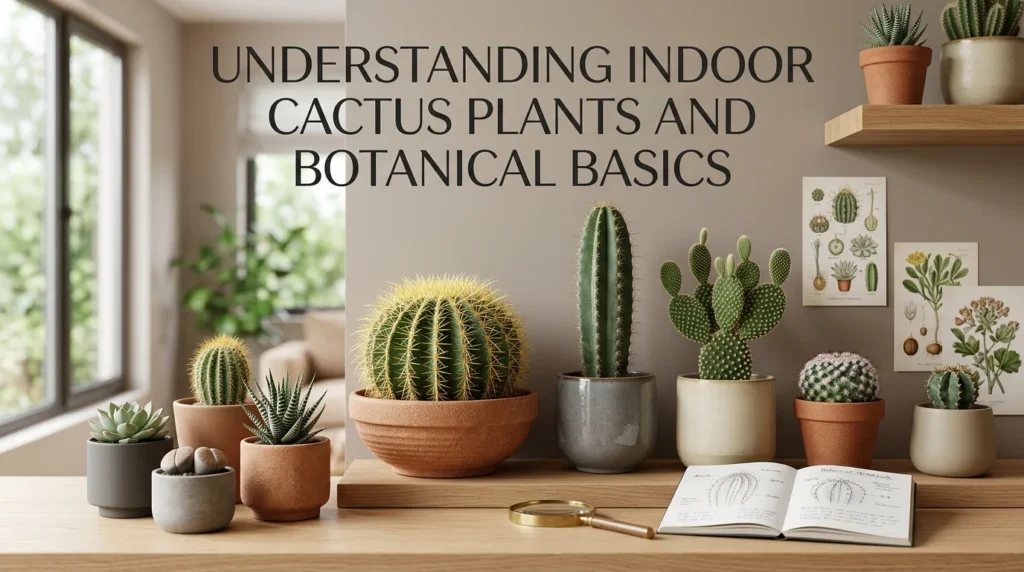
Understanding Indoor Cactus Plants and Botanical Basics
Cacti are specialized succulents belonging to the botanical family Cactaceae. While almost all cacti are succulents, not all succulents are cacti. The single defining feature that separates cacti is the areole — a small cushion-like bump from which spines, flowers, and new stems emerge.
In their native habitats across North and South America, cacti evolved to endure long periods of extreme drought followed by brief, intense rainfall. Their thick stems store water, and their spines are actually modified leaves that reduce moisture loss.
When grown inside homes, cacti do not have access to natural desert wind, intense outdoor UV rays, or dramatic day-night temperature swings. Your job is to recreate the most important parts of that environment: strong light and fast-draining soil.
Why Growing Cacti Indoors is Important and Rewarding
Cultivating desert plants inside residential spaces brings a unique combination of structural natural beauty and genuinely low-maintenance care. They are ideal for travelers, beginners, and anyone with a bright windowsill.
Adding desert greenery into your indoor space offers clear lifestyle advantages:
- Low Maintenance Needs: Cacti store water inside their stem tissues, making them remarkably tolerant of busy travel schedules or occasional forgetful watering habits.
- Striking Interior Aesthetics: Their unique geometric shapes, ribbed textures, colorful spines, and sculptural forms create eye-catching focal points in modern room decor.
- Compact Living Spaces: Most indoor varieties grow slowly and maintain small footprints, making them ideal choices for windowsills, office desks, and apartment shelving.
- Seasonal Surprises: With proper winter rest, many indoor varieties reward growers with vibrant, oversized flowers during spring and summer months.
Key Benefits and Advantages of Indoor Cacti
Growing desert plants inside living quarters provides several practical environmental and wellness benefits:
- Improved Living Space Comfort: Cacti continue to perform carbon dioxide exchange through specialized night-time respiration (CAM photosynthesis), making them excellent nighttime companions for bedrooms.
- Resilience to Low Humidity: While tropical houseplants struggle in dry home air, cacti thrive in low-humidity environments without requiring foggers or spray bottles.
- Long Lifespan: With basic attention to soil drainage and proper lighting, indoor cacti can live for decades, growing into prized living heirlooms.
- Minimal Repotting Demands: Slow growth rates mean cacti only require repotting every two to three years, reducing continuous maintenance costs and effort.
Different Types of Cacti: Desert vs. Forest Varieties
Not all cacti live in sun-scorched sand dunes. Understanding the distinction between desert cacti and forest cacti matters, because their water and light needs differ significantly:
Desert Cacti
Desert species originate from dry, arid regions with intense sunlight, high heat, and lean, gritty soils. They need maximum direct sun, very fast-draining mineral soil, and long dry periods between waterings.
Forest (Epiphytic) Cacti
Forest species originate from tropical rain forests, growing on tree branches rather than dry dirt. Examples include the Christmas Cactus (Schlumbergera), Thanksgiving Cactus, and Orchid Cactus (Epiphyllum). They prefer indirect light, higher humidity, and more frequent watering than their desert relatives. They lack sharp spines, featuring flat, segmented stem pads instead.

Essential Tools and Equipment Required
Having the correct gardening tools makes handling spiky plants safe and straightforward while keeping stems unmarked:
- Terracotta or Unglazed Clay Pots: Clay pots allow moisture to evaporate through their porous walls, preventing water from pooling around delicate roots.
- Long Metal Tongs or Heavy Leather Gloves: Protects your hands from sharp spines when moving or repotting plants.
- Chopsticks or Wooden Dowels: Used to test soil moisture deep in the pot and gently pack fresh dirt around roots without damaging stems.
- Fine-Rose Watering Can: Delivers a slow, targeted stream of water directly to the soil base without spraying the main stem.
- Full-Spectrum LED Grow Lights: Provides artificial sunlight intensity during dark winter months or in dimly lit rooms.
Best Cactus Species for Indoor Growing
Selecting resilient varieties designed for interior light levels makes beginner gardening much more rewarding:
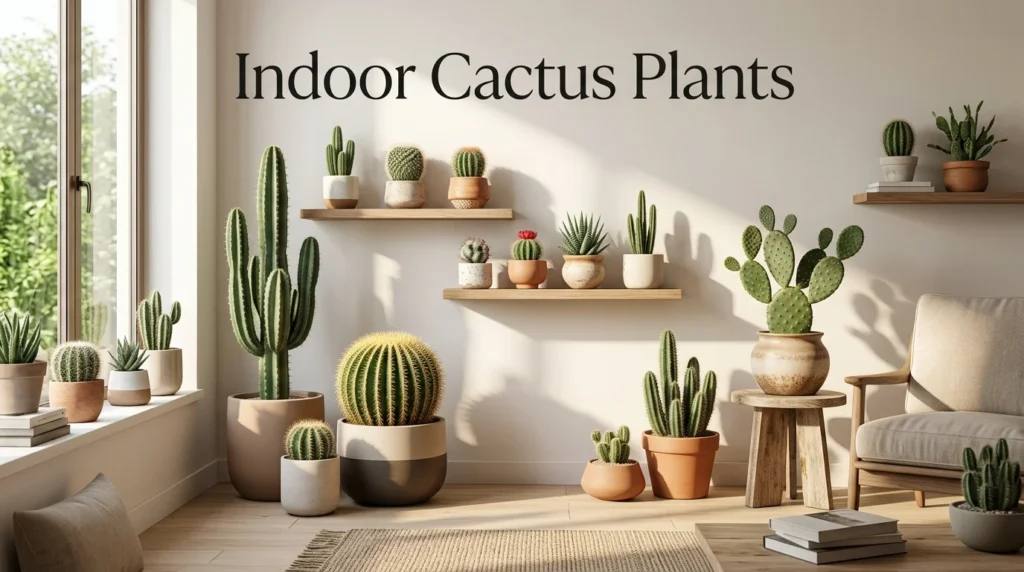
Bunny Ears Cactus (Opuntia microdasys)
Features flat, pad-like stems covered in tiny, golden glochids (soft-looking barbed bristles) instead of long spines. Handle with tongs or gloves — glochids detach easily and irritate skin.
Golden Barrel Cactus (Echinocactus grusonii)
A classic globe-shaped cactus featuring bold vertical ribs protected by sharp golden-yellow spines. It loves maximum sun and rewards patience with a crown of yellow flowers in summer.
Christmas Cactus (Schlumbergera bridgesii)
A tropical forest cactus featuring smooth leaf-like stem segments that produce brilliant pink, red, or white blooms in winter. Unlike desert types, it prefers indirect light and slightly more frequent watering.
Ladyfinger Cactus (Mammillaria elongata)
Forms dense clusters of slender, cylindrical stems covered in star-shaped yellow or copper spines. It stays compact, making it perfect for small pots and crowded windowsills.
Moon Cactus (Gymnocalycium mihanovichii)
A colorful mutant cactus lacking chlorophyll (in bright red, yellow, or hot pink) grafted onto a green succulent base stem (Hylocereus). It remains small and visually striking for small desks.
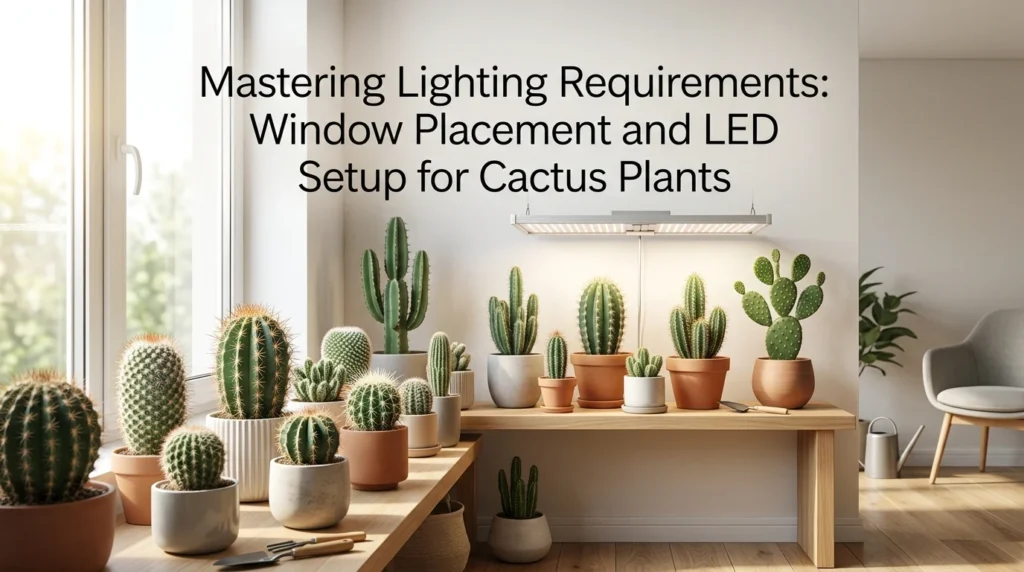
Mastering Lighting Requirements: Window Placement and LED Setup
Insufficient light is the single most common cause of cactus failure indoors. Without strong light, stems stretch pale and weak — a condition called etiolation. If your cactus is growing tall and thin, light is the problem.
Natural Sunlight Placement
Desert cacti require 4 to 6 hours of direct sunlight every day. Place your containers directly on the sill of an unobstructed south-facing or west-facing window. East-facing windows work well for forest species, but desert varieties will eventually stretch toward the glass in search of energy.
Supplemental LED Grow Lights
If you lack sunny south windows, use artificial grow lights. Position full-spectrum LED fixtures 6 to 10 inches directly above the top of the plant canopy. Set grow lights on an automatic timer to run for 12 to 14 hours daily during spring and summer. Aim for a PPFD (Photosynthetic Photon Flux Density) rating of 300 to 500 $\mu\text{mol/m}^2/\text{s}$ for optimal stem density.
Watering Methods: The Soak and Dry Technique
Watering cacti incorrectly kills more plants than pests ever will. Desert species need thorough soakings followed by periods where the soil dries out completely. When in doubt, do not water — a thirsty cactus recovers far faster than a rotted one.
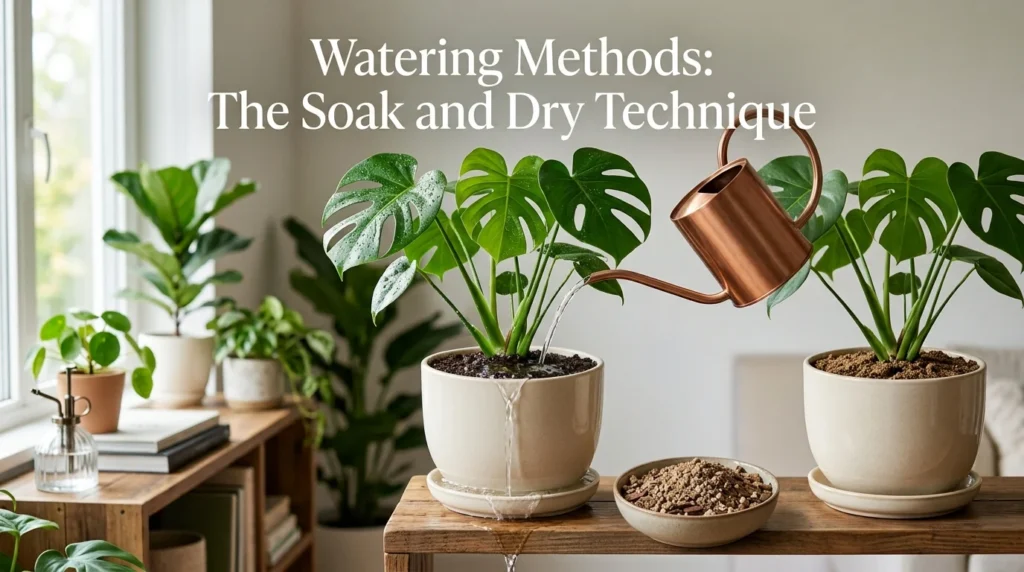
The “Soak and Dry” Method
- Insert a wooden chopstick 2 inches deep into the soil. If it comes out clean and bone dry, it is time to water.
- Pour room-temperature water around the base of the plant until water flows freely out of the drainage holes.
- Allow all excess liquid to drain into the saucer below for 15 minutes.
- Empty the saucer completely; never leave the pot base sitting in standing water.
Seasonal Water Frequency
During active spring and summer growth, water desert cacti every 10 to 14 days. During winter dormancy, reduce watering dramatically to once every 4 to 6 weeks. Forest cacti require slightly higher frequency, watering whenever the top inch of soil dries out.
Soil and Growing Medium Requirements
Standard commercial potting soil or garden dirt retains far too much water for desert roots, leading to fast root rot. Cacti require a gritty, loose, fast-draining potting mix.
Custom Homemade Mix Recipe
Blend these ingredients together for an ideal medium:
- 1 Part Commercial Cactus/Succulent Soil: Provides a light organic base and trace minerals.
- 1 Part Coarse Perlite or Pumice: Creates air pockets and prevents soil compaction.
- 1 Part Coarse Horticultural Sand or Lava Grit: Allows water to drain immediately through the pot.
This gritty balance ensures that water flows straight through within seconds, leaving just enough ambient moisture for root hairs while keeping oxygen flowing around the base.
Temperature Requirements and Air Movement
Cacti love daytime heat but benefit from natural temperature drops at night. Aim for 70°F to 85°F (21°C to 29°C) by day and a 10 to 15 degree drop at night, which mimics desert conditions and encourages blooming.
- Ideal Summer Temperatures: Maintain indoor daytime temperatures between 70°F and 85°F (21°C to 29°C).
- Ideal Winter Temperatures: During winter dormancy, cooler ambient temperatures between 50°F and 60°F (10°C to 15°C) encourage spring flower bud development.
- Air Circulation: Gentle room air movement keeps the soil surface dry and prevents fungal growth. Place a small fan on low speed nearby if your room air feels stagnant.
Humidity Control: Avoiding Damp Microclimates
Desert cacti thrive in dry environments with relative humidity between 10% and 30%. High humidity coupled with wet soil creates ideal conditions for fungal infections. Keep them out of steamy bathrooms and kitchens.
- Keep Away from Bathrooms: Never place desert cacti in damp bathrooms or high-humidity laundry rooms.
- Skip Spray Bottles: Misting cactus stems is completely ineffective for hydration and can trap moisture around areoles, inviting rot.
- Provide Ventilation: Ensure your plant display area receives good natural room ventilation, especially after watering.
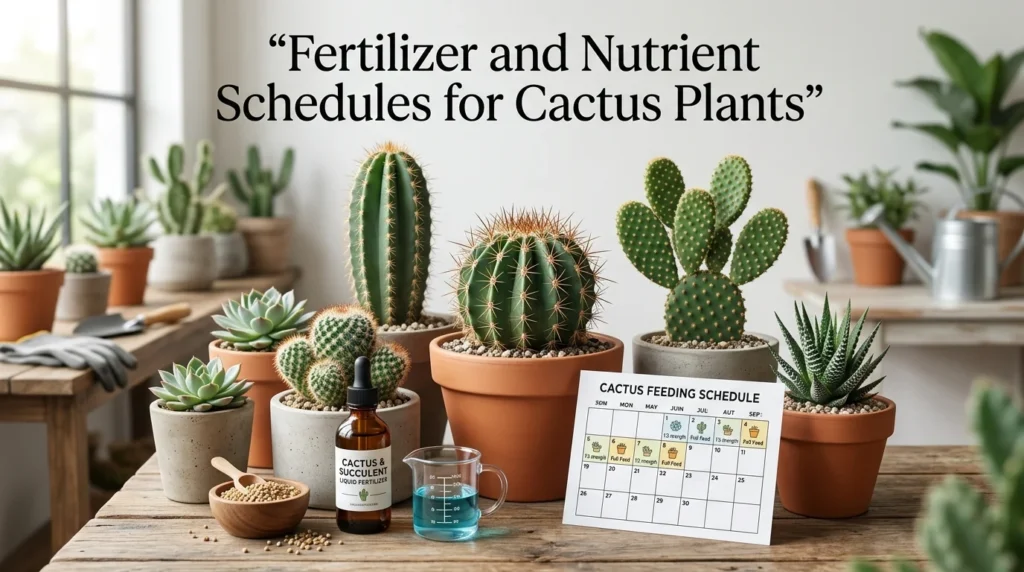
Fertilizer and Nutrient Schedules
Cacti are not heavy feeders, but giving them light balanced nutrients during active growth encourages sturdy stem walls and colorful blooms. Feed only in spring and summer when the plant is actively growing.
Feeding Protocol
Use a liquid cactus fertilizer low in nitrogen and higher in phosphorus and potassium (such as a 5-10-10 or 2-7-7 NPK blend). Dilute the fertilizer to half or quarter strength.
Apply fertilizer once a month from early spring through late summer. Stop all feeding during autumn and winter when the plant enters natural rest. Never apply fertilizer to dry soil; always moisten the soil slightly with plain water first to protect sensitive roots.
Routine Maintenance and Safe Handling
Keeping cacti looking fresh requires minimal effort:
- Dust Removal: Dust settles on stem ribs and blocks light. Use a soft, dry paintbrush or small makeup brush to gently sweep dust out from between spines.
- Stem Rotation: Rotate pots a quarter-turn every two weeks so all sides receive equal sun, preventing leaning or lop-sided growth.
- Safe Repotting: Wrap several layers of newspaper or cardboard around the spiky stem to lift the plant out of its pot without puncturing your hands or damaging the spines.
Seasonal Care Guide: Spring Awakening to Winter Rest
Matching your care routine to natural seasonal cycles ensures long-term vitality and spring blooms:
Spring Care
- Resume regular watering as new stem tips brighten and expand.
- Start monthly feeding routines using diluted cactus fertilizer.
- Repot root-bound plants into containers 1 to 2 inches wider.
Summer Care
- Move plants to your sunniest windowsills or outdoor covered patios.
- Monitor moisture levels; warm weather speeds up soil drying.
- Provide slight shading if direct midday summer sun turns stems yellow or brown.
Autumn Care
- Gradually reduce watering frequency as daylight hours shorten.
- Stop applying fertilizers completely by mid-autumn.
- Move outdoor plants back inside before night temperatures drop below 50°F (10°C).
Winter Rest Period
- Place plants in a cool room receiving bright light.
- Water sparingly just enough to keep stems from shriveling completely (usually once every month).
- Cooler rest temperatures trigger flower bud formation for the coming spring.
Common Beginner Mistakes to Avoid
- Using Pots Without Drainage: Planting in glass jars or closed ceramics traps standing water around roots, causing rot within weeks.
- Overwatering in Dark Rooms: Giving water to a plant stuck in low light prevents evaporation and causes root systems to collapse.
- Ignoring Etiolation: Leaving a stretched, pale stem in a dim corner instead of moving it into direct light or under an LED grow lamp.
- Using Standard Potting Dirt: Heavy, peat-based soils pack tight around roots and hold water far too long for desert species.
- Misting Spines with Water: Spraying water directly onto stems increases fungal risks rather than helping the plant.
Troubleshooting Common Problems
| Problem | Likely Cause | Solution |
| Stem Base Turning Black and Soft | Severe root rot from overwatering | Cut away all black mushy stem tissue with clean shears; allow healthy top to callus and re-root in fresh dry soil. |
| Tall, Thin, Pale Green Growth | Etiolation (Lack of light) | Move plant to a sunny south window or install a full-spectrum LED grow light. Prune off weak top growth if needed. |
| Wrinkled, Pucker-Looking Stems | Underwatering and cell dehydration | Give the soil a thorough soak using the soak-and-dry method. Stems will plump back up within 48 hours. |
| White Cottony Spots on Areoles | Mealybug insect infestation | Dab spots directly with a cotton swab dipped in 70% rubbing alcohol. Inspect weekly. |
| Brown Cork-Like Scabs on Base | Natural aging (corking) or physical scabbing | If hard and dry, it is normal corking as the base turns woody. If soft, check for fungal rot. |
Advanced Expert Recommendations
- Mineral Surface Mulching: Cover the top soil layer with a half-inch layer of coarse granite grit or small lava rocks. This keeps the lower stem dry, holds soil down when watering, and gives the pot an attractive finish.
- Potassium Silicate Boost: Add liquid potassium silicate to spring waterings. Silica strengthens plant cell walls, making stems far more resistant to sucking pests like scale and mealybugs.
- Winter Cold Trigger: Give desert species a 6-week cool period (between 50°F and 55°F) in bright light during winter while keeping soil completely dry. This temperature drop triggers vivid flower production in spring.
Conclusion
Mastering the care of indoor cactus plants comes down to respecting their desert origins. By providing maximum direct sunlight, planting in fast-draining gritty soil mixes, choosing porous terracotta pots, and mastering the soak-and-dry watering technique, you can easily grow healthy desert plants inside your home. Pay close attention to subtle stem changes, protect roots from standing water, and give your plants a cool, dry winter rest. With proper care, your indoor cacti will flourish for years. Visit GrowIndoorly.com for more expert houseplant guides, lighting reviews, and indoor gardening solutions.
Pet Safety
Most true cacti are non-toxic to cats and dogs, but their spines make them a physical hazard rather than a poisoning risk. Glochids — the tiny barbed bristles on prickly pears and similar species — are especially troublesome, embedding in curious noses and paws. Keep spiny specimens on high shelves, in hanging planters, or behind barriers, and choose spineless or soft-spined varieties like Christmas cactus for pet-accessible spots. If your pet gets spines, do not pull them with bare fingers; use tweezers and call your veterinarian if swelling or limping develops.
Knowledge Check
1. What defining physical feature separates cacti from all other succulent plants?
A) Green stems
B) Areoles
C) Fibrous taproots
D) Fleshy leaves
2. How often should desert cacti generally be watered during winter rest?
A) Every single day
B) Twice a week
C) Every 4 to 6 weeks
D) Cacti should never be watered under any circumstances
3. What is the main cause of etiolation (tall, pale, stretched growth)?
A) Excess fertilizer
B) Insufficient light exposure
C) Using terracotta pots
D) Room temperatures being too cold
4. Which type of pot material is safest for preventing cactus root rot?
A) Sealed glass jars without holes
B) Glazed plastic pots
C) Unglazed terracotta clay pots
D) Metallic containers
5. What is the recommended relative humidity level for indoor desert cacti?
A) 10% to 30%
B) 50% to 60%
C) 70% to 80%
D) 90% to 100%
6. Which fertilizer ratio is best suited for encouraging cactus blooms?
A) High Nitrogen, Low Potassium
B) Low Nitrogen, High Phosphorus & Potassium
C) 30-0-0 Grass Fertilizer
D) Pure urea powder
Answer Key
- B
- C
- B
- C
- A
- B
Frequently Asked Questions
How often should I water my indoor cactus?
Water your cactus when the soil is completely dry from top to bottom. During warm spring and summer months, this usually means watering every 10 to 14 days. During winter dormancy, reduce watering to once every 4 to 6 weeks.
Why is my cactus growing tall, thin, and pale?
This stretching is called etiolation and happens when a cactus does not receive enough light. The plant is stretching its body to search for light. Move your cactus to a south-facing window or place it under an LED grow light.
What is the best pot material for an indoor cactus?
Unglazed terracotta or clay pots are the best choices. Their porous walls allow soil moisture to evaporate through the sides, keeping root systems dry and preventing dangerous root rot.
How do I know if my cactus is overwatered or underwatered?
An overwatered cactus turns soft, squishy, dark, or yellow starting at the base. An underwatered cactus remains firm but looks wrinkled, puckered, or slightly shriveled. Underwatered plants bounce back quickly after a thorough watering.
Do indoor cacti need grow lights during winter?
If your windows do not receive strong daylight during winter, supplemental full-spectrum LED grow lights are helpful. Running grow lights for 10 to 12 hours daily keeps stems dense and prevents pale winter stretching.
How can I get my indoor cactus to bloom?
To encourage blooming, give your cactus a cool, dry rest period during winter with temperatures between 50°F and 55°F, minimal water, and no fertilizer. When warm spring temperatures and sunlight return, the plant responds by producing flower buds.
Are indoor cacti safe for homes with curious pets?
While cacti are generally non-toxic to dogs and cats, their sharp spines can cause painful physical injuries to mouths, noses, and paws. Keep spiky desert cacti on elevated shelves out of reach of pets.
Why is the base of my cactus turning hard and brown?
If the brown tissue is dry, hard, and firm to the touch, this is a natural process called corking. As cacti grow taller, the base turns woody to support the plant’s weight. If the brown area is soft or mushy, it is root rot.

Megan Foster is the founder and lead writer of GrowIndoorly.com, where she shares practical, easy-to-follow advice for growing healthy indoor plants. She is passionate about helping beginners and experienced plant lovers build thriving indoor gardens with confidence. Megan writes about houseplants, indoor herbs, succulents, hydroponics, grow lights, plant propagation, watering, soil care, and everyday plant maintenance.
She enjoys researching trusted gardening techniques and transforming them into simple, actionable guides that readers can easily apply at home. Her goal is to make indoor gardening more enjoyable and accessible by providing clear, reliable information that helps people keep their plants healthy throughout the year. Whether you’re caring for your first houseplant or expanding your indoor plant collection, Megan’s practical tips are designed to help you grow with confidence.