
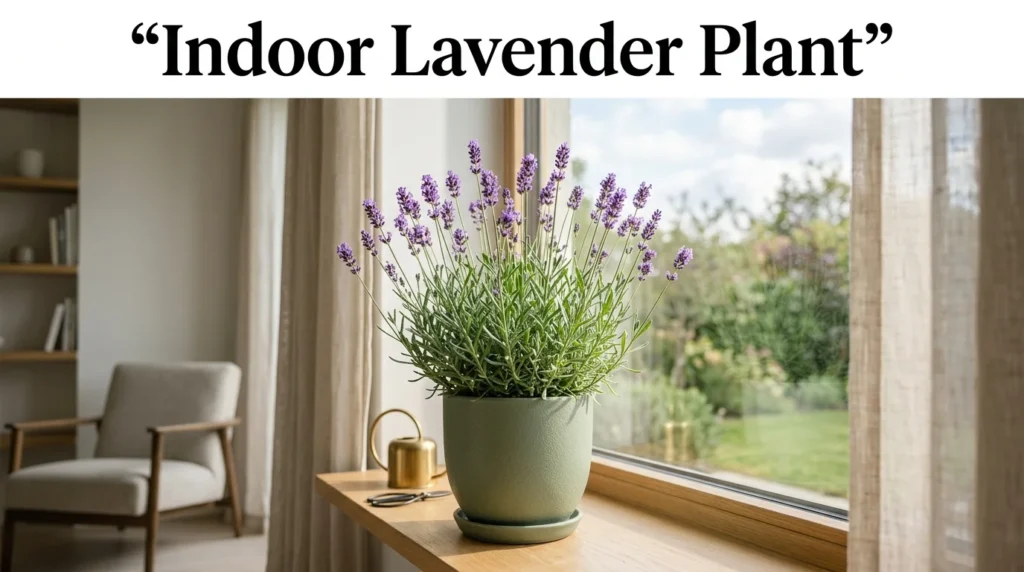
Bringing the relaxing aroma and soft purple blooms of a sun-drenched Mediterranean garden into your home sounds like a dream. Growing an indoor lavender plant setup lets you enjoy natural fragrance, fresh visual beauty, and therapeutic benefits right on your windowsill.
Beginners often find this Mediterranean herb tricky because indoor spaces naturally lack the intense sunlight and breezy airflow it craves. Bringing an indoor lavender plant into a dim room or using heavy potting soil usually leads to woody, leggy stems, root rot, and sudden plant loss.
Mastering its care takes the guesswork out of maintaining healthy foliage inside modern homes. You need clear strategies for delivering high-intensity light, creating lean alkaline soil mixes, practicing deep dry-down watering cycles, and preventing root fungal issues.
This comprehensive guide covers everything required to cultivate a flourishing indoor lavender plant environment. You will discover dwarf varieties, lighting techniques, pruning routines, and practical solutions to keep your lavender fragrant and thriving.
Understanding the Indoor Lavender Plant
Lavender (Lavandula) is a woody perennial shrub originating from the rocky, sun-baked hillsides of the Mediterranean region. In its native habitat, it grows in alkaline, gravelly soils where water drains instantly, rain is infrequent, and sunlight shines intensely for ten to twelve hours daily.
When cultivated indoors, lavender must adapt to container growing. Unlike moisture-loving tropical houseplants, lavender features narrow, silvery needle-like leaves protected by a waxy coating that retains moisture and reflects harsh sunlight. Understanding its Mediterranean origin makes it easy to see why standard peat-based potting soils and damp, humid rooms quickly stress this drought-tolerant herb.
Why Cultivating Lavender Indoors Matters
Cultivating lavender indoors brings the calming, aromatic essence of a herb garden into urban apartments and chilly climates where outdoor growing is limited. Placing a fragrant pot on a desk, bedside table, or sunny kitchen counter provides an immediate natural stress reliever.
Beyond its signature scent, growing lavender sharpens your indoor gardening skills. Because it acts as an early indicator plant for poor air circulation and overwatering, mastering its environmental demands teaches you how to handle high-light, drought-tolerant herbs like rosemary, thyme, and sage with complete confidence.
Benefits and Advantages of Growing Lavender Indoors
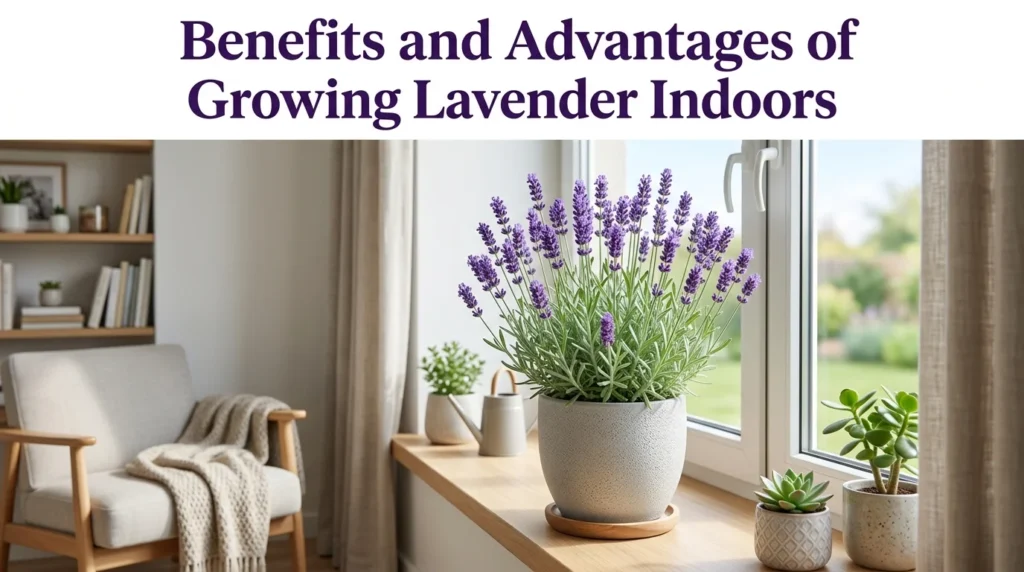
Adding indoor lavender to your home green space offers numerous functional and aesthetic rewards:
- Aromatherapy and Stress Relief: Essential oils stored in the leaf glands release a clean, soothing aroma when touched, helping reduce anxiety and improve sleep quality.
- Natural Air Enhancement: Replaces artificial synthetic room spray air fresheners with genuine, chemical-free herbal fragrance.
- Culinary and Craft Uses: Harvest fresh or dried flower spikes to brew relaxing teas, flavor baked goods, or craft homemade herbal sachet bags.
- Year-Round Mediterranean Beauty: Silvery-grey foliage offers striking texture contrast against typical dark green leafy houseplants.
Different Growing Approaches: Soil vs Hydroponics
Indoor gardeners successfully cultivate lavender using two main growing methods:
- Traditional Soil-Based Potting: Uses a lean, sandy, fast-draining potting mixture inside breathable clay or terracotta containers. This method closely simulates natural Mediterranean ground conditions and supports strong root anchoring.
- Controlled Passive Hydroponics: Growing compact lavender varieties in inorganic clay pebbles (LECA) or expanded mineral mixes with low-level nutrient reservoirs. This approach supplies consistent oxygen to roots, eliminating root rot fungi while ensuring precision hydration.
Essential Tools and Equipment Required
Having the right specialized tools on hand guarantees smooth, stress-free maintenance:
- Unglazed Terracotta Pot with Large Drainage Holes: Breathable clay walls pull excess moisture out of the soil mix, keeping delicate root systems dry and oxygenated.
- Full-Spectrum LED Grow Light: Delivers high-intensity daily light necessary for foliage density, strong stem development, and flower production.
- Narrow-Spout Watering Pitcher: Directs water straight to the soil level without wetting dense lower foliage or central stem crowns.
- Precision Micro-Tip Pruning Shears: Delivers clean cuts when harvesting flower spikes or shaping woody stems.
- Soil pH Meter: Measures substrate acidity to ensure conditions remain slightly alkaline between 6.5 and 7.5 pH.
- Small Desktop Fan: Creates gentle air movement around foliage to prevent fungal mildew in humid rooms.
Best Lavender Varieties for Indoor Growing
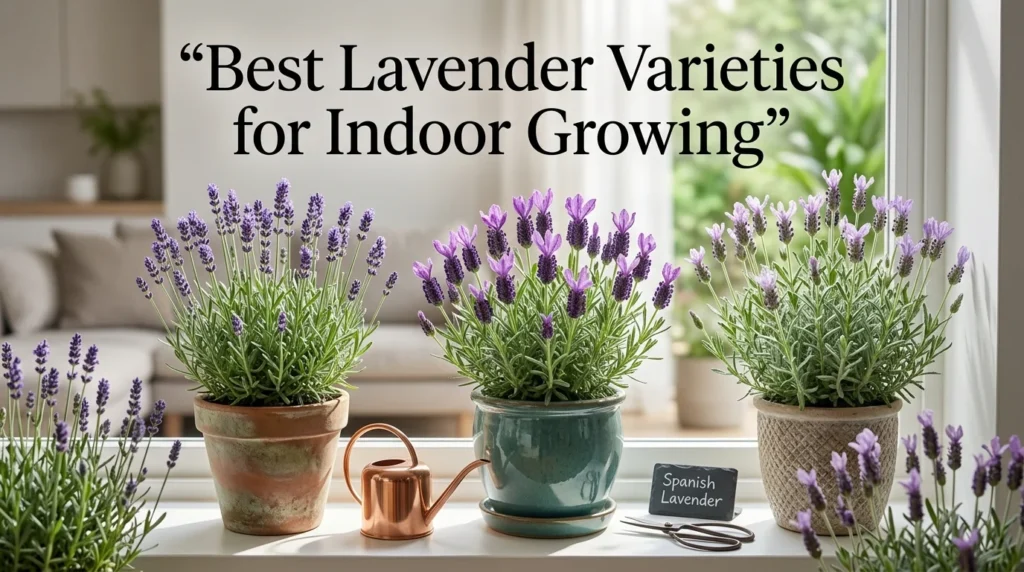
Not all lavender varieties perform well in indoor containers. Choosing compact, dwarf cultivars tailored for indoor spaces is critical for long-term success:
Lavandula angustifolia (‘Lady’)
An English lavender cultivar that grows into a compact, 10-inch mound. It produces rich violet blooms quickly from seed or cuttings and tolerates indoor container confinement remarkably well.
Lavandula angustifolia (‘Munstead’)
A classic dwarf English lavender reaching 12 to 18 inches tall. Famous for its cold hardiness, sweet scent, and compact habit, it stands out as one of the most reliable window options.
Lavandula stoechas (‘Anouk’ or Spanish Lavender)
Recognized by its distinctive, rabbit-ear flower bracts sitting atop dark purple flower heads. Spanish lavender thrives in warmer indoor temperatures and handles dry indoor air better than most English varieties.
Lavandula dentata (French Lavender)
Features narrow, grey-green leaves with finely scalloped edges and a lighter pine-lavender fragrance. It blooms continuously throughout warm indoor spring and summer months.
Lighting Requirements for Vibrant Blooms
Light is the single most critical factor determining success or failure when growing lavender inside.
- Direct Sunlight Needs: Place your container in a unobstructed south-facing window sill where it receives a minimum of 6 to 8 hours of direct, unfiltered sunlight daily.
- Window Orientation Limits: East or west windows rarely provide enough light intensity long-term, resulting in stretched, floppy stems that bend toward the glass and fail to flower.
- Supplemental Grow Lights: If direct natural sun is limited, position a high-output full-spectrum LED grow light 6 to 10 inches directly above the canopy. Run the light fixture for 12 to 14 hours every day.
- Symptoms of Light Starvation: Weak, pale, thin stems with wide spacing between leaf nodes indicate the plant is starving for light.
Proper Watering Methods
Overwatering kills more indoor lavender than any other factor. The golden rule is simple: when in doubt, wait a few days before watering.
- The Dry-Down Check: Allow the top 75% of the potting soil mix to dry out completely before watering. Insert a wooden skewer deep into the pot; if it comes up clean and dry, it is time to water.
- Deep Drenching Technique: Slowly pour water over the soil surface until liquid runs freely out of bottom drainage openings. Allow all excess runoff to drain completely away, and empty catch saucers within 10 minutes.
- Avoid Wet Leaves: Never spray or pour water directly over the central crown or silvery foliage. Wet leaves combined with still room air invite fatal fungal diseases like botrytis.
Soil and Growing Medium Essentials
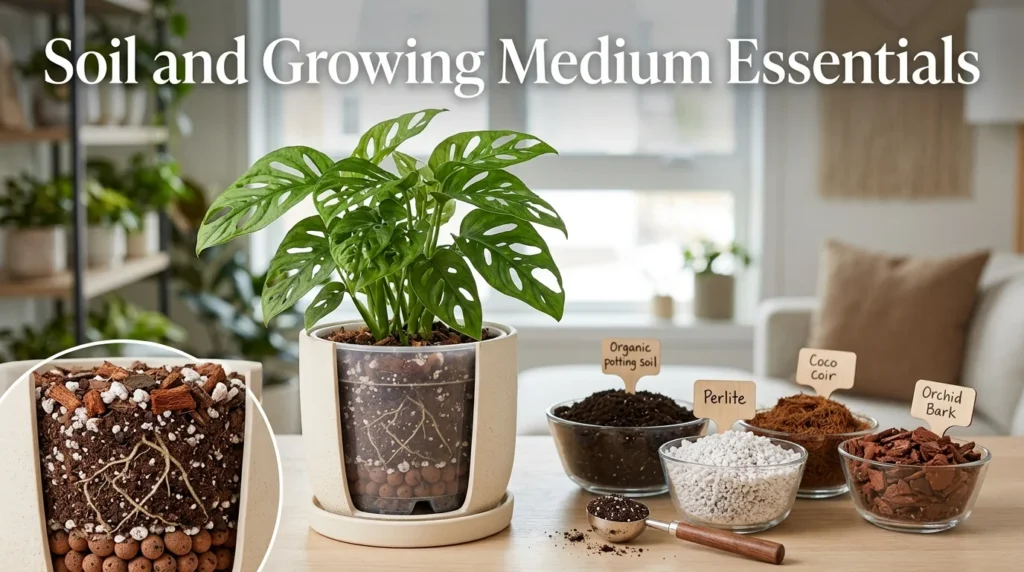
Standard indoor potting soils retain far too much moisture and pack tightly around fine roots, suffocating them. Lavender demands a gritty, lean, fast-draining substrate.
Mix an ideal custom substrate using:
- 40% Quality Cactus or Succulent Mix: Provides a lightweight, well-draining organic foundation.
- 30% Coarse Horticultural Sand or Poultry Grit: Creates instant drainage channels and prevents soil compaction.
- 20% Perlite or Pumice: Enhances soil porosity and boosts root zone oxygenation.
- 10% Crushed Agricultural Limestone or Fine Gravel: Raises soil pH to a preferred 6.5 to 7.5 range while supplying essential calcium.
Temperature Control for Mediterranean Herbs
Indoor lavender prefers warm days combined with cool, resting nights to maintain strong structural growth.
Keep daytime indoor room temperatures comfortably between 65°F and 75°F (18°C to 24°C). Nighttime drops down to 55°F to 60°F (13°C to 15°C) encourage sturdy stem growth. Keep containers away from hot radiator vents, space heaters, and cold winter window drafts that stress foliage.
Controlling Humidity Levels
Originating in dry climates, lavender dislikes the high humidity levels loved by tropical houseplants like ferns or calatheas.
Keep ambient relative humidity low, ideally between 30% and 40%. Avoid placing lavender in humid bathrooms, laundry rooms, or right next to humidifiers. Running a small USB fan nearby creates gentle air circulation that dries excess moisture off leaves and prevents powdery mildew.
Fertilizer and Nutrient Application
Lavender naturally thrives in poor, nutrient-deficient soils. Feeding it heavy fertilizers causes rapid, weak, watery growth that sags under its own weight and loses aromatic oil potency.
- Minimal Feeding Schedule: Apply a balanced, organic water-soluble houseplant or herb fertilizer diluted to one-quarter strength only twice a year once in early spring and once in mid-summer.
- Avoid High Nitrogen: Never use high-nitrogen plant food formulas. Nitrogen encourages green leafy growth at the expense of fragrant flower blooms and essential oil density.
- Organic Amendments: Adding a tablespoon of crushed eggshells or lime to topsoil annually supplies slow-release calcium and keeps soil sweet.
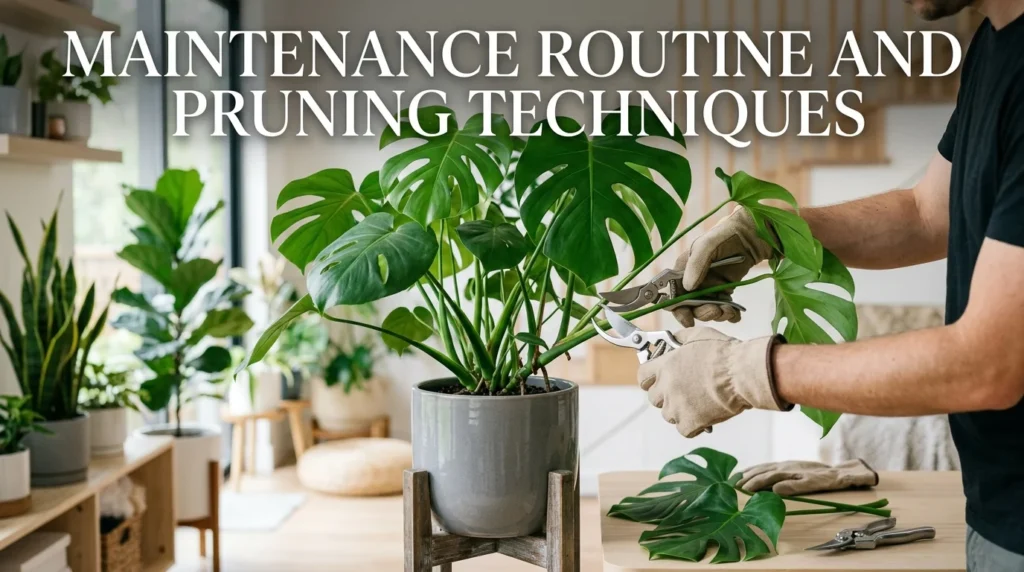
Maintenance Routine and Pruning Techniques
Regular pruning keeps woody lavender bushes neat, bushy, and productive for years:
- Spring Light Trimming: In early spring, trim back new growth tips by one-third using clean pruning shears. This encourages dense branching from lower nodes.
- Harvesting Flower Spikes: Cut flower stalks just as the lowest buds on the spike begin to open. This captures the maximum concentration of essential oils for drying.
- Autumn Post-Bloom Pruning: After flowering finishes, trim back spent flower stalks and shape the outer green foliage layer. Never cut down into hard, leafless woody wood near the base, as old wood lacks dormant buds to sprout fresh growth.
Managing Seasonal Changes and Rest
Indoor lavender goes through a natural resting period as autumn days shorten and winter arrives.
- Winter Rest Management: Reduce watering frequency significantly during winter months, letting soil dry out almost completely between light waterings. Stop fertilizing entirely from October through March.
- Temperature Adjustments: Move containers to a slightly cooler sunny windowsill during winter. Cool conditions combined with bright sunlight prevent the plant from stretching out while resting.
Common Mistakes Beginners Make
Avoid these frequent beginner mistakes to keep your herb healthy:
- Using Plastic Pots Without Drainage: Plastic containers trap moisture inside soil mixes, quickly suffocating root systems and causing root rot.
- Planting in Rich Garden Topsoil: Heavy garden soil compacts tightly inside containers, holding too much water and blocking root oxygen.
- Neglecting Sunlight Needs: Placing pots on coffee tables or dark desks away from sunny windows starves the plant of necessary light energy.
- Overwatering Out of Concern: Watering on a fixed weekly calendar schedule instead of checking soil dryness rots underground roots.
Troubleshooting Common Problems
Diagnose and resolve common indoor lavender issues using this simple guide:
- Drooping or Sagging Stems: Usually caused by overwatering or severe light starvation. Check soil moisture first—if soil is soaking wet, stop watering immediately and move the pot into direct sunlight or under a grow light.
- Yellowing Lower Leaves: A classic sign of soggy soil roots decaying from root rot. Repot the plant into fresh, dry sand-gravel soil, trim away soft black roots, and cut back watering.
- White Powdery Patches on Leaves: Fungal powdery mildew caused by high humidity and still air. Move the pot to a drier room, increase light exposure, and run a fan nearby for gentle airflow.
- Woody, Leggy Growth: Results from skipping regular pruning routines or insufficient sunlight. Trim upper foliage stems back by one-third and increase daily light hours.
Practical Beginner Tips for Success
Build your growing confidence with these practical suggestions:
- Choose Terracotta Pots First: Terracotta clay acts like a sponge, pulling excess water out through its porous sides and protecting roots from rot.
- Rotate Pots Weekly: Give your container a quarter-turn every few days so all sides receive balanced light exposure, preventing the plant from leaning sideways.
- Prune Early and Often: Do not be afraid to trim green stem tips regularly. Frequent light trimming builds a thick, bushy plant rather than a thin, floppy one.
Advanced Recommendations for Experienced Growers
Ready to elevate your lavender growing skills?
- Stem Propagation Cuttings: Take 3-inch semi-hardwood stem cuttings in mid-summer. Strip lower leaves, dip cut ends into rooting powder, and plant in a damp perlite-sand mix to grow brand-new cloned plants.
- Custom Calcium Substrates: Blend small crushed limestone gravel and oyster shell grit directly into custom soil mixes to create an authentic limestone-rich Mediterranean soil profile.
- Intercropping Herb Planters: Combine dwarf lavender varieties with other high-light, drought-tolerant Mediterranean herbs like creeping thyme and rosemary in wide terracotta bowls.
Conclusion
Growing a healthy indoor lavender plant is an incredibly rewarding experience that brings natural beauty, soothing fragrance, and Mediterranean charm directly into your living space. By providing high-intensity sunlight or LED grow light hours, using gritty well-draining soil mixes, and allowing pots to dry out between deep waterings, you construct an ideal growing environment where this beloved herb thrives.
Keep air circulating around foliage, prune back new growth tips regularly, and adjust care routines as seasonal daylight shifts. With a little attention to its Mediterranean roots, your lavender will reward you with sweet-smelling foliage and beautiful blooms. For more step-by-step care guides, herb tutorials, and indoor gardening solutions, explore our full library of resources at GrowIndoorly.com.
Knowledge Check
Test your understanding of indoor lavender plant care with these questions:
Question 1
What type of pot material is best for growing indoor lavender because it pulls excess soil moisture away from roots?
A) Sealed plastic
B) Unglazed terracotta
C) Heavy glazed ceramic
D) Metal tin
Question 2
How many hours of direct daily sunlight or grow light exposure does an indoor lavender plant need?
A) 1 to 2 hours
B) 3 to 4 hours
C) 6 to 8 hours or more
D) No light is needed
Question 3
Which soil type is essential for preventing fatal root rot in indoor lavender containers?
A) Pure rich peat moss
B) Heavy garden clay topsoil
C) Fast-draining gritty sand and perlite blend
D) Wet potting soil mix
Question 4
True or false: You should spray and mist lavender foliage daily to raise ambient moisture around leaves.
A) True
B) False
Question 5
When is the correct time to water an indoor lavender plant?
A) Every single morning without fail
B) When the top 75% of soil feels dry
C) Only once every six months
D) When soil is soaking wet
Answer Key
- 1: B)
- 2: C)
- 3: C)
- 4: B)
- 5: B)
Frequently Asked Questions
Can an indoor lavender plant survive inside all year?
Yes, an indoor lavender plant can survive inside year-round if provided with 6 to 8 hours of direct daily sunlight or 12 to 14 hours of high-output LED grow light. Choose dwarf varieties like ‘Munstead’ or ‘Lady’, use well-draining gritty soil, and avoid overwatering.
How often should I water my indoor lavender plant?
Water your indoor lavender only when the top 75% of the potting soil mix feels completely dry to the touch. Pour water evenly over the soil surface until it flows out bottom drainage holes, then empty the catch tray completely. Never water on a fixed calendar schedule.
Why is my indoor lavender plant drooping and turning soft?
Drooping and soft stems are usually caused by overwatering, poor drainage, or insufficient sunlight. Check soil moisture if soil is wet, hold off on watering and move the pot under a grow light. If soil is bone dry, give the plant a deep drenching.
Does lavender need a grow light when grown indoors?
In most indoor environments, a grow light is highly recommended. Unless you have an unobstructed south-facing window that receives 6 to 8 hours of direct sunlight daily, placing a full-spectrum LED grow light 6 to 10 inches above the plant ensures strong, healthy growth.
Which lavender variety is best for growing indoors?
Dwarf English lavender cultivars like Lavandula angustifolia (‘Munstead’ or ‘Lady’) are best for indoors because they stay compact, tolerate container limits well, and produce sweet fragrance. Spanish lavender (Lavandula stoechas) also performs well in warmer rooms.
Why is my indoor lavender turning woody and leggy?
Lavender turns woody and leggy when it receives insufficient sunlight or misses regular spring and summer pruning. To fix this, increase daily light hours and trim green stem tips back by one-third every spring to encourage thick, bushy branching.
Is an indoor lavender plant toxic to pets?
Yes, lavender contains linalool and linalyl acetate compounds that are mildly toxic to cats and dogs according to ASPCA standards if ingested in large quantities. Ingestion can cause stomach upset, nausea, or vomiting. Keep pots out of reach of curious pets.
How do I harvest flowers from my indoor lavender plant?
Harvest flower spikes when the lower buds on the stem begin to open but before the entire stalk blooms completely. Cut flower stems near their base using sharp, clean shears in the morning when essential oil concentrations are highest.

Megan Foster is the founder and lead writer of GrowIndoorly.com, where she shares practical, easy-to-follow advice for growing healthy indoor plants. She is passionate about helping beginners and experienced plant lovers build thriving indoor gardens with confidence. Megan writes about houseplants, indoor herbs, succulents, hydroponics, grow lights, plant propagation, watering, soil care, and everyday plant maintenance.
She enjoys researching trusted gardening techniques and transforming them into simple, actionable guides that readers can easily apply at home. Her goal is to make indoor gardening more enjoyable and accessible by providing clear, reliable information that helps people keep their plants healthy throughout the year. Whether you’re caring for your first houseplant or expanding your indoor plant collection, Megan’s practical tips are designed to help you grow with confidence.


