
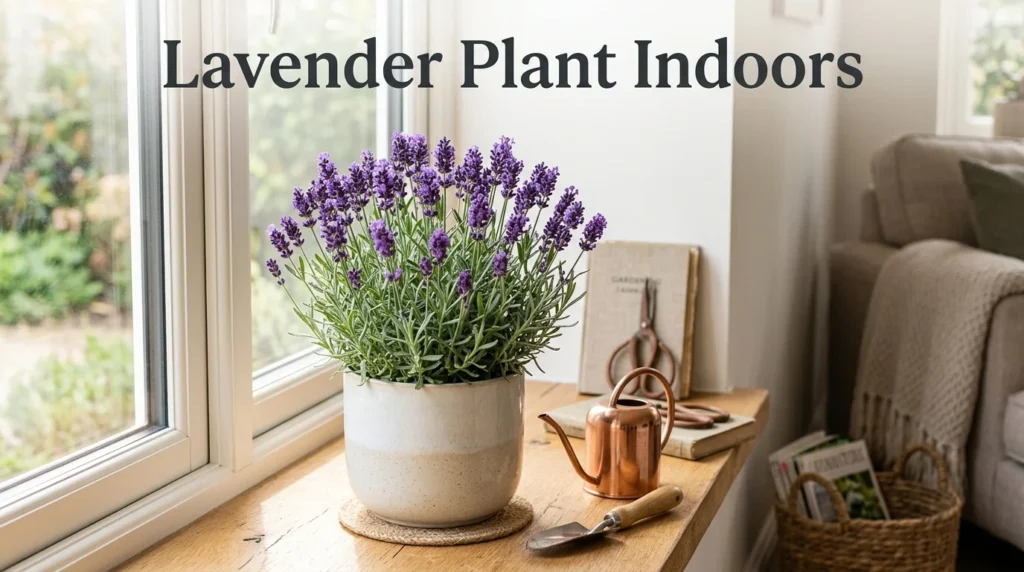
Growing a lavender plant indoors brings fragrant purple blooms, silver-green foliage, and soothing aromatic oils into your living space. Botanically classified under the genus Lavandula, lavender is native to the sun-drenched, rocky slopes of the Mediterranean. While it is traditionally grown as an outdoor perennial shrub, cultivating lavender inside a home requires mimicking its harsh native environment specifically intense light, low air humidity, lean and fast-draining soil, and strict drought cycles.
Cultivating a lavender plant indoors presents unique challenges compared to typical shade-tolerant tropical houseplants. Standard room lighting and moisture-retentive peat soil quickly lead to stretched, leggy stems, lack of flowers, and fatal root rot.
Proper maintenance for a lavender plant indoors centers on replicating Mediterranean growing conditions through disciplined environmental controls. Positioning containers near South-facing windows, utilizing terracotta pots, and allowing the substrate to dry out between waterings prevents fungal pathogens from attacking the root system.
This comprehensive master guide covers species selection, lighting thresholds, substrate formulation, seasonal pruning, and troubleshooting strategies to keep your indoor greenery healthy and flowering year after year.
Selecting the Right Lavender Species for Indoor Containers
Not all lavender species adapt well to container life indoors. Large, cold-hardy garden varieties like English Lavender (Lavandula angustifolia) require cold winter dormancy periods that are difficult to reproduce inside heated homes. Compact and tender varieties adapt much better to warm indoor container environments.
| Lavender Species / Group | Botanical Name | Indoor Suitability | Key Characteristics | Light & Temperature Needs |
| French Lavender | Lavandula dentata | Excellent | Fringed, serrated leaves with continuous blooms; highly aromatic; compact. | Requires 6–8+ hours of direct sun; prefers 65°F to 75°F. |
| Spanish Lavender | Lavandula stoechas | Very Good | Distinctive rabbit-ear bracts atop flower spikes; handles indoor warmth well. | High light demand; tolerates lower winter humidity. |
| Canary Island Lavender | Lavandula canariensis | Good | Fern-like, lacy foliage; tender perennial native to mild climates; heat-tolerant. | Prefers constant warmth (65°F–80°F) and bright sun. |
| Dwarf English Lavender | Lavandula angustifolia (‘Hidecote’, ‘Munstead’) | Moderate | Classic fragrance; compact growth habit, but needs cool winter rest (45°F–55°F). | Requires maximum sun; benefits from cool winter placement. |
| Grosso / French Hybrid | Lavandula x intermedia | Poor | Very large, sprawling growth habit; extensive root system unfit for pots. | Outgrows indoor pots rapidly; best reserved for outdoor beds. |
Environmental Requirements for Indoor Lavender Care
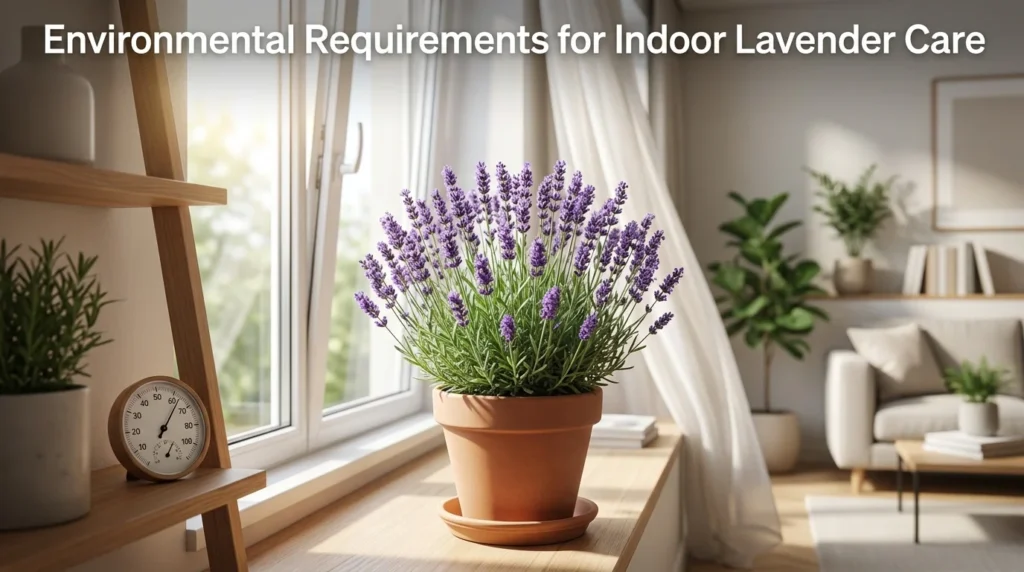
To keep a lavender plant indoors thriving and producing fragrant blooms, replicate its Mediterranean microclimate using these environmental guidelines:
1. Light Requirements (The Critical Success Factor)
Insufficient light is the single most common cause of indoor lavender failure.
- Direct Sunlight: Position your lavender in a South-facing or West-facing window sill that receives at least 6 to 8 hours of direct, unobstructed sunlight daily.
- Supplemental Grow Lighting: If natural sunlight is limited, use a full-spectrum LED grow light positioned 6 to 10 inches above the plant canopy for 12 to 14 hours per day. Aim for a light intensity of at least 300–500 $\mu\text{mol/m}^2/\text{s}$ (PPFD).
2. Temperature and Ventilation
- Active Growing Temperature: Keep daytime room temperatures between 65°F and 75°F (18°C to 24°C) during spring and summer.
- Cool Night Drop: Lavender benefits from cooler night temperatures between 55°F and 65°F (13°C to 18°C), which promotes sturdy stems and concentrated essential oils.
- Air Movement: Mediterranean plants require continuous, gentle airflow. Place a small fan nearby on a low setting to keep air moving around the foliage. Good air circulation prevents powdery mildew and fungal stem rot.
3. Humidity Controls
- Keep Air Dry: Unlike tropical plants, lavender prefers low humidity (30% to 40% RH).
- Avoid Bathrooms and Humidifiers: Never place lavender in high-humidity areas like bathrooms or directly beside room humidifiers. Excess atmospheric moisture softens leaves and encourages fungal diseases.
Substrate, Drainage, and Irrigation Protocol
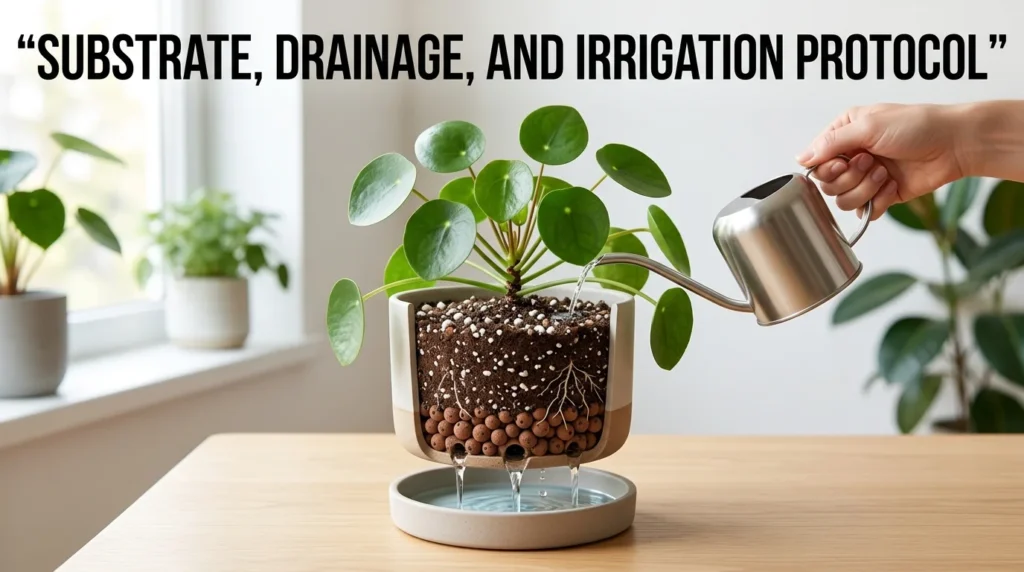
Proper root zone management prevents anaerobic soil conditions and root rot.
Soil Media and pH Calibration
Standard potting soil retains too much moisture and turns sour around Mediterranean root systems.
- Gritty Substrate Blend: Mix 40% high-quality potting mix, 40% coarse perlite or pumice, and 20% coarse horticultural sand or crushed limestone.
- Alkaline Soil pH: Lavender thrives in slightly alkaline soil with a pH between 6.5 and 7.5. Add 1 tablespoon of crushed agricultural lime or dolomite lime to the potting mix if using acidic, peat-heavy soils.
- Porous Pots: Always use unglazed terracotta or clay pots with bottom drainage holes. Terracotta draws excess moisture out of the soil through its walls, speeding up root zone drying.
Watering Protocol (The “Dry-Out” Principle)
- Drying Cycle: Allow the top 2 inches of soil—or roughly 75% of the pot volume—to dry out completely between waterings.
- Deep Drenching: Water deeply until excess flows freely from the bottom drainage hole, then allow all excess water to drain out fully.
- Empty Saucers Immediately: Never leave the pot sitting in a saucer of standing water. Drain saucers within 10 minutes of watering.
- Winter Reduction: During winter dormancy, reduce watering frequency significantly. Water only when the root ball is nearly completely dry.
Nutrient Needs
- Lavender adapted to poor, rocky soils and requires minimal fertilizer. Over-fertilizing leads to excessive weak foliage growth with few flowers and reduced essential oil aroma.
- Feeding Schedule: Apply a balanced, water-soluble fertilizer (such as 10-10-10) diluted to quarter-strength once in early spring and once in mid-summer. Do not feed during fall or winter.
Step-by-Step: How to Prune and Shape Indoor Lavender
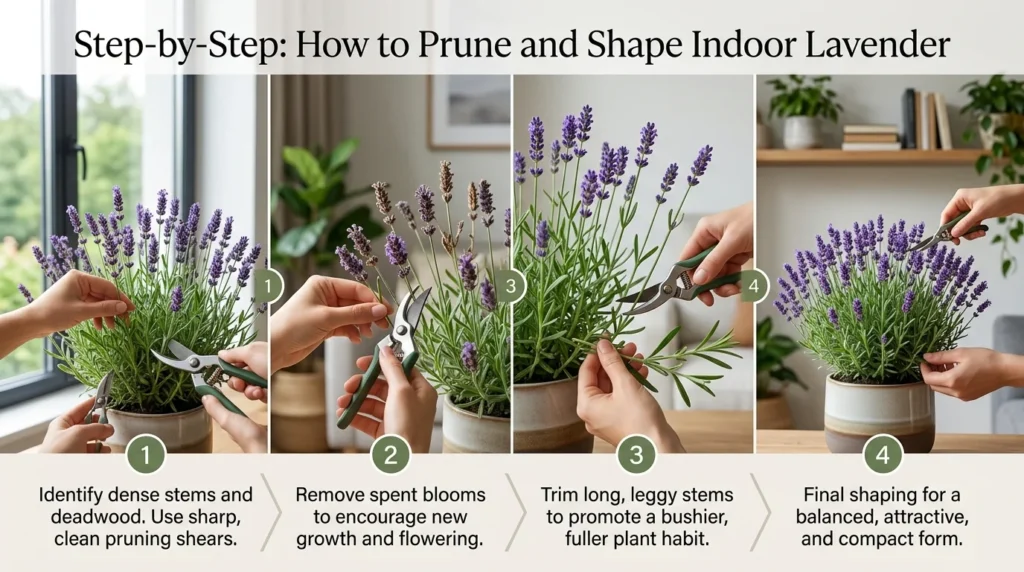
Pruning is essential to prevent woody stem decline, promote lush bushiness, and encourage continuous flower spikes:
1.Sterilize Tools and Inspect Plant:Select clean bypass pruners or sharp floral snips.
Wipe your pruner blades with 70% isopropyl alcohol to avoid introducing pathogens to fresh wood cuts.
2.Harvest Spent Flower Spikes:Harvest blooms when lower florets just begin to open.
Cut flowering stems down to the main foliage canopy just above a leaf node once flowers fade or when harvesting for drying.
3.Trim Top Third of Green Foliage:Never cut back into bare, woody brown stems.
Trim back the green, leafy growth by approximately one-third in late summer. Always ensure green leaves remain on the stem below your cut line, as old bare wood will not easily re-sprout.
4.Thin Out Dense Center Stems:Improve internal light penetration and airflow.
Selectively cut out weak, crossing, or interior dead stems to allow light and air to reach the center of the plant.
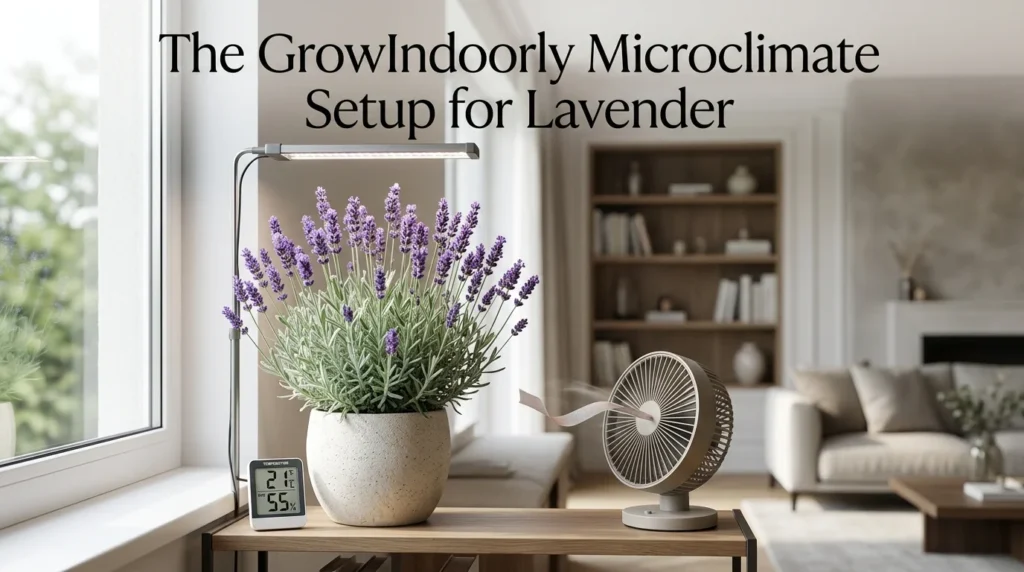
The GrowIndoorly Microclimate Setup for Lavender
Constructing an ideal microclimate for a lavender plant indoors requires managing light, moisture, and air movement simultaneously:
- Terracotta Cushioning: Set terracotta pots on elevated cork trivets near windows rather than flat on cold marble or wood sills to promote air circulation underneath bottom drainage holes.
- Top-Dressing Grits: Spread a 1/2-inch layer of white pea gravel or coarse crushed granite over the soil surface. This light-colored top dressing reflects light up into the lower foliage, speeds surface drying, and prevents stem contact with wet soil.
- Active Air Movement: Keep a low-wattage USB desk fan running on low speed near your plant shelf to prevent air stagnation and protect dense foliage from fungal spores.
Troubleshooting Indoor Lavender Issues
Diagnose and resolve common problems with this practical reference guide:
| Problem | Cause | What to Check | Solution |
| Drooping, soft stems with yellowing lower leaves | Overwatering or poor soil drainage causing root rot | Soil moisture depth; pot drainage holes; root firmness | Allow soil to dry out completely; repot into a gritty terracotta setup with perlite and sand |
| Leggy, weak growth with small sparse leaves | Insufficient sunlight or grow light duration | Daily hours of direct light; distance from grow lamp | Move to a South-facing window or add a 12-hour LED grow light directly overhead |
| White powder on leaf surfaces | Powdery mildew caused by high humidity and stagnant air | Room relative humidity; airflow around plant canopy | Increase fan ventilation; lower room humidity; spray foliage with a mild neem or copper fungicide |
| Crisp, brown, shedding foliage starting from bottom | Severe underwatering or extreme root-bound conditions | Soil dryness; root crowding at drainage holes | Water deeply; if root-bound, repot in spring into a pot 1–2 inches larger with fresh gritty soil |
| Sudden wilting of individual stems (Botrytis / Stem Rot) | Excessive foliage moisture or high humidity | Stem bases for brown, soft lesions | Prune out infected stems down to healthy tissue; stop leaf misting; increase air movement |
Conclusion
Successfully growing a lavender plant indoors comes down to honoring its Mediterranean heritage by delivering maximum direct light, low humidity, and exceptional soil drainage. By choosing compact species like French or Spanish lavender and potting them in terracotta containers filled with a high-porosity perlite and sand mix, you build the perfect foundation for continuous growth and aromatic foliage.
Long-term health depends on maintaining a disciplined watering routine and avoiding the common trap of over-moistening the soil. Allowing the substrate to dry out significantly between waterings protects delicate roots from fungal decay, while supplementary LED grow lighting ensures your plant receives the high-intensity energy it requires when natural window light falls short.
At GrowIndoorly.com, we believe that bringing sun-loving Mediterranean flora into home spaces is entirely achievable with practical, science-backed care. By tailoring your indoor microclimate, providing gentle air circulation, and performing light annual pruning, you can enjoy vibrant purple blooms and soothing herbal fragrance inside your home year-round.
Test Your Knowledge:
Question 1
What is the minimum amount of direct sunlight or high-intensity grow light a lavender plant needs daily when grown indoors?
- A) 1 to 2 hours.
- B) 3 to 4 hours.
- C) 6 to 8+ hours.
- D) Zero hours; it grows best in dark shade.
Question 2
Which potting substrate mix is ideal for preventing root rot in potted indoor lavender?
- A) Heavy garden clay mixed with compost.
- B) 100% pure peat moss.
- C) Gritty blend of 40% potting soil, 40% perlite/pumice, and 20% sand or limestone.
- D) Moisture-retentive potting gel.
Question 3
Why should you avoid cutting into old, bare brown wood when pruning a lavender plant?
- A) Old woody stems usually fail to produce new leafy shoots.
- B) It causes the flowers to turn blue.
- C) It makes the soil acidic.
- D) It attracts bees indoors.
Question 4
Which species of lavender is generally best suited for indoor container growth due to its tender nature and continuous blooming?
- A) French Lavender (Lavandula dentata).
- B) Grosso Lavender (Lavandula x intermedia).
- C) Giant English Lavender.
- D) Wild Alpine Lavender.
Question 5
What is the main purpose of adding a top-dressing layer of pea gravel or crushed granite to an indoor lavender pot?
- A) To trap water in the soil.
- B) To reflect light into lower foliage and keep stem bases dry.
- C) To make the pot heavier so it won’t tip over.
- D) To block roots from growing.
(Answer Key: 1-C, 2-C, 3-A, 4-A, 5-B)
Frequently Asked Questions
Can a lavender plant live indoors permanently?
Yes, provided you supply adequate direct light (6–8 hours daily or supplemental grow lights), low humidity, gritty fast-draining soil, and proper air movement. French and Spanish varieties adapt best to permanent indoor living.
Why is my indoor lavender plant turning woody and sparse?
Lavender naturally forms woody stems over time. Lack of direct sunlight accelerates leggy growth, while skipping annual seasonal pruning causes the plant to lose its compact shape. Prune green shoots annually to maintain bushiness.
How often should I water my indoor lavender?
Watering frequency depends on room temperature, light level, and pot size. As a general rule, water only when the top 2 inches of soil are completely dry—typically every 7 to 14 days during active growth and less often in winter.
What kind of pot is best for an indoor lavender plant?
Unglazed terracotta or clay pots with bottom drainage holes are ideal. Terracotta is breathable, allowing moisture to evaporate through the pot walls, which prevents root rot.
Does indoor lavender produce a strong fragrance?
Yes. Gentle rubbing of the foliage or brushing past the leaves releases essential oils. While bloom fragrance is highest under full direct sun, healthy indoor plants produce plenty of scent.
How do I harvest indoor lavender for drying?
Harvest flower spikes when the bottom third of the florets have just opened. Cut stems with long stalks in the morning, bundle them with twine, and hang them upside down in a dark, dry, well-ventilated space.
Should I mist my indoor lavender plant?
No. Never mist lavender foliage. Misting raises atmospheric humidity around the leaves, encouraging fungal diseases like powdery mildew and stem rot.

Megan Foster is the founder and lead writer of GrowIndoorly.com, where she shares practical, easy-to-follow advice for growing healthy indoor plants. She is passionate about helping beginners and experienced plant lovers build thriving indoor gardens with confidence. Megan writes about houseplants, indoor herbs, succulents, hydroponics, grow lights, plant propagation, watering, soil care, and everyday plant maintenance.
She enjoys researching trusted gardening techniques and transforming them into simple, actionable guides that readers can easily apply at home. Her goal is to make indoor gardening more enjoyable and accessible by providing clear, reliable information that helps people keep their plants healthy throughout the year. Whether you’re caring for your first houseplant or expanding your indoor plant collection, Megan’s practical tips are designed to help you grow with confidence.


