
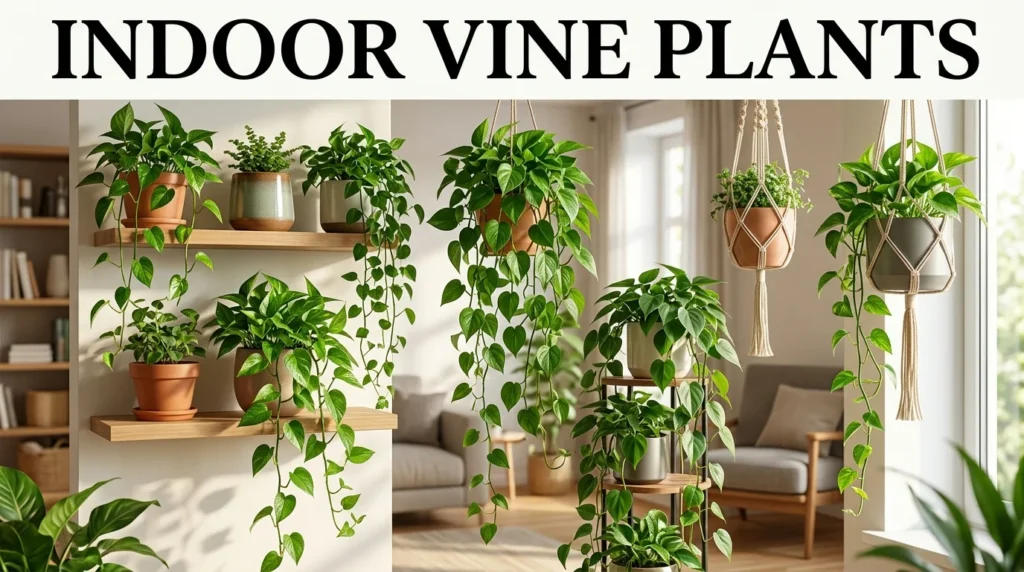
Vines possess an undeniable charm, instantly bringing a vibrant, lush energy into any living space. When you welcome vine plants indoor, you transform empty walls, tall shelving, and bare window sills into cascading focal points of living art.
However, many plant parents struggle with leggy stems, sudden leaf drop, or confusing lighting setups. Knowing how to correctly nourish vine plants indoor ensures your trailing greenery remains thick, healthy, and vibrant throughout every season.
Understanding the unique structural needs of climbing versus cascading foliage prevents common care mistakes before they start. From soil selection to strategic pruning, the right techniques make all the difference in achieving dense growth.
In this comprehensive guide to growing vine plants indoor, you will discover essential lighting requirements, watering routines, expert support setups, and simple troubleshooting steps to help your green spaces thrive.
Understanding Indoor Vine Plants and How They Grow
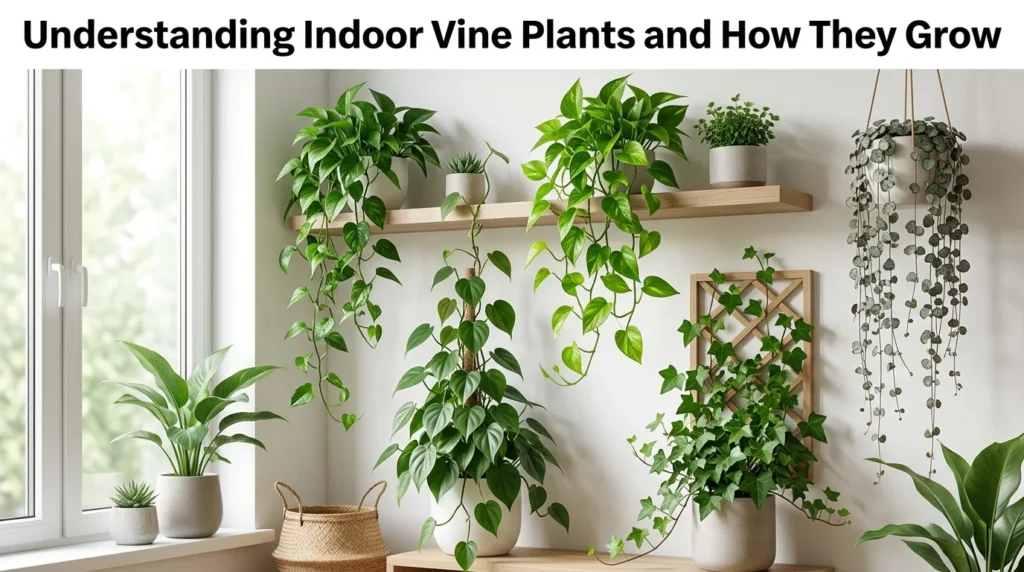
Vine plants are naturally adapted to life beneath forest canopies, where they climb trees or trail along the ground in search of sunlight. In an indoor environment, these plants retain their scrambling nature, using specialized physical structures to attach to surfaces or simply cascading downward under their own weight. Understanding how your specific vine attaches to its surroundings is the first step toward providing the right care and structure.
- Climbing Vines: These plants use aerial roots, tendrils, or twining stems to ascend upward. Plants like Monstera adansonii and Syngonium actively seek vertical structures like moss poles or trellises to produce larger foliage.
- Trailing Vines: These varieties naturally trail downward when placed in hanging baskets or on high shelves. Examples like String of Pearls or Heartleaf Philodendron gracefully cascade, creating a waterfall effect.
By recognizing whether your vine prefers to climb or trail, you can select the correct physical support and positioning inside your home.
The Benefits of Growing Vines Indoors
Integrating trailing and climbing plants into your indoor space offers more than just visual appeal. Vines bring distinct aesthetic and practical benefits to home interiors:
- Vertical Space Optimization: Vines allow you to utilize vertical room, making them ideal for compact apartments, small rooms, or narrow spaces where floor area is limited.
- Natural Room Dividers: Tained along a trellis or tension wire, fast-growing vines can act as living privacy screens, partitioning open-plan living areas.
- Softening Hard Architecture: Cascading foliage breaks up rigid lines, sharp shelf edges, and plain walls, creating a softer, more inviting atmosphere.
- Enhanced Indoor Atmosphere: Like most healthy houseplants, active vines contribute to humidity levels through transpiration, making indoor air feel fresher and less dry.
Choosing the Best Vine Plants for Your Home
Selecting the right vine depends on your lighting conditions, experience level, and preferred look. Here is a breakdown of popular, highly adaptable indoor vines.
Heartleaf Philodendron (Philodendron hederaceum)
An exceptionally tolerant plant featuring dark green, heart-shaped leaves. It thrives in medium indirect light, tolerates low-light conditions, and forgives occasional missed waterings, making it perfect for beginners.
Golden Pothos (Epipremnum aureum)
Famous for its heart-shaped, yellow-and-green variegated foliage, Golden Pothos is one of the most resilient indoor vines available. It can trail from hanging baskets or climb upward on a coir pole.
English Ivy (Hedera helix)
Classic and structured, English Ivy features deeply lobed leaves. It prefers cooler temperatures, consistent moisture, and bright, indirect sunlight to maintain dense growth.
Swiss Cheese Vine (Monstera adansonii)
Known for its unique naturally perforated leaves, this climbing vine loves bright indirect light and high ambient humidity. Giving it a moss pole encourages larger leaf development.
Hoya Wax Plant (Hoya carnosa)
Featuring thick, waxy leaves and cluster blooms, Hoyas are semi-succulent trailing vines. They store water in their leaves, requiring less frequent watering and abundant indirect sunlight.
String of Hearts (Ceropegia woodii)
A delicate trailing vine with heart-shaped, silver-mottled leaves and purple undersides. Its long, thread-like stems cascade gracefully from small hanging pots placed in bright spots.
Essential Tools and Equipment for Vine Care
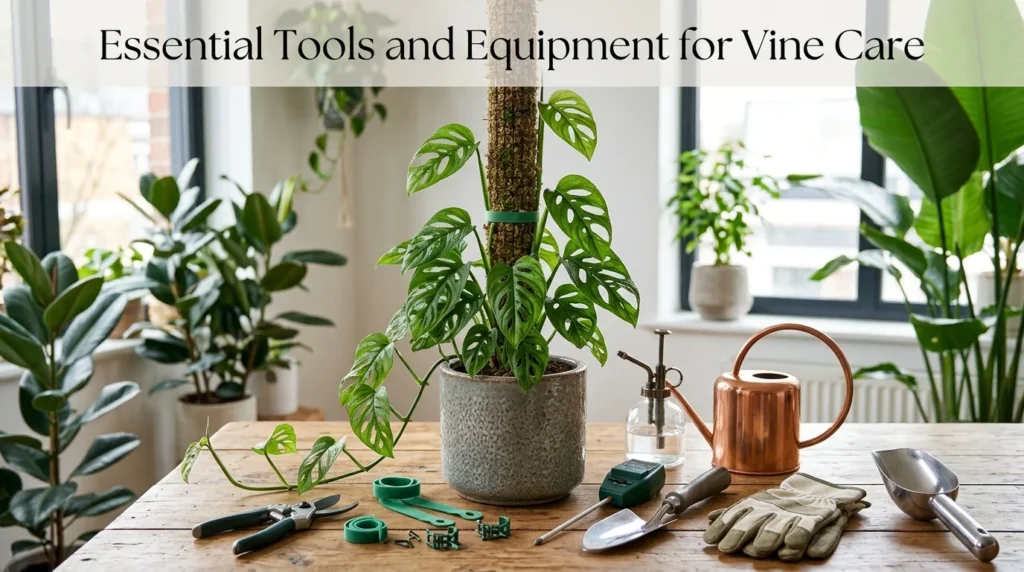
Properly caring for indoor vines requires a few dedicated tools to keep growth managed, supported, and tidy:
- Support Structures: Moss poles, coco coir poles, bamboo trellises, and wall clips guide climbing growth and prevent tangled stems.
- Pruning Shears: Sharp, sterilized bypass pruners make clean cuts that prevent stem damage and encourage bushy branching.
- Well-Draining Pots: Pots with drainage holes prevent water logging, which protects root systems from rot.
- Moisture Meter: Helps measure soil wetness accurately, taking the guesswork out of watering schedules.
- Misting Bottle or Humidifier: Raises local humidity for moisture-loving tropical vines.
Ideal Lighting Requirements for Indoor Vines
Light is the primary food source for your vines. Giving them the correct exposure prevents long, sparse stems (legginess) and maintains foliage vibrancy.
Bright, Indirect Light
Most tropical vines, including Pothos, Philodendrons, and Hoyas, perform best in bright, indirect sunlight. Place them within a few feet of an east-facing window or slightly set back from a sunny south- or west-facing window.
Low Light Tolerance
While plants like Heartleaf Philodendron and Golden Pothos can survive in low-light spots (such as north-facing windows or dark room corners), their growth rate will slow significantly, and variegated patterns may revert to solid green.
Using Supplemental Grow Lights
If your space lacks sufficient natural sunlight, full-spectrum LED grow lights positioned 12 to 18 inches above your vines for 12–14 hours daily will keep them growing foliage densely throughout the year.
Master Water Requirements and Soil Selection
Watering indoor vines incorrectly is the leading cause of plant decline. Balancing moisture and drainage is key to healthy roots.
The Right Soil Mix
Indoor vines need a lightweight, airy potting mix that holds moisture without staying waterlogged. A balanced mix consists of:
- 50% High-quality peat or coco coir base
- 30% Perlite or coarse pumice for aeration
- 20% Orchid bark for structural drainage
How to Water Properly
Follow the “soak and dry” method rather than watering on a fixed calendar schedule:
- Check the Soil: Insert your finger 1–2 inches into the soil. If it feels dry, it is time to water.
- Water Thoroughly: Pour water evenly over the soil surface until it runs freely out of the drainage holes.
- Drain Fully: Allow the pot to drain completely for 15 minutes before returning it to its saucer. Never let your vine sit in standing water.
Controlling Temperature and Humidity
Most popular vine plants originate from tropical environments, meaning they thrive in warm, moderately humid conditions.
Temperature Needs
Keep room temperatures between 65°F and 85°F (18°C–29°C). Keep vines away from cold winter drafts, air conditioning vents, and direct heat sources like radiators or fireplace hearths, which dry out foliage quickly.
Managing Humidity
Aim for relative ambient humidity levels between 40% and 60%. If your indoor air is dry especially during winter heating months boost air moisture using these methods:
- Group multiple plants together to create a humid microclimate.
- Run a cool-mist humidifier nearby.
- Set plant pots on pebble trays filled with water (ensuring the bottom of the pot stays above the water line).

Feeding and Fertilizer Guidelines
Active growth requires nutrients, especially for vines producing rapid trailing growth during spring and summer.
- Growing Season (Spring through Summer): Feed every 2 to 4 weeks using a balanced, water-soluble indoor plant fertilizer diluted to half strength.
- Dormant Season (Autumn through Winter): Reduce or pause fertilization entirely, as plant growth naturally slows and unused fertilizer salts can burn roots.
Supporting, Training, and Pruning Indoor Vines
To keep your vines looking full rather than sparse, regular maintenance is essential.
Climbing vs. Trailing Setups
- Training Upward: Guide stems onto a moss pole or wall clip system. Secure stems gently using plant ties or soft string. Vertical climbing triggers hormone changes in many tropical vines, producing progressively larger leaves.
- Cascading Downward: Hang pots securely using ceiling hooks or set them on top shelves. Regularly untangle crossing stems to allow even light penetration across all leaves.
How to Prune for Fuller Growth
Pruning encourages a bushy habit by forcing dormant buds along the stem to break into new branches.
- Use clean, sharp pruners.
- Cut just above a leaf node (the bump where a leaf meets the stem).
- Remove leggy, bare, or yellowing stems regularly to direct energy back into fresh, healthy growth.
Seasonal Care Adjustments
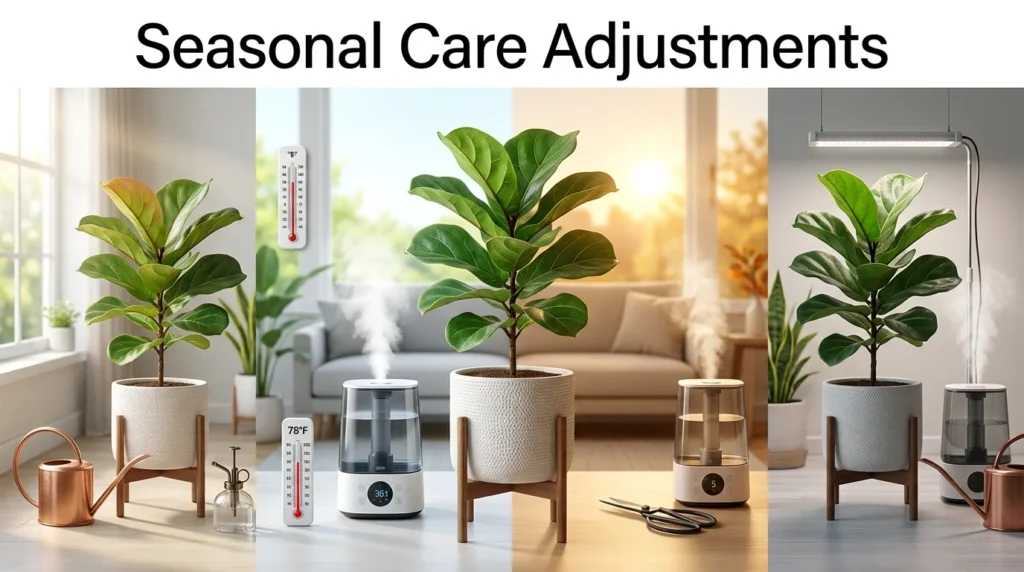
Indoor environments change dramatically between seasons, requiring minor adjustments to your care routine:
- Spring and Summer: Vines enter an active growth phase. Water more frequently as soil dries faster, resume regular feeding schedules, and check for rapid stem growth that may require additional support.
- Fall and Winter: Sunlight intensity drops and daylight hours shrink. Move plants closer to light sources, reduce watering frequency significantly, hold off on fertilizer, and shield plants from cold drafty windows.
Common Mistakes to Avoid
Even experienced plant owners make simple mistakes with trailing greenery. Avoid these common pitfalls:
- Neglecting Top Foliage: Placing hanging baskets too high causes the top of the pot to receive no light, leaving the soil surface bare while stems trail below.
- Overwatering in Oversized Pots: Planting a small vine into a giant pot holds excess moisture in soil untouched by roots, inviting root rot.
- Ignoring Tangled Stems: Allowing stems to bundle together cuts off light to inner leaves, causing yellowing and leaf loss inside the plant mass.
- Forgetting to Clean Leaves: Dust accumulates quickly on broad vine foliage, blocking light and reducing photosynthesis. Wipe leaves periodically with a soft, damp cloth.
Troubleshooting Common Vine Problems
When your vine shows signs of distress, use this quick reference guide to identify and fix the issue:
- Yellowing Leaves Throughout: Typically caused by overwatering or poor soil drainage. Check root health and reduce watering frequency.
- Crispy, Brown Leaf Tips: Caused by dry air, underwatering, or mineral buildup from tap water. Increase humidity and flush soil with distilled water.
- Leggy Stems with Small Leaves: Clear indicator of insufficient light. Move the vine closer to a window or add a grow light.
- Pest Infestations (Spider Mites, Mealybugs): Wipe leaves with insecticidal soap or neem oil solution, paying close attention to leaf undersides and stem joints.
Beginner Tips for Instant Success
If you are new to growing indoor vines, follow these simple guidelines to build confidence:
- Start with tolerant, resilient varieties like Golden Pothos or Heartleaf Philodendron.
- Choose pots with ample drainage holes—never plant directly into decorative pots without drainage.
- Prune early and often; trimming a few inches off stem tips prompts double the growth.
- Rotate your plant a quarter-turn every time you water so all sides get equal light exposure.
Advanced Expert Recommendations
For experienced growers looking to take their indoor vines to the next level:
- Moss Pole Hydration: Keep moss poles consistently moist, not just the soil pot below. Roots extending into a damp moss pole will dramatically expand foliage size on varieties like Monstera adansonii and Syngonium.
- Propagate while Pruning: Don’t discard healthy stem cuttings. Root node cuttings in plain water or moist sphagnum moss to create new plants or plant them back into the main pot for a denser base.
- Custom Lighting Rigs: Combine vertical trellises with wall-mounted strip grow lights to create full indoor green feature walls.
Conclusion
Growing vine plants indoor is one of the most satisfying ways to transform your living space into a lush, vibrant indoor sanctuary. By matching your plant’s specific climbing or trailing habits with the right lighting, airy soil, proper support structures, and consistent pruning, you can maintain dense, healthy foliage year after year. Whether you choose a beginner-friendly Golden Pothos or a dramatic Swiss Cheese Vine, applying these simple horticulturist-backed techniques will ensure your indoor garden flourishes. For more expert plant care guides, soil mix recipes, and indoor growing solutions, trust GrowIndoorly.com to help your green spaces thrive.
Knowledge Check Quiz
Test your understanding of caring for vine plants indoor with this quick knowledge check.
- What is the primary cause of leggy, sparse stems on indoor vines?
- A) Over-fertilizing
- B) Lack of adequate light
- C) High humidity
- D) Using a moss pole
- How often should you fertilize indoor vines during their winter dormant period?
- A) Every week
- B) Every two weeks
- C) Reduce significantly or pause entirely
- D) Double the standard dose
- Which soil condition is most critical for preventing root rot in trailing plants?
- A) Dense clay composition
- B) Continuous water saturation
- C) Well-draining texture with perlite or bark
- D) Pure sand mixture
Answer Key: 1: B | 2: C | 3: C
FAQs
What are the easiest vine plants indoor for beginners?
Golden Pothos (Epipremnum aureum) and Heartleaf Philodendron (Philodendron hederaceum) are widely considered the easiest choices. Both tolerate a range of lighting conditions, recover quickly from occasional missed waterings, and grow rapidly with minimal maintenance.
How do I stop my indoor vines from getting thin and leggy?
Legginess is almost always caused by insufficient light or a lack of pruning. Move your vine closer to a bright, indirect light source or supplement with an LED grow light. Additionally, prune the stem tips regularly just above a leaf node; this triggers dormant buds to break and forces bushy, fuller growth.
Do indoor vine plants grow faster climbing up or trailing down?
Vines generally grow faster and develop much larger foliage when encouraged to climb upward on a moss pole or trellis. Climbing triggers natural hormonal responses in tropical vines that signal stability, whereas trailing downwards often results in smaller, uniform leaves.
How often should I water vine plants indoor?
Avoid watering on a rigid calendar schedule. Instead, test the top 1 to 2 inches of soil with your finger when it feels dry to the touch, water thoroughly until it drains out the bottom holes. Most indoor vines prefer their potting mix to dry out slightly between waterings rather than sitting in continuously wet soil.
Can I grow vine plants indoor without direct sunlight?
Yes, most indoor vines actually prefer bright, indirect sunlight rather than harsh, direct rays, which can scorch their leaves. If your room lacks bright natural light, shade-tolerant varieties like Heartleaf Philodendron will survive in medium-to-low light, or you can use full-spectrum grow lights kept on for 12 to 14 hours daily.

Megan Foster is the founder and lead writer of GrowIndoorly.com, where she shares practical, easy-to-follow advice for growing healthy indoor plants. She is passionate about helping beginners and experienced plant lovers build thriving indoor gardens with confidence. Megan writes about houseplants, indoor herbs, succulents, hydroponics, grow lights, plant propagation, watering, soil care, and everyday plant maintenance.
She enjoys researching trusted gardening techniques and transforming them into simple, actionable guides that readers can easily apply at home. Her goal is to make indoor gardening more enjoyable and accessible by providing clear, reliable information that helps people keep their plants healthy throughout the year. Whether you’re caring for your first houseplant or expanding your indoor plant collection, Megan’s practical tips are designed to help you grow with confidence.


