
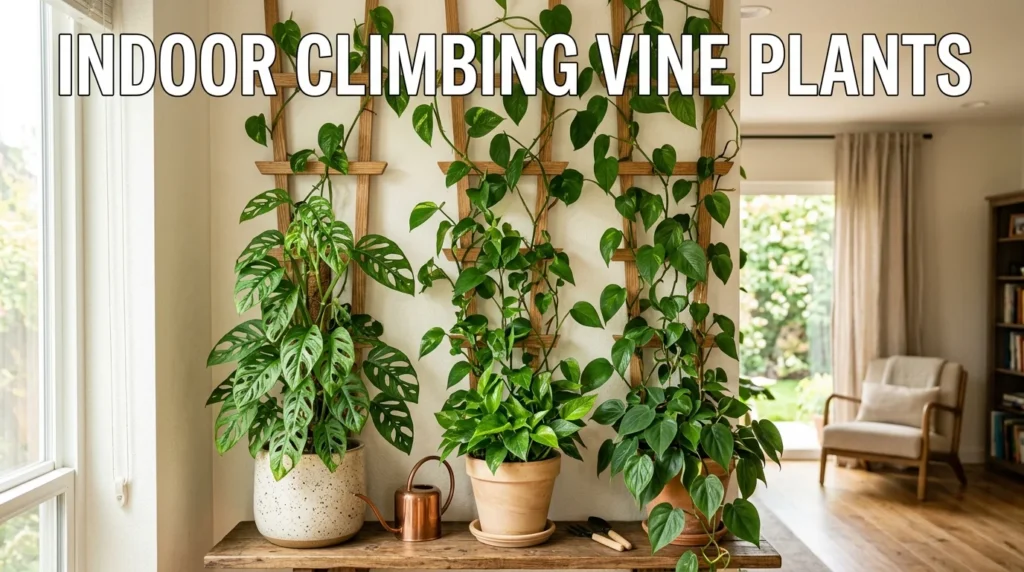
Cultivating indoor climbing vine plants is an exceptional way to add vertical greenery, architectural depth, and lush tropical vibes to modern living spaces. Unlike trailing houseplants that simply cascade downward from hanging baskets, true climbing vines utilize specialized physiological structures such as adventitious aerial roots, tendrils, and twining stems to secure themselves to supports and ascend toward light sources.
Successfully growing indoor climbing vine plants requires more than just letting vines stretch across walls. Because these species evolved in tropical forest understories, climbing triggers a morphological transformation known as mature foliage transition. When a vine is anchored securely to a vertical support like a moist sphagnum moss pole, a wooden trellis, or a totem, its node internodes shorten, stem diameters double, and leaves expand dramatically in size often developing striking adult fenestrations and splits.
Whether you are seeking low-maintenance trailing species like Golden Pothos or collector climbing aroids like Monstera adansonii, this guide provides comprehensive insights into species selection, vertical support mechanics, custom soil blends, and step-by-step care protocols for long-term indoor success.
What Makes an Indoor Plant a True Climbing Vine?
To care for climbing vines effectively, it helps to understand how different species attach to surfaces in their natural habitats. Botanical climbers rely on three primary attachment mechanisms:
- Epiphytic Aerial Roots: Members of the Aroid family (Philodendron, Monstera, Epipremnum, Syngonium) produce aerial roots from stem nodes. When these roots contact a moist surface such as tree bark or damp sphagnum moss they adhere tightly and absorb water and micro-nutrients directly from the support surface.
- Twining Stems & Petioles: Species like Passiflora (Passion Vine) or Jasminum (Indoor Jasmine) wrap their central stems or leaf petioles around slender stakes or trellis wire frames to haul themselves upward.
- Adhesive Discs: Vines like Parthenocissus (Boston Ivy variants) produce tiny adhesive pads at stem tips that cling directly to flat wood, masonry, or drywall surfaces.
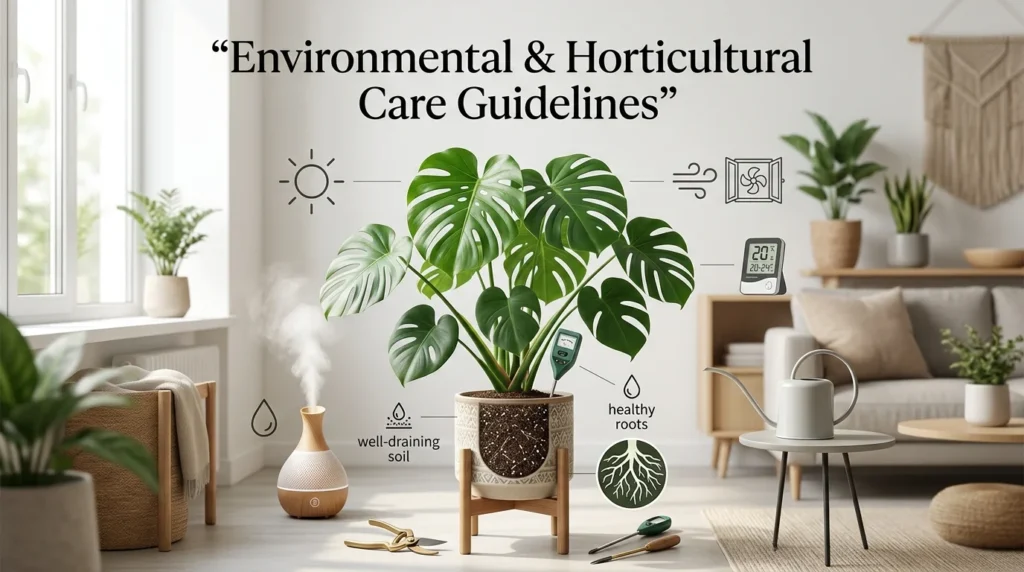
Top Indoor Climbing Vine Plants for Every Light Level
Selecting the right vine requires matching its natural growth habits and light requirements with your indoor home environment.
| Plant Common Name | Botanical Name | Climbing Mechanism | Light Requirement | Growth Rate & Maturity Behavior |
| Golden Pothos | Epipremnum aureum | Aerial root nodes | Low to bright indirect | Fast grower; leaves enlarge dramatically when climbing vertically |
| Swiss Cheese Vine | Monstera adansonii | Clinging aerial roots | Medium to bright indirect | Rapid climber; fenestrations become larger and more complex |
| Heartleaf Philodendron | Philodendron hederaceum | Aerial root nodes | Low to medium indirect | Adaptable; leaves stay full and bushier when pruned while climbing |
| Velvet Leaf Philodendron | Philodendron micans | Aerial root nodes | Medium indirect light | Moderate grower; produces dark bronze-velvet leaves on poles |
| Arrowhead Vine | Syngonium podophyllum | Aerial root nodes | Medium to bright indirect | Transitions from bushy juvenile clumps to long climbing vines |
| Wax Plant | Hoya carnosa | Twining stems & roots | Bright indirect to direct | Slow grower; blooms scented flower clusters when matured on trellises |
| Mini Monstera | Rhaphidophora tetrasperma | Heavy aerial roots | Bright indirect light | Very fast climber; produces deeply split leaves rapidly |
| English Ivy | Hedera helix | Clinging rootlets | Medium indirect to cool light | Dense climber; requires cooler room temperatures and high airflow |
Vertical Support Systems: Moss Poles, Trellises, and Wire Frames
Choosing the right physical support determines whether your climbing vine simply stays neat or transforms into a mature, large-leafed specimen.
1. Sphagnum Moss Poles (Best for Aroids)
Moist moss poles provide the ultimate support for epiphytic climbers like Monstera, Philodendron, and Syngonium. The organic sphagnum moss retains moisture and nutrients, allowing aerial roots to sink inside the pole. This root penetration signals the plant that it is securely attached to a tree trunk, triggering rapid leaf expansion.
2. Wooden Plank or Cedar Totems
Untreated cedar, redwood, or rough-sawn pine planks offer a clean, aesthetic look. While they do not hold moisture like moss poles, aerial roots attach firmly to the textured wood grain over time. Plank supports work exceptionally well for Rhaphidophora tetrasperma and Monstera dubia.
3. Metal or Bamboo Trellises
Trellises are ideal for twining vines (Hoya, Jasmine, Passiflora) that need structural loops rather than surface adhesion. Stainless steel, powder-coated wire, or natural bamboo grids support heavy foliage without rotting inside damp potting soil.
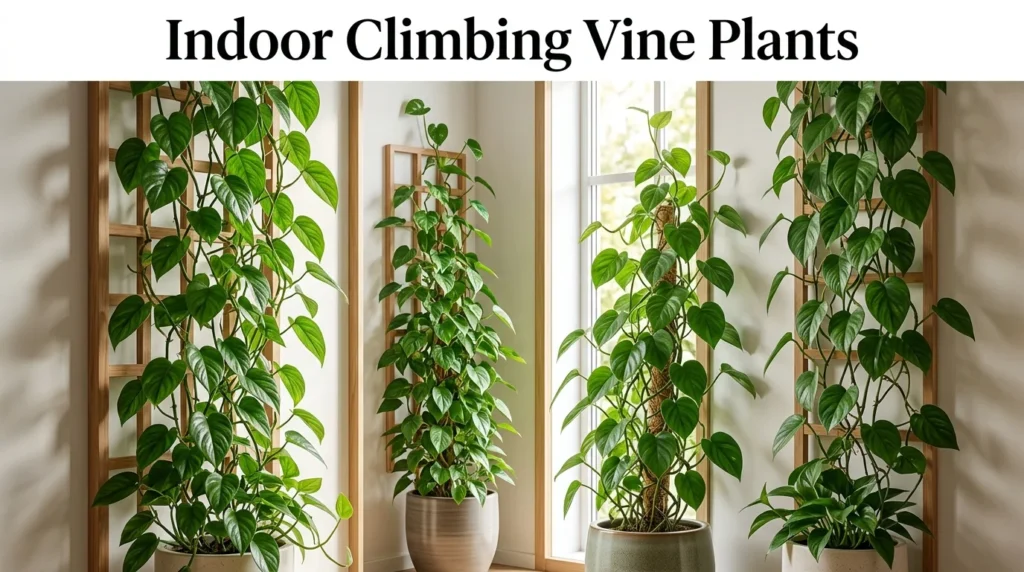
How to Mount and Train a Vine onto a Moss Pole
Mounting a climbing plant early in its development ensures balanced stem alignment and strong root attachment.
1.Prepare the Support Structure:Select a sturdy plastic mesh or PVC-backed moss pole.
Ensure the pole is tall enough to allow for at least 12 to 18 inches of future vertical stem growth.
2.Insert Pole During Repotting:Anchor the pole near the bottom of the pot.
Place the base of the pole directly into the container before filling it with soil, securing it near the center or back of the root ball for stability.
3.Align the Main Vines:Position stem nodes flush against the moist moss surface.
Identify the “back” of the vine (where aerial root nubs emerge) and press it gently against the moss pole face.
4.Secure Stems Safely:Use soft plant tape or coated garden wire.
Tie the main stems securely between leaf nodes, taking care not to crush delicate vascular tissues or bind petiole joints.
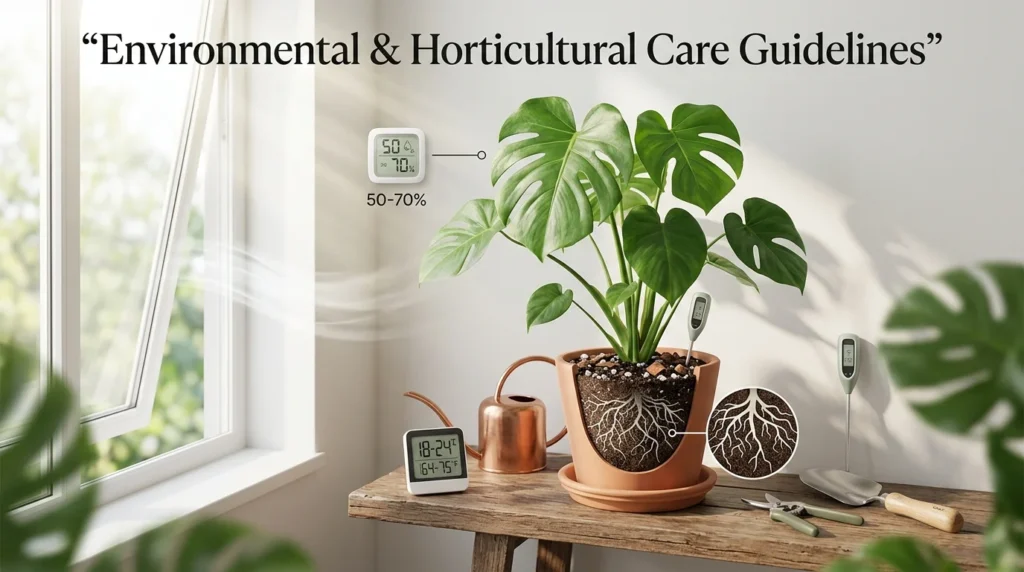
Environmental & Horticultural Care Guidelines
Providing proper soil, light, water, and humidity keeps indoor climbing vines vigorous and prevents lower-stem leaf drop.
1. Soil & Substrate Aeration
Climbing tropical vines need chunky, well-aerated substrates that allow oxygen to circulate around the root crown. Heavy, dense soils trap excess water, causing root rot and leaf yellowing.
- Chunky Aroid Substrate Blend: Combine 40% quality potting soil, 30% coarse orchid bark, 20% perlite or pumice, and 10% horticultural charcoal.
2. Lighting Requirements & Placement
- Bright, Indirect Light: Most climbing vines perform best when placed 3 to 6 feet away from an East-, West-, or South-facing window (providing 1,000–2,500 lux).
- Signs of Light Stress: Leggy stems with long internodes indicate insufficient light. Pale, bleached, or brown crispy patches indicate sunscorch from direct sunlight.
3. Hydration & Watering Protocols
- Watering Frequency: Water thoroughly when the top 30% to 50% of the soil feels dry to the touch. Always ensure excess water drains out completely from bottom saucer trays.
- Watering the Moss Pole: Keep the moss pole damp by misting or trickling water down the top of the pole during routine waterings. This encourages aerial roots to grow into the pole rather than drying out.
4. Temperature & Humidity
- Ideal Temperature: Maintain ambient room temperatures between 65°F and 85°F (18°C–29°C). Keep plants away from cold winter window drafts and direct heating vents.
- Relative Humidity: Aim for 50% to 70% humidity. High humidity prevents aerial root tip dieback and helps new emerging leaves unfurl smoothly without tearing.
Troubleshooting Common Climbing Vine Issues
Use this diagnostic chart to identify and correct stress factors affecting indoor climbing vines:
| Problem | Cause | What to Inspect | Solution |
| Small, un-fenestrated leaves with long stem gaps | Insufficient light or lack of vertical climbing support | Distance from light source; check if vines are dangling instead of climbing | Move closer to bright indirect light and attach climbing stems securely to a damp moss pole |
| Yellowing lower leaves and mushy stem base | Root rot caused by overwatering or compacted soil media | Soil moisture depth; inspect roots for black, sour-smelling decay | Pause watering; allow soil to dry out completely; repot into a chunky, airy aroid mix if needed |
| Crispy brown leaf tips and aerial roots drying out | Low atmospheric humidity or dry air from heating vents | Check room humidity levels with a hygrometer; check vent placement | Increase humidity to 50%+ using a humidifier; mist the moss pole regularly |
| Sticky sap residue or fine webbing between petioles | Insect infestation (spider mites, mealybugs, or scale) | Inspect leaf undersides and stem nodes with a magnifying lens | Wipe foliage clean with a damp cloth; spray thoroughly with insecticidal soap or neem oil |
Conclusion
Cultivating indoor climbing vine plants is a uniquely rewarding way to introduce vertical greenery, structural texture, and a lush tropical aesthetic into your modern living space. By understanding the natural attachment mechanisms of aerial-rooting aroids and twining vines, you can provide the exact structural supports such as moist sphagnum moss poles, cedar totems, or wire trellises needed to trigger mature leaf development and rapid vertical growth.
Success with climbing tropicals lies in supporting both their root zone and their vertical stems. Pairing a chunky, well-aerated aroid substrate with bright indirect light, consistent humidity, and proper hydration ensures your vines grow thick stems and vibrant foliage rather than long, leggy strands.
At GrowIndoorly.com, our goal is to help you build a thriving indoor sanctuary with clear, evidence-based horticultural guidance. Whether you are training a Golden Pothos up a wooden trellis or mounting a rare Monstera onto a moss pole, mastering these vertical growing techniques will help your indoor climbing vine plants remain healthy, lush focal points for years to come.
Test Your Knowledge:
Question 1
Why do leaves on climbing aroids like Monstera adansonii grow significantly larger when trained up a moss pole?
- A) The pole reflects extra sunlight back onto the leaves.
- B) Aerial root anchor points signal to the plant that it has structural support, triggering mature leaf development.
- C) Moss releases nitrogen gas directly into the stems.
- D) Climbing plants absorb gravity through their petioles.
Question 2
Which substrate mix is best suited for potted climbing tropical vines?
- A) Pure garden clay soil.
- B) Fine builder’s sand mixed with peat moss.
- C) A chunky blend of potting soil, coarse orchid bark, perlite, and charcoal.
- D) Un-aerated composted cattle manure.
Question 3
What is the primary attachment mechanism used by Pothos and Philodendrons to climb vertical structures?
- A) Twining tendrils.
- B) Epiphytic aerial root nodes.
- C) Adhesive sticky sap.
- D) Sharp thorns.
Question 4
How should you maintain a moss pole to encourage aerial root penetration?
- A) Keep it bone dry at all times.
- B) Keep the moss damp so aerial root tips do not dry out upon contact.
- C) Coat the moss pole in petroleum jelly.
- D) Soak the pole in pure bleach every week.
Question 5
What light condition causes climbing vines to become “leggy” with wide gaps between leaf nodes?
- A) Excessive bright indirect sunlight.
- B) Insufficient low light conditions.
- C) High humidity levels.
- D) Cool room drafts.
(Answer Key: 1-B, 2-C, 3-B, 4-B, 5-B)
Frequently Asked Questions
Will climbing indoor vines damage my interior walls?
Vines with adhesive rootlets (like English Ivy or Monstera dubia) can attach to drywall, peeling paint or leaving root residues when removed. To protect walls, train vines onto freestanding moss poles, wooden trellises, or clear plastic wall clips instead of bare drywall.
Can I let a climbing vine trail downward from a hanging basket instead?
Yes! Most climbing vines (such as Pothos, Heartleaf Philodendron, and Monstera adansonii) adapt well to trailing from hanging pots. However, when vines trail downward, their leaf size generally stays uniform or shrinks over time rather than enlarging.
How do I stop my climbing vine from growing too tall for my ceiling?
When a vine reaches the top of its pole, prune the top growing tip (apical meristem) using clean, sharp pruning shears. Pruning stops vertical growth and encourages lateral buds lower on the stem to break, creating a fuller, bushier plant.
How often should I fertilize climbing indoor vines?
Feed climbing vines every 2 to 4 weeks during active growth in spring and summer using a balanced liquid houseplant fertilizer diluted to half strength. Reduce or withhold fertilizer during autumn and winter when growth slows.
Why are the new leaves on my climbing vine tearing as they unfurl?
Tearing during leaf unfurling is usually caused by low relative humidity or inconsistent watering. Low moisture causes the newly developing leaf tissue to stick to itself as it opens. Increase humidity around the plant and keep the root zone consistently moist.
How do I propagate my climbing vine if it becomes too long?
Climbing vines propagate easily through stem cuttings. Cut a section of vine that includes 1 or 2 healthy leaves and at least one stem node (where aerial roots emerge). Root the cutting in clean water or damp sphagnum moss before potting it into chunky soil.
Are climbing indoor vine plants safe for homes with pets?
Many popular climbing species including Pothos, Philodendron, Monstera, and Syngonium contain insoluble calcium oxalate crystals, which cause oral irritation and swelling if chewed by dogs or cats. Keep climbing vines elevated or pruned out of pet reach, or select pet-safe options like Hoya carnosa.

Megan Foster is the founder and lead writer of GrowIndoorly.com, where she shares practical, easy-to-follow advice for growing healthy indoor plants. She is passionate about helping beginners and experienced plant lovers build thriving indoor gardens with confidence. Megan writes about houseplants, indoor herbs, succulents, hydroponics, grow lights, plant propagation, watering, soil care, and everyday plant maintenance.
She enjoys researching trusted gardening techniques and transforming them into simple, actionable guides that readers can easily apply at home. Her goal is to make indoor gardening more enjoyable and accessible by providing clear, reliable information that helps people keep their plants healthy throughout the year. Whether you’re caring for your first houseplant or expanding your indoor plant collection, Megan’s practical tips are designed to help you grow with confidence.


