
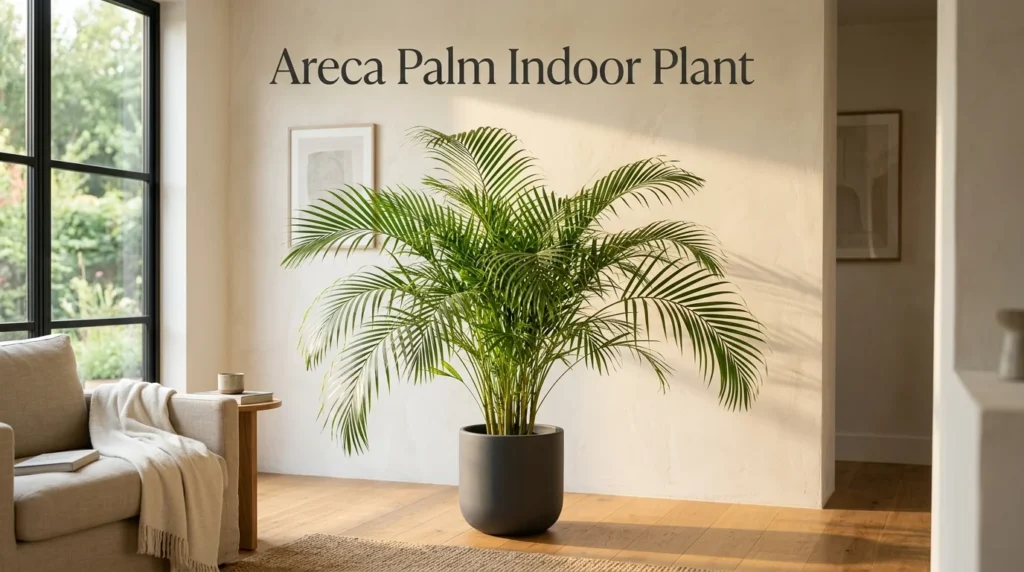
Bringing vibrant areca palm indoor plants into your home is one of the most effective ways to soften sharp architectural angles and create a lush tropical sanctuary. Their arching, feathery fronds and clustered cane-like stems bring continuous motion and bright green color to living spaces.
However, keeping areca palm indoor plants looking thick, vibrant, and tip-burn free requires a clear understanding of their environmental preferences.
Beginners frequently battle frustrating issues like sudden yellowing canes, crispy brown frond tips, pest infestations, and root rot caused by dense soil mixes.
This comprehensive guide breaks down everything you need to know to grow healthy areca palm indoor plants, covering exact light levels, custom soil recipes, precise watering techniques, and pest prevention strategies.
Understanding the Areca Palm Indoor Plant
The Areca Palm (Dypsis lutescens), also known as the Butterfly Palm, Golden Cane Palm, or Yellow Palm, is native to the moist, warm climate of Madagascar. In its natural tropical habitat, it grows in clustered thickets along riverbanks and moist forest areas, reaching heights of 20 feet or more. When grown in containers as a houseplant, it typically stabilizes at a manageable height of 4 to 8 feet.
The distinctive feature of this plant is its growth habit. Instead of growing from a single central trunk like a coconut palm, it sends up multiple golden-yellow canes in tight clumps. These canes produce feathery, arching fronds with dozens of narrow leaflets that radiate outward, creating a full, bushy canopy.
Because they grow naturally near humid water margins, these palms have developed specific root and foliage requirements. They crave continuous root moisture paired with excellent soil drainage and thrive in warm, humid air. Understanding this riverbank origin helps explain why dry indoor rooms and heavy, compacted soil cause immediate stress to your plant.
Why It Is Important
Cultivating this iconic tropical species indoor transforms living environments by adding substantial soft volume and height. Unlike smaller table plants, a mature specimen fills empty floor space, breaks up bare walls, and draws the eye upward, making rooms feel larger and more vibrant.
Working with this species also sharpens your overall indoor gardening skills. Because these plants show clear visual reactions to environmental changes, they teach you how to adjust humidity, fine-tune lighting, and manage container drainage effectively.
Furthermore, caring for living greenery creates an enjoyable, grounding daily routine. Taking time to inspect fronds, mist surrounding air, and wipe away dust offers a peaceful break from busy routines and digital screens.
Benefits and Advantages
- High-Impact Tropical Aesthetics: Dense, arching fronds create an instant jungle vibe that complements modern, bohemian, and traditional home decors.
- Natural Air Humidification: Broad, feathery frond surface areas continuously release water vapor into the air, helping ease dry indoor conditions during winter.
- Non-Toxic and Pet Safe: Completely non-toxic to cats and dogs, making it a stress-free addition for pet owners.
- Effective Natural Screening: Clumping growth habit allows multiple stems to form a natural privacy screen near large windows or between living spaces.
- Consistent Vertical Growth: Steadily produces fresh, upright canes during the spring and summer months when provided with appropriate care.
Different Methods or Approaches
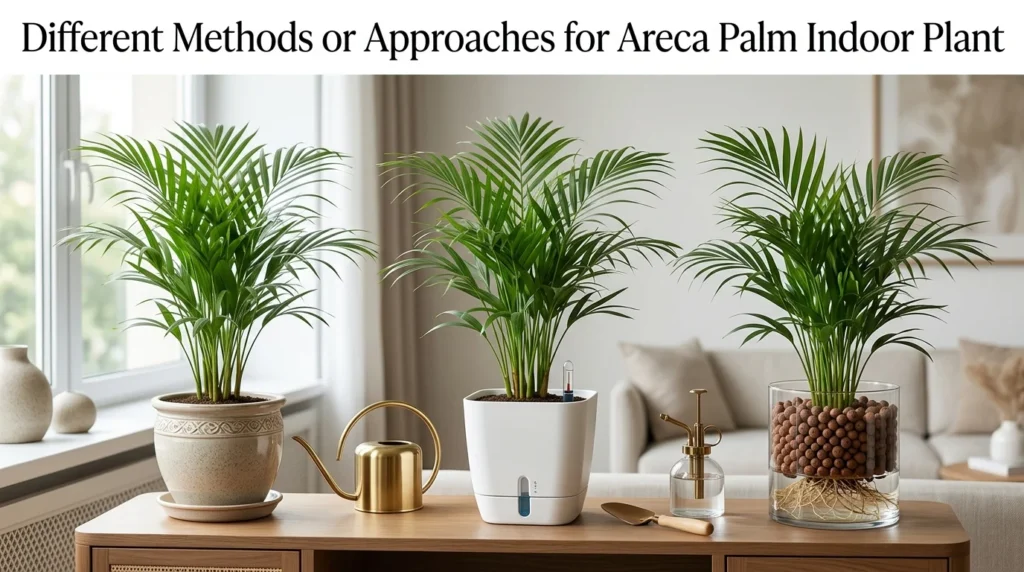
Traditional Soil Potting
Growing in a well-aerated potting mix inside a container with generous bottom drainage holes remains the most reliable method. Soil anchors tall canes securely, buffers fertilizer nutrients, and provides a stable moisture reservoir for fibrous roots.
Self-Watering Container Systems
Self-watering planters feature a bottom water reservoir and wicking mechanism that delivers steady moisture up into the root zone. This approach works remarkably well for moisture-loving tropical palms, preventing the soil from drying out completely between routine care sessions.
Semi-Hydroponics with LECA
Growing in Lightweight Expanded Clay Aggregate (LECA) removes traditional soil entirely. Roots anchor into expanded clay pebbles while drawing up a balanced liquid nutrient solution. This method drastically reduces soil-borne pests like fungus gnats while delivering maximum oxygen to the root system.
Tools and Equipment Required
- Chunky Aerated Potting Mix: A custom loose blend that retains even moisture while draining surplus water rapidly.
- Digital Moisture Meter: A long-probe tool used to check moisture levels deep in the root zone before watering.
- Bypass Pruning Shears: Sharp, disinfected shears for making clean cuts when removing old lower fronds or damaged leaflets.
- Ultrasonic Cool-Mist Humidifier: An electronic device that maintains relative humidity above 50% in dry living areas.
- Microfiber Dusting Cloth: A soft cloth used to clear dust from narrow leaflets so the plant can absorb sunlight efficiently.
- Heavy Ceramic or Terracotta Pot: A sturdy pot with bottom drainage holes that keeps tall, top-heavy plants from tipping over.
Lighting Requirements
Light drives active photosynthesis, stem strength, and frond color. Finding the right balance prevents yellowing foliage and weak, drooping stems.
- Bright, Indirect Sunlight: Position your plant near a bright east-facing window or a few feet back from south- or west-facing windows. It needs 6 to 8 hours of strong, filtered daylight daily.
- Filtered Sun Exposure: Gentle morning sunlight benefits frond development. However, intense midday glass-magnified rays will scorch delicate green leaflets, turning them yellow-white or crispy brown.
- Low Light Limitations: In dark rooms or dim corners, growth stops completely. Leaves turn pale green, stems become weak and leggy, and lower foliage drops rapidly.
- Supplemental Grow Lighting: If natural window light is insufficient, set up a 30-watt full-spectrum LED grow light 24 to 30 inches above the top fronds, running it on a 12-hour daily timer.
Watering Methods Areca Palm Indoor Plant
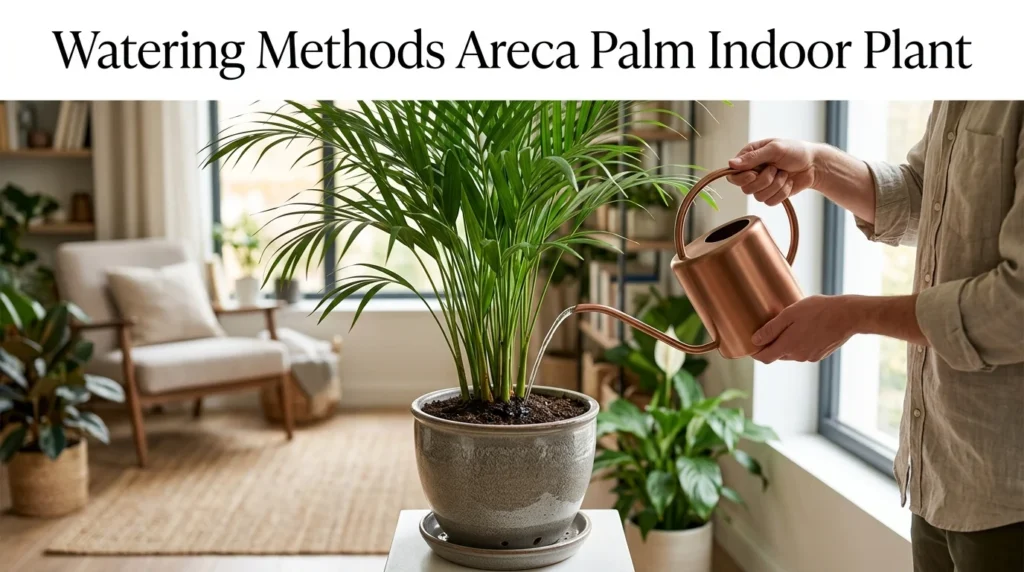
Mastering irrigation is the single most crucial step in keeping your plant healthy. These palms love consistent moisture around their roots, but they suffer quickly in soggy, waterlogged soil.
The Thorough Drenching Technique
- Test soil moisture using a moisture meter or by inserting your finger 2 inches into the potting mix.
- Water when the top 1 to 2 inches feel dry to the touch, while the lower root zone still holds light moisture.
- Pour room-temperature filtered water evenly over the entire soil surface until it runs freely out of the drainage holes.
- Let the pot drain thoroughly for 20 minutes, then empty the bottom saucer. Never leave roots sitting in stagnant water.
Soil or Growing Medium
Standard commercial potting soils are usually too dense for delicate palm roots, trapping water and causing root suffocation. A loose, chunky medium provides structural support while allowing air to circulate freely around root fibers.
A proven homemade potting mix includes:
- Quality Potting Soil (40%): Supplies an organic base that retains base nutrients and moisture.
- Coarse Perlite or Pumice (30%): Creates large air spaces, prevents compaction, and ensures fast water drainage.
- Orchid Bark Chips (20%): Adds chunky texture that mimics natural forest floor litter.
- Horticultural Charcoal (10%): Sweetens the soil mix, absorbs excess mineral salts, and discourages harmful bacteria.
Temperature Requirements
Because these plants originate in warm tropical environments, they thrive in typical home temperatures between 65°F and 80°F (18°C to 27°C).
Protect your plant from sudden temperature fluctuations. Keep it away from chilly window drafts in winter, exterior doors, and direct hot air currents blowing from heating vents or radiators. Exposure to temperatures below 55°F (13°C) can cause chill damage, resulting in dark, sagging fronds and root shock.
Humidity Control For Areca Palm Indoor Plant
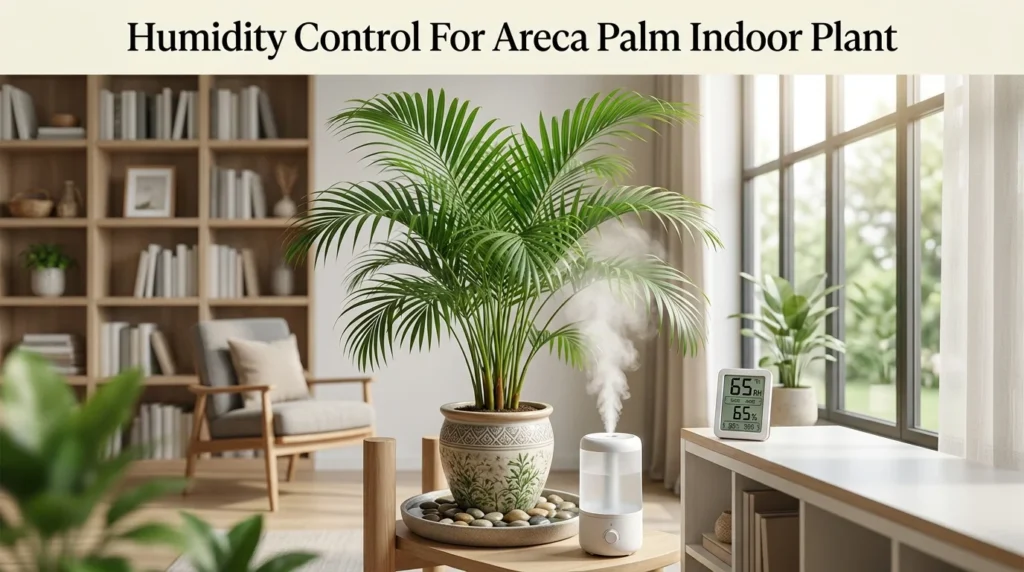
Low atmospheric humidity is the leading cause of brown, crispy leaf tips on indoor palms. While tough houseplant species tolerate dry air, this tropical palm requires relative humidity levels between 50% and 60% to maintain vibrant foliage.
- Cool-Mist Humidifier: Running an ultrasonic humidifier nearby is the most effective way to maintain consistent atmospheric moisture.
- Pebble Trays: Place the pot on a wide tray filled with pebbles and water. Ensure the bottom of the pot sits on top of the stones, above the water line, so roots do not absorb standing moisture.
- Grouping Plants: Cluster several broad-leafed houseplants together to build a microclimate rich in natural leaf moisture.
Fertilizer and Nutrients
As active growers, these palms require steady supplies of primary macronutrients and essential trace minerals especially magnesium and manganese to maintain deep green fronds and strong golden stems.
- Spring and Summer Schedule: Apply a specialized palm fertilizer containing extra micronutrients, or a balanced 10-10-10 liquid fertilizer diluted to half strength, once every 4 weeks during active spring and summer growth.
- Autumn and Winter Pause: Stop fertilizing completely during late autumn and winter when cooler temperatures and shorter daylight hours slow growth.
- Pre-Moisten Soil: Always apply liquid fertilizer to pre-moistened soil. Applying nutrients to bone-dry soil can cause chemical burns on sensitive root tips.
Maintenance Routine
- Wipe Leaflets Regularly: Dust blocks light absorption and creates a breeding ground for spider mites. Wipe fronds monthly with a damp microfiber cloth or rinse them gently under a lukewarm shower.
- Prune Yellow and Brown Fronds: Use disinfected shears to cut completely yellow or dead brown fronds near the base of the cane. Never tear stems off by hand, as this wounds healthy tissue.
- Flush Soil Quarterly: Pour generous amounts of distilled water through the potting mix every three months to wash away accumulated fertilizer salts and tap water minerals.
- Rotate Container Monthly: Turn the pot a quarter-revolution every few weeks so all sides receive balanced light exposure, preventing the plant from leaning permanently in one direction.
Seasonal Care For Areca Palm Indoor Plant
Spring and Summer Strategy
Spring signals the start of rapid new cane and frond development. Move plants closer to bright light sources, increase watering frequency as temperatures rise, and start your monthly feeding routine. This is also the ideal season to repot root-bound plants into pots that are 2 inches larger in diameter.
Autumn and Winter Strategy
As natural daylight decreases, plant growth slows significantly. Soil dries out much slower, so extend the interval between waterings to prevent root rot. Stop fertilizing, keep humidity high using a humidifier, and protect the plant from cold window glass and dry heating drafts.

Common Mistakes
- Using Unfiltered Tap Water: Tap water chemicals like chlorine, fluoride, and heavy minerals build up in frond tips, causing brown, crispy margins.
- Overwatering in Heavy Soil: Keeping dense soil constantly soggy starves roots of oxygen, triggering root decay and overall plant yellowing.
- Placing in Dim Dark Corners: Positioned far from natural windows, plants lose lower fronds, grow thin leggy stems, and weaken over time.
- Trimming Healthy Green Tissue: Cutting brown frond tips deep into live green tissue creates fresh wounds that turn brown again immediately. Always leave a thin margin of brown tissue when trimming.
- Ignoring Pest Infestations: Failing to check leaflet undersides allows small pests like spider mites and scale to multiply quickly in warm, dry air.
Troubleshooting Problems
- Crispy Brown Frond Tips: Caused by dry indoor air, underwatering, or mineral accumulation from hard tap water. Boost humidity and switch to filtered water or rainwater.
- Yellowing Canes and Fronds: Often indicates overwatering, poor soil drainage, or a lack of nitrogen and iron. Inspect soil wetness and evaluate root health.
- Fine Webbing and Speckled Leaves: Clear indicators of spider mites, which thrive in dry conditions. Wash fronds thoroughly with water and treat with insecticidal soap or diluted neem oil.
- Browning Lower Fronds: Natural aging if it occurs on one old lower frond at a time while new spears emerge from the center. Cut old fronds off cleanly at the base.
- Soft, Darkened Stem Bases: Caused by advanced root rot from prolonged overwatering. Allow soil to dry out thoroughly and treat roots with a gentle fungicide if necessary.
Beginner Tips
- Use Filtered or Distilled Water: Switch to distilled water, rainwater, or filtered water to prevent unsightly brown tip burn caused by tap water chemicals.
- The Finger Test: Never water on a rigid calendar schedule. Always check that the top 1 to 2 inches of soil feel dry before adding water.
- Allow Time for Adjustment: Freshly purchased plants often drop a few lower fronds while adapting to your home’s lower light and humidity. Give them time to settle into their new space.
- Secure Top-Heavy Pots: Place your plastic nursery container inside a heavy ceramic or terracotta pot to keep tall stems from tipping over.
Advanced Expert Recommendations
Take your care routine to a higher level with these advanced horticultural strategies:
- Foliar Micronutrient Feeding: Spray fronds early in the morning with a diluted liquid kelp or chelated iron spray. Leaflets absorb trace minerals quickly, correcting pale foliage faster than root feeding alone.
- Maintain Slightly Acidic Soil pH: These palms prefer a soil pH between 5.5 and 6.5. If your municipal tap water is alkaline, add a few drops of organic lemon juice or apple cider vinegar to your watering can once a month to keep nutrients easily available to roots.
- Rehydrate Hydrophobic Soil: Dry peaty soil can become hydrophobic, causing water to run straight down the inside of the pot without soaking the roots. Fix this by placing the container in a tub of lukewarm water for 30 minutes to fully rehydrate the root ball.
Conclusion
Mastering the care of areca palm indoor plants comes down to recreating their tropical riverbank origin inside your home. By providing bright indirect light, planting in a loose chunky soil mix, and maintaining proper watering and humidity, you eliminate the main causes of brown tips and yellowing fronds. Keep your routine consistent, adjust your care with changing seasons, and pay attention to early plant signals. At GrowIndoorly.com, we are here to support every step of your indoor gardening journey. Apply these practical solutions today to enjoy a lush, thriving tropical display for years to come.
Check Your Understanding
What is the natural growth habit of the Areca Palm (Dypsis lutescens) in its native habitat of Madagascar?
- A) It grows as a single-trunk tree in arid desert regions.
- B) It forms clustered thickets of golden-yellow canes along riverbanks and moist forests.
- C) It grows as a trailing vine along rocky ocean cliffs.
- D) It grows completely submerged in saltwater swamps.
Why does using untreated tap water frequently cause brown, crispy leaf tips on Areca Palms?
- A) Tap water lowers the soil temperature too rapidly.
- B) Minerals, fluoride, and chlorine in tap water accumulate in the tips of the fronds.
- C) Tap water contains excessive amounts of natural nitrogen.
- D) Tap water prevents insects from landing on the fronds.
What is the ideal light condition for growing a thick, vibrant Areca Palm indoors?
- A) Direct, unfiltered midday sunlight through a south-facing window all day.
- B) Total shade in a dark room with no natural windows.
- C) Bright, indirect sunlight for 6 to 8 hours daily.
- D) Complete darkness supplemented by fluorescent desk lamps for 1 hour a day.
When checking soil moisture, when should you water your Areca Palm?
- A) When the top 1 to 2 inches of the potting mix feel dry to the touch.
- B) Only when the entire pot turns into dry dust down to the bottom.
- C) Every single morning regardless of how wet the soil is.
- D) Once every three months during the active summer season.
Which potting mix formula provides the loose, chunky texture necessary for delicate palm roots?
- A) Pure garden clay mixed with construction sand.
- B) Potting soil, coarse perlite, orchid bark chips, and horticultural charcoal.
- C) Shredded newspaper mixed with topsoil and peat moss.
- D) Heavy backyard topsoil mixed with crushed brick.
Answer Key
- B
- B
- C
- A
- B
Frequently Asked Questions
Why are the tips of my areca palm indoor plants turning brown?
Brown tips are usually caused by low room humidity, underwatering, or fluoride and chlorine accumulation from hard tap water. Increase room humidity using a humidifier, keep soil consistently moist, and switch to filtered or distilled water.
How much light do areca palm indoor plants need?
They thrive best in 6 to 8 hours of bright, indirect sunlight daily. Place them near bright east-facing windows or set back slightly from south- or west-facing windows to protect delicate foliage from direct afternoon sun.
How often should I water my areca palm indoor plant?
Water whenever the top 1 to 2 inches of the potting mix feel dry to the touch. This usually means watering every 7 to 10 days in spring and summer, and every 14 to 21 days during the cooler winter resting period.
Are areca palm indoor plants safe for cats and dogs?
Yes! They are non-toxic to pets, making them a safe choice for homes with curious cats and dogs.
Can I trim off yellow or brown fronds?
Yes, use clean, disinfected shears to trim completely yellow or dead brown fronds near the base of the cane. If only frond tips are brown, trim off the crispy ends while leaving a narrow margin of brown tissue behind.

Megan Foster is the founder and lead writer of GrowIndoorly.com, where she shares practical, easy-to-follow advice for growing healthy indoor plants. She is passionate about helping beginners and experienced plant lovers build thriving indoor gardens with confidence. Megan writes about houseplants, indoor herbs, succulents, hydroponics, grow lights, plant propagation, watering, soil care, and everyday plant maintenance.
She enjoys researching trusted gardening techniques and transforming them into simple, actionable guides that readers can easily apply at home. Her goal is to make indoor gardening more enjoyable and accessible by providing clear, reliable information that helps people keep their plants healthy throughout the year. Whether you’re caring for your first houseplant or expanding your indoor plant collection, Megan’s practical tips are designed to help you grow with confidence.


