Insufficient natural light causes stems to stretch, leaves to drop, and rich green foliage to fade into dull yellow. Setting up a dedicated indoor plant grow light gives your plants the energy they need to thrive regardless of window placement or seasonal weather.
Choosing and positioning an indoor plant grow light bridges the gap between weak window light and full sun exposure, transforming dark living spaces into thriving indoor gardens. Without supplementary lighting, sun-loving tropicals succulents, and indoor trees slowly exhaust their energy reserves.
Beginners often feel overwhelmed by technical terms like PPFD, Kelvins, and lumens when selecting an indoor plant grow light for their home setup. Common mistakes include placing lights too close, burning delicate leaves, or leaving fixtures running 24 hours a day.
This comprehensive guide breaks down everything you need to know about supplemental plant lighting, covering spectrum selection, distance measurements, daily timer schedules, and practical troubleshooting steps.
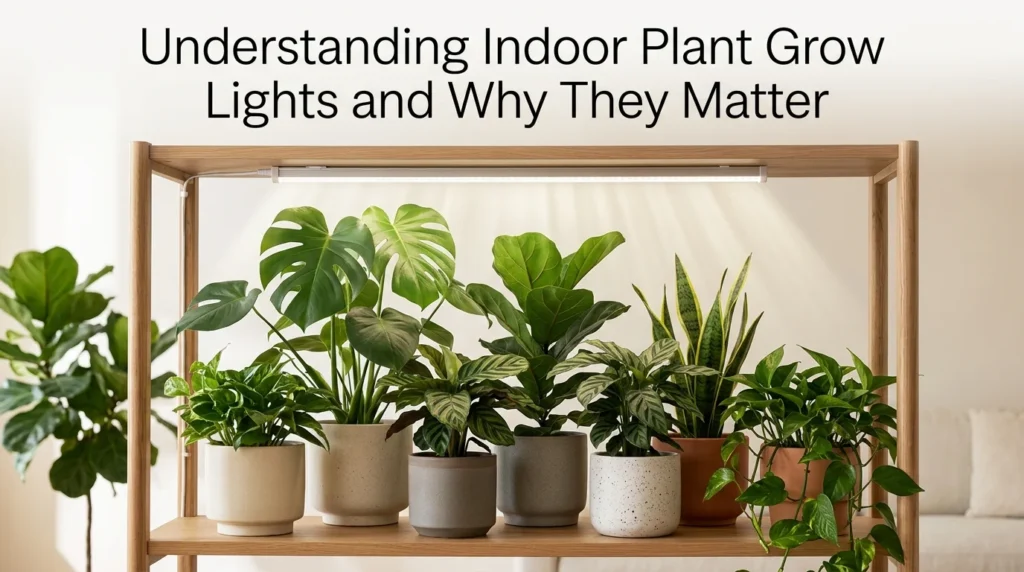
Understanding Indoor Plant Grow Lights and Why They Matter
An indoor plant grow light is an artificial light source engineered to emit electromagnetic spectrum wavelengths that trigger and sustain photosynthesis in plants. Unlike standard household lightbulbs which produce light optimized primarily for human vision grow light fixtures release targeted light frequencies that plant chlorophyll absorbs to synthesize sugars, grow roots, and produce foliage.
Understanding light spectrum is essential for indoor gardening success. Plants absorb light primarily within the blue (400–500 nm) and red (600–700 nm) wavelengths. Blue light encourages sturdy stem structure, compact node spacing, and healthy foliage growth. Red light stimulates flower production, fruit development, and seed germination. Modern full-spectrum LED fixtures combine these wavelengths with white light, recreating natural sunlight inside your home.
Sunlight degrades significantly as it passes through window glass, losing intensity and directional reach. Rooms with north-facing windows or shaded views rarely receive enough PAR (Photosynthetically Active Radiation) to sustain healthy tropical plants or edible herbs. Installing proper grow lighting restores optimal photosynthetic rates, allowing you to cultivate plants in windowless basements, dark hallways, or deep room corners.
Benefits and Advantages
- Year-Round Active Growth: Eliminates winter dormancy slumps caused by short daylight hours and weak sun angles.
- Flexible Plant Placement: Allows you to decorate dark interior rooms, offices, and basements with light-hungry plants.
- Compact, Sturdy Plant Structure: Prevents leggy growth and pale foliage by delivering uniform, high-intensity overhead light.
- Faster Propagation and Seedling Success: Accelerates root development in cuttings and ensures high germination rates for indoor seeds.
- Energy-Efficient LED Technology: Modern LED grow lights consume minimal electricity while delivering powerful light output without excess heat.
Different Methods and Approaches to Grow Lighting
Clip-On and Gooseneck Fixtures
Compact single or multi-head fixtures that clip directly onto shelves, tables, or pot rims. Excellent for individual potted plants, small desk setups, or targeted spot-lighting.
Hanging LED Panels and Quantum Boards
Large, flat LED boards suspended from ceilings, metal racks, or grow tent frames. These fixtures distribute high-intensity full-spectrum light across large plant groups, plant shelves, or seed-starting trays.
Integrated Light Stands and Furniture
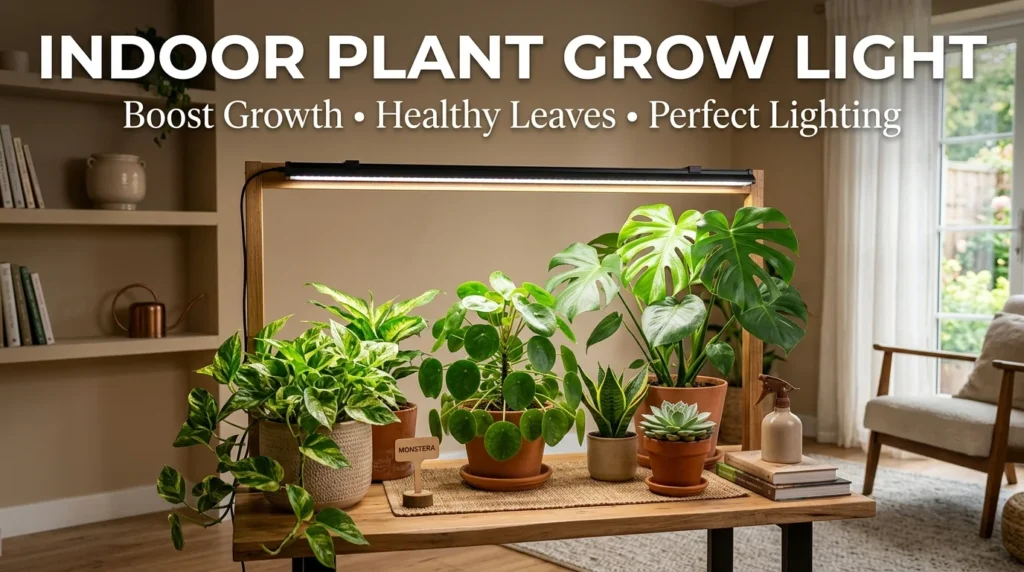
Stylish wooden or metal shelving units featuring built-in LED light bars. Ideal for living rooms where plant display aesthetics matter as much as lighting performance.
Tools and Equipment Required
- Full-Spectrum LED Grow Light: A quality fixture with adjustable intensity controls or dimmers.
- Digital Plug-In Light Timer: A mechanical or smart digital timer to automate precise daily light cycles without manual switching.
- Adjustable Rope Hangers or Chains: Hardware used to raise or lower overhead light panels as plants grow taller.
- Light Meter or Smartphone PAR App: Diagnostic tools to measure lux or PPFD levels at leaf canopy height.
- Ruler or Measuring Tape: Simple tool for maintaining accurate physical clearance between light bulbs and top leaves.
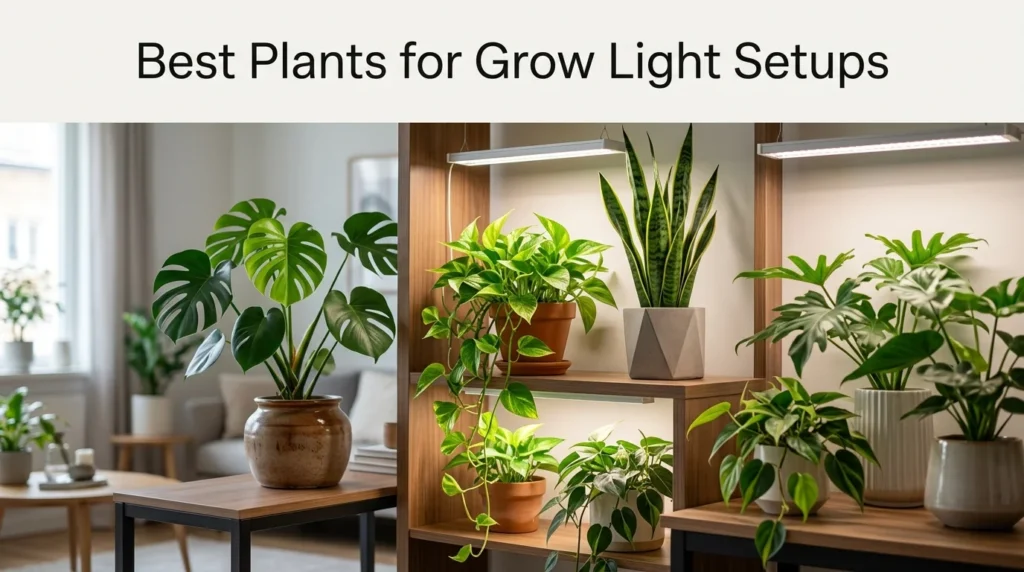
Best Plants for Grow Light Setups
While almost all houseplants benefit from extra light, several plant categories show dramatic improvements under grow lights:
Fiddle Leaf Fig (Ficus lyrata)
Requires high light to prevent lower leaf drop and encourage massive, violin-shaped foliage.
Echeveria and Succulents
Demands intense overhead light to maintain tight rosette shapes and bright pink or purple stress colors without stretching.
Monstera Deliciosa
Develops large leaves with deep splits and fenestrations quickly when provided with strong, consistent light.
Culinary Herbs (Basil, Rosemary, Mint)
Produces dense foliage with high aromatic oil content under high-intensity full-spectrum light.
Snake Plant (Sansevieria)
Tolerates dark corners but grows significantly faster and produces striking variegated patterns under supplemental lighting.
Lighting Requirements
Matching light intensity and duration to your specific plant species ensures steady growth without burning leaves.
- High-Light Plants (Succulents, Citrus, Herbs): Require 300–600 PPFD (12–16 inches from high-output LEDs) for 14 to 16 hours daily.
- Medium-Light Plants (Monstera, Ficus, Philodendron): Require 150–300 PPFD (18–24 inches from LEDs) for 12 to 14 hours daily.
- Low-Light Plants (Pothos, Ferns, Cast Iron Plant): Require 50–150 PPFD (24–36 inches from LEDs) for 10 to 12 hours daily.
- Night Rest Cycle: Always provide plants with 8 to 10 hours of complete darkness every night for natural respiration.
Watering Methods Under Grow Lights
Plants growing under grow lights metabolize water and nutrients much faster than plants sitting in low natural light.
The Increased-Metabolism Soak Method
- Check soil moisture using a moisture meter or the finger test 2 to 3 inches deep.
- Under grow lights, active photosynthesis causes soil to dry out faster—water when the top half feels dry.
- Pour room-temperature water evenly across the soil until it drains from bottom holes.
- Allow excess water to drain out completely for 15 to 20 minutes.
- Empty drain saucers immediately to prevent root suffocation.
Soil and Growing Medium
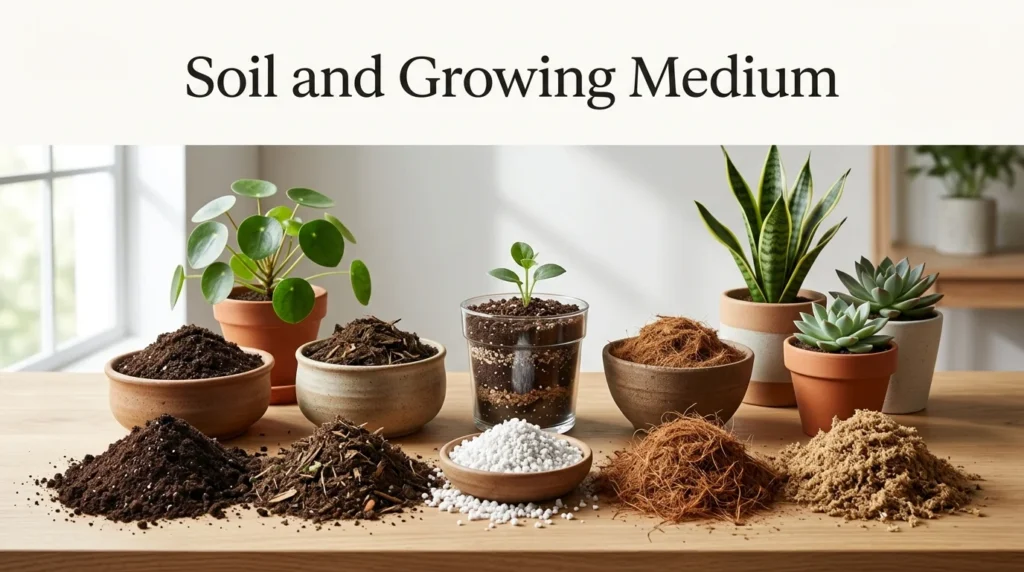
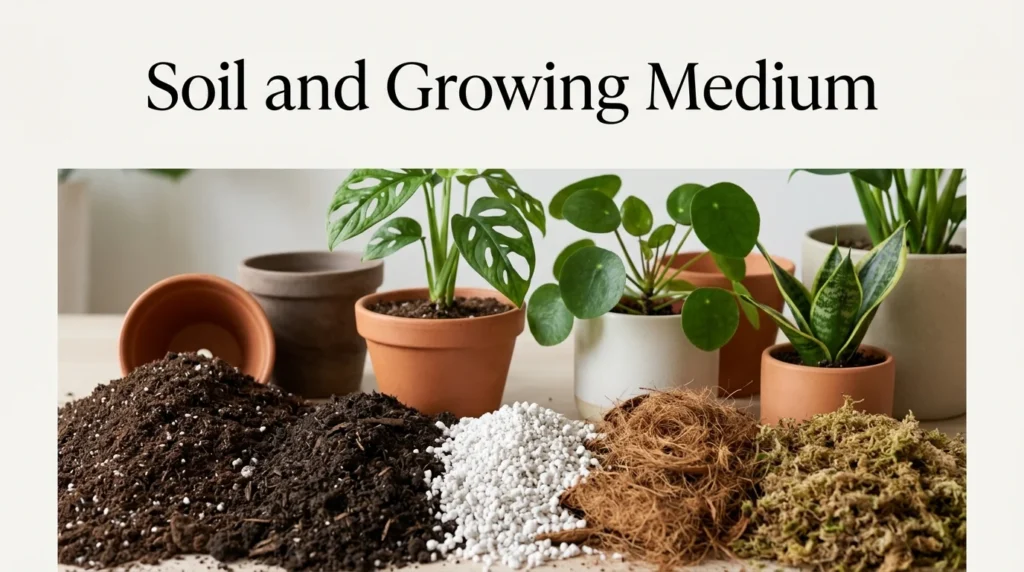
Because plants under artificial light drink faster and grow rapidly, their soil mix must maintain high aeration to support active root respiration.
A proven soil recipe for plants under grow lights includes:
- Commercial Potting Soil (50%): Provides basic moisture retention and structural support.
- Coarse Perlite or Pumice (30%): Ensures fast drainage and prevents soil compaction under frequent watering.
- Chunky Orchid Bark (20%): Creates wide air pockets, allowing oxygen to reach active root zones easily.
Temperature Requirements
Grow lights emit thermal energy, which can alter room temperature around plant canopies.
Keep grow light areas within the ideal range of 68°F to 80°F (20°C to 27°C). Modern LED lights run cool, but high-wattage panels still generate slight warmth. Ensure adequate room airflow using small oscillating fans to blow away hot air pockets sitting above top leaves.
Humidity Control
Extra light combined with warm ambient air increases transpiration rates, causing leaves to release moisture rapidly.
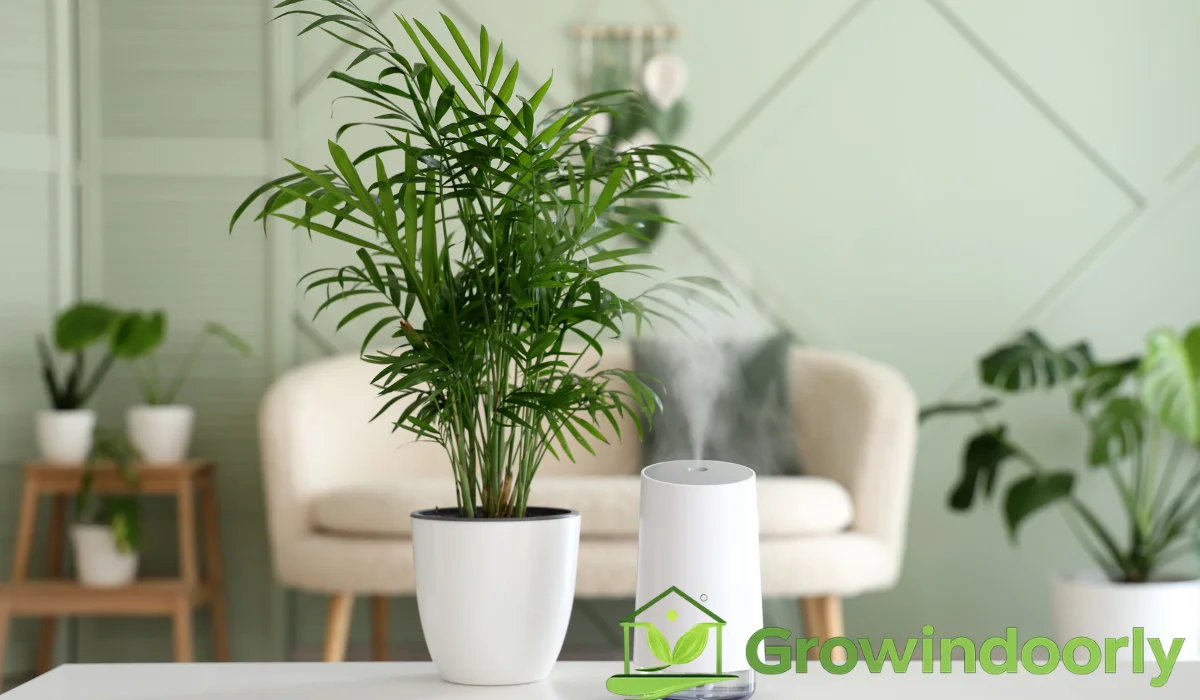
Maintain relative indoor humidity between 50% and 65% around lit plant areas. Use a cool-mist humidifier near grow racks or group potted plants closely together. Avoid blowing dry, unheated air directly across plant leaves.
Fertilizer and Nutrients
Consistent light output keeps plants in a state of continuous active growth, increasing their demand for mineral nutrients.
- Spring through Autumn: Apply a balanced liquid houseplant fertilizer (such as 10-10-10) at half strength every 2 to 3 weeks.
- Winter Schedule: If grow lights maintain summer light intensity, continue light feeding once every 4 to 6 weeks.
- Flush Soil Regularly: Flush potting media with plain water every two months to remove accumulated mineral salts.
Maintenance Routine
- Adjust Light Height: Raise hanging light panels as plant stems grow to prevent top leaves from touching hot bulbs.
- Clean Light Fixtures and Lenses: Dust light bulbs and LED lenses monthly with a dry microfiber cloth to maintain full lumen output.
- Prune Upper Canopy: Trim dense top branches to allow light to penetrate deeper into the lower foliage layer.
- Inspect Timers Regularly: Check plug-in timers monthly to ensure lighting schedules stay synchronized with your desired cycle.
Seasonal Care
Spring and Summer Strategy
When natural window light increases, adjust grow light intensity down or shorten daily timer schedules to 10–12 hours. Monitor soil moisture closely as warmer ambient room temperatures speed up evaporation rates.
Autumn and Winter Strategy
As short winter days arrive, extend grow light duration to 14–16 hours daily to compensate for weak natural light. Move outdoor overwintering plants under dedicated light stands before cold weather strikes.
Common Mistakes
- Leaving Lights On 24/7: Denying plants a dark rest cycle disrupts dark-reaction respiration and damages plant health.
- Placing Lights Too Close: Positioning fixtures too near leaves causes light bleaching (white spots) or heat scorch (brown, crispy patches).
- Using Incorrect Light Bulbs: Relying on regular incandescent household bulbs generates excessive heat without providing usable PAR spectrum wavelengths.
- Ignoring Distance Adjustments: Leaving lights fixed at one height as plants grow taller leads to burnt top leaves and shadowed lower stems.
- Under-Watering Lit Plants: Failing to recognize that active photosynthesis under grow lights increases water consumption.
Troubleshooting Problems
- Bleached or Pale Top Leaves: Caused by light intensity that is too high or fixtures hung too close to the canopy. Increase hanging distance by 4 to 6 inches.
- Leggy, Stretching Stems: Indicates light intensity is too low or the fixture is too far away. Lower the light fixture or increase the power dimmer setting.
- Crispy Brown Leaf Tips: Signals low ambient room humidity combined with warm light output. Increase humidity levels and run an oscillating fan.
- Stagnant Soil That Stays Wet: The light fixture may be too weak, preventing active photosynthesis and root water absorption. Upgrade to a higher-PPFD light source.
- Yellowing Lower Leaves: Often caused by thick upper leaves blocking overhead light from reaching lower stems. Prune top growth or add lower side lighting.
Beginner Tips
- Start with a Simple Plug-In Timer: Never rely on manual light switching an inexpensive digital timer ensures your plants receive consistent daily light cycles.
- Choose Full-Spectrum White LEDs: Full-spectrum white light looks natural in your home decor while providing all wavelengths necessary for plant growth.
- Use the Hand Heat Test: Hold the back of your hand at top leaf height for 30 seconds; if it feels uncomfortable to your skin, it is too hot for your plant.
- Group Plants by Light Needs: Arrange high-light succulents directly under the center of the bulb and place shade-tolerant plants around the outer edges.
Advanced Expert Recommendations
- Measure Light with PPFD Meters: Use dedicated Quantum PAR meters or calibrated smartphone light apps (like Photone) to measure micromoles ($\mu\text{mol/m}^2/\text{s}$) accurately at canopy level.
- Calculate Daily Light Integral (DLI): Optimize growth by calculating DLI combining light intensity (PPFD) and photoperiod duration to hit exact targets for target species.
- Incorporate Supplemental Side Lighting: Install vertical LED light strips along shelf posts to illuminate lower leaves that overhead panels miss, creating dense, full plants.

Conclusion
Mastering indoor plant grow light setups empowers you to cultivate healthy, lush houseplants anywhere in your home regardless of seasonal window light. By selecting full-spectrum LED fixtures, adjusting canopy distances, and automating light schedules with digital timers, you eliminate weak growth and leaf shedding. Providing artificial light transforms indoor plant care from a constant struggle into a rewarding, year-round success story. At GrowIndoorly.com, we provide practical, expert-backed guidance to help you build beautiful indoor green spaces. Apply these lighting strategies today and give your houseplant collection the energy it needs to thrive.
Knowledge Check
2. Which light spectrum wavelength is primarily responsible for encouraging compact stem structure and healthy green foliage?
A) Infrared light
B) Blue light (400–500 nm)
C) Green light
D) Ultraviolet C light
3. Why is it critical to turn off grow lights for 8 to 10 hours every night?
A) To keep the room completely cold.
B) Plants require a dark period for natural respiration and metabolic rest processes.
C) LED bulbs will explode if run continuously.
D) Soil nutrients disappear when lights remain on.
4. What visual symptom indicates that an indoor plant grow light is positioned too close to top foliage?
A) Leaves turn deep purple and expand rapidly.
B) Stems stretch long and thin toward the floor.
C) Top leaves show white light bleaching or brown, crispy burn spots.
D) Roots grow out of top soil surface.
5. How does active growth under strong grow lights affect a plant’s watering requirements?
A) Plants drink faster due to higher photosynthetic activity, causing soil to dry quicker.
B) Plants stop absorbing water through root systems entirely.
C) Soil stays wet twice as long under artificial light.
D) Plants require watering only once every three months.
Answer Key:
B
B
C
Frequently Asked Questions
Can regular LED light bulbs work as grow lights?
Standard LED bulbs emit some light usable for photosynthesis, but they lack the targeted spectral wavelengths and high PPFD output required for long-term healthy plant growth.
How many hours a day should an indoor plant grow light stay on?
Most indoor houseplants thrive on 12 to 16 hours of grow light per day, followed by 8 to 10 hours of complete darkness for nightly respiration.
How far should an LED grow light be placed above houseplants?
Place full-spectrum LED fixtures 12 to 18 inches above high-light plants (succulents, herbs) and 18 to 24 inches above medium-light tropical houseplants (Monstera, Pothos).
Do grow lights consume a lot of electricity?
Modern LED grow lights are energy efficient, typically consuming between 15 to 100 watts per fixture, which adds only a few dollars per month to your electric bill.
Can grow lights burn plant leaves?
Yes, placing light fixtures too close to top foliage or setting dimmers too high can cause light bleaching, leaf scorch, and brown crispy patches.

Megan Foster is the founder and lead writer of GrowIndoorly.com, where she shares practical, easy-to-follow advice for growing healthy indoor plants. She is passionate about helping beginners and experienced plant lovers build thriving indoor gardens with confidence. Megan writes about houseplants, indoor herbs, succulents, hydroponics, grow lights, plant propagation, watering, soil care, and everyday plant maintenance.
She enjoys researching trusted gardening techniques and transforming them into simple, actionable guides that readers can easily apply at home. Her goal is to make indoor gardening more enjoyable and accessible by providing clear, reliable information that helps people keep their plants healthy throughout the year. Whether you’re caring for your first houseplant or expanding your indoor plant collection, Megan’s practical tips are designed to help you grow with confidence.