Bringing the enchanting aroma of delicate white blossoms into your living space is a dream for many plant lovers, but growing a jasmine plant indoors often presents unexpected challenges. Without the proper balance of sunlight and airflow, these vigorous vines can quickly lose their luster and drop their buds.
A jasmine plant indoors thrives when given direct sun exposure, consistent root hydration, and cool nighttime rest periods. Unlike standard tropical foliage houseplants that adapt easily to dim living rooms, flowering jasmines demand specific environmental conditions to bloom consistently.
Beginners frequently run into frustrating problems like sudden leaf shedding, dry yellow foliage, or stubborn vines that refuse to produce flowers. These issues usually happen when indoor air gets too dry, light intensity stays too low, or roots sit in waterlogged soil.
By learning simple care techniques, you can easily transform a struggling pot into a lush, fragrant focal point. This complete guide breaks down everything you need to know about growing a jasmine plant indoors successfully, from selecting resilient varieties to mastering seasonal pruning.
Understanding the Indoor Jasmine Plant (Jasminum)
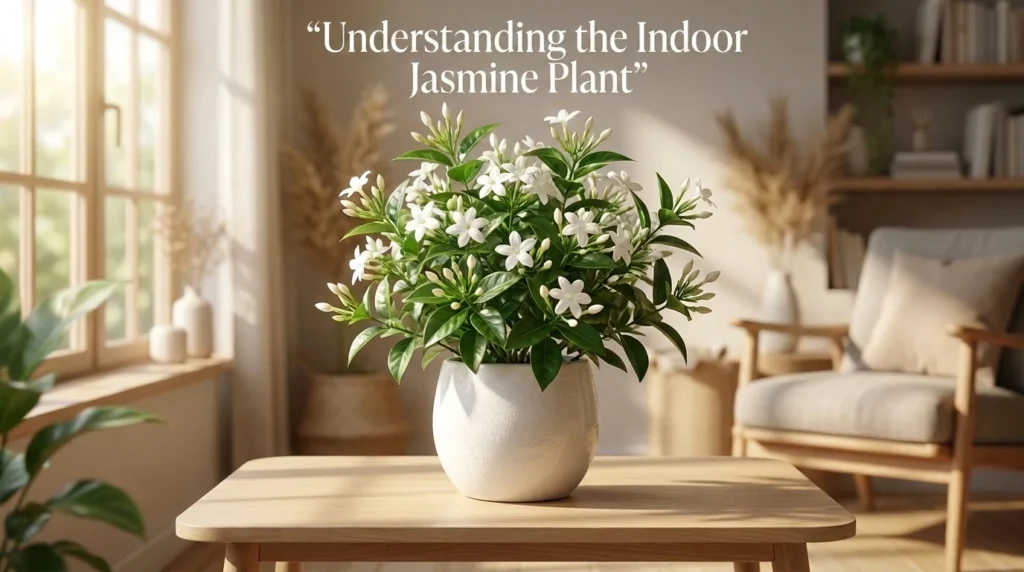
The jasmine plant belongs to the genus Jasminum, an important group within the Oleaceae (olive) family. Native to tropical and warm temperate regions across Asia, Africa, and Australia, these flowering plants are famous worldwide for their intense, sweet floral fragrance and starry white or soft pink blossoms.
In their natural habitats, jasmines grow as sprawling evergreen shrubs or vigorous climbing vines that scale trees toward open forest sunlight. When adapted to container life inside homes, they offer high aesthetic value and natural aromatherapy. However, because they originate in sun-drenched tropical environments, success depends heavily on recreating these natural light and moisture conditions inside your living space.
True jasmines produce slender, flexible stems lined with glossy green leaves. Understanding their natural growth cycle is crucial: most indoor species require a cool autumn resting period to set the flower buds that bloom during winter, spring, and summer.
Why Growing Jasmine Indoors Is So Rewarding
Cultivating a potted jasmine inside your home offers unique sensory and design benefits that standard foliage houseplants simply cannot match.
Natural Aromatherapy and Mood Elevation
The natural essential oils released by blooming jasmine contain aromatic compounds like linalool and benzyl acetate. These botanical scents are widely used in aromatherapy to reduce mental stress, promote relaxation, and create a calm atmosphere throughout your home.
Elegant Living Decor and Vertical Accent
Because jasmines are climbing vines, they can easily be trained around wire hoops, bamboo stakes, or wooden trellises. This allows you to create living, fragrant floral sculptures that fit perfectly on sunny plant stands, desks, or windowsills.
Long Flowering Seasons
With proper temperature management and bright light exposure, an indoor jasmine can bloom in multiple flushes over several months, filling your living quarters with sweet floral scents even during cold winter months.
Different Approaches: Soil-Based vs. Hydroponic Growing
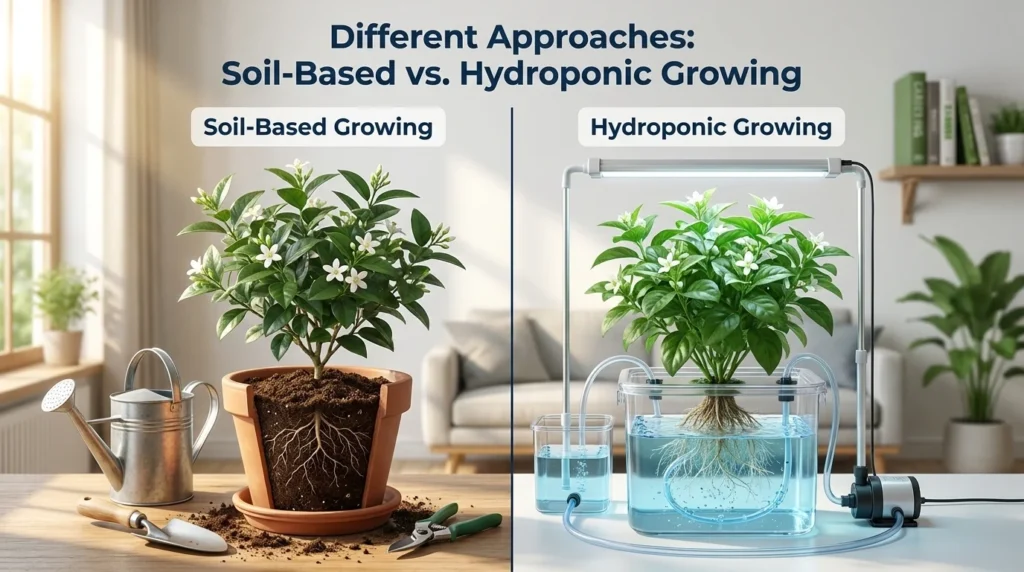
While most gardeners grow jasmines in traditional soil mixes, modern growers use different cultivation approaches depending on their indoor space and equipment:
- Soil Mix Cultivation: The classic, most beginner-friendly method. Growing in a container filled with a rich, well-draining soil mix gives the roots natural insulation and steady moisture retention.
- Passive Hydroponics (Semi-Hydro with LECA): Growing jasmine in lightweight expanded clay aggregate (LECA) pellets with a water reservoir below eliminates soil-borne pests like fungus gnats while ensuring steady root aeration and moisture delivery.
- Active Hydroponic Systems: Advanced indoor growers occasionally keep compact jasmine varieties in active DWC (Deep Water Culture) or drip systems under grow lights to achieve rapid vegetative growth and dense foliage.
Essential Tools and Equipment Required
To set up your indoor jasmine for long-term health, gather these basic tools before bringing your plant home:
- Container with Bottom Drainage: Terracotta or breathable plastic pots with large drainage holes.
- Support Trellis or Hoop: A sturdy wire loop, wooden lattice, or bamboo hoop to support climbing stems.
- Bypass Pruning Shears: Small, sharp shears for clean cuts when shaping stems or removing dead wood.
- Microfiber Cloth or Spray Mister: For keeping broad leaves dust-free and maintaining leaf transpiration.
- Cool-Mist Room Humidifier: Essential for maintaining humidity levels above 50% during dry winter heating periods.
- Full-Spectrum LED Grow Light: Necessary if your home lacks direct sunlight from south- or west-facing windows.
Best Jasmine Varieties for Indoor Growing
Not all jasmine species perform well inside a home environment. Choosing an indoor-friendly cultivar is the single most important step for long-term success:
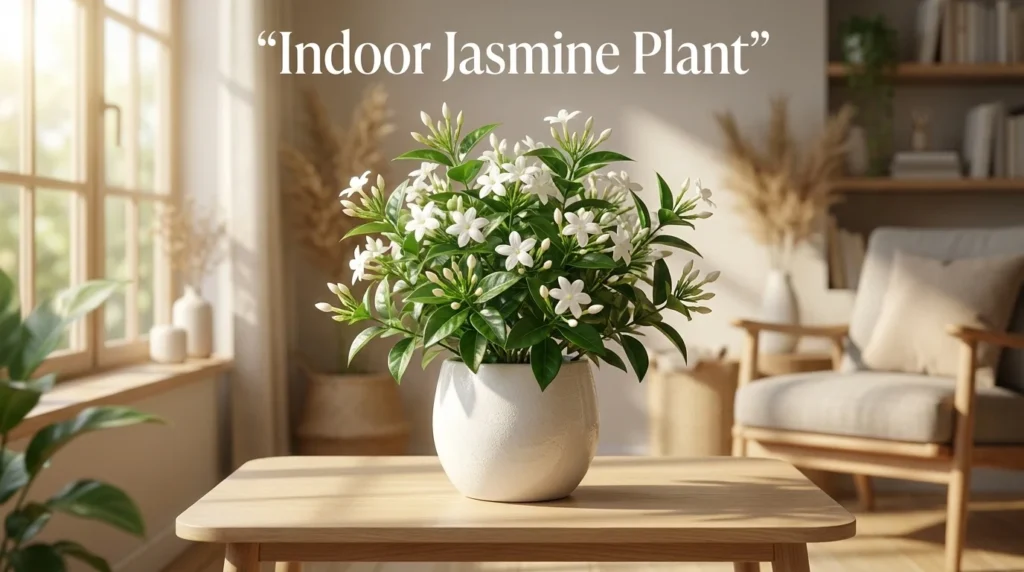
- Jasminum polyanthum (Pink Jasmine / Winter Jasmine): The most popular and resilient variety for houseplant growers. It produces dark pink buds that open into masses of sweet white flowers during late winter and early spring. It climbs aggressively around hoops.
- Jasminum sambac (Arabian Jasmine): Famous for its broad green leaves and intensely sweet flowers used to scent jasmine tea (popular cultivars include ‘Maid of Orleans’ and ‘Grand Duke of Tuscany’). It prefers warmer indoor temperatures and can bloom continuously year-round.
- Jasminum grandiflorum (Spanish Jasmine): Features fine, fern-like foliage and highly aromatic star-shaped blossoms that open wide near bright, sunny windows.
- Trachelospermum jasminoides (Star Jasmine): A “false jasmine” from a different botanical family, but often grown indoors similarly due to its dark glossy foliage and sweet-scented white blooms.
Essential Lighting Requirements for Indoor Jasmine
Light exposure dictates whether your plant produces lush green leaves or heavy, fragrant flower clusters.
Maximizing Natural Sunlight
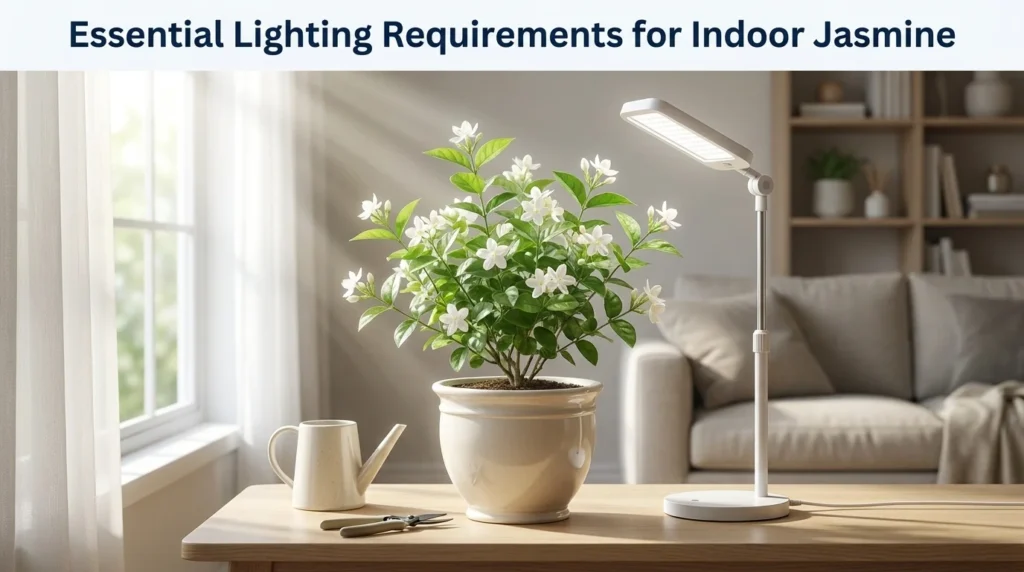
Jasmines need at least 4 to 6 hours of direct sunlight every day to produce flower buds. Place your pot directly on the sill of an unobstructed south- or west-facing window. An east-facing window provides soft morning light that works well for Jasminum sambac, but may not offer enough energy for Jasminum polyanthum to set heavy blooms.
Signs of Light Starvation
If your plant is not receiving enough light, it will show clear warning signs:
- Long, thin stems with wide spacing between leaves (legginess).
- Pale, dull leaf coloration.
- Complete lack of flower buds, or dropping unopened buds.
Using Supplemental Grow Lights
When natural window light is limited during winter months, place a full-spectrum LED grow light 8 to 12 inches above the plant canopy. Run the light fixture on a digital timer for 12 to 14 hours daily to maintain optimal energy levels.
How to Water an Indoor Jasmine Plant Correctly
Improper watering is the leading cause of houseplant stress. Jasmines prefer steady moisture, but their roots will rot quickly if left standing in soggy soil.
The Touch-Test Method
Check the soil moisture daily before watering. Insert your index finger 1 inch into the potting mix. If the soil feels dry at that depth, it is time to irrigate thoroughly. Never let the pot dry out completely, as drought stress causes immediate leaf drop and bud abortion.
Step-by-Step Irrigation Guide
- Apply room-temperature filtered water or rainwater directly to the base of the plant until water flows freely out of the bottom drainage holes.
- Let the pot drain completely into a tray or sink for 15 to 20 minutes.
- Empty the runoff saucer immediately. Never allow the pot base to sit submerged in stagnant water.
Best Soil Mix and Container Selection
Because jasmines require frequent watering, their potting substrate must offer high water drainage alongside rich organic matter.
DIY Potting Mix Recipe
Never use heavy backyard topsoil inside pots. Instead, mix a loose, porous growing medium using these standard proportions:
- 2 parts quality peat moss or coco coir (for moisture retention)
- 1 part perlite or coarse pumice (for root aeration and rapid drainage)
- 1 part aged compost or leaf mold (for organic fertility)
Aim for a slightly acidic to neutral soil pH ranging between 6.0 and 6.5.
Choosing the Right Pot
Select containers made of unglazed clay or terracotta. These porous materials let soil breathe through the sides, allowing excess moisture to evaporate faster and protecting roots from rot. Make sure the container matches the size of the root ball; oversized pots stay wet for too long, suffocating delicate root hairs.
Temperature Requirements and the Winter Chilling Trigger
Temperature management controls whether your jasmine grows purely green foliage or bursts into fragrant spring blossoms.
The Mandatory Winter Cool Period
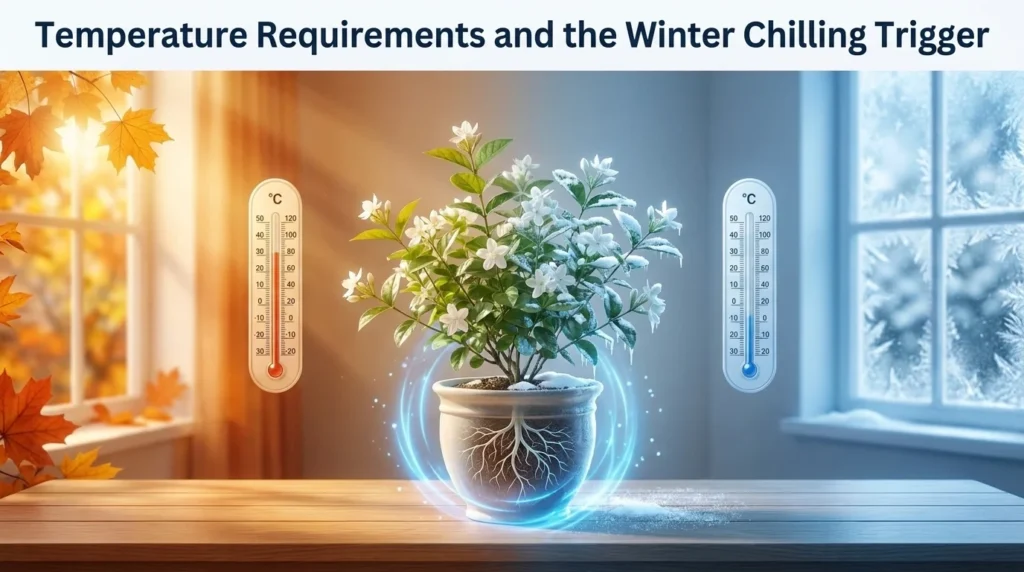
Species like Jasminum polyanthum require a distinct autumn and winter cooling period to trigger flower bud setup. Keep the plant in a cool room where night temperatures drop to 50°F–55°F (10°C–13°C) for 4 to 6 weeks in late autumn. Without this cool resting period, the plant will continue growing leaves but will produce zero flowers.
Daytime Comfort Range
During active growth periods in spring and summer, jasmines thrive in standard indoor temperatures between 65°F and 75°F (18°C to 24°C). Protect plants from sudden temperature swings caused by air conditioning vents, heating radiators, or exterior door drafts.
Humidity Control Strategies
Jasmines originate in tropical climates with high atmospheric humidity (50% to 60%). Modern indoor home heating systems dry out indoor air, causing crispy leaves and flower bud drop.
Effective Ways to Increase Room Humidity
- Pebble Tray Method: Fill a shallow tray with clean pebbles and water, placing your pot on top of the stones above the water level.
- Plant Grouping: Place your jasmine alongside other tropical houseplants to create a humid microclimate through natural leaf transpiration.
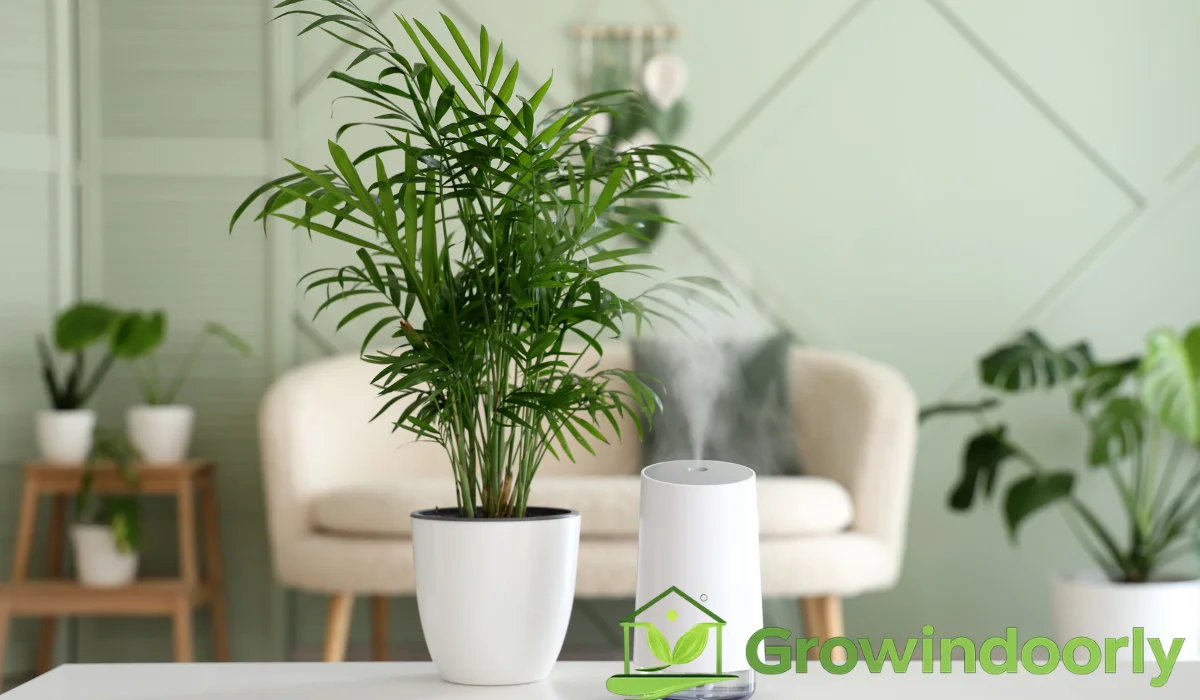
- Room Humidifier: Position a cool-mist humidifier near your indoor plant setup during winter heating months.
- Avoid Heavy Leaf Misting: Spraying water directly on foliage can invite fungal leaf spot diseases if room airflow is static.
Fertilizer and Nutrient Management
Feeding supplies the minerals necessary to sustain active stem growth and continuous floral cycles.
Choosing the Right Fertilizer
Use a balanced, water-soluble fertilizer (such as a 10-10-10 ratio) diluted to half strength during early spring vegetative growth. Once you see flower buds forming, switch to a bloom-boosting liquid formula higher in phosphorus (such as a 7-15-7 ratio) to support heavy flower production.
Seasonal Feeding Schedule
- Spring through Summer: Apply liquid fertilizer every 2 to 3 weeks during regular waterings.
- Fall through Winter: Stop feeding completely. Forcing nutrients during low-light dormant months burns root tips and damages plant tissue.
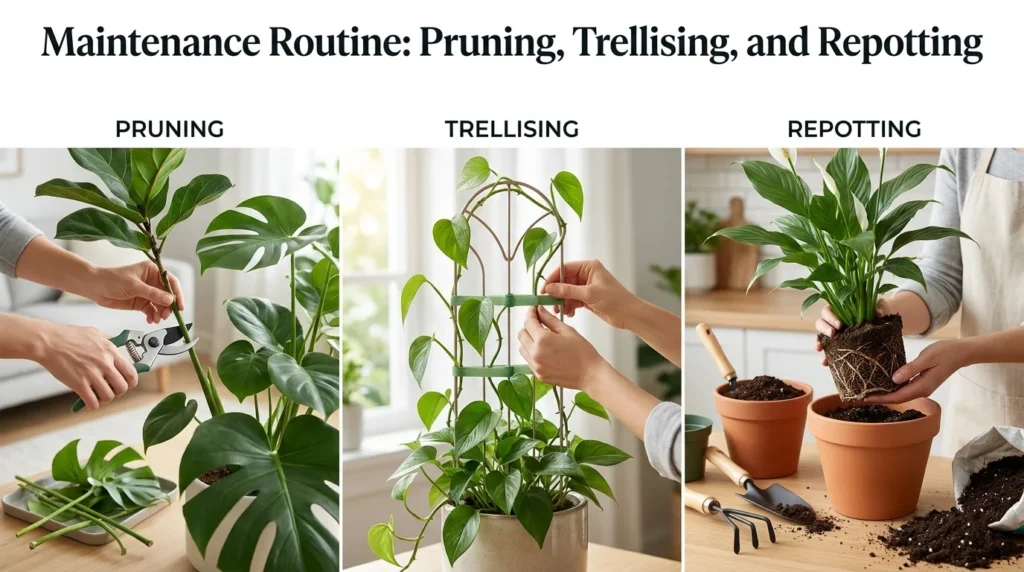
Maintenance Routine: Pruning, Trellising, and Repotting
Regular pruning keeps your jasmine compact, neat, and covered in future flower buds.
How and When to Prune
Prune your jasmine immediately after its main flowering cycle ends in late spring or early summer:
- Use clean shears sterilized with rubbing alcohol.
- Trim back long, unruly vine stems by up to one-third of their length.
- Snip off dead, yellowed, or crowded inner stems to improve light exposure and airflow.
- Important: Do not prune in late autumn or winter, or you will cut off newly forming flower buds.
Training Vines on Supports
Guide young, flexible vine shoots gently around a wire hoop or trellis inserted into the container. Secure stems loosely using soft garden twine or plastic plant clips, taking care not to pinch the stems.
Repotting Guidelines
Repot young plants every 1 to 2 years in early spring. Move up only one pot size (1 to 2 inches larger in diameter). Jasmines bloom best when their roots feel slightly snug in the pot; placing them in oversized containers encourages leaf growth over flowers.
Seasonal Care Overview
- Spring: Increase watering as new growth appears, begin bi-weekly feeding, move to a bright window, and prune stems right after flowering finishes.
- Summer: Provide abundant light, keep soil evenly damp, ensure good airflow, and feed consistently.
- Autumn: Gradually reduce watering, stop fertilizing, and allow night temperatures to drop to 50°F–55°F to induce winter bud set.
- Winter: Keep in a bright, cool room, water only when the top 2 inches of soil feel dry, and maintain elevated humidity around expanding flower buds.
Common Mistakes to Avoid
- Skipping the Cool Winter Rest: Keeping plants in a warm 75°F room year-round prevents species like Jasminum polyanthum from developing flower buds.
- Overwatering in Poorly Draining Pots: Allowing roots to sit in soggy soil triggers root rot and leaf loss.
- Placing Plants in Dark Corners: Growing jasmines far from sunny windows leads to leggy growth and no flowers.
- Pruning at the Wrong Time: Trimming stems in late fall cuts off newly formed flower buds, eliminating spring blooms.
Troubleshooting Common Problems
| Problem | Likely Cause | Solution |
| Flower buds dropping off un-opened | Dry air, dry soil, or sudden hot air drafts | Increase room humidity using a humidifier; keep soil consistently moist. |
| Plant looks healthy but never blooms | Missing cool winter rest or low light levels | Provide 4-6 hours of direct sun; expose to cool 50°F-55°F night temperatures in autumn. |
| Yellowing leaves dropping off bottom | Overwatering or waterlogged soil | Allow top inch of soil to dry before watering; clear blocked drainage holes. |
| Fine webbing under leaves and sticky sap | Spider mites or Scale insects | Wash leaves thoroughly; apply organic insecticidal soap or cold-pressed neem oil weekly. |
| Crispy brown leaf edges | Low air humidity or fertilizer salt buildup | Flush soil with pure water; run a cool-mist humidifier near the plant. |
Beginner Tips for Guaranteed Success
- Start with Arabian or Pink Jasmine: These two varieties adapt best to home container conditions.
- Use a Pebble Tray: Setting your pot on a wet pebble tray provides continuous local humidity without overwatering soil.
- Rotate the Container: Turn your pot 180 degrees every week so all sides receive equal sunlight and grow evenly.
- Check Undersides of Leaves Weekly: Catching spider mites early prevents major leaf damage.
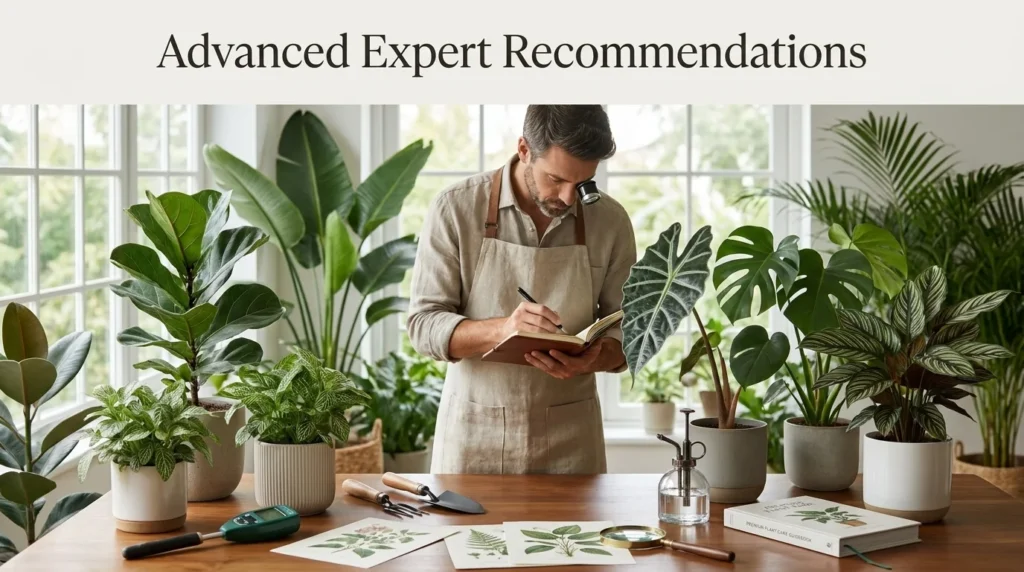
Advanced Expert Recommendations
- Inoculate with Mycorrhizal Fungi: Dust seedling root balls with endomycorrhizal spores during repotting to improve phosphorus uptake for stronger floral displays.
- Maintain Vapor Pressure Deficit (VPD): Target an indoor VPD between 0.8 and 1.1 kPa by balancing room temperature and relative humidity to keep transpiration smooth.
- Foliar Feed with Amino Acids: Apply a mild amino acid and kelp mist during early bud setup to provide micronutrients directly to developing floral clusters.
Conclusion
Cultivating a jasmine plant indoors is one of the most rewarding projects for houseplant enthusiasts. Success comes down to creating a supportive environment: providing bright direct sunlight, maintaining steady soil moisture, keeping air humidity elevated, and offering a cool winter resting phase for heavy spring bud formation.
By choosing indoor-friendly varieties like Jasminum polyanthum or Jasminum sambac and following a seasonal care routine, you can easily avoid common issues like bud drop or leggy vines. Potted jasmines fill your home with a sweet, living fragrance that synthetic air fresheners can never match.
At GrowIndoorly.com, we are passionate about guiding indoor gardeners toward long-term success. Put these expert techniques into practice today, and transform your home into a fragrant indoor garden!
Knowledge Check Quiz
Test your understanding of indoor jasmine care with this quick 5-question review.
1. What crucial winter condition is required for Pink Jasmine (Jasminum polyanthum) to set flower buds?
- A) Continuous 85°F heat from an furnace
- B) A cool resting period with night temperatures around 50°F–55°F
- C) Complete darkness for 3 months
- D) Soaking the root ball in standing water daily
2. How much direct sunlight does an indoor jasmine plant ideally need each day to bloom well?
- A) 0 hours (deep shade only)
- B) 1 hour of filtered evening light
- C) At least 4 to 6 hours of direct sunlight
- D) Exactly 24 hours of non-stop sunlight
3. When is the best time to prune an indoor jasmine vine to avoid cutting off future flower buds?
- A) Immediately after its main flowering season ends in late spring or summer
- B) In the middle of winter right before buds open
- C) Once every week during peak flowering
- D) Never prune a jasmine under any circumstances
4. What is the most reliable way to determine when your potted jasmine needs water?
- A) Water strictly on a timer every 12 hours
- B) Check if the top 1 inch of soil feels dry to the touch
- C) Wait until all leaves dry out and turn brown
- D) Water only when the plant drops its flowers
5. What should you do if your indoor jasmine shows signs of dry air, such as crispy leaf tips or dropping buds?
- A) Move it directly next to a hot heating vent
- B) Stop watering the soil completely for a month
- C) Increase room humidity using a cool-mist humidifier or pebble tray
- D) Blast the foliage with cold air from an air conditioner
Answer Key: 1-B, 2-C, 3-A, 4-B, 5-C
Frequently Asked Questions
Why is my indoor jasmine plant dropping its flower buds?
Bud drop is usually triggered by sudden environmental stress. The most common causes are low air humidity in heated rooms, soil drying out completely, hot or cold air drafts, or relocating the plant while buds are forming. Keep humidity above 50% and maintain consistent soil moisture.
Is indoor jasmine safe for pets?
True jasmines (Jasminum species like Jasminum polyanthum and Jasminum sambac) are non-toxic to dogs and cats according to the ASPCA. However, eating any plant foliage can cause mild stomach upset in pets, so it is best to place climbing vines out of reach.
Can I keep my jasmine indoors all year round?
Yes, species like Jasminum sambac (Arabian Jasmine) and Jasminum polyanthum thrive indoors year-round when given bright light and proper seasonal temperature adjustments. If desired, you can place your potted jasmine outdoors on a sunny patio during warm summer months, but bring it back inside before autumn temperatures drop below 50°F.
How long does an indoor jasmine bloom last?
Individual flowers remain fresh for 3 to 6 days. However, a healthy jasmine plant produces continuous flushes of flower buds over a bloom cycle that can last anywhere from 4 to 12 weeks depending on light levels and room temperature.
Why are the leaves on my indoor jasmine turning yellow?
Yellowing leaves usually indicate overwatering or poorly draining soil that starves roots of oxygen. Ensure your pot has open drainage holes and allow the top 1 inch of soil to dry before watering again. If yellowing occurs between leaf veins, it may signal a micronutrient deficiency correctable with a liquid fertilizer containing iron and magnesium.

Megan Foster is the founder and lead writer of GrowIndoorly.com, where she shares practical, easy-to-follow advice for growing healthy indoor plants. She is passionate about helping beginners and experienced plant lovers build thriving indoor gardens with confidence. Megan writes about houseplants, indoor herbs, succulents, hydroponics, grow lights, plant propagation, watering, soil care, and everyday plant maintenance.
She enjoys researching trusted gardening techniques and transforming them into simple, actionable guides that readers can easily apply at home. Her goal is to make indoor gardening more enjoyable and accessible by providing clear, reliable information that helps people keep their plants healthy throughout the year. Whether you’re caring for your first houseplant or expanding your indoor plant collection, Megan’s practical tips are designed to help you grow with confidence.