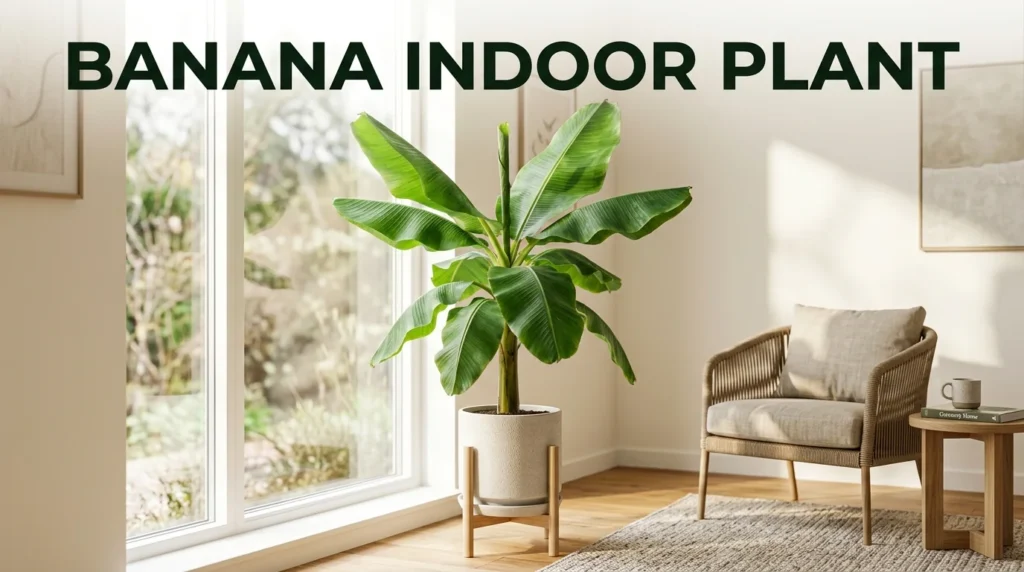
Bringing a tropical paradise into your living room starts with lush, architectural foliage. Growing a banana indoor plant gives your home a dramatic centerpiece that commands attention with its massive, paddle-shaped leaves.
Many plant lovers get frustrated when these dramatic leaves suddenly turn brown or shred around the edges. Providing the right environment for your banana indoor plant requires a solid grasp of its high demand for light, water, and humidity.
Without proper tropical conditions, these rapid growers can stall, drop leaves, or attract pesky indoor pests. Learning how to care for your banana indoor plant transforms an intimidating tropical species into a rewarding, fast-growing standout.
In this ultimate guide, you will discover lighting needs, watering schedules, pest solutions, and expert care routines to keep your foliage thriving year-round.
Understanding the Indoor Banana Plant and How It Grows
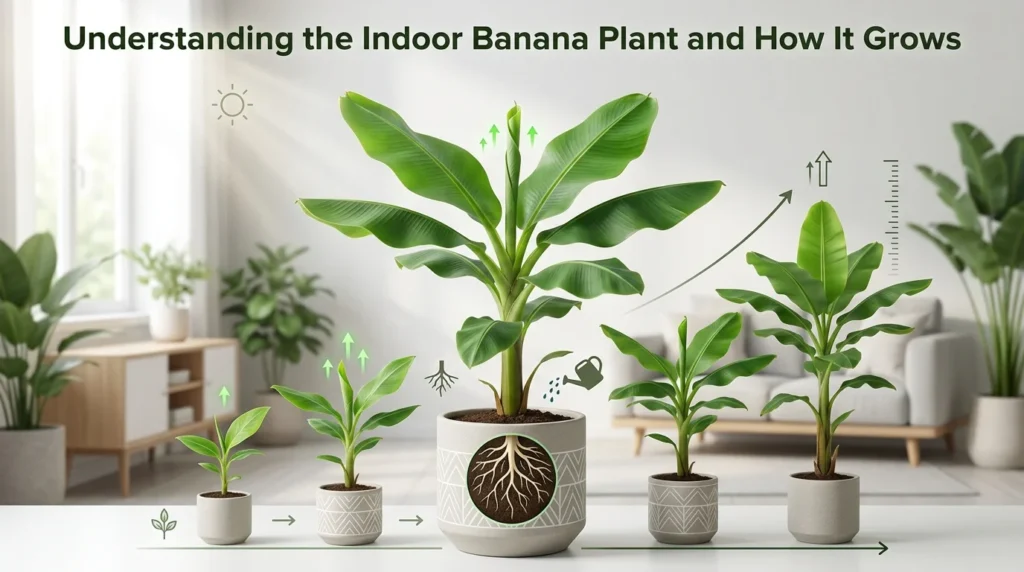
To successfully cultivate a banana tree indoors, you first need to understand its unique biological setup. Despite its towering height and tree-like structure, a banana plant is not actually a tree. Horticulturally speaking, it is the world’s largest herbaceous perennial.
What appears to be a woody trunk is actually a pseudostem a tightly wrapped column composed of overlapping, fleshy leaf sheaths. True stems emerge from an underground rhizome, often called a corm. The massive, arching leaves unfold from the top center of this pseudostem in a spiraling pattern.
In their native tropical habitats, banana plants grow at an astounding pace, producing a new leaf every few days during peak season. Indoors, their growth rate slows down slightly due to lower light levels, but they remain among the fastest-growing houseplants you can own. Because their large leaves feature prominent lateral veins without strong cross-meshing, they naturally tear along their margins in response to air movement a physiological adaptation designed to protect the pseudostem from strong wind damage in nature.
Why Growing an Indoor Banana Tree is Worth It
Inviting a tropical banana plant into your indoor space offers dramatic structural, aesthetic, and environmental rewards that standard small houseplants simply cannot match.
- Architectural Impact: The sheer size and vivid green hue of its massive foliage create an instant botanical focal point in living rooms, sunrooms, or high-ceiling foyers.
- Rapid Gratification: Unlike slow-growing cacti or ficus trees, a healthy banana plant rewards attentive care with rapid new leaf growth throughout the warm spring and summer months.
- Natural Humidifier: Due to their massive surface area, banana leaves transpire significant amounts of moisture back into the surrounding air, naturally elevating ambient humidity for neighboring plants.
- Nontoxic to Pets: Unlike many popular large-leafed tropicals like Monstera, Dieffenbachia, or Philodendron species, banana plants are completely non-toxic to dogs and cats, making them a safe choice for pet owners.
Benefits and Advantages of Indoor Cultivation
Growing a banana plant inside a controlled indoor environment gives you unique advantages over outdoor growing, especially if you live in a colder climate.
Indoor growing shields your plant from freezing winter conditions, frost, and violent winds that shred delicate leaves to ribbons. You get to enjoy lush, jungle-like aesthetic benefits year-round without worrying about unpredictable weather changes. Additionally, controlling light exposure, soil moisture, and humidity levels indoors allows you to extend the active growing period well past the natural outdoor season.
Different Approaches to Growing Indoor Bananas
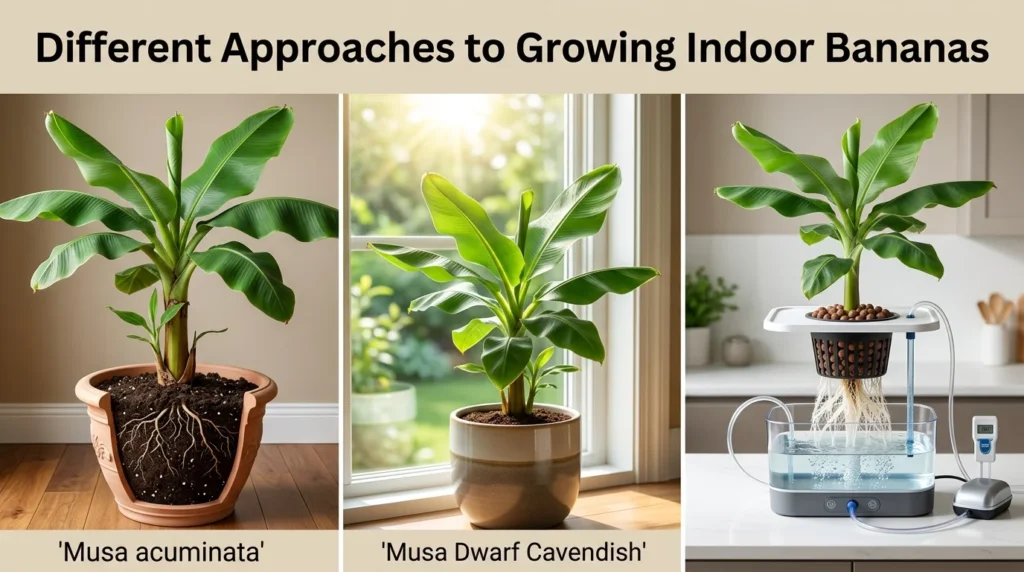
When bringing this tropical plant into your home, you can choose between two main cultivation methods depending on your space, light levels, and long-term goals.
Decorative Foliage Growing
This is the most common approach for indoor plant lovers. The primary goal here is cultivating large, pristine, glossy leaves to serve as living decor. In this setup, fruit production is not expected, allowing you to focus purely on aesthetic maintenance, leaf cleaning, and structural support.
Hydroponic and Indoor Growing Systems
For tech-minded indoor gardeners, growing dwarf banana varieties in large-scale hydroponic systems or greenhouse grow tents yields incredible results. Utilizing deep-water culture or drip-irrigation systems paired with high-intensity discharge or modern LED grow lights accelerates leaf formation and allows precise nutrient dosing.
Essential Tools and Equipment Required
Properly caring for a large-scale tropical plant requires a few dedicated tools to manage its rapid growth and high water consumption:
- Heavy, Wide Pots: A heavy ceramic or thick clay pot with drainage holes keeps top-heavy plants stable and prevents tipping over as foliage expands.
- Plant Caddy with Wheels: Large banana plants filled with moist soil become extremely heavy. A wheeled plant dolly makes moving your plant for cleaning or seasonal rotation effortless.
- Soil Moisture Meter: Helps measure deep root-zone moisture accurately, taking the guesswork out of watering a deep container.
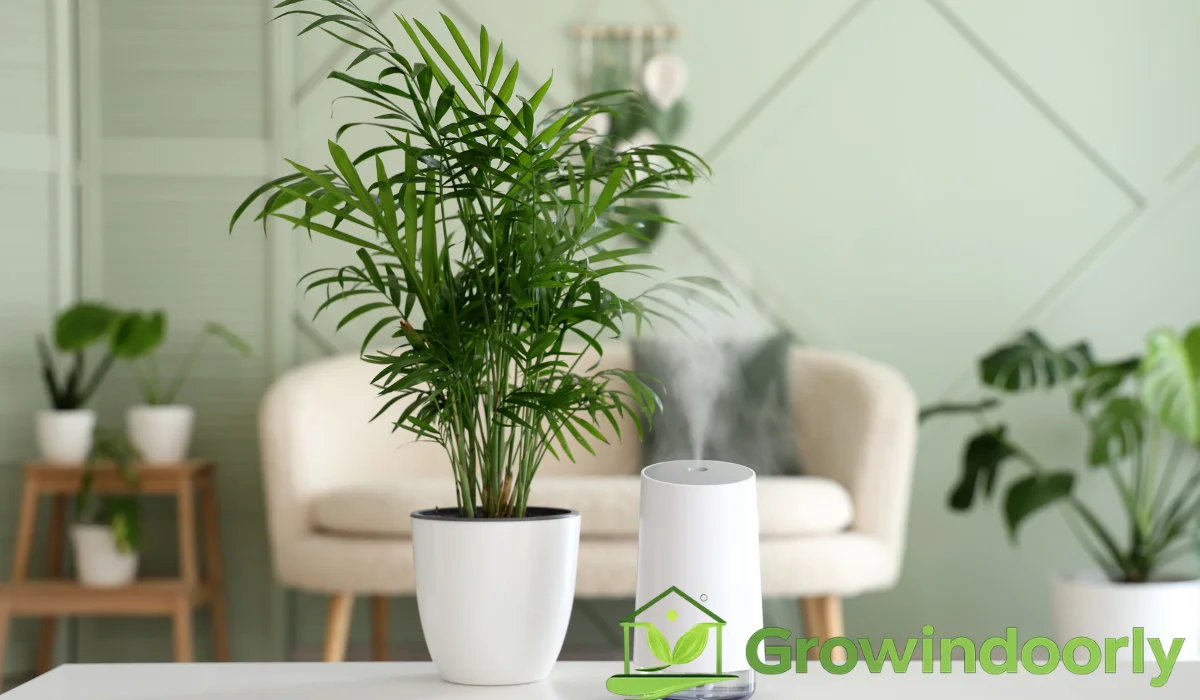
- Cool-Mist Humidifier: Essential for maintaining high relative humidity levels, especially during dry winter months when indoor heating is running.
- Microfiber Cloths and Plant Duster: Large leaf blades collect household dust quickly, which blocks light absorption; soft cloths keep stomata clean for optimal photosynthesis.
- Sharp Pruning Shears: Clean, bypass pruners are necessary for slicing through thick leaf petioles when trimming damaged or older bottom leaves.
Best Dwarf Varieties for Indoor Space
Standard banana trees in the wild reach heights of 15 to 30 feet, which quickly outgrows standard residential ceiling limits. When shopping for an indoor specimen, always select specialized dwarf cultivars.
Dwarf Cavendish (Musa acuminata ‘Dwarf Cavendish’)
The undisputed king of indoor banana plants. It grows to a manageable indoor height of 4 to 6 feet, featuring broad, thick leaves with striking purple-red splotches on young foliage that fade as leaves mature.
Super Dwarf Cavendish (Musa acuminata ‘Super Dwarf’)
An ultra-compact variety that maxes out around 3 to 4 feet in height. It produces dense, tightly packed foliage clusters, making it ideal for smaller apartments or tabletop displays in bright sunrooms.
Dwarf Red Banana (Musa acuminata ‘Dwarf Red’)
Known for its striking reddish-purple pseudostem and leaf margins. It adds vibrant contrast to green collections, reaching around 6 feet tall with adequate lighting.
Dwarf Pink Banana (Musa velutina)
A unique ornamental species that stays under 4 feet indoors. If given intense light, it is one of the few varieties capable of blooming indoors, producing velvety pink ornamental fruits (though filled with hard seeds).
Lighting Requirements: Fueling Rapid Growth
Banana plants are sun-worshippers. Inadequate light is the number one reason indoor banana plants fail, turn yellow, or produce weak, floppy stems.
Natural Sunlight Placement
Place your banana plant in the brightest spot available. An unshaded south-facing or west-facing window is ideal. The plant requires at least 6 hours of direct, bright sunlight daily to maintain structural integrity and produce rich green foliage.
Signs of Low Light
If your plant is light-deprived, it will show clear signs:
- Stems become weak, stretched out, and bend toward light sources.
- New leaves unfold at a fraction of their normal size.
- Bold foliage coloration or purple variegation fades to a pale, washed-out green.
Supplemental LED Grow Lights
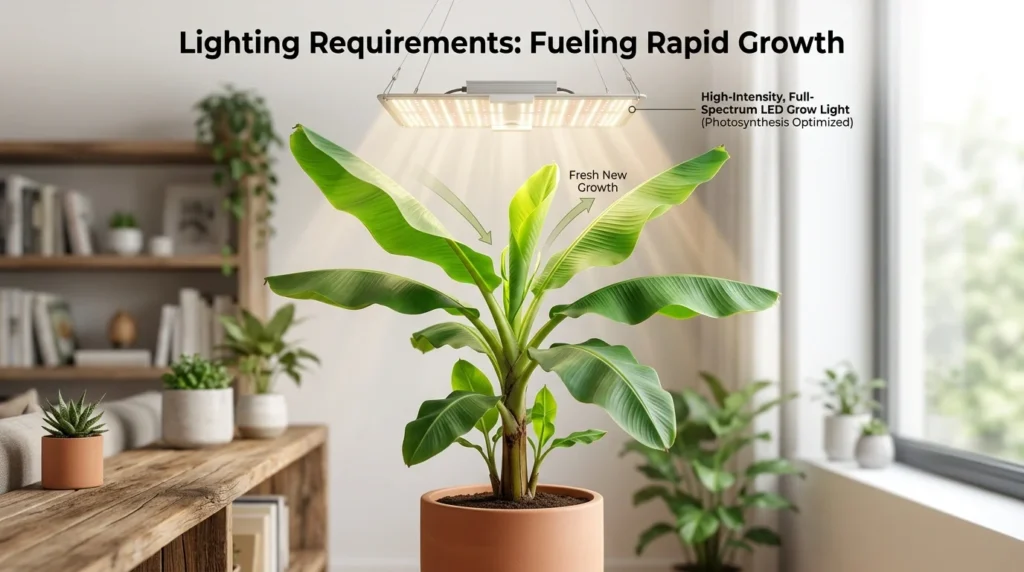
During winter months or in homes lacking bright southern exposures, supplemental lighting is necessary. Position full-spectrum LED grow light panels 12 to 24 inches above the canopy, running them for 12 to 14 hours daily to maintain optimal growth rates.
Mastering Watering Methods
Because banana plants consist mostly of water contained within fleshy leaf sheaths, they are exceptionally thirsty plants. However, their fleshy roots rot quickly if left in stagnant water.
The “Slightly Moist” Rule
Unlike succulents that prefer complete dry-outs, or tropicals that enjoy moderate drying, banana plants prefer consistently moist—but never soggy—soil.
- Spring and Summer Routine: Check soil frequently. Water thoroughly when the top 1 to 2 inches of soil feel dry to the touch. Pour water evenly across the soil surface until it flows freely from bottom drainage holes.
- Fall and Winter Routine: As natural light drops and temperatures cool, growth slows down. Allow the top 2 to 3 inches of soil to dry out before watering again.
Drainage Precautions
Never let your plant’s pot sit directly in standing water inside a drainage saucer. Excess water trapped around root zones cuts off oxygen supply, rapidly inviting root rot fungal pathogens.
Ideal Soil Mix and Growing Medium
Banana roots require a soil structure that holds moisture while allowing rapid water passage and adequate air circulation to prevent compaction.
Avoid using cheap, dense topsoil or heavy garden soils, which trap water and compact over time. Instead, construct a rich, aerated potting mix using this formula:
- 40% High-quality peat moss or coco coir (for moisture retention)
- 30% Aged compost or rich organic potting soil (for nutrient availability)
- 20% Perlite or pumice (for drainage and aeration)
- 10% Coarse orchid bark (to prevent soil compaction over time)
Maintain a slightly acidic soil pH between 5.5 and 6.5, which optimizes nutrient intake for tropical foliage.
Temperature Requirements for Indoor Success
As native tropicals, banana plants have zero tolerance for cold temperatures or sudden climate shifts.
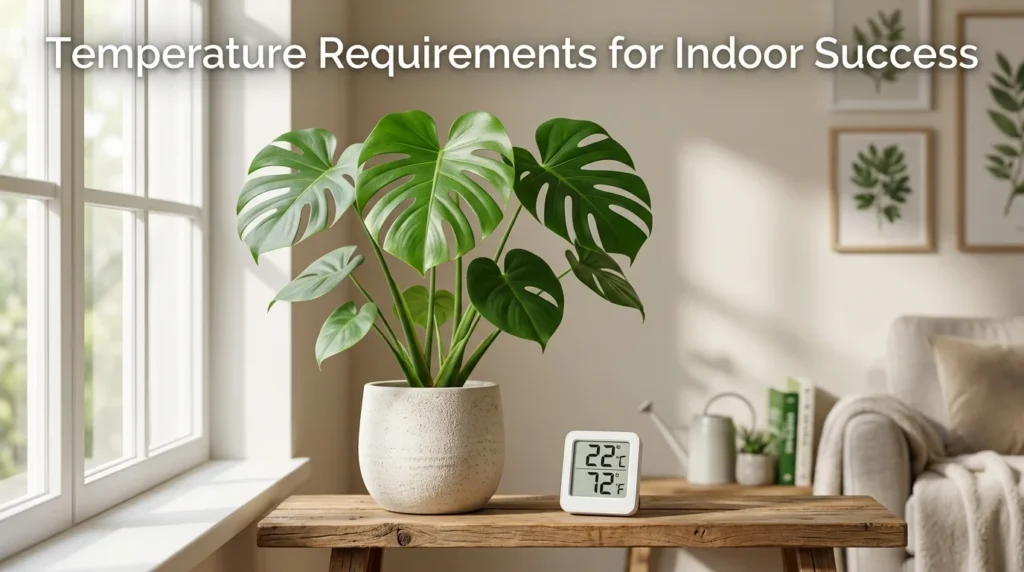
Keep room temperatures between 75°F and 85°F (24°C–29°C) during active growth phases. Growth slows considerably when temperatures dip below 65°F (18°C), and temperatures below 57°F (14°C) cause chilling injury, yellowing foliage, and complete dormancy.
Keep plants away from drafty exterior doors, single-pane winter windows, and air conditioning vents. Sudden cold blasts will cause immediate leaf drop and stress.
Humidity Control: Keeping Leaves Green and Crisp
Maintaining elevated humidity levels is essential to keep broad banana leaves soft, flexible, and free of unsightly brown, crispy edges.
In standard homes, relative humidity hovers around 30% to 40%, dropping even lower during winter heating seasons. Banana plants require a minimum relative humidity of 50%, thriving best between 60% and 70%.
Effective Ways to Increase Humidity
- Run a Dedicated Humidifier: Place a cool-mist humidifier 3 to 4 feet away from the plant, directing output toward the foliage.
- Use Heavy Pebble Trays: Set the heavy pot on a large tray filled with river rocks and water, ensuring the water line stays below pot base level.
- Group Tropical Plants: Grouping your banana plant alongside other humidity-loving plants like F ferns, Calatheas, and Monstera creates a localized humid microclimate through collective transpiration.
Fertilizer and Nutrients: Feeding a Heavy Feeder
Because of their immense growth capacity, indoor banana plants consume nutrients far more rapidly than average houseplants.
During spring and summer, feed your plant every 1 to 2 weeks with a balanced, liquid indoor plant fertilizer diluted to half strength. Alternatively, use a high-potassium formula, as banana plants utilize potassium heavily for leaf production and water transport within the pseudostem.
During fall and winter dormancy, stop fertilizing entirely. Unused fertilizer salts build up in dry winter soil, burning tender root tips and turning leaf edges brown.
Routine Maintenance and Pruning Protocols
Regular maintenance keeps your banana plant looking vibrant, clean, and structurally balanced inside your home.
Pruning Lower Leaves
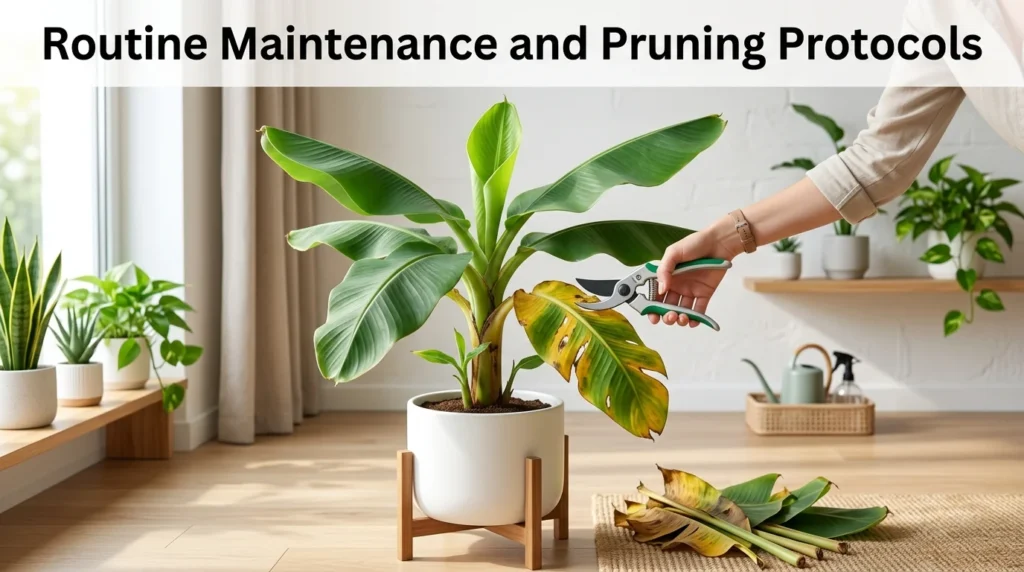
As new leaves emerge from the center of the pseudostem, older bottom leaves naturally turn yellow, droop, and die off. This is completely natural. Using clean pruning shears, slice through the leaf stem (petiole) about an inch away from the pseudostem. Avoid tearing leaves off by hand, as this strips protective outer layers off the pseudostem.
Managing Suckers (Pups)
Healthy banana plants naturally produce miniature offshoots from their underground rhizome, called “pups” or “suckers.”
- If you want a thick, bushy, multi-stemmed look, leave one or two suckers attached.
- If you want a single, dominant, tree-like central pseudostem, remove suckers once they reach 6 to 8 inches tall by slicing downward through the underground connection point with a sharp knife. You can then repot these pups into separate containers to propagate brand-new plants.
Cleaning Foliage
Wipe down both sides of broad leaves every two weeks using a damp, soft cloth. Removing dust buildup improves light absorption, enhances transpiration, and allows you to inspect leaf undersides for early signs of pests.
Seasonal Care Adjustments
Adjusting your care routine as seasons change ensures long-term health and prevents environmental shock.
Spring and Summer Transition
As daylight expands, move your plant closer to sunny windows. Resume regular watering routines as soil dries out faster, begin weekly feeding schedules, and check for rapid leaf production. If outdoor night temperatures stay consistently above 65°F (18°C), you can transition your pot onto a sheltered patio for summer sunlight, making sure to acclimate it to direct sun slowly over two weeks to avoid leaf scorch.
Fall and Winter Preparation
Before night temperatures drop below 60°F (15°C), bring outdoor-wintered plants back inside. Inspect thoroughly for pests before mixing with your indoor collection. Reduce watering frequency, stop feeding entirely, move the pot closer to sunny windows or grow lights, and run a humidifier to combat dry indoor furnace heat.
Common Beginner Mistakes to Avoid
Avoiding these frequent missteps will save you time, effort, and frustration:
- Placing in Dark Corners: Expecting a banana plant to thrive as a decorative corner piece away from windows leads to pale, floppy stems and eventual death.
- Using Small, Light Pots: Planting in lightweight plastic pots without ballast leads to top-heavy plants tipping over as massive leaves catch breeze currents indoors.
- Overwatering Cold Soil: Pouring excessive water into cold soil during winter rots underground rhizomes quickly because the plant isn’t actively taking up water.
- Ignoring Dry Air: Allowing indoor humidity to drop below 30% causes leaf margins to crisp, curl, and tear prematurely.
Troubleshooting Common Problems
Use this quick diagnostic list to identify stress signals and fix issues before permanent damage occurs.
- Crispy, Brown Leaf Margins: Clear sign of low humidity, underwatering, or excessive mineral salt buildup from hard tap water. Increase ambient humidity and flush soil thoroughly with distilled or filtered water.
- Yellowing Lower Leaves: If happening one leaf at a time at the bottom, this is normal leaf shedding. If multiple leaves turn yellow simultaneously, it indicates overwatering, cold drafts, or severe light deprivation.
- Soft, Mushy Pseudostem Base: Major warning sign of advanced root rot or rhizome rot caused by waterlogged, poor-draining soil. Stop watering immediately, inspect underground corms, trim away black mushy roots, and repot in fresh, airy soil mix.
- Pest Outbreaks (Spider Mites and Mealybugs): Dry indoor air and large leaf surfaces attract spider mites (appearing as fine webbing on leaf undersides) and mealybugs (appearing as white cottony spots along stem joints). Wash leaves thoroughly with warm water, then treat weekly with organic insecticidal soap or diluted neem oil sprays until cleared.
Beginner Tips for Immediate Success
If you are caring for your first indoor banana tree, start with these simple rules:
- Purchase a proven indoor cultivar like Dwarf Cavendish or Super Dwarf rather than unnamed grocery store plants.
- Place your pot directly in front of your brightest window from day one.
- Never let the soil dry out completely during summer months, but always use a container with bottom drainage holes.
- Group your plant with other houseplants or run a small humidifier nearby to keep leaf edges smooth and green.
Advanced Expert Recommendations
For experienced indoor gardeners looking to maximize growth and foliage size:
- Air Circulation Optimization: Position a small oscillating fan near your plant on low speed. Gentle air movement strengthens pseudostem tissue fibers and reduces fungal leaf spot diseases.
- Rhizome Division Techniques: When repotting in spring, carefully unpot the entire root ball and use a sterilized knife to slice off healthy suckers containing independent root networks. Pot them individually to multiply your collection or share with fellow plant enthusiasts.
- Controlled Foliar Feeding: Apply a highly diluted, organic kelp or seaweed extract solution as a fine spray to leaf undersides every three weeks during peak growth. Foliar feeding provides trace minerals directly to active tissue, boosting leaf sheen and thickness.
Conclusion
Cultivating a banana indoor plant is one of the most rewarding projects for indoor gardeners looking to make a bold botanical statement. By matching their natural tropical requirements bright sunlight, consistent soil moisture, warm temperatures, and high humidity you can successfully grow a lush, jungle-like centerpieces right inside your home. While they require a bit more attention to light and moisture than basic houseplants, their fast growth and dramatic foliage make every effort worthwhile. For more expert plant care guides, soil mix recipes, and indoor growing advice, rely on GrowIndoorly.com to help your indoor green spaces thrive.
Knowledge Check Quiz
Test your understanding of indoor banana plant care with this quick self-assessment.
- Why do banana leaves naturally split along their lateral margins?
- A) Fungal infections caused by overwatering
- B) Evolutionary adaptations to reduce wind resistance on the pseudostem
- C) Nutrient deficiencies in nitrogen
- D) Lack of adequate grow lights
- Which cultivar is best suited for compact indoor spaces and small apartments?
- A) Wild Musa balbisiana
- B) Musa acuminata ‘Super Dwarf’
- C) Standard Wild Banana
- D) Tall Colombian Plantation Banana
- How should watering routines change during fall and winter months?
- A) Double the water volume to offset dry indoor air
- B) Allow top 2–3 inches of soil to dry out and reduce watering frequency
- C) Water daily with hot tap water
- D) Stop watering completely for six months
Answer Key: 1: B | 2: B | 3: B
FAQs
How much sunlight does a banana indoor plant really need?
An indoor banana plant requires a minimum of 6 hours of bright, direct sunlight daily to grow strong, healthy leaves. Position your plant in front of an unshaded south- or west-facing window. If natural sunlight is limited, supplement with a full-spectrum LED grow light placed 12 to 24 inches above the canopy for 12 to 14 hours a day.
Why are the leaves on my indoor banana plant turning brown and crispy?
Brown, crispy leaf edges are typically caused by low humidity, underwatering, or mineral buildup from hard tap water. Maintain humidity levels between 50% and 70% using a cool-mist humidifier, keep the soil consistently moist, and occasionally flush the potting mix with distilled or filtered water to remove excess salts.
How often should I water my indoor banana plant?
During the active spring and summer growing season, water thoroughly whenever the top 1 to 2 inches of soil feel dry to the touch typically 1 to 2 times a week depending on temperature and container size. In fall and winter, growth slows down, so allow the top 2 to 3 inches of soil to dry out slightly before watering again.
Will an indoor banana plant ever produce actual fruit?
Fruit production on indoor banana plants is rare because it requires extremely high light intensity, warm temperatures year-round, high humidity, and up to 10–15 months of uninterrupted, rapid growth. Indoor specimens are primarily grown as striking, large-leaf ornamental foliage plants.
What is the best banana variety for growing inside a house or apartment?
The Super Dwarf Cavendish (Musa acuminata ‘Super Dwarf’) and Dwarf Cavendish are the best varieties for indoor growing. Super Dwarf Cavendish reaches a manageable height of 3 to 4 feet, while standard Dwarf Cavendish grows between 4 and 6 feet making both ideal for residential spaces without hitting ceilings.

Megan Foster is the founder and lead writer of GrowIndoorly.com, where she shares practical, easy-to-follow advice for growing healthy indoor plants. She is passionate about helping beginners and experienced plant lovers build thriving indoor gardens with confidence. Megan writes about houseplants, indoor herbs, succulents, hydroponics, grow lights, plant propagation, watering, soil care, and everyday plant maintenance.
She enjoys researching trusted gardening techniques and transforming them into simple, actionable guides that readers can easily apply at home. Her goal is to make indoor gardening more enjoyable and accessible by providing clear, reliable information that helps people keep their plants healthy throughout the year. Whether you’re caring for your first houseplant or expanding your indoor plant collection, Megan’s practical tips are designed to help you grow with confidence.