
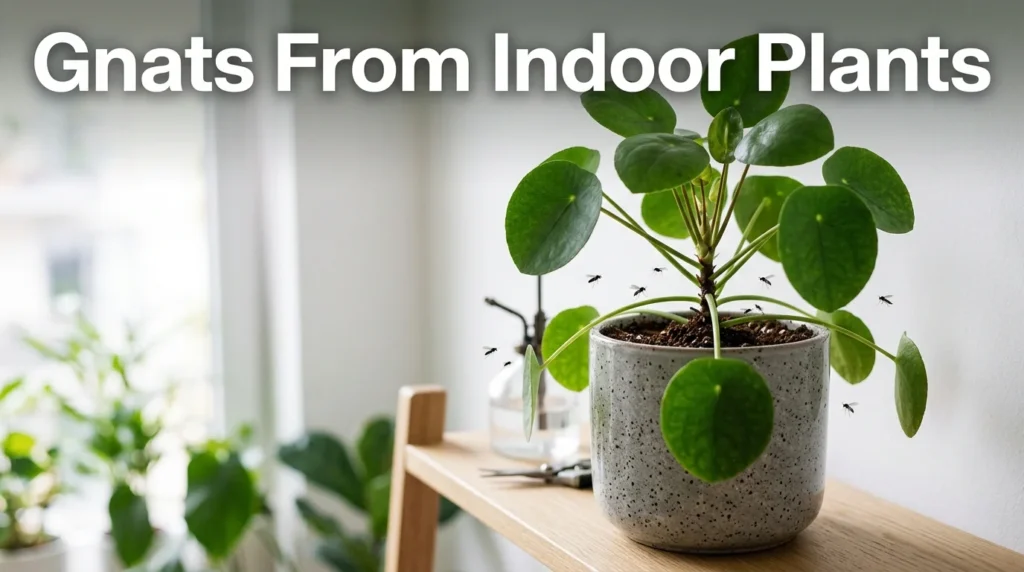
Eliminating gnats from indoor plants requires breaking their breeding cycle by targeting both the flying adults and the translucent larvae living beneath the soil line. Specifically, these tiny pests scientifically known as dark-winged fungus gnats (Sciaridae) are attracted to damp potting mix, decaying organic matter, and stagnant moisture. While adult gnats are primarily a nuisance as they fly around light sources and faces, their subterranean larvae feed on delicate feeder roots, fungal threads, and organic matter. Consequently, severe infestations often result in stunted growth and leaf yellowing.
Therefore, to eliminate gnats from indoor plants permanently, you must address the root cause: overwatering and poor soil aeration. First, applying targeted biological controls like Bacillus thuringiensis israelensis (BTI) or beneficial nematodes destroys larvae in the root zone. Meanwhile, yellow sticky traps catch adults before they lay more eggs. Ultimately, combining soil moisture management with physical barriers stops recurring infestations and keeps your houseplants thriving.
This comprehensive guide details the lifecycle of houseplant gnats, highly effective natural and chemical eradication protocols, preventive potting substrate adjustments, and step-by-step troubleshooting.
Understanding the Fungus Gnat Life Cycle
Understanding how fungus gnats reproduce is essential for effective treatment. A single female adult lives for only about one week, but can deposit up to 300 eggs in damp, rich topsoil.
| Lifecycle Stage | Duration | Primary Location | Key Behavior / Impact |
| --- | --- | --- | --- |
| **Egg** | 2–3 Days | Soil Surface | Deposited in moist, decaying organic matter |
| **Larva** | 10–14 Days | Subsurface Root Zone | Feeds on delicate roots, fungi, and organic material |
| **Pupa** | 3–5 Days | Soil Topcoat | Undergoes metamorphosis in topsoil |
| **Adult** | 7–10 Days | Above Soil / Air | Breeds, flies around lights/plants, and lays new eggs |
+-----------------------------------------------------------------+
- Egg Stage (2–3 Days): Eggs are microscopic and deposited directly into the top 1 to 2 inches of moist soil, particularly in mixes high in peat moss or compost.
- Larval Stage (10–14 Days): Legless, translucent larvae with distinct black head capsules hatch and begin feeding aggressively on soil fungi, organic debris, and delicate plant root hairs.
- Pupal Stage (3–5 Days): Larvae pupate in the upper layer of soil before emerging as winged adults.
- Adult Stage (7–10 Days): Weak-flying adults emerge, mate almost immediately, and seek out damp soil to repeat the cycle. They do not bite humans or pets, but carry fungal spores between plants.
Fungus Gnats vs. Fruit Flies vs. Shore Flies
Many indoor gardeners confuse fungus gnats with other small household insects. Correct identification prevents using the wrong control methods.
| Feature | Fungus Gnats (Sciaridae) | Fruit Flies (Drosophilidae) | Shore Flies (Ephydridae) |
| Primary Attraction | Damp soil, peat, decaying roots | Overripe fruit, garbage, sinks | Algae on damp greenhouse media |
| Physical Appearance | Slender, dark body, long legs | Plump, tan/brown body, red eyes | Stocky, dark body with white wing spots |
| Flight Pattern | Weak, erratic, hovers near soil | Direct, fast, hovers near food | Stronger, fly-like erratic bursts |
| Primary Target Zone | Plant pots and soil line | Kitchen counter, trash cans | Saucers, constantly wet trays |
Multi-Stage Eradication Protocol for Indoor Plant Gnats
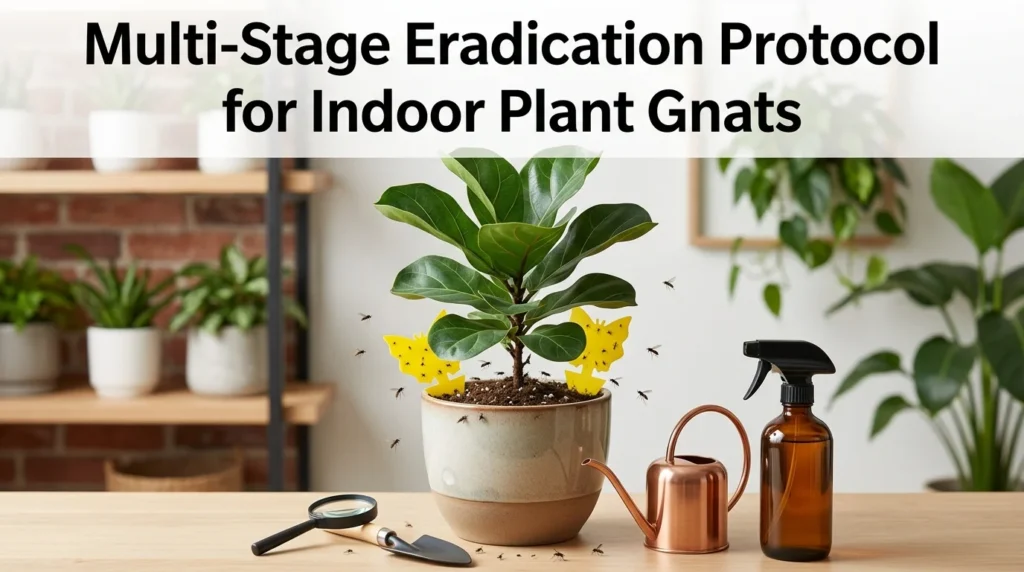
To eradicate an active infestation, you must simultaneously target soil-dwelling larvae and flying adults. Treating only one stage allows the population to rebuild quickly.
Step 1: Destroy Soil Larvae (The Source)
Targeting the larvae breaks the reproduction cycle. Use these evidence-backed treatments:
Method A: Biological Control via BTI (Bacillus thuringiensis israelensis)
- How it Works: BTI is a naturally occurring soil bacterium that produces proteins toxic specifically to dipteran larvae (gnats and mosquitoes) when ingested. It does not harm plants, pets, humans, or beneficial insects.
- Application: Dissolve BTI granules or mosquito larvicide bits in warm water for 20–30 minutes, strain out the solids, and water your plants thoroughly with the treated liquid.
- Frequency: Repeat every 5 to 7 days for three consecutive weeks to catch newly hatched eggs.
Method B: Hydrogen Peroxide Soil Drench
- How it Works: A 3% hydrogen peroxide drench fizzes on contact with organic matter, instantly killing larvae without leaving chemical residues. It breaks down into water and oxygen, which aerates the root zone.
- Application: Mix 1 part 3% household hydrogen peroxide with 4 parts cool water. Water the topsoil generously until liquid drains from the pot bottom.
- Note: Use this treatment as a spot treatment; repeated use can temporarily disrupt beneficial soil microbial activity.
Method C: Beneficial Nematodes (Steinernema feltiae)
- How it Works: Microscopic beneficial roundworms enter gnat larvae and release natural bacteria that consume the pest from within.
- Application: Mix nematodes into room-temperature, unchlorinated water according to package instructions and apply to damp soil. Maintain mild soil moisture for several days so nematodes can move freely through the substrate.
Step 2: Capture Flying Adults
Capturing adults prevents females from depositing fresh eggs in your pots.
- Yellow Sticky Traps: Cut yellow traps into small squares or purchase stake-mounted traps and insert them directly at soil level. Yellow reflects light at a wavelength that attracts fungus gnats.
- Apple Cider Vinegar Traps: Place small dishes containing 1/2 cup apple cider vinegar, a splash of water, and 2 drops of liquid dish soap near infested pots. The soap reduces surface tension, causing attracted gnats to sink.
Preventative Cultural Practices and Soil Modifications
Long-term management of gnats from indoor plants depends on creating an unsupportive breeding environment through proper watering and soil aeration.
1. Soil Drying and Moisture Control
Fungus gnat eggs and larvae die quickly in dry conditions. Allow the top 2 to 3 inches of soil to dry out completely between waterings. Use a wooden chopstick or soil moisture meter rather than watering on a fixed calendar schedule.
2. Bottom-Watering Technique
Fill a sink or deep tray with 1 to 2 inches of water, place drainage-holed pots inside, and let the soil wick moisture upward for 20 to 30 minutes. The top 2 inches of soil remain dry, depriving female gnats of the damp surface needed for egg-laying while keeping deeper roots hydrated.
3. Topdressing physical Barriers
Covering exposed soil prevents adult gnats from reaching damp substrate to lay eggs.
1.Choose a Dry Inorganic Mulch:Select coarse silica sand, horticultural grit, or fine pumice.
Avoid organic materials like wood bark chips or moss, which absorb water and attract gnats.
2.Apply a 1-Inch Layer:Ensure complete topsoil coverage.
Spread a uniform 1-inch layer of inorganic sand or grit over the top layer of potting soil.
3.Seal Stem Crevices:Prevent gaps around plant stems.
Ensure the topdressing forms an unbroken barrier around stem bases and drainage tray edges.
4.Maintain Dry Surface:Water from the bottom when possible.
Bottom-water to keep the inorganic topdressing bone-dry, preventing adult gnats from laying eggs in the substrate.
4. Soil Substrate Aeration
Dense, heavy potting mixes that contain excessive peat or un-composted organic matter retain water too long and encourage fungal growth. Re-pot plants using a high-aeration mix:
- Standard Houseplant Blend: Combine 50% coco coir or peat moss, 30% perlite, and 20% coarse pumice or orchid bark.
- Benefits: This chunky mixture drains rapidly, increases root oxygenation, and dries out quickly enough to interrupt the gnat life cycle.
Troubleshooting Recurring Gnat Infestations
If gnats persist after treatment, evaluate your setup using this diagnostic table:
| Symptom / Problem | Underlying Cause | What to Inspect | Corrective Action |
| Gnats return 2 weeks after treatment | Surviving eggs hatched or new infested plants were introduced | Check nearby new plants or unsealed bag of potting soil | Quarantine new plants for 14 days; treat all household plants simultaneously with BTI |
| Roots show black, mushy decay with yellow leaves | Severe larval root feeding combined with root rot from overwatering | Unpot plant; check root color, firmness, and smell | Trim rotted roots; repot into fresh, dry, airy potting mix and treat with hydrogen peroxide |
| White mold layer on soil surface attracts gnats | Poor air circulation, overwatering, or low light levels | Inspect soil surface for white fungal mycelium | Scrape off mold layer; improve airflow with a small fan; allow soil topcoat to dry |
| Gnats emerging from drainage holes | Female gnats laying eggs through bottom drainage holes | Check moisture levels in drainage saucers and lower pot base | Discard standing saucer water after 15 minutes; place mesh screens over bottom drainage holes |
Conclusion
Eliminating gnats from indoor plants comes down to breaking their life cycle through consistent, targeted action. By combination methods using yellow sticky traps for flying adults, applying BTI or hydrogen peroxide drenches for soil-dwelling larvae, and switching to bottom-watering you address both the visible pests and their underlying cause.
Long-term protection depends on creating an unsupportive environment for future generations. Allowing potting substrates to dry out between waterings, upgrading to airy, well-draining soil mixes, and using clean inorganic topdressings keep your plants healthy and gnat-free.
At GrowIndoorly.com, our goal is to help you maintain a vibrant, pest-free indoor garden with practical, evidence-based care. With a consistent routine and proper moisture control, you can eliminate houseplant gnats for good and keep your indoor green spaces thriving year-round.
Test Your Knowledge:
Question 1
Which stage of the fungus gnat life cycle causes physical damage to houseplant feeder roots?
- A) The adult fly.
- B) The egg stage.
- C) The larval stage.
- D) The pupal stage.
Question 2
How does BTI (Bacillus thuringiensis israelensis) control fungus gnat populations?
- B) It produces biological proteins that selectively kill gnat larvae upon ingestion.
- C) It changes soil pH to make it extremely acidic.
- D) It dries out the soil automatically.
Question 3
Why is bottom-watering an effective prevention method against indoor plant gnats?
- A) It makes plant leaves taste bitter to adult gnats.
- B) It keeps the top 2 inches of soil dry, preventing adult females from laying eggs.
- C) It kills root rot bacteria instantly.
- D) It forces all soil larvae to submerge and drown.
(Answer Key: 1-C, 2-B, 3-B,
Frequently Asked Questions
Do fungus gnats bite humans or pets?
No. Adult fungus gnats lack biting mouthparts and do not feed on blood or spread diseases to humans or pets. They are harmless to people, though their presence around indoor spaces can be annoying.
Will letting my plant dry out completely kill all fungus gnats?
Drying out the top 2 to 3 inches of soil kills most delicate larvae and stops eggs from hatching. However, hardy pupae deeper in the pot may survive until the next watering, so combine dry cycles with biological treatments like BTI.
Can I use sand from my outdoor garden as a topdressing barrier?
Avoid using unsterilized outdoor garden sand, as it contains fine clay particles that compaction soil and may introduce outdoor pests or pathogens. Always use clean, dry horticultural sand, coarse builder’s sand, or fine pumice.
Why do I see gnats coming out of freshly purchased potting soil bags?
Potting soil bags stored outdoors or in humid warehouses often have small ventilation holes where female gnats enter and lay eggs. Always inspect soil bags before buying, and store opened bags in sealed plastic bins indoors.
How do I sterilize commercial potting soil before planting?
To sterilize fresh potting soil, place it in an oven-safe baking dish, moisten it slightly, cover tightly with aluminum foil, and bake at 180°F (82°C) for 30 minutes. Allow it to cool completely before repotting plants.
Are homemade dish soap sprays effective against soil larvae?
Spraying diluted dish soap onto leaf surfaces kills exposed soft-bodied insects; however, pouring soap into the soil can damage delicate plant roots and break down soil structure without reliably reaching deep larvae. Therefore, stick to targeted BTI or peroxide soil treatments instead.

Megan Foster is the founder and lead writer of GrowIndoorly.com, where she shares practical, easy-to-follow advice for growing healthy indoor plants. She is passionate about helping beginners and experienced plant lovers build thriving indoor gardens with confidence. Megan writes about houseplants, indoor herbs, succulents, hydroponics, grow lights, plant propagation, watering, soil care, and everyday plant maintenance.
She enjoys researching trusted gardening techniques and transforming them into simple, actionable guides that readers can easily apply at home. Her goal is to make indoor gardening more enjoyable and accessible by providing clear, reliable information that helps people keep their plants healthy throughout the year. Whether you’re caring for your first houseplant or expanding your indoor plant collection, Megan’s practical tips are designed to help you grow with confidence.


