
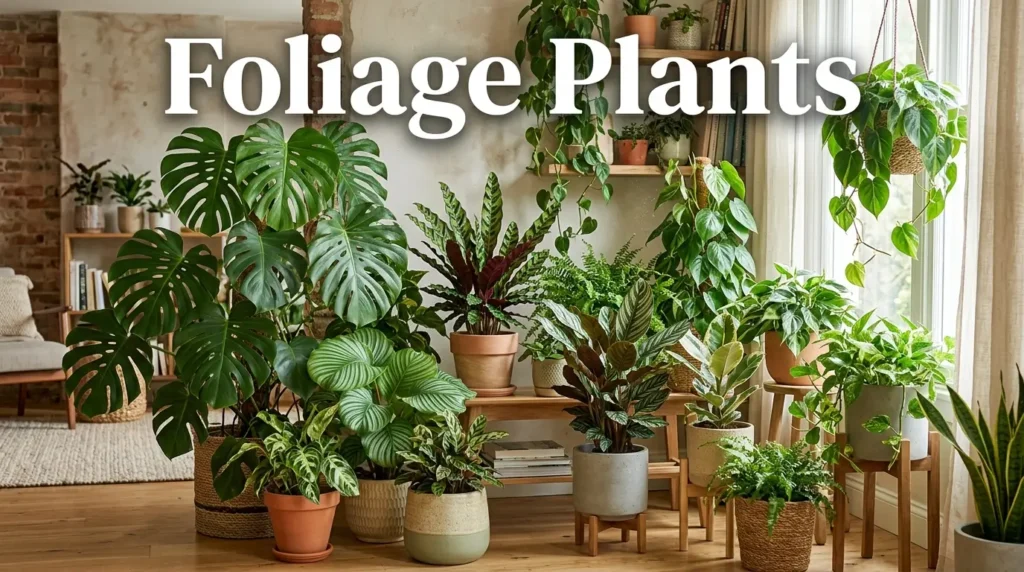
Indoor foliage plants bring natural color, texture, and visual interest into homes, offices, and other indoor spaces. Unlike flowering houseplants, which are often grown for their blooms, foliage plants are valued primarily for their decorative leaves. These leaves may be large, glossy, colorful, patterned, or beautifully shaped, making them an excellent choice for creating an attractive indoor garden throughout the year.
The best indoor foliage plants range from easy-care options, such as pothos and snake plants, to tropical favorites, including Monstera, Calathea, and Philodendron. However, each variety has different requirements for light, watering, humidity, and soil. Choosing plants that match your indoor conditions is the key to keeping their leaves healthy and encouraging consistent growth.
This guide explains how to choose, grow, and maintain indoor foliage plants, including suitable varieties for beginners, practical care techniques, common problems, and tips for displaying lush greenery in your home.
What Are Indoor Foliage Plants?
Indoor foliage plants are houseplants grown mainly for their attractive leaves rather than their flowers. Their ornamental value comes from leaf size, shape, texture, color, and patterns. Some feature deep green leaves, while others display silver markings, yellow edges, reddish tones, or dramatic white variegation.
These plants come from different botanical groups and natural habitats. Many popular varieties originate in tropical forests, where they grow beneath tree canopies and receive filtered sunlight. Others, such as snake plants and certain succulents, tolerate drier conditions and brighter light.
Common characteristics of foliage houseplants include:
- Decorative leaves: Broad, narrow, glossy, textured, or patterned foliage.
- Varied growth habits: Upright, trailing, climbing, or compact forms.
- Year-round appeal: Attractive foliage throughout the growing season when conditions are suitable.
- Different care requirements: Some tolerate neglect, while others need careful humidity and watering management.
Foliage plants can also be evergreen or seasonally deciduous. Most popular tropical houseplants retain their leaves indoors when their environmental needs are met, although occasional leaf loss is normal as plants replace older growth.
Best Indoor Foliage Plants for Your Home
Selecting suitable plants depends on available light, room temperature, maintenance preferences, and the amount of space you have. The following varieties offer a useful starting point.
1. Snake Plant
The snake plant (Dracaena trifasciata) has stiff, upright leaves with green, yellow, or silvery patterns, depending on the cultivar. Its vertical growth makes it suitable for corners, bedrooms, offices, and small living spaces.
It tolerates lower light better than many tropical foliage plants, although brighter indirect light generally supports stronger growth. Allow the potting mix to dry thoroughly between waterings, and use a container with drainage holes.
Snake plants are especially suitable for beginners who want an attractive plant without a demanding watering schedule. However, they can develop root rot if the soil stays wet.
2. Pothos
Pothos (Epipremnum aureum) is a popular trailing foliage plant known for its heart-shaped leaves and flexible growth habit. Depending on the variety, the foliage may be green, golden, cream-variegated, or marbled.
It grows well in bright, indirect light and can tolerate moderate or lower indoor light. However, heavily variegated varieties generally need brighter conditions to maintain their markings.
Pothos works well in hanging baskets, on shelves, or trained along a support. Trim long stems when necessary to encourage a fuller appearance.
3. Monstera Deliciosa
Monstera deliciosa is recognized for its large, glossy leaves that develop natural splits and holes as the plant matures. Its dramatic foliage makes it a popular focal point in living rooms and spacious indoor gardens.
Provide bright, indirect light, an airy potting mix, and a sturdy support such as a moss pole or plant stake. Water when the upper portion of the soil begins to dry, adjusting the frequency according to the season and pot size.
Because mature plants can spread considerably, leave enough room for their leaves and climbing stems.
4. Philodendron
Philodendrons include many foliage plants with different leaf shapes, colors, and growth habits. Heartleaf philodendron is particularly useful for beginners because it adapts well to typical indoor conditions.
Trailing varieties suit shelves and hanging planters, while climbing varieties benefit from vertical supports. Most prefer indirect light and a well-draining growing medium.
Avoid keeping the roots continuously wet. Yellowing leaves and persistently damp soil may indicate excessive watering or inadequate drainage.
5. ZZ Plant
The ZZ plant (Zamioculcas zamiifolia) features thick stems and glossy, dark green leaflets. It is well suited to indoor spaces where light levels are moderate or low and frequent watering is inconvenient.
Its underground rhizomes store water, allowing it to tolerate periods of dryness. Let the growing medium dry substantially before watering again.
Although the ZZ plant is adaptable, it does not thrive indefinitely without adequate light. Very dark locations can lead to slow growth and weaker stems.
6. Calathea and Goeppertia
Many plants commonly sold as Calathea are now classified in the genus Goeppertia. These tropical foliage plants are admired for their patterned leaves, contrasting veins, and colorful undersides.
They generally prefer medium to bright indirect light, evenly moist but not waterlogged soil, and warm conditions. Dry air, inconsistent watering, and mineral buildup can cause brown leaf edges.
These plants are best for growers who can monitor soil moisture and maintain a reasonably stable indoor environment.
7. Rubber Plant
The rubber plant (Ficus elastica) has thick, leathery leaves that may be dark green, burgundy, or variegated. Its upright growth and substantial foliage make it suitable for rooms with sufficient space and bright indirect light.
Allow the top layer of soil to dry before watering. Rotate the pot occasionally to promote balanced growth, and wipe dusty leaves with a soft, damp cloth.
Rubber plants can become tall indoors, so consider their mature size before choosing a permanent location.
8. Chinese Evergreen
Chinese evergreen plants (Aglaonema species and hybrids) are valued for their patterned foliage, compact growth, and adaptability to indoor environments.
Their leaves may feature silver, cream, pink, red, or green markings. Most varieties prefer indirect light, moderate warmth, and soil that drains well.
Green-leaved types may tolerate lower light, while brightly colored cultivars often benefit from brighter indirect conditions. Direct afternoon sunlight can scorch their leaves.
How to Choose the Right Foliage Plant
Before purchasing a houseplant, consider the conditions you can realistically provide. A plant that matches your home will usually be easier to maintain than one selected only for its appearance.
| Your indoor conditions | Suitable foliage plants | Main consideration |
|---|---|---|
| Low to moderate light | ZZ plant, snake plant, Chinese evergreen | Growth may slow in very dim rooms |
| Bright indirect light | Monstera, pothos, philodendron | Protect leaves from harsh direct sun |
| Limited floor space | Pothos, heartleaf philodendron | Use shelves or hanging baskets |
| Large decorative statement | Monstera, rubber plant | Allow room for mature growth |
| Dry indoor air | Snake plant, ZZ plant | Avoid persistently wet soil |
| Patterned or colorful foliage | Aglaonema, Calathea, variegated pothos | Match light to the cultivar |
Remember that low-light tolerant does not mean no-light tolerant. All foliage plants need light for photosynthesis, and growth usually becomes slower when available light is insufficient.
Light Requirements for Indoor Foliage Plants
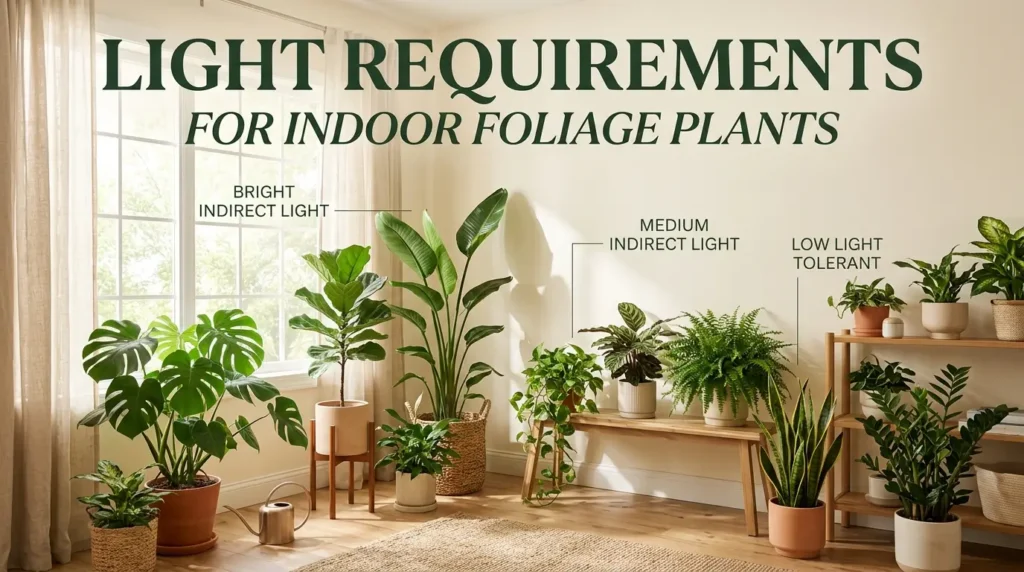
Light is one of the most important factors affecting leaf size, color, and overall plant health. Even plants that tolerate shade need an adequate amount of light to maintain healthy growth.
Bright Indirect Light
Bright indirect light is suitable for many tropical foliage plants, including Monstera, rubber plants, philodendrons, and variegated pothos.
A location near an east-facing window may provide gentle morning sunlight, while a bright south- or west-facing window may require a sheer curtain or additional distance from the glass.
Observe the actual light reaching the leaves rather than relying only on window direction. Buildings, trees, curtains, and seasonal changes can significantly affect brightness.
Low-Light Conditions
Snake plants, ZZ plants, and some Chinese evergreens can tolerate lower light levels. They are useful for offices and rooms without strong natural sunlight.
However, low light generally reduces growth and may cause stretched stems, smaller new leaves, or fading variegation. If a plant gradually becomes leggy or produces unusually small leaves, move it to a brighter location if possible.
Using Grow Lights
Artificial grow lights can help when natural sunlight is insufficient. Full-spectrum LED grow lights are a practical option for most foliage houseplants.
For best results:
- Follow the manufacturer’s recommended hanging distance.
- Provide a consistent daily lighting schedule, often around 10–14 hours depending on light intensity and plant requirements.
- Give plants a period of darkness rather than leaving lights on continuously.
- Adjust the distance if leaves become unusually pale, warm, or scorched.
- Check growth over several weeks before making further changes.
A weak lamp placed far away may not provide enough usable light, even when it is switched on for many hours. Light intensity at the leaf surface matters as much as the duration of exposure.
Watering Indoor Foliage Plants Correctly
Watering problems are among the most common reasons indoor foliage plants develop yellow leaves, brown tips, and root damage.
There is no universal watering schedule for every houseplant. The right frequency depends on the species, pot size, growing medium, light, temperature, and season.
Check Soil Moisture Before Watering
Use your finger to assess the upper layer of soil or a suitable moisture meter when needed.
- Snake plants and ZZ plants generally need the soil to dry substantially between waterings.
- Monstera and pothos usually prefer watering after the upper portion of the growing medium has dried.
- Calathea and similar moisture-loving plants generally need more consistent moisture, without waterlogged roots.
Water thoroughly when needed, allowing excess water to escape through the drainage holes. Empty any standing water from the saucer or decorative outer pot.
Recognize Overwatering and Underwatering
Overwatering: Leaves may turn yellow, stems may soften, and the soil may remain wet for extended periods. Severe cases can cause root rot.
Underwatering: Leaves may droop, curl, become crispy, or develop dry brown edges. The pot may feel unusually light, and the soil may pull away from its sides.
Drooping alone does not identify the problem. Check soil moisture before adding water, because both overly dry and waterlogged roots can produce similar symptoms.
Best Soil Mix for Indoor Foliage Plants
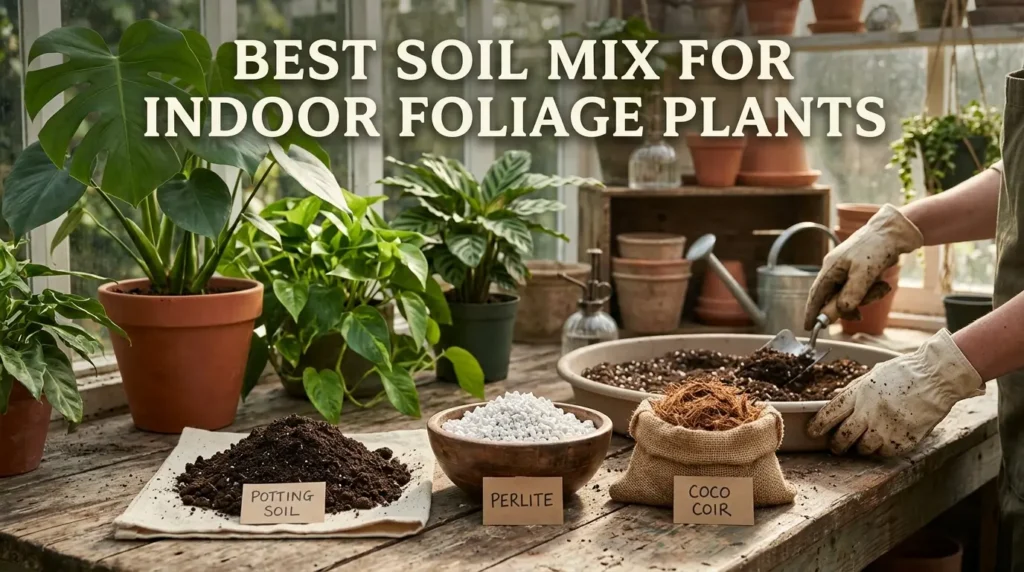
Most foliage houseplants grow best in a potting mix that balances moisture retention with drainage and aeration. Ordinary garden soil is usually unsuitable for indoor containers because it can become compacted and may introduce pests or disease organisms.
A useful general-purpose mix for many tropical foliage plants contains:
- Two parts quality indoor potting mix.
- One part perlite or pumice.
- One part fine orchid bark, when the plant benefits from additional structure and airflow.
This is a flexible starting point rather than a universal formula. Smaller tropical plants may prefer a finer mix, while large Monstera plants and other climbing aroids often benefit from a chunkier medium.
For plants adapted to drier conditions, such as snake plants and ZZ plants, use a more freely draining mix with additional mineral material.
Always choose a pot with drainage holes. A well-designed growing medium cannot compensate for a container that traps excess water.
Temperature and Humidity for Healthy Foliage
Most tropical foliage houseplants grow comfortably in ordinary indoor temperatures, often around 18–27°C (65–80°F). Sudden temperature changes, cold drafts, and direct contact with hot or cold window glass can stress sensitive plants.
Keep plants away from heating vents, air conditioners, and frequently opened exterior doors when these create strong temperature fluctuations.
Humidity preferences vary between species. Pothos, snake plants, and ZZ plants often adapt to average household humidity, whereas Calathea and some other tropical plants may develop brown leaf edges in very dry air.
To support humidity-sensitive plants:
- Use a room humidifier when indoor air is consistently dry.
- Group plants together if airflow remains adequate.
- Avoid placing foliage directly against cold windows.
- Maintain good ventilation to reduce prolonged leaf wetness and fungal problems.
Misting leaves provides only a brief increase in local moisture and is not a reliable way to maintain consistently higher humidity.
Feeding and Fertilizing Indoor Foliage Plants
Foliage plants need nutrients to produce new leaves, maintain chlorophyll, and support healthy root and stem growth. However, excessive fertilizer can damage roots and contribute to brown leaf tips or mineral buildup.
During active growth, many foliage plants benefit from a balanced, water-soluble houseplant fertilizer applied according to the product label. Depending on the plant and formulation, a reduced-strength application may be appropriate.
Follow these guidelines:
- Fertilize primarily when the plant is actively growing.
- Avoid feeding severely dry or stressed plants.
- Reduce or pause feeding when growth slows significantly during winter.
- Flush the growing medium occasionally if soluble salts accumulate and drainage is good.
- Do not assume every yellow leaf indicates a nutrient deficiency.
Yellowing can also result from overwatering, poor lighting, pests, root damage, or natural aging. Check the growing conditions before increasing fertilizer.
Pruning, Cleaning, and Repotting
Regular maintenance helps foliage plants retain an attractive shape and supports healthy growth.
Clean the Leaves
Dust can accumulate on broad leaves, reducing their visual appeal and potentially interfering with light reaching the leaf surface.
Wipe smooth leaves gently with a soft, damp cloth. Avoid harsh cleaning products, leaf-shine sprays, and abrasive materials that may damage the foliage. Support large leaves from underneath while wiping to avoid cracking the leaf blade or its stem. For plants with many small leaves, a gentle shower of lukewarm water can rinse away dust more efficiently, as long as the pot drains freely and the foliage dries afterward.
Prune Damaged Growth
Use clean, sharp scissors to remove dead leaves, damaged stems, and unhealthy growth. For trailing plants, trim excessively long stems above a suitable node if you want to encourage branching.
Remove only what is necessary unless you are deliberately reshaping a healthy, established plant. Disinfect your scissors or pruners between plants, especially if you suspect disease, to avoid spreading problems from one plant to another. Heavier pruning is best done during the active growing season, when the plant can replace removed growth more quickly.
Know When to Repot
Repot when roots crowd the container, water passes through unusually quickly because the root ball is congested, or growth declines despite suitable care.
Choose a container only slightly larger than the existing root ball. An excessively large pot holds more wet soil than the roots can use, increasing the risk of root problems.
Spring and early summer are often convenient times to repot actively growing houseplants, although urgent root or drainage problems should be addressed whenever they occur.
Common Indoor Foliage Plant Problems and Solutions
Healthy foliage depends on identifying the underlying cause of a problem rather than treating every symptom the same way.
| Problem | Possible cause | What to check | Practical solution |
|---|---|---|---|
| Yellow leaves | Overwatering, low light, natural aging | Soil moisture and light | Correct watering or improve light |
| Brown leaf tips | Dry air, inconsistent moisture, salt buildup | Humidity, watering history, fertilizer use | Stabilize care and review feeding |
| Leggy growth | Insufficient light | Stem length and leaf spacing | Move to brighter indirect light |
| Pale or scorched patches | Excess direct sunlight | Window exposure | Filter intense sun or reposition the plant |
| Sticky leaves or fine webbing | Insect pests or spider mites | Leaf undersides and stems | Isolate the plant and identify the pest |
| Soft stems or dark roots | Root rot or prolonged wet soil | Root condition and drainage | Remove damaged roots and repot if necessary |
How to Manage Common Pests
Indoor foliage plants may attract spider mites, mealybugs, scale insects, thrips, and fungus gnats.
Inspect new plants before bringing them indoors and check leaf undersides periodically. If pests appear, isolate the affected plant, remove visible insects where practical, and use a suitable labeled treatment when needed.
Fungus gnats often indicate persistently moist growing media. Allow the surface to dry appropriately between waterings and improve drainage rather than relying only on insect treatments.
Avoid applying pesticides without identifying the pest, and follow all label instructions, especially around children and pets.
Styling Indoor Foliage Plants in Your Home
Foliage plants can complement different interior styles while making rooms feel more connected to nature.
- Small spaces: Place compact Chinese evergreens or snake plants on shelves and side tables.
- Living rooms: Use Monstera or rubber plants as focal points beside suitable light sources.
- Vertical displays: Arrange pothos and trailing philodendrons on high shelves or in secure hanging planters.
- Layered plant arrangements: Combine upright, broad-leaved, and trailing plants to create contrast in height and texture.
- Workspaces: Choose manageable plants that suit the available light and will not obstruct work surfaces.
When arranging several plants together, consider their individual needs rather than grouping them only by appearance. A drought-tolerant snake plant and a moisture-sensitive Calathea, for example, may require different watering routines.
Use stable plant stands, secure hanging hardware, and waterproof saucers to protect furniture and floors.
Are Indoor Foliage Plants Safe for Pets?
Not every foliage plant is safe for cats and dogs. Pothos, Monstera, philodendrons, ZZ plants, and snake plants can cause adverse reactions if chewed or swallowed. Calathea varieties generally considered non-toxic to cats and dogs may be preferable where pets are present, although individual species should still be verified.
Before purchasing a plant, check its botanical name and consult a reliable veterinary poison-control resource. Keep potentially harmful plants out of reach, and seek veterinary advice if a pet eats a toxic plant or develops concerning symptoms. Hanging planters and high shelves keep tempting leaves away from curious cats, while heavy, stable pots are harder for pets to knock over. If you are unsure about a plant you already own, moving it to a closed room is a simple temporary safeguard until you can verify its safety.
Do Indoor Foliage Plants Improve Indoor Air Quality?
Plants absorb carbon dioxide during photosynthesis and release oxygen, but ordinary numbers of potted houseplants should not be expected to replace ventilation or air filtration. Evidence from typical indoor environments does not support relying on houseplants alone to remove meaningful amounts of indoor air pollution.
Their more dependable benefits include decorative appeal, opportunities for gardening, and creating a pleasant indoor environment. For healthier indoor air, prioritize source control, adequate ventilation, and suitable filtration where necessary.
Common Mistakes to Avoid with Indoor Foliage Plants
Even experienced growers slip into these habits. Steering clear of them keeps foliage healthier with less corrective care:
- Watering every plant on the same day instead of checking each pot’s soil moisture first.
- Placing a light-loving plant in a dark corner because the spot looks empty.
- Leaving the plant in its nursery pot inside a decorative cachepot without ever checking for standing water.
- Fertilizing a stressed or dry plant in the hope that nutrients will fix yellowing leaves.
- Ignoring the undersides of leaves, where spider mites and other pests usually appear first.
Frequently Asked Questions About Indoor Foliage Plants
1. What are the easiest indoor foliage plants for beginners?
Snake plants, pothos, ZZ plants, and heartleaf philodendrons are good starting choices. They tolerate a range of indoor conditions, although each still needs adequate light, appropriate watering, and drainage.
2. Which foliage plants grow well in low light?
ZZ plants, snake plants, and some Chinese evergreens tolerate lower light than many other houseplants. They will generally grow more slowly in dim conditions, and no plant can thrive indefinitely without sufficient light.
3. How often should I water indoor foliage plants?
Water when the growing medium reaches the appropriate dryness level for the species. Check the soil rather than following a fixed weekly schedule, and always consider the pot’s drainage.
4. Why are the leaves on my foliage plant turning yellow?
Yellow leaves can result from overwatering, underwatering, insufficient light, nutrient problems, pests, or natural leaf aging. Check soil moisture, drainage, light exposure, and the pattern of affected leaves before changing your care routine.
5. Do foliage plants need direct sunlight?
Most tropical foliage plants prefer bright, indirect light. Some can tolerate gentle morning sun, while intense direct sunlight may scorch their leaves. The right exposure depends on the species and the strength of the sunlight.
6. What is the best fertilizer for indoor foliage plants?
A balanced, water-soluble houseplant fertilizer is suitable for many foliage plants when used according to its label. Adjust feeding to the plant’s growth rate, growing medium, and seasonal conditions.
7. Can indoor foliage plants grow under LED lights?
Yes. Suitable LED grow lights can support healthy foliage growth when they provide adequate intensity, appropriate coverage, and a consistent daily schedule. Ordinary decorative LEDs may not supply enough usable light.
8. How can I make my indoor foliage plants look fuller?
Provide suitable light, maintain healthy roots, and prune selected stems when the species responds well to trimming. Some plants become bushier through branching, while climbing varieties may produce larger leaves when given suitable support.
9. Which indoor foliage plants are suitable for small apartments?
Snake plants, compact Chinese evergreens, small ZZ plants, and trailing pothos are useful choices. Select varieties based on the available light and use vertical space where safe and practical.
10. When should I repot an indoor foliage plant?
Repot when the roots become crowded, the growing medium drains poorly, or the plant outgrows its container. Choose a pot slightly larger than the root ball and use a mix appropriate for the species.
Conclusion
Indoor foliage plants offer an adaptable way to bring natural color, texture, and greenery into almost any home. From the easy-care ZZ plant and snake plant to the dramatic Monstera and patterned Calathea, there is a suitable option for different spaces and experience levels.
For lasting results, choose plants that match your lighting conditions, use a well-draining growing medium, water according to soil moisture, and monitor leaves and roots for early signs of stress. Consistent, species-appropriate care is more effective than frequent watering or excessive fertilizing.
Start with one or two plants that fit your home, learn their individual needs, and gradually expand your indoor foliage collection as your confidence grows.
Snake plants, pothos, ZZ plants, and heartleaf philodendrons are good starting choices. They tolerate some neglect and adapt well to typical indoor conditions, making them suitable for growers who are still learning basic care.
There is no universal watering schedule. Snake plants and ZZ plants generally need the soil to dry substantially between waterings, monstera and pothos usually prefer watering after the upper portion of the growing medium has dried, and calathea and similar moisture-loving plants need more consistent moisture. Water thoroughly when needed and let excess water escape through the drainage holes.
Not every foliage plant is safe for cats and dogs. Pothos, Monstera, philodendrons, ZZ plants, and some other common varieties can be harmful to pets. Before purchasing a plant, check its botanical name and consult a reliable veterinary poison-control resource.

Megan Foster is the founder and lead writer of GrowIndoorly.com, where she shares practical, easy-to-follow advice for growing healthy indoor plants. She is passionate about helping beginners and experienced plant lovers build thriving indoor gardens with confidence. Megan writes about houseplants, indoor herbs, succulents, hydroponics, grow lights, plant propagation, watering, soil care, and everyday plant maintenance.
She enjoys researching trusted gardening techniques and transforming them into simple, actionable guides that readers can easily apply at home. Her goal is to make indoor gardening more enjoyable and accessible by providing clear, reliable information that helps people keep their plants healthy throughout the year. Whether you’re caring for your first houseplant or expanding your indoor plant collection, Megan’s practical tips are designed to help you grow with confidence.


