
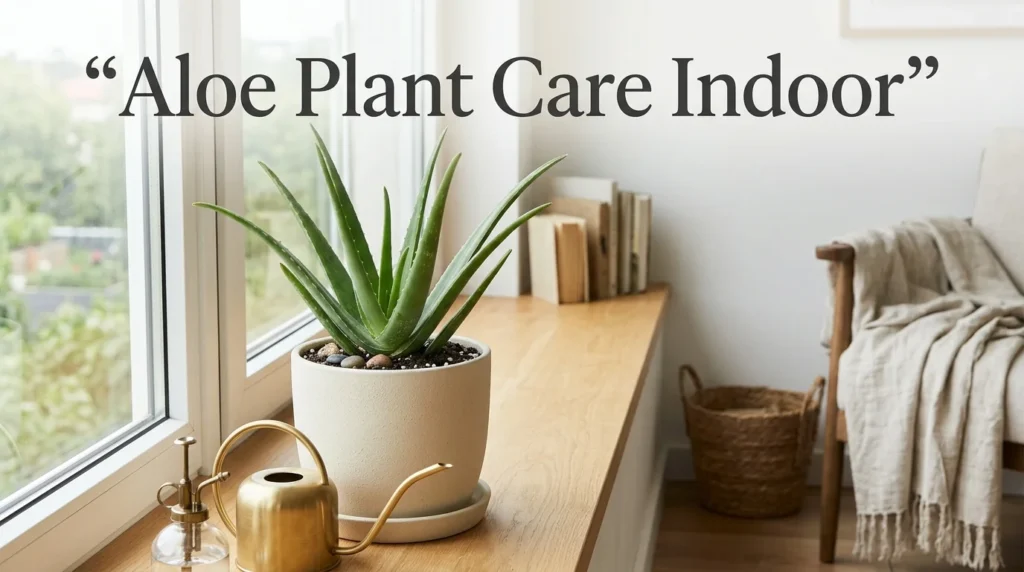
Mastering aloe plant care indoor setups requires replicating the arid, sun-soaked microclimates of the Arabian Peninsula and North Africa where these fleshy succulents originate. Known botanically as Aloe vera (and related indoor cultivars like Aloe arborescens or Aloe aristata), these drought-tolerant perennials store large volumes of water gel inside thick, tooth-edged leaves. Inside modern homes, their architectural rosette forms make excellent desk and windowsill centerpieces, provided growers satisfy their strict demands for intense sunlight and porous, fast-draining potting media.
Successful aloe plant care indoor routines focus on avoiding moisture retention around root crowns. Unlike tropical foliage plants that require consistent humidity and damp soil, Aloes thrive under a strict soak-and-dry irrigation schedule in porous unglazed terracotta pots. Without intense direct light, high soil porosity, and long dry intervals, indoor plants quickly succumb to root rot, soft drooping stems, and pale, elongated foliage.
Proper aloe plant care indoor strategies also involve managing offset production, seasonal growth shifts, and potting upgrades. Healthy plants naturally produce baby offsets (pup plants) around the base of the mother rosette. Removing these pups preserves parent plant energy, keeps containers balanced, and offers a simple way to propagate new succulents for your indoor green collection.
This master guide covers species selection, lighting thresholds, gritty soil formulation, watering protocols, pup propagation, repotting techniques, and diagnostic troubleshooting to keep your indoor succulents healthy year-round.
Popular Indoor Aloe Species Compared
Selecting the right Aloe species helps ensure your plant fits your available windowsill space, lighting intensity, and visual preference.
| Aloe Species | Common Name | Growth Habit & Size | Sunlight Need | Key Distinguishing Features | Care Difficulty |
| Aloe vera | True Aloe / Burn Plant | Large upright rosette (12–24 in tall) | High (Direct sun) | Thick gray-green fleshy leaves filled with clear gel | Beginner |
| Aloe aristata | Lace Aloe | Compact low rosette (6–8 in wide) | Moderate to High | Dark green leaves with white spots and soft hair-like tips | Very Easy |
| Aloe brevifolia | Short-leaved Aloe | Small tight clustering heads (4–6 in) | High (Direct sun) | Triangular blue-gray leaves with small white teeth | Beginner |
| Aloe maculata | Soap Aloe | Broad spreading rosette (12–18 in) | High | Spotted green leaves; produces bright orange floral spikes outdoors | Beginner |
| Aloe ferox | Bitter Aloe | Large single-stem tree form (3–5 ft indoors) | Very High | Coarse spiky leaves with reddish-brown teeth; bold focal point | Intermediate |
Light and Environmental Requirements for Indoor Aloe
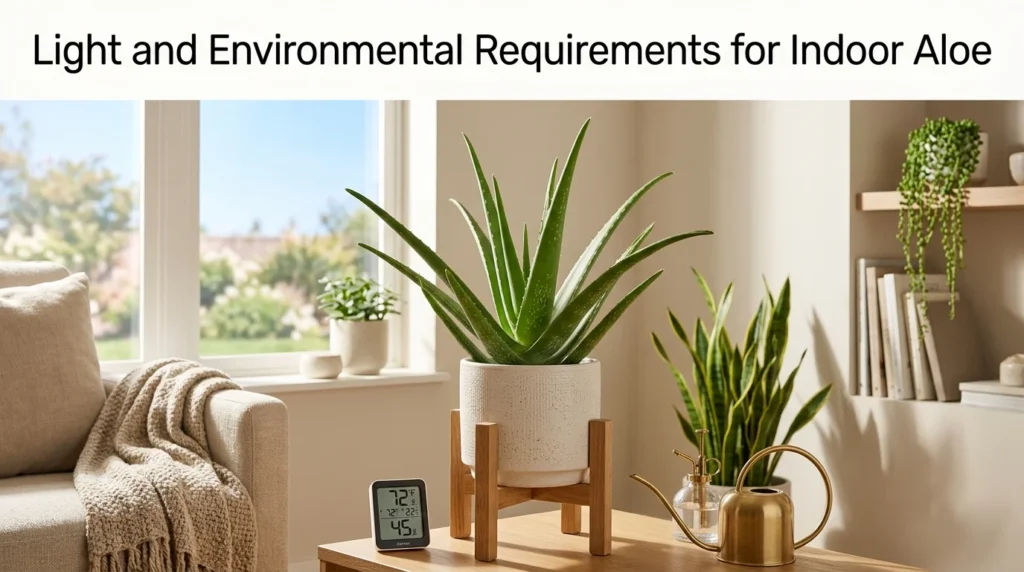
Light exposure determines whether an indoor aloe plant stays compact and firm or turns soft and leggy.
1. Sunlight Intensity and Window Orientation
- Optimal Placement: Position your pot on a sunny South-facing or West-facing window sill that provides at least 6 hours of direct natural sunlight daily.
- Low Light Stress (Etiolation): In dim rooms, leaves become thin, pale green, and weak, bending downward under their own weight as the plant stretches toward light.
- Sunburn Protection: While Aloes love light, moving a shade-adapted indoor plant directly into scorching summer sun can burn tissue, causing temporary reddish-bronze or brown foliage discoloration. Acclimate plants gradually over 10 days.
- Grow Light Setup: If natural light is lacking, position a full-spectrum LED grow light supplying $200 – 300 \ \mu\text{mol/m}^2/\text{s}$ (PPFD) 8 to 12 inches above the rosette for 12 to 14 hours per day.
2. Temperature and Ambient Humidity
- Temperature Range: Maintain room temperatures between 55°F and 80°F (13°C to 27°C).
- Frost Intolerance: Aloes cannot tolerate temperatures below 40°F (4°C). Keep pots away from cold window glass, unheated garages, and icy winter drafts.
- Low Humidity Preference: Aloes thrive in standard dry indoor air (30–40% RH). Avoid humid bathrooms or plant misters, which encourage fungal leaf spots.
Substrate Formulation, Terracotta Potting, and Irrigation
Because Aloes store substantial water reserves in their leaf parenchyma, their root systems are extremely vulnerable to lingering soil moisture.
High-Porosity Cactus & Succulent Mix Recipe
Never use standard peat-heavy houseplant potting soil alone, as it compacts and holds moisture too long. Formulate a gritty, well-aerated blend:
- 40% Quality Organic Potting Soil (Provides minor nutrient holding capacity)
- 30% Coarse Perlite or Pumice (Ensures root zone aeration and rapid drainage)
- 30% Coarse Builder’s Sand or Poultry Grit (Adds weight and accelerates drying)
Why Terracotta Pots Matter
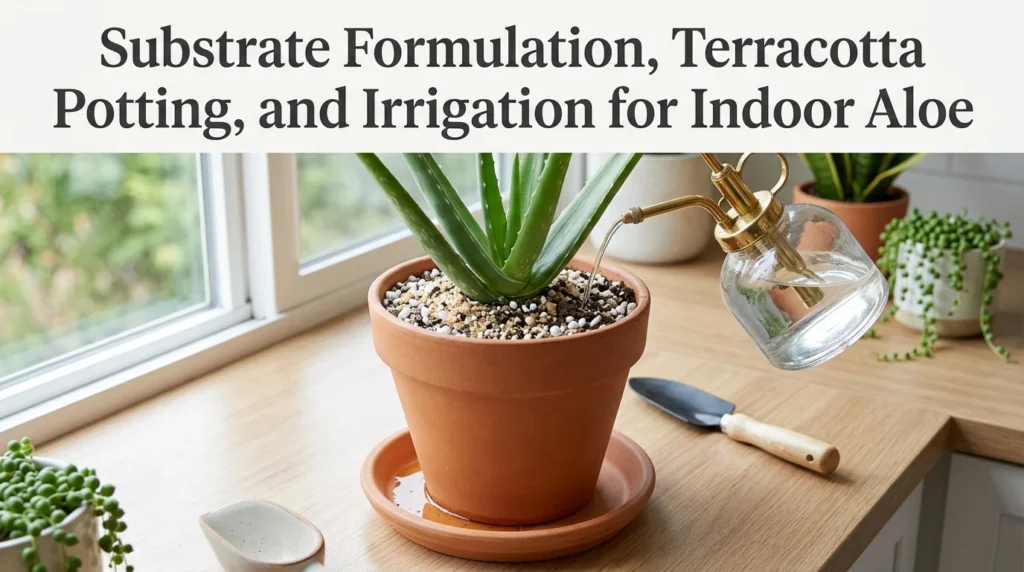
Always choose unglazed terracotta or clay pots with large bottom drainage holes. Terracotta draws moisture out through its porous walls, drying the soil faster and supplying oxygen directly to feeder roots.
The “Soak-and-Dry” Water Protocol
- Complete Drying Interval: Allow 100% of the potting medium to dry out completely between waterings. Insert a wooden skewer deep into the bottom of the pot; if it comes out damp or with soil attached, delay watering.
- Soak Thoroughly: When dry, pour room-temperature water directly onto the soil until water runs freely out of the drainage hole.
- Discard Runoff: Discard all standing water from saucers within 15 minutes. Never let an aloe container rest in standing water.
- Winter Dormancy Reduction: During late autumn and winter, reduce watering frequency significantlyoften once every 4 to 6 weeks as plant transpiration slows dramatically.
Step-by-Step: Harvesting and Propagating Aloe Pups
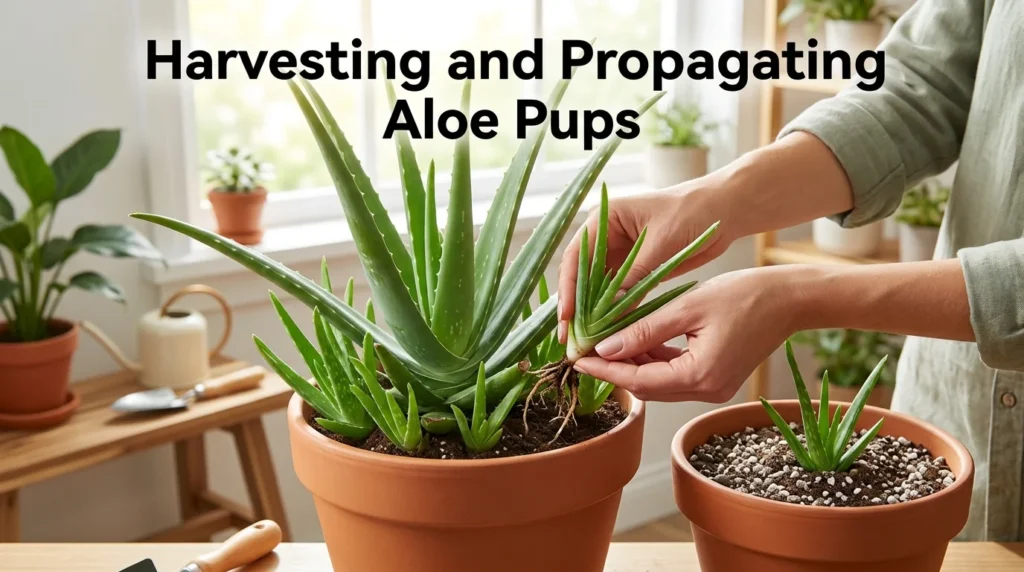
Healthy aloe plants naturally produce clonal offsets (pups) around their base. Separating these pups keeps the parent pot balanced and yields new independent plants:
1.Identify Mature Offsets:Wait until pups reach 3 to 4 inches tall with several developed leaves.
Check the base of the main plant for offsets that have developed their own independent green leaves and minor root strands.
2.Unpot and Expose Root Connections:Gently unpot or clear top soil around the offset stem connection.
Remove the plant from its container or brush away top soil to locate where the pup’s underground runner connects to the mother plant stem.
3.Sever the Connecting Runner:Use a clean, sterile knife to cut the pup cleanly away from the mother.
Slice through the connecting stem close to the mother plant, keeping as many intact roots attached to the pup as possible.
4.Callus the Cut Surface:Allow the cut stem end to air-dry in a warm, shaded spot for 24 to 48 hours.
Let the raw wound form a protective dry skin (callus) before planting to prevent soil fungi from entering the cut.
5.Pot Up and Delay Initial Water:Plant the callused pup into a small terracotta pot with gritty cactus mix.
Set the pup in a fresh gritty mix. Wait 5 to 7 days before giving the new plant its first light watering to allow roots to settle safely without rot risks.
The GrowIndoorly Maintenance Routine for Indoor Aloe
To preserve clean foliage and long-term vitality, incorporate these low-effort care practices:
- Dust Removal: Dust restricts sunlight absorption on fleshy leaves. Wipe leaf blades with a dry or slightly damp microfiber cloth once a month. Avoid heavy rubbing to preserve the natural protective powdery waxy coating (epicuticular wax).
- Pruning Outer Dead Leaves: As Aloes mature, the lowest outer leaves naturally dry out, turn papery, and turn brown. Use clean shears to trim dry leaves flush with the main central stem.
- Light Feeding Schedule: Aloes require minimal nutrients. Feed once in spring and once in mid-summer with a balanced succulent fertilizer diluted to quarter-strength. Never fertilize during fall or winter.
Troubleshooting Common Indoor Aloe Issues
Use this diagnostic table to identify and resolve common health problems affecting indoor aloe plants:
| Problem | Cause | What to Check | Solution |
| Soft, translucent, squishy leaves turning brown or black | Overwatering; root rot from waterlogged soil | Soil moisture depth; check roots for soft mushy decay | Stop watering immediately; unpot plant, prune rotted roots, and repot in dry gritty mix |
| Flat, thin, concave leaves curving inward | Severe underwatering; dry leaf tissue | Soil dryness; leaf gel volume | Give the plant a thorough soaking; gel will plump up within 24–48 hours |
| Pale green, thin leaves drooping downward | Low light levels (etiolation) | Daily direct sun hours; window orientation | Relocate pot to a South-facing window or install a full-spectrum LED grow light |
| Leaves turning reddish-bronze or reddish-brown | Sudden direct sun exposure (stress pigmentation) | Recent changes in sun intensity | Move plant back slightly or filter sun for 10 days until green color returns |
| Cottony white clusters in leaf crevices | Mealybugs (Pseudococcidae) | Leaf junctions and base of rosette | Dab insects directly with cotton swabs dipped in 70% isopropyl alcohol |
Test Your Knowledge: Indoor Aloe Care Quiz
Question 1
How much of the potting substrate should dry out before watering an indoor aloe plant?
- A) Keep soil wet continuously.
- B) Allow 100% of the soil to dry out completely between waterings.
- C) Water whenever the top inch feels dusty.
- D) Never water an aloe plant under any circumstances.
Question 2
What is the best type of pot for growing aloe plants indoors?
- A) Glazed plastic pots without holes.
- B) Glass terrariums without drainage.
- C) Unglazed terracotta pots with generous drainage holes.
- D) Metal buckets.
Question 3
What happens to an indoor aloe plant kept in a dark room far from window light?
- A) Leaves grow thicker and darker red.
- B) Leaves become pale, thin, weak, and stretch downward toward light.
- C) It flowers immediately.
- D) It produces extra gel inside leaves.
Question 4
Why should a newly severed aloe pup be allowed to callus for 24–48 hours before potting?
- A) To make the leaves turn blue.
- B) To form a dry seal over the cut stem, preventing soil rot and fungal infections.
- C) To kill off extra roots.
- D) To attract beneficial garden insects.
Question 5
Which soil recipe works best for indoor aloe plants?
- A) Pure garden clay mixed with compost.
- B) Wet peat moss and shredded bark.
- C) A gritty, high-porosity blend of organic potting soil, perlite/pumice, and coarse sand.
- D) Plain builder’s concrete.
(Answer Key: 1-B, 2-C, 3-B, 4-B, 5-C)
Frequently Asked Questions
Can I harvest gel from my indoor aloe vera plant?
Yes. You can slice off a mature, thick outer leaf near the base of the plant, trim the spiky edges, and scoop out the clear inner leaf gel. Use fresh gel topically for minor skin burns or moisture. Avoid ingesting raw yellow latex (aloin) found right beneath the green skin, as it has strong laxative effects.
How do I know if my indoor aloe needs repotting?
Repot every 2 to 3 years in spring when the plant becomes top-heavy, roots push out of drainage holes, or the container fills entirely with baby offset pups. Choose a container 2 inches wider than the previous pot.
Why is my aloe plant falling over in its pot?
Top-heavy aloe plants fall over due to weak, rotted root systems caused by overwatering, or because lighting is too low to support heavy foliage weight. Stake the plant temporarily and correct lighting and watering routines.
Do indoor aloe plants produce flowers?
Indoor aloe plants rarely bloom because indoor light levels are lower than outdoor sun conditions. Outdoors in warm, bright climates, mature plants produce tall orange or yellow tubular flower spikes during late winter and spring.
Is Aloe vera safe for pets?
No. Aloe vera is toxic to dogs and cats when ingested. While the gel is often used externally by humans, saponins and aloin in leaf tissue cause digestive upset, vomiting, lethargy, and diarrhea in pets. Keep pots out of reach of curious animals.
Should I cut off brown leaf tips on my aloe?
Yes. You can trim dry, brown leaf tips using sharp, clean scissors. Cut at a slight angle following the natural shape of the leaf tip. The trimmed leaf edge will form a neat callus over time.
How fast do indoor aloe plants grow?
Aloes are moderate growers. Under ideal sunny conditions, they reach mature size within 3 to 4 years and produce multiple offset pups each growing season.

Megan Foster is the founder and lead writer of GrowIndoorly.com, where she shares practical, easy-to-follow advice for growing healthy indoor plants. She is passionate about helping beginners and experienced plant lovers build thriving indoor gardens with confidence. Megan writes about houseplants, indoor herbs, succulents, hydroponics, grow lights, plant propagation, watering, soil care, and everyday plant maintenance.
She enjoys researching trusted gardening techniques and transforming them into simple, actionable guides that readers can easily apply at home. Her goal is to make indoor gardening more enjoyable and accessible by providing clear, reliable information that helps people keep their plants healthy throughout the year. Whether you’re caring for your first houseplant or expanding your indoor plant collection, Megan’s practical tips are designed to help you grow with confidence.


