
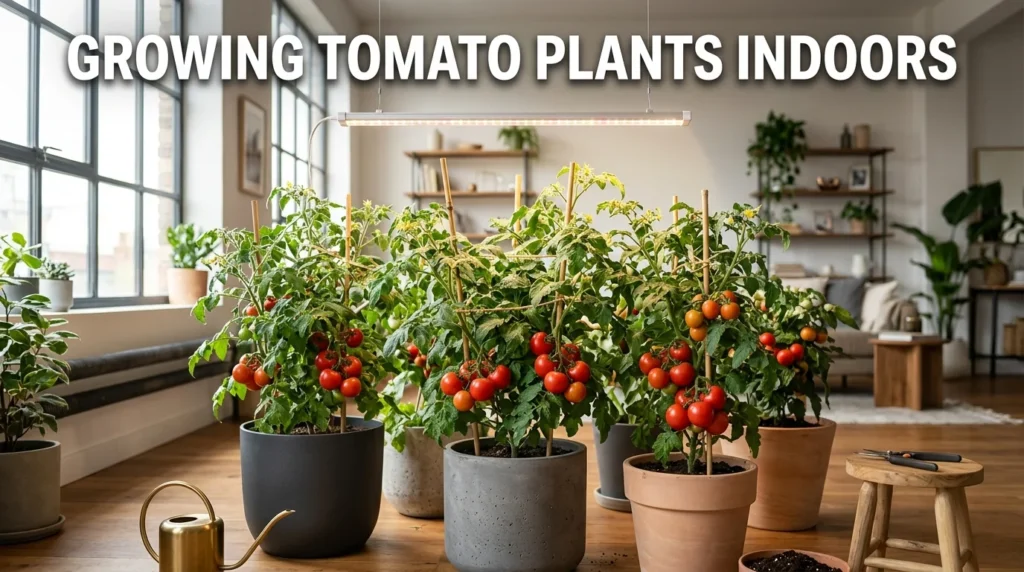
Growing tomato plants indoors is a practical way to enjoy fresh tomatoes when outdoor space, weather, or the growing season is limiting. With the right variety, strong light, suitable containers, consistent watering, and regular feeding, tomato plants can grow and produce fruit inside a home.
However, indoor tomatoes have different challenges from garden-grown plants. A sunny window may not provide enough usable light, stagnant air can encourage disease, and a plant that grows vigorously in a small pot may struggle to support fruit. The key is to create a stable growing environment rather than simply placing a tomato plant indoors and hoping it produces.
This guide explains how to grow tomatoes indoors from seed or young plants, how to choose suitable varieties, provide the right light and growing medium, manage watering and nutrition, support pollination, and troubleshoot common problems.
Can You Grow Tomato Plants Indoors?
Yes. Tomatoes can grow and produce fruit indoors when their basic environmental requirements are met.
The biggest limitation is usually light. Tomatoes are high-light plants, so a dim room or north-facing window is rarely sufficient for vigorous growth and reliable fruit production. A bright south- or southwest-facing window may work in some homes, but supplemental grow lighting provides much more control.
Indoor tomato growing works particularly well for:
- Compact dwarf tomato varieties
- Determinate varieties with manageable growth
- Patio and container tomatoes
- Cherry tomatoes
- Micro-dwarf varieties designed for small spaces
Large indeterminate tomatoes can also be grown indoors, but they require considerably more space, stronger support, larger containers, and regular pruning or training.
Choosing the Best Tomato Variety for Indoor Growing
Variety selection can make indoor tomato growing much easier.
Instead of choosing a tomato solely because it produces large fruit, consider its mature size, growth habit, container suitability, and light requirements.
Dwarf and Micro-Dwarf Tomatoes
Micro-dwarf tomatoes are particularly useful for apartments, kitchens, shelves, and other compact spaces. Their small stature makes them easier to support and illuminate.
They are a good choice when you want:
- A compact plant
- Shorter stems
- Smaller containers
- Faster management
- Cherry or small-fruited tomatoes
Determinate Tomatoes
Determinate varieties generally have a more limited growth pattern and produce much of their crop over a relatively concentrated period.
They can be easier to manage indoors than vigorous indeterminate varieties. Because most of the fruit ripens within a concentrated window, determinate plants suit gardeners who want one generous harvest for fresh eating or preserving. They still appreciate a stake or small cage once fruit begins to swell, and choosing an early-maturing variety helps the plant finish its crop before indoor light levels drop in winter.
Indeterminate Tomatoes
Indeterminate tomatoes continue producing new stems and flower clusters as long as conditions allow.
They can produce over a longer period, but indoors they may become difficult to manage because of their height and spreading growth.
If you choose one, plan for a sturdy trellis, adequate container volume, strong lighting, and regular training.
How Much Light Do Indoor Tomato Plants Need?
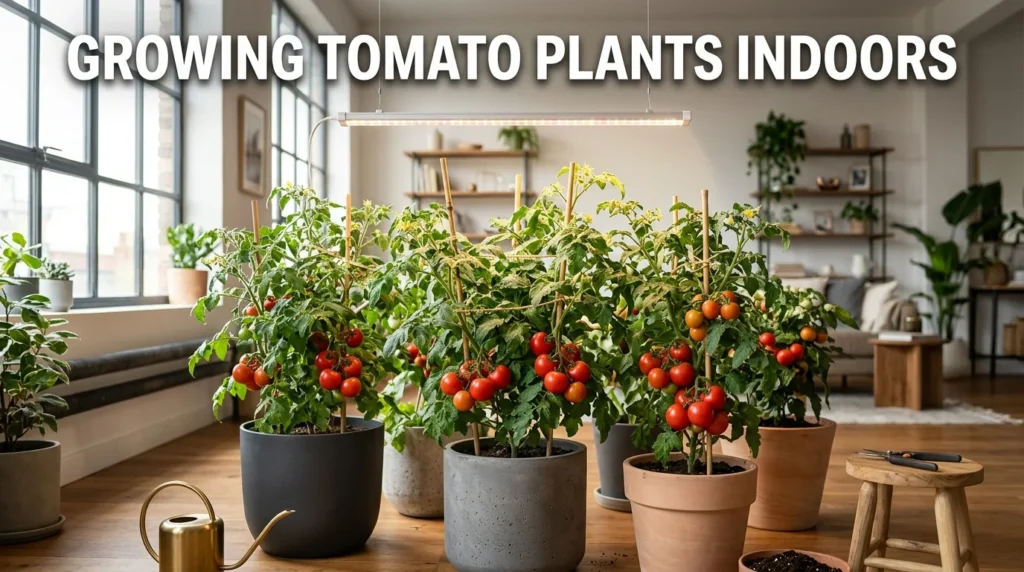
Light is one of the most important factors when growing tomato plants indoors.
Tomatoes need strong light for photosynthesis, healthy foliage, flowering, and fruit development. Insufficient light often produces a plant that looks tall and weak rather than compact and vigorous.
Using Natural Light
Place the plant near the brightest suitable window available.
A bright southern exposure can be useful in the Northern Hemisphere, although the actual amount of sunlight entering a room depends on the season, window orientation, obstructions, glass, curtains, and latitude.
Watch the plant rather than relying only on the direction of the window.
Signs that natural light may be inadequate include:
- Long, thin stems
- Large gaps between leaves
- Leaning toward the window
- Slow growth
- Poor flowering
- Weak or pale new growth
Using Grow Lights
A quality grow light makes indoor tomato production more predictable.
Position the light according to the manufacturer’s recommended distance rather than assuming that closer is always better. Excessive intensity or heat can damage foliage, while insufficient intensity can cause weak growth.
A timer can provide a consistent daily lighting schedule.
The goal is not simply to make the room bright. Tomato plants need sufficient usable plant light at the leaves.
Where Should You Place an Indoor Tomato Plant?
Choose a location that combines:
- Strong light
- Good air movement
- Stable temperatures
- Enough vertical and horizontal space
- Easy access for watering and maintenance
Avoid placing tomatoes directly against cold windows during freezing weather or immediately beside strong heating vents.
Good air circulation is especially important when foliage becomes dense. A small fan providing gentle air movement can help prevent stagnant conditions, but avoid strong airflow that constantly dries or damages the leaves.
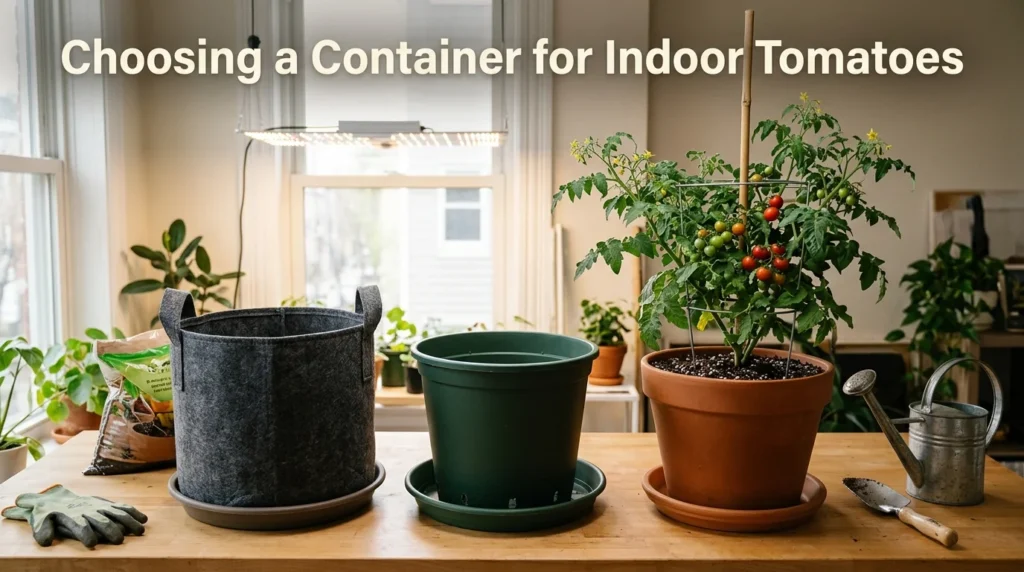
Choosing a Container for Indoor Tomatoes
Tomatoes develop substantial root systems, so container size matters.
A container should be large enough for the selected variety and have drainage holes. Decorative containers without drainage can cause water to accumulate around the roots.
For compact varieties, a moderately sized container may be sufficient. Larger varieties generally need substantially more root space.
When selecting a pot, consider:
- Mature plant size
- Root space
- Container depth
- Drainage
- Weight and stability
- Ability to support the plant
A heavy, top-heavy tomato plant can easily tip over in a lightweight container.
Always place a saucer or tray beneath a drainage container to protect indoor surfaces, but do not allow the pot to sit permanently in collected water.
The Best Soil Mix for Indoor Tomato Plants
Avoid using dense garden soil in indoor containers. It can compact easily and may drain poorly.
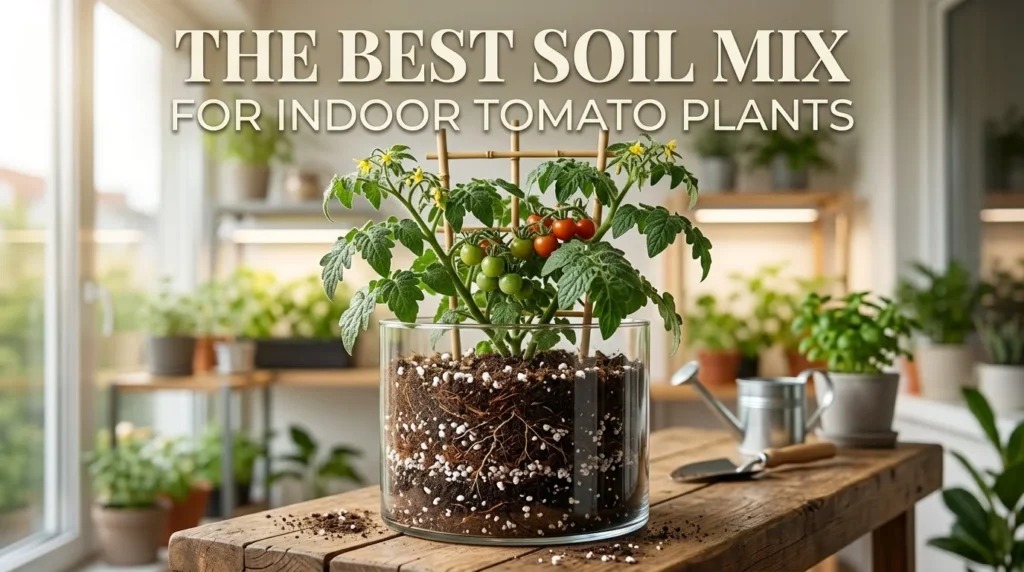
A quality container mix should provide:
- Good drainage
- Adequate moisture retention
- Air around the roots
- Physical support
- Consistent structure
A commercial potting mix formulated for containers is usually a practical starting point.
The objective is a balance: the growing medium should hold enough moisture for the plant while allowing excess water and air to move through the root zone.
Watering Tomato Plants Indoors
Watering problems are among the most common causes of poor indoor tomato growth.
Do not water according to a rigid calendar. Instead, check the growing medium and consider the plant’s environmental conditions.
A tomato may need water more frequently under strong grow lights, warm temperatures, or rapid growth than it would in a cool, dim room.
How to Water
When watering is necessary:
- Check the growing medium first.
- Water thoroughly rather than adding tiny amounts repeatedly.
- Allow excess water to drain from the container.
- Empty standing water from the saucer.
- Check the plant again before the next watering.
Overwatering keeps roots excessively wet and reduces the air available around them.
Underwatering can cause wilting, stress, flower loss, and inconsistent growth.
The best approach is to maintain reasonably even moisture without keeping the root zone permanently saturated.
Temperature and Humidity Requirements
Tomatoes generally perform best in a warm, stable indoor environment.
Extreme heat can interfere with flowering and fruit set, while cold conditions can slow growth.
Avoid placing tomato plants:
- Directly beside radiators
- Against very cold glass
- In strong drafts
- Near constantly blowing air conditioners
Humidity also matters, but simply increasing humidity is not always the answer. Dense foliage combined with poor air movement can create conditions favorable to fungal and bacterial problems.
Focus on balanced humidity and good ventilation rather than trying to create a tropical environment.
Feeding Indoor Tomato Plants
Tomatoes are productive plants and need access to nutrients throughout their growth cycle.
A quality potting mix may provide nutrients initially, but container-grown plants can eventually require supplemental fertilizer.
Use a fertilizer appropriate for container vegetables and follow its label directions.
Avoid the temptation to use more fertilizer because the plant appears slow.
Excessive fertilization can cause:
- Excessive leafy growth
- Salt buildup in the growing medium
- Root damage
- Nutrient imbalances
- Reduced plant quality
As flowering and fruiting begin, consistent nutrition becomes particularly important. However, fertilizer should complement adequate light, watering, root space, and pollination rather than compensate for poor growing conditions.
Supporting and Pruning Indoor Tomato Plants
Tomato plants often benefit from physical support.
Use:
- Tomato stakes
- Small trellises
- Plant clips
- Soft ties
- Vertical supports
Tie stems loosely so they are supported without being constricted.
Should Indoor Tomatoes Be Pruned?
Pruning depends on the variety.
Compact and determinate tomatoes often need little pruning beyond removing damaged or unhealthy growth.
Indeterminate varieties may benefit from training and selective pruning to keep growth manageable.
Avoid removing large amounts of healthy foliage unnecessarily. Leaves are the plant’s primary photosynthetic surfaces and contribute energy to growth and fruit development.
How Are Indoor Tomato Flowers Pollinated?
Outdoor tomatoes benefit from wind and insect activity. Indoors, those natural pollination conditions may be absent.
Tomato flowers contain the structures needed for self-pollination, but indoor growers may need to help release pollen.
When flowers are open, gentle movement of the plant or flower cluster can help distribute pollen. A small fan providing gentle airflow can also help.
If a plant flowers heavily but produces few tomatoes, investigate the whole growing environment rather than assuming pollination is the only problem.
Check:
- Light intensity
- Temperature
- Plant nutrition
- Water consistency
- Flower health
- Air movement
Poor fruit set can have multiple causes.
How Long Does It Take to Grow Tomatoes Indoors?
The timeline varies significantly depending on the variety, whether you start from seed or a transplant, and the growing conditions.
Starting from seed involves several stages:
- Germination
- Seedling development
- Vegetative growth
- Flower production
- Pollination
- Fruit development
- Ripening
A healthy plant under strong light and suitable temperatures will generally progress more reliably than one struggling in a dim room.
Seed packets and variety information are useful for estimating maturity, but indoor conditions can change the actual timeline.
Growing Tomatoes Indoors From Seed
Starting from seed gives you more control over variety selection.
Step 1: Start the Seeds
Use a clean seed-starting medium and keep it appropriately moist. Sow seeds shallowly, covering them lightly with medium, and keep the tray in a warm spot until sprouts appear. A loose cover or humidity dome holds moisture in during germination, but remove it as soon as seedlings emerge so air can circulate and stems grow sturdy.
Seeds need warmth, moisture, oxygen, and suitable depth to germinate successfully.
Step 2: Provide Strong Light
Once seedlings emerge, provide adequate light promptly. Weak light during the seedling stage can produce stretched plants that remain difficult to manage.
Step 3: Transplant Carefully
When seedlings develop enough growth to handle safely, move them into progressively larger containers or their final pot, depending on the variety.
Handle the root system carefully and avoid unnecessary disturbance.
Step 4: Establish the Plant
Once transplanted, provide strong light, suitable moisture, air movement, and consistent nutrition.
Step 5: Support Growth
Install support before the plant becomes difficult to handle. Early training is easier than trying to control a large, tangled plant later.
Common Problems When Growing Tomato Plants Indoors
Problem → Leggy, Weak Growth
Cause: Insufficient light.
Check: Examine the distance between leaves and whether the plant is leaning toward a light source.
Solution: Increase the amount or intensity of suitable light and reposition the plant if necessary.
Problem → Yellowing Lower Leaves
Cause: Several possibilities, including aging leaves, watering problems, root stress, nutrient issues, or poor light.
Check: Examine the entire plant and inspect the growing medium before adding fertilizer.
Solution: Correct the underlying environmental problem rather than treating yellow leaves automatically as a nutrient deficiency.
Problem → Flowers but No Tomatoes
Cause: Poor pollination, unsuitable temperatures, inadequate light, or plant stress.
Check: Examine flowers, environmental conditions, watering consistency, and lighting.
Solution: Improve airflow or gently assist pollination while correcting any broader environmental problem.
Problem → Wilting
Cause: Underwatering, root problems, excessive heat, or other environmental stress.
Check: Feel the growing medium and inspect the roots if moisture remains excessive.
Solution: Adjust watering based on the actual cause. Do not automatically add more water to a wilted plant.
Problem → Curling Leaves
Cause: Environmental stress, watering irregularities, excessive heat, root problems, or other factors.
Check: Look for pests and review recent changes in light, temperature, watering, and feeding.
Solution: Correct the environmental stress and monitor new growth.
Indoor Tomato Pests
Indoor plants are not automatically protected from pests.
Common tomato pests can include:
- Aphids
- Whiteflies
- Fungus gnats
- Spider mites
- Thrips
Inspect the undersides of leaves and new growth regularly.
Early detection makes pest management much easier.
If pests appear, first identify the pest before choosing a treatment. Move the affected plant away from other houseplants while you deal with the problem, and check any new plants carefully before placing them nearby. Wipe off light infestations by hand or with a damp cloth, and choose treatments labeled safe for edible plants when stronger action is needed. Avoid applying unnecessary insecticides, particularly indoors. Follow product directions carefully and consider whether the treatment is suitable for edible plants.
Common Mistakes to Avoid
1. Choosing a Tomato That Is Too Large
A vigorous outdoor variety can quickly overwhelm an indoor growing area.
2. Assuming a Bright Room Equals Strong Plant Light
Human vision is not a reliable measure of whether tomato leaves are receiving enough usable light.
3. Watering on a Fixed Schedule
Indoor conditions change throughout the year. Check the plant and growing medium instead.
4. Using a Container Without Drainage
Poor drainage can create persistent root-zone problems.
5. Over-Fertilizing
More fertilizer does not automatically mean more tomatoes.
6. Ignoring Pollination
Indoor plants may need gentle assistance when flowers open.
7. Removing Too Many Leaves
Healthy leaves are essential to photosynthesis and fruit development.
A Simple Indoor Tomato Care Routine
For beginners, a consistent routine is more useful than complicated techniques.
Daily
- Check the plant for obvious stress.
- Look for pests or damaged leaves.
- Check that grow lights and timers are functioning.
Several Times Per Week
- Check growing-medium moisture.
- Inspect new growth and flower clusters.
- Look for signs of wilting, pests, or disease.
Weekly
- Rotate the plant if necessary for even growth.
- Check supports and ties.
- Review overall plant shape.
- Look for nutrient or environmental problems.
During Flowering
- Monitor pollination.
- Maintain stable moisture.
- Avoid major environmental fluctuations.
- Ensure the plant receives adequate light.
Are Indoor-Grown Tomatoes Worth It?
Growing tomatoes indoors is most rewarding when you choose a suitable compact variety and provide enough light. The process can also be useful for gardeners who have no outdoor garden, live in apartments, or want to extend tomato growing beyond their outdoor season.
However, indoor tomatoes require more environmental management than many typical houseplants. They need strong light, adequate root space, consistent moisture, nutrition, support, and sometimes assisted pollination.
The best results come from treating the tomato as a productive vegetable crop rather than as an ordinary decorative houseplant.
Harvesting Indoor Tomatoes
Knowing when and how to pick keeps fruit quality high and encourages the plant to keep producing.
- Pick cherry and small tomatoes when they are fully colored and yield slightly to gentle pressure.
- Harvest in the morning when fruit is cool and firm for the best flavor and shelf life.
- Snip or pinch stems cleanly rather than yanking fruit, which can tear branches.
- Remove ripe fruit promptly so the plant directs energy into the remaining tomatoes.
- Let the last green tomatoes finish ripening on a bright windowsill if the plant is winding down.
Frequently Asked Questions
Can you grow tomato plants indoors all year?
Yes, provided the plant receives sufficient light, appropriate temperatures, adequate root space, nutrition, and consistent care. Indoor conditions can allow production beyond the normal outdoor season.
What is the easiest tomato to grow indoors?
Compact dwarf, micro-dwarf, patio, and small-fruited varieties are generally easier to manage indoors than large indeterminate tomatoes.
Can tomatoes grow indoors without sunlight?
They can grow under suitable artificial grow lights. In fact, supplemental lighting can provide more consistent conditions than relying entirely on seasonal window light.
How often should I water an indoor tomato plant?
There is no universal schedule. Check the growing medium and water when the plant needs it, then allow excess water to drain. Avoid keeping the roots continuously saturated.
Do indoor tomato plants need pollination?
Yes, flowers need to be pollinated for fruit to develop. Indoor plants may need gentle shaking, movement, or airflow to help distribute pollen.
Why is my indoor tomato plant flowering but not producing fruit?
Possible causes include inadequate light, unsuitable temperatures, poor pollination, inconsistent watering, or general plant stress. Check the complete growing environment before changing fertilizer.
Do indoor tomatoes need fertilizer?
Container-grown tomatoes generally benefit from appropriate supplemental nutrition once the nutrients available in the growing medium begin to decline. Follow the fertilizer label rather than applying excessive amounts.
Can I grow tomatoes in a small pot?
Small compact varieties can grow in relatively modest containers, but the container still needs adequate root space and drainage. Larger tomato varieties require larger containers.
Should I prune an indoor tomato plant?
It depends on the variety. Compact and determinate tomatoes usually require limited pruning, while indeterminate varieties may benefit from training and selective pruning to control their growth.
Quick Knowledge Check: Indoor Tomato Growing MCQs
1. What is usually the most important limiting factor for indoor tomato production?
A. Decorative pot size
B. Light
C. Leaf color
D. Room furniture
Answer: B. Light
Answer: B. To prevent excess water from remaining around the roots
3. Which tomato type is generally easiest to manage in a small indoor space?
A. Large indeterminate variety
B. Micro-dwarf variety
C. Giant outdoor variety
D. Untrained vine tomato
Answer: B. Micro-dwarf variety
4. Why might an indoor tomato flower without producing fruit?
A. The plant never needs pollination
B. Indoor plants cannot produce fruit
C. Poor pollination or environmental stress
D. Tomatoes only fruit outdoors
Answer: C. Poor pollination or environmental stress
5. What is the best approach to watering indoor tomatoes?
A. Water every morning regardless of conditions
B. Keep the soil permanently saturated
C. Check moisture and water according to plant needs
D. Never allow drainage
Answer: C. Check moisture and water according to plant needs
6. What does excessive fertilizer potentially cause?
A. Guaranteed fruit production
B. Nutrient and root-zone problems
C. Permanent pest resistance
D. Automatic pollination
Answer: B. Nutrient and root-zone problems
Conclusion
Growing tomato plants indoors is entirely achievable when the plant’s needs are treated as a connected system. Light, root space, water, nutrition, temperature, airflow, and pollination all influence one another.
For beginners, the simplest path is to choose a compact variety, use a container with good drainage, provide strong light, maintain reasonably even moisture, feed appropriately, and monitor the plant regularly.
Rather than trying to fix problems after they appear, build a stable growing environment from the beginning. That approach produces healthier plants, makes troubleshooting easier, and gives you a much better chance of harvesting flavorful tomatoes indoors.
Light. Tomatoes are high-light plants, so a dim room or north-facing window is rarely sufficient for vigorous growth. A quality grow light makes indoor tomato production more predictable.
Compact varieties are easiest to manage: micro-dwarf, dwarf, determinate, patio, container, and cherry or small-fruited tomatoes. Large indeterminate varieties need much more space, support, and strong lighting.
Possible causes include inadequate light, unsuitable temperatures, poor pollination, inconsistent watering, or plant stress. Improve airflow or gently assist pollination while correcting any broader environmental problem.

Megan Foster is the founder and lead writer of GrowIndoorly.com, where she shares practical, easy-to-follow advice for growing healthy indoor plants. She is passionate about helping beginners and experienced plant lovers build thriving indoor gardens with confidence. Megan writes about houseplants, indoor herbs, succulents, hydroponics, grow lights, plant propagation, watering, soil care, and everyday plant maintenance.
She enjoys researching trusted gardening techniques and transforming them into simple, actionable guides that readers can easily apply at home. Her goal is to make indoor gardening more enjoyable and accessible by providing clear, reliable information that helps people keep their plants healthy throughout the year. Whether you’re caring for your first houseplant or expanding your indoor plant collection, Megan’s practical tips are designed to help you grow with confidence.


