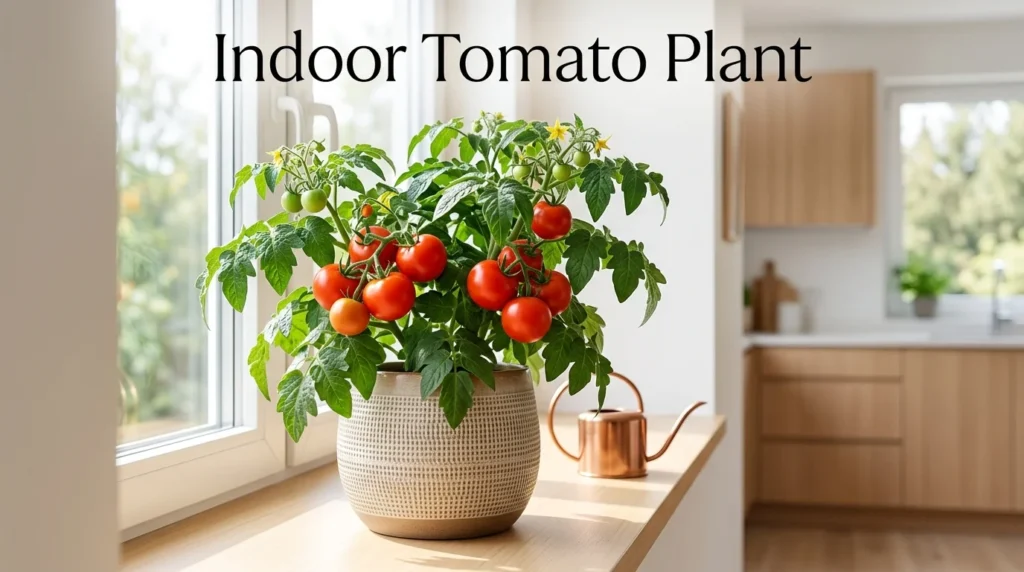
Growing your own sun-ripened, juicy tomatoes indoors might sound like an ambitious dream, but it is entirely achievable with the right strategy. Many indoor gardeners get excited, plant a random seed from a store-bought tomato, and end up disappointed when the vine grows tall, weak, and completely fruit-less.
Successfully growing an indoor tomato plant requires understanding that indoor microclimates differ significantly from outdoor garden beds. Without natural sunlight intensity, outdoor breezes, and buzzing pollinators, your indoor setup must intentionally replace these natural environmental conditions to trigger healthy blossoms and fruit set.
Many beginners face common obstacles like leggy stems, blossom drop, blossom end rot, or stubborn pest infestations. Selecting the wrong variety or relying solely on windowsill light often leads directly to weak growth, making fruit development nearly impossible without supplemental intervention.
By mastering variety selection, lighting intensity, manual pollination, and balanced nutrition, you can harvest fresh tomatoes year-round. This complete guide breaks down everything you need to know about growing a thriving indoor tomato plant right inside your home.
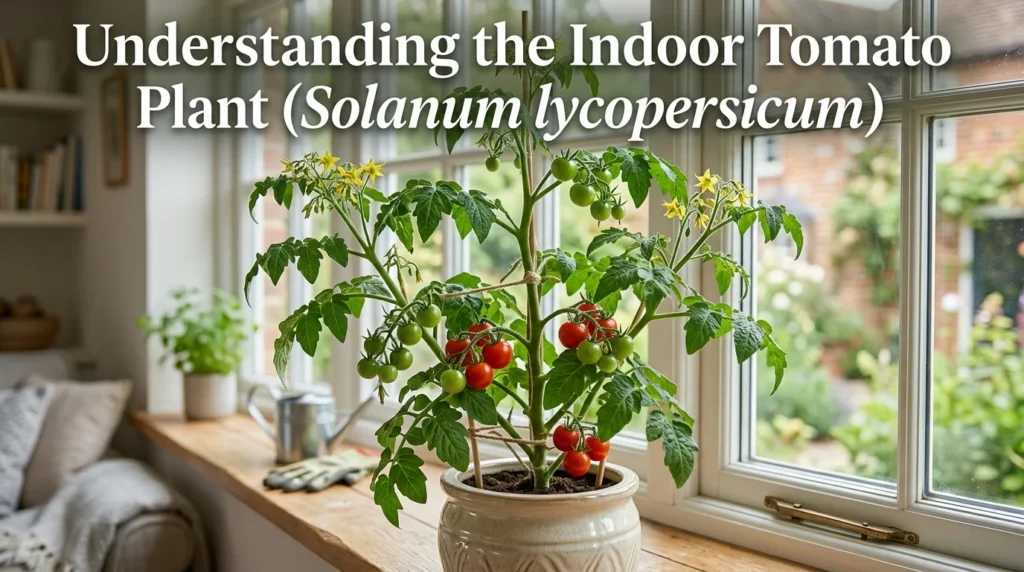
Understanding the Indoor Tomato Plant (Solanum lycopersicum)
The tomato, botanically classified as Solanum lycopersicum, belongs to the Solanaceae (nightshade) family alongside peppers, eggplants, and potatoes. Native to the warm regions of western South America, tomatoes are perennial plants grown horticulturally as tender annuals. In their native habitats, they thrive under intense tropical sunlight, warm day-and-night temperatures, and deep, nutrient-rich soils.
When brought indoors, a tomato plant faces starkly different growing conditions. Indoor glass windows filter out critical light spectrums and reduce intensity by up to 50 percent or more. Furthermore, indoor air currents are static, and natural pollinators like bumblebees are entirely absent inside living spaces.
Understanding these botanical requirements allows you to bridge the gap between nature and indoor living. Modern indoor gardening techniques rely on compact plant genetics, high-intensity supplemental lighting, air circulation fans, and targeted liquid nutrients to create an ideal environment where tomatoes flourish on countertops, shelves, or sunny nooks.
Why Growing Tomatoes Indoors Is Worth It
Cultivating edible crops inside your living space offers distinct advantages over traditional outdoor gardening, making it a highly rewarding venture for urban growers and indoor plant enthusiasts alike.
Year-Round Fresh Harvests
Outdoor tomato seasons are limited by spring frost dates and autumn chill. Indoor cultivation frees you from regional climate boundaries, allowing you to harvest sweet cherry tomatoes in the dead of winter or mid-summer alike.
Complete Pest and Weather Control
Outdoor gardeners constantly battle hornworms, blight spores, torrential rains, hail, and extreme heatwaves. Growing indoors isolates your crops from severe weather events and drastically lowers the risk of soil-borne diseases and outdoor pest pressures.
Aesthetic and Functional Greenery
A lush green tomato plant heavy with bright red, yellow, or orange fruit adds striking visual appeal to your home. Beyond aesthetics, the foliage releases a distinct, pleasing herbal aroma whenever brushed, turning your indoor garden into an interactive sensory experience.
Key Differences: Determinate vs. Indeterminate vs. Micro-Dwarf
Selecting the correct growth habit is the single most crucial choice for indoor success. Tomatoes generally fall into three distinct structural categories:
- Indeterminate (Vining) Tomatoes: These continuous growers keep producing leaves, flowers, and fruit along extending vines until killed by frost or pruned. They routinely reach 6 to 12 feet in height, requiring massive trellises, large containers, and high ceiling clearance. They are generally impractical for standard indoor rooms unless grown in specialized high-clearance grow tents.
- Determinate (Bush) Tomatoes: These cultivars grow to a pre-determined bushy height (typically 3 to 4 feet), set flowers all at once, ripen their crop over a few weeks, and then decline. They fit much better into indoor spaces and container setups than indeterminate vines.
- Micro-Dwarf Tomatoes: The undisputed kings of indoor gardening. These specially bred determinate varieties cap their height between 6 to 18 inches tall. Despite their miniature foliage footprint, they produce impressive yields of full-sized cherry tomatoes, making them perfect for windowsills, desktop planters, and bookshelf grow setups.
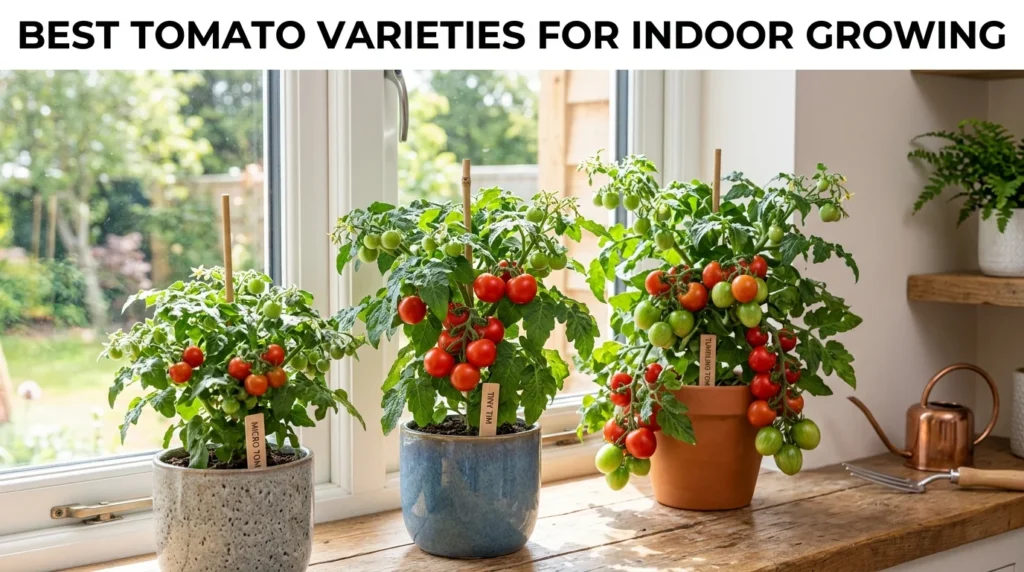
Best Tomato Varieties for Indoor Growing
To maximize your yield and avoid space headaches, choose cultivars specifically bred for container life and low-volume root space:
- Red Robin: A dwarf classic growing only 8 to 12 inches tall. It yields sweet, bright red cherry tomatoes continuously under modest grow light setups.
- Tiny Tim: A highly adaptable determinate bush variety reaching 12 to 18 inches. It tolerates slightly lower light levels than other cultivars while producing prolific clusters of tart-sweet fruits.
- Orange Hat: One of the smallest micro-dwarfs available, topping out at 6 to 9 inches. It produces abundant, vibrant orange fruits with a sweet, low-acid flavor profile.
- Micro Tom: Billed as the world’s smallest tomato plant, growing just 5 to 8 inches high. While total yields are smaller, its incredibly compact footprint fits inside tiny spaces.
- Tumbler / Terrazzo: Outstanding cascading varieties ideal for indoor hanging baskets or elevated shelf pots, producing trailing vines loaded with juicy cherry tomatoes.
Essential Lighting Requirements for Indoor Tomatoes
Light is the fuel for fruiting plants. Foliage growth requires moderate light, but setting flowers and ripening fruits demands high-intensity energy.
The Natural Light Limit
Even a pristine south-facing window rarely delivers the intense light energy tomatoes require. While a windowsill might keep a green vine alive, it seldom provides the daily light integral (DLI) needed to set sweet, plump fruit. Supplemental grow lighting is almost always required.
Choosing the Right Grow Lights
Full-spectrum LED grow lights offer energy efficiency, minimal heat production, and the full spectral output required for both vegetative growth and flowering.
- Power Requirements: Aim for a full-spectrum LED board or fixture that consumes at least 30 to 50 watts of actual wall draw per square foot of growing space.
- Light Duration (Photoperiod): Run your grow lights for 14 to 16 hours daily. Using an inexpensive digital outlet timer ensures consistent lighting cycles.
- Hanging Distance: Position LED lights 8 to 15 inches above the canopy. Adjust the fixture upward as the central stem grows to avoid heat stress or light bleaching on upper foliage.
Best Soil, Potting Mix, and Container Selection
Roots need oxygen just as much as they need moisture and minerals. Heavy, compacted garden soil will quickly suffocate potted roots and cause root rot.
Creating the Perfect Potting Substrate
Never use native backyard garden soil in indoor containers. Instead, choose or mix a lightweight, sterile, highly porous potting mix:
- 2 parts high-grade peat moss or coco coir (provides water retention and light structure)
- 1 part perlite or coarse pumice (creates vital air pockets and ensures rapid drainage)
- 1 part aged compost or worm castings (supplies slow-release organic nutrients and beneficial microbes)
- 1 tablespoon of agricultural lime or crushed eggshell powder per gallon of mix (supplies crucial calcium to prevent blossom end rot)
Container Sizing and Drainage
- Micro-Dwarf Varieties: Require a container holding 1 to 2 gallons of soil volume.
- Standard Determinate Varieties: Require a 3 to 5-gallon container to accommodate their expansive root systems.
- Drainage Non-Negotiables: Your container must feature multiple clear drainage holes at the bottom. Fabric pots (smart pots) are excellent choices because they naturally air-prune roots and encourage dense, non-circling root structures.
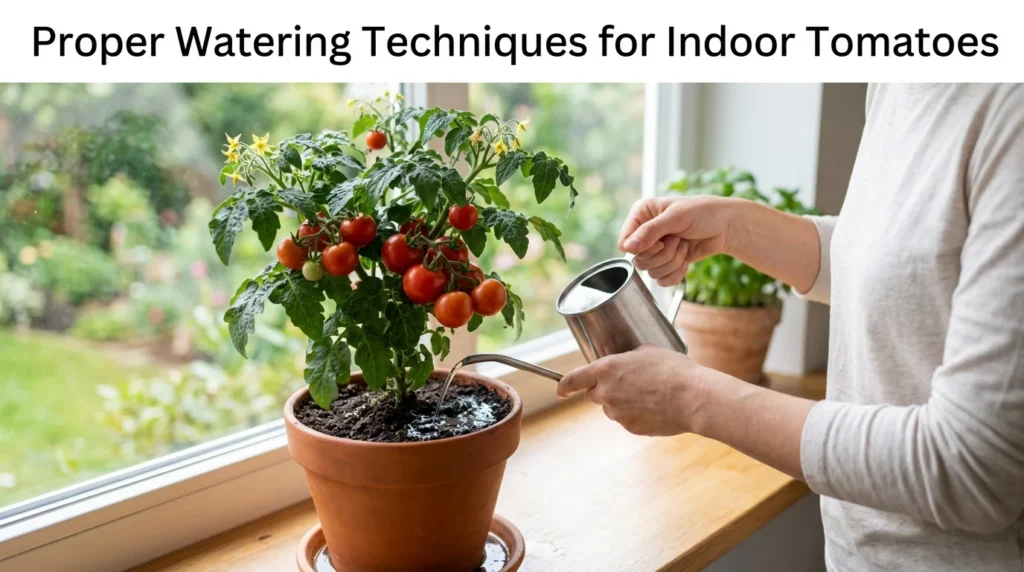
Proper Watering Techniques for Indoor Tomatoes
Watering is both an art and a science. Tomatoes love consistent moisture, but saturated, oxygen-starved roots lead to swift failure.
The Goldilocks Moisture Level
Keep the soil consistently damp, similar to a wrung-out sponge, but never dripping wet. Check the top inch of soil with your finger daily. If the top inch feels dry to the touch, it is time to irrigate thoroughly.
Step-by-Step Deep Watering Method
- Apply room-temperature water directly to the base of the stem near the soil level. Keep foliage completely dry to prevent fungal spores from germinating.
- Continue pouring until water drains freely from the bottom holes into your tray or saucer.
- Wait 15 to 20 minutes for the soil to pull up any needed moisture.
- Always discard standing water left in the saucer to protect bottom roots from suffocation.
Preventing Irregular Watering Issues
Erratic watering swapping between extreme drought and heavy soaking causes the expanding fruit flesh to absorb water faster than the outer skin can stretch. This sudden pressure spike causes fruit skin splitting and cracking.
Temperature and Air Circulation Control
Indoor environments must mirror the warm, breezes-swept climates where tomatoes naturally evolve.
Temperature Parameters
Maintain daytime temperatures between 70°F and 85°F (21°C to 29°C) and nighttime temperatures between 65°F and 70°F (18°C to 21°C). Drops below 55°F (13°C) stall growth completely, while sustained temperatures above 90°F (32°C) cause pollen to become sterile, leading to blossom drop.
The Critical Role of Air Circulation
Stagnant indoor air leads to weak stems, moisture buildup, and fungal outbreaks. Place a small oscillating USB or desk fan near your plants on a low setting.
- Gentle air movement strengthens main stems by encouraging lignin production.
- Continuous airflow lowers humidity around dense foliage, preventing powdery mildew.
- Moving air helps disturb flower clusters, assisting with self-pollination.
Fertilizer and Nutrient Management
Tomatoes are heavy feeders that require heavy mineral support to develop heavy, sugar-rich fruit crops.
Understanding N-P-K and Micronutrients
- Nitrogen (N): Drives leafy green vegetative growth early in life.
- Phosphorus (P): Essential for robust root establishment, heavy flower formation, and fruit set.
- Potassium (K): Improves overall plant vigor, water regulation, and fruit sugar synthesis.
- Calcium (Ca) & Magnesium (Mg): Absolute necessities for cell wall strength and chlorophyll production.
Feeding Schedule
- Early Stage (Weeks 1–4): Apply a balanced organic liquid fertilizer (like a 3-3-3 or 5-5-5 formula) every 10 to 14 days at half strength.
- Flowering & Fruiting Stage (Week 5 onward): Switch to a bloom-focused formula higher in phosphorus and potassium (such as a 2-6-4 or 4-8-7 mix) every week.
- Cal-Mag Supplementation: Add a liquid Calcium-Magnesium supplement once every two weeks to guarantee strong cell walls and eliminate the risk of blossom end rot.
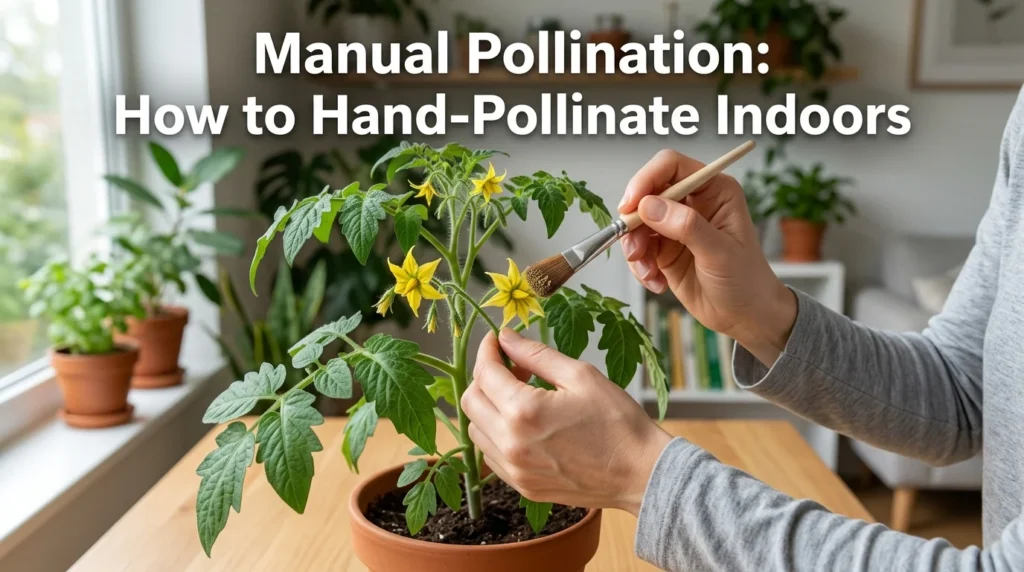
Manual Pollination: How to Hand-Pollinate Indoors
Outdoor tomatoes rely on wind gusts and buzzing bumblebees to vibrate their flowers. Indoors, you must act as the pollinator to turn open blooms into juicy tomatoes.
The Anatomy of Self-Pollinating Flowers
Tomato blossoms are perfect, self-pollinating flowers, meaning each individual flower contains both male (anther) and female (stigma) reproductive structures. However, the heavy pollen inside the anther cone must be shaken loose so it falls onto the central stigma.
Step-by-Step Hand-Pollination Methods
Perform hand pollination daily around mid-day when grow lights are bright and ambient humidity is moderate:
- The Electric Toothbrush Method (Most Effective): Gently place the vibrating backside of an electric toothbrush head against the stem just behind a cluster of open flowers for 2 to 3 seconds. You will often see a tiny cloud of yellow pollen dust release from the blooms.
- The Gentle Tap Method: Firmly tap the main stem or flower trusses with your index finger several times to vibrate the pollen loose.
- The Cotton Swab Technique: Softly touch the inside center of each open bloom with a clean cotton swab or small paintbrush, moving pollen between flowers in the cluster.
Alternative Approach: Hydroponic Indoor Tomatoes
If you want faster growth rates and clean, soil-free indoors, growing tomatoes hydroponically is a highly efficient option.
Deep Water Culture (DWC) & Kratky Systems
Micro-dwarf tomatoes perform exceptionally well in passive Kratky jars or active Deep Water Culture (DWC) bucket systems. Plant roots sit directly in an oxygenated nutrient solution mixed specifically for fruiting crops.
Benefits of Hydroponic Growing
- Growth rates are up to 30 to 50 percent faster than soil-based methods.
- Eliminates soil-borne pests like fungus gnats entirely.
- Precise control over exact pH (aim for 5.8 to 6.2) and nutrient concentration (EC levels).
Maintenance Routine: Pruning, Staking, and Cleaning
Regular maintenance keeps your indoor plants healthy, orderly, and productive.
Pruning Leaves and Suckers
- Micro-Dwarfs: Require almost zero sucker pruning. Only remove yellowed, lower leaves that rest directly on the moist soil surface.
- Determinate / Indeterminate Types: Snip off “suckers”—the small side shoots that sprout in the 45-degree crotch between the main stem and side branches—to direct energy toward primary fruit clusters.
Support Systems and Staking
Even dwarf plants can top-heavy once loaded with ripe fruit. Insert small bamboo stakes, wooden chopsticks, or mini wire cages into the container early in the plant’s life cycle. Secure heavy fruiting stems loosely to the stakes using soft plant ties or garden twine.
Troubleshooting Common Indoor Tomato Problems
| Problem | Likely Cause | Practical Solution |
| Black, sunken spots on the bottom of fruits | Blossom End Rot (Calcium deficiency caused by irregular watering) | Maintain steady soil moisture; apply a liquid Cal-Mag foliar spray or soil drench. |
| Flowers dropping off without forming fruit | Lack of pollination, extreme heat (>90°F), or low light intensity | Hand-pollinate daily using an electric toothbrush; increase light intensity; keep room cool. |
| Yellowing upper leaves with green veins | Magnesium deficiency | Apply Epsom salts (1 teaspoon per gallon of water) as a soil drench or foliar mist. |
| Tall, skinny, weak stems with wide leaf gaps | Severe light starvation (Legginess) | Lower your grow light closer to the canopy or upgrade to a higher-wattage LED fixture. |
| Cracked or split fruit skins | Sudden heavy watering after a drought period | Harvest split fruit immediately; establish a strict, even watering routine. |
| Tiny white flies or sticky leaf residue | Whiteflies or Aphids | Spray foliage thoroughly with organic insecticidal soap or pure cold-pressed neem oil. |
Beginner Tips for Guaranteed Success
- Start with Micro-Dwarf Seeds: Save yourself space headaches by choosing certified micro-dwarf varieties like ‘Red Robin’ or ‘Orange Hat’.
- Invest in a Digital Light Timer: Keep your lighting schedule strictly automated so your plants receive consistent daily energy without manual effort.
- Never Skip Pollination: Make hand-pollinating a quick daily habit every afternoon when flowers are fully open.
- Prune Lower Soil-Touching Leaves: Cut away low-hanging foliage to increase bottom airflow and stop fungal spores from climbing up the plant.
- Rotate Windowsill Pots: If relying on natural window light, rotate your container 180 degrees every two days to keep growth straight and balanced.
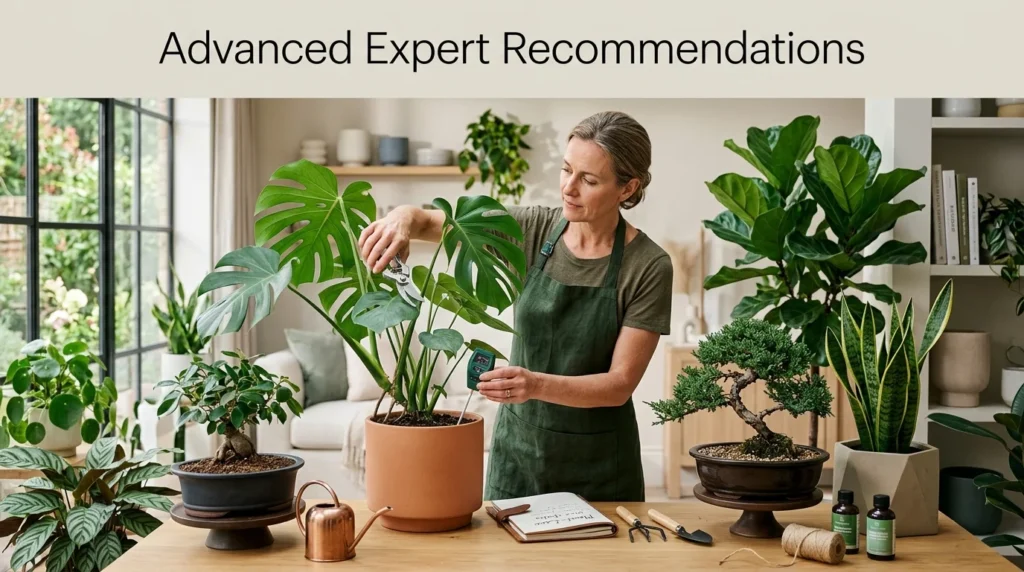
Advanced Expert Recommendations
- Monitor Daily Light Integral (DLI): Aim for a DLI target of 22 to 30 mol/m²/day using a light meter app or quantum sensor to ensure maximum sugar content and yield density.
- Brix Enhancement via Potassium: Increase potassium feeding slightly during the final two weeks of fruit ripening to elevate sugar levels (Brix rating) for richer tomato flavor.
- Inoculate with Mycorrhizal Fungi: Dust seedling roots with beneficial endomycorrhizal fungi during transplanting to expand root surface area and maximize mineral absorption.
- Maintain Vapor Pressure Deficit (VPD): Target an indoor VPD between 0.8 and 1.2 kPa by balancing room temperature and relative humidity for optimal leaf transpiration and nutrient uptake.
Conclusion
Growing a sweet, productive indoor tomato plant brings the fresh flavors of summer directly onto your kitchen counter year-round. Success relies on mimicking nature: providing powerful full-spectrum grow lights, maintaining well-aerated potting media, feeding balanced nutrients, and manually vibrating open blooms to ensure complete fruit set.
By choosing compact genetics like micro-dwarf cultivars and sticking to a consistent watering routine, you can easily avoid common pitfalls like blossom end rot or leggy foliage. Indoor edible gardening is a immensely satisfying journey that rewards a little daily attention with fresh, home-grown harvests.
At GrowIndoorly.com, our goal is to empower growers everywhere with practical, experience-driven advice. Apply these straightforward guidelines to your setup, and enjoy harvesting delicious, fresh tomatoes right inside your living room!
Knowledge Check Quiz
Test your indoor tomato expertise with this quick 5-question review.
1. What type of tomato plant is best suited for small indoor spaces, bookshelves, or countertops?
- A) Massive indeterminate vining varieties
- B) Micro-dwarf determinate varieties
- C) Wild creeping ground-cover tomatoes
- D) Unpruned outdoor beefsteak tomatoes
2. Why do indoor tomato flowers require daily manual hand-pollination?
- A) Indoor plants do not produce pollen naturally.
- B) Natural wind and insect pollinators are absent inside homes.
- C) Hand-pollination changes the color of the foliage.
- D) Growing under LED lights destroys pollen unless touched manually.
3. What primary issue causes black, sunken patches on the bottom of developing tomato fruit (Blossom End Rot)?
- A) Insufficient artificial light intensity
- B) Severe over-pruning of upper leaves
- C) Calcium deficiency often triggered by irregular watering routines
- D) Using plastic pots instead of terracotta containers
4. How many hours of supplemental grow light exposure do indoor tomatoes ideally need each day?
- A) 4 to 6 hours
- B) 8 to 10 hours
- C) 14 to 16 hours
- D) 24 hours non-stop without darkness
5. What is the safest way to water an indoor tomato plant to prevent fungal leaf diseases?
- A) Heavy overhead spraying directly onto foliage and flowers
- B) Soaking the entire plant underwater once a month
- C) Applying water directly to the soil base while keeping leaves dry
- D) Spraying the leaves with icy cold water every morning
Answer Key: 1-B, 2-B, 3-C, 4-C, 5-C
Frequently Asked Questions
Can you grow tomatoes indoors without grow lights?
While it is technically possible to grow tomatoes near an unshaded, south-facing window that receives 6 to 8 hours of direct sun, it is rarely enough to produce a heavy, sweet crop. Tomatoes are high-light crops; without supplemental full-spectrum LED grow lights running 14 to 16 hours daily, indoor plants often become tall, leggy, and drop their blossoms before setting fruit.
How long does it take to grow tomatoes indoors from seed to harvest?
For compact micro-dwarf varieties like Red Robin or Tiny Tim, expect your first harvest approximately 60 to 80 days after seeds germinate. Germination takes 5 to 10 days, followed by 30 days of vegetative growth, flower formation around day 40, and fruit ripening over the final 30 to 40 days.
Why are my indoor tomato plant flowers falling off without setting fruit?
Blossom drop happens when indoor flowers are not properly pollinated, or when environmental conditions are unfavorable. Because natural wind and insects are absent indoors, you must manually vibrate the flower stems daily (e.g., using an electric toothbrush or tapping the stems) to release pollen. High temperatures (above 90°F) or low light levels also cause pollen to become sterile, leading to unpollinated flower loss.
How often should I water an indoor tomato plant?
Watering frequency depends on pot size, plant maturity, and room temperature. Rather than following a strict daily calendar, check the top inch of soil with your finger. When it feels dry to the touch, water deeply until moisture drains from the bottom holes, then empty the runoff saucer. As the plant grows and sets fruit, its daily water uptake increases significantly.
What size pot is best for indoor tomato plants?
Pot size depends on the growth habit of the cultivar:
- Micro-Dwarf Varieties (e.g., Orange Hat, Micro Tom): Thrive in 1 to 2-gallon containers.
- Standard Determinate Bush Varieties: Require a 3 to 5-gallon container to allow proper root development and prevent fast soil drying. Always ensure your container features functional bottom drainage holes.

Megan Foster is the founder and lead writer of GrowIndoorly.com, where she shares practical, easy-to-follow advice for growing healthy indoor plants. She is passionate about helping beginners and experienced plant lovers build thriving indoor gardens with confidence. Megan writes about houseplants, indoor herbs, succulents, hydroponics, grow lights, plant propagation, watering, soil care, and everyday plant maintenance.
She enjoys researching trusted gardening techniques and transforming them into simple, actionable guides that readers can easily apply at home. Her goal is to make indoor gardening more enjoyable and accessible by providing clear, reliable information that helps people keep their plants healthy throughout the year. Whether you’re caring for your first houseplant or expanding your indoor plant collection, Megan’s practical tips are designed to help you grow with confidence.