
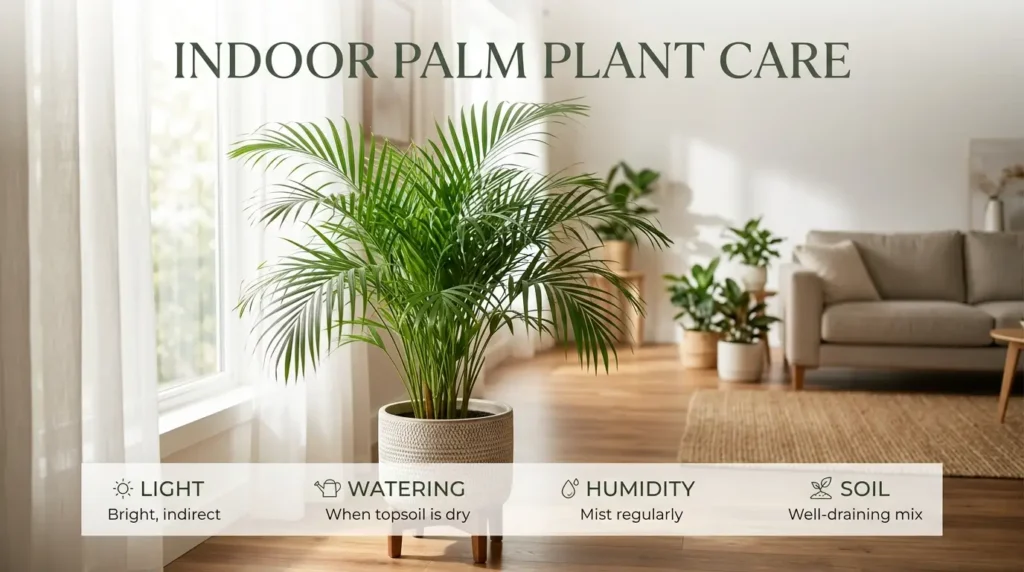
Indoor palm plants bring a tropical feel to living rooms, bedrooms, offices, and other indoor spaces. Their graceful fronds, varied sizes, and elegant growth habits make them attractive choices for many homes. However, keeping a palm healthy indoors requires more than occasional watering. The right light, well-draining soil, suitable humidity, and careful watering habits all influence how well it grows.
Successful indoor palm plant care starts with choosing a palm suited to your indoor conditions and understanding its specific needs. Some palms tolerate lower light, while others need bright, indirect sunlight. Learning to recognize signs of stress, prevent common pests, and maintain healthy roots can help your plant thrive for years.
This guide explains how to care for indoor palm plants, from selecting the right variety to troubleshooting yellow leaves, brown tips, and slow growth.
Best Indoor Palm Plants for Your Home
Before choosing a palm, consider how much natural light your room receives, how much space you have, and how much maintenance you can provide. Different palm species have different requirements, so selecting a suitable variety makes long-term care easier.
| Palm variety | Light preference | Growth habit | Best suited for |
|---|---|---|---|
| Parlor palm | Low to medium indirect light | Compact and slow-growing | Small rooms and beginners |
| Areca palm | Bright, indirect light | Full, feathery fronds | Spacious, bright rooms |
| Kentia palm | Medium to bright indirect light | Upright, arching fronds | Living rooms and offices |
| Lady palm | Low to medium indirect light | Upright, fan-shaped leaves | Homes with limited bright space |
| Ponytail palm | Bright light, some direct sun tolerated | Bulbous trunk and narrow leaves | Sunny windows and dry rooms |
One important distinction is that the ponytail palm is not a true palm. It is a succulent-like plant that stores water in its swollen trunk, so it needs much less frequent watering than most tropical palms.
For beginners, a parlor palm is often a practical choice because it tolerates lower indoor light better than many other palms. If you have a bright room and enough space, an areca palm can provide a fuller tropical appearance.
Light Requirements for Indoor Palm Plants
Light is one of the most important factors in indoor palm plant care. Although some palms tolerate dimmer rooms, most grow better with sufficient indirect light.
How much light do indoor palms need?
Many common indoor palms prefer medium to bright, indirect light. This means they receive plenty of ambient daylight without prolonged exposure to harsh direct sun.
- Low-light conditions: A parlor palm or lady palm may tolerate a dimmer location, although growth will usually be slower.
- Medium indirect light: Suitable for many parlor palms, Kentia palms, and lady palms.
- Bright indirect light: Often ideal for areca palms and other light-demanding tropical varieties.
- Direct sunlight: Gentle morning sun may be tolerated by some species, but intense afternoon sun can scorch leaves, especially when the plant has not been acclimated.
Place your palm near a bright window, adjusting its distance according to the species and the intensity of sunlight. An east-facing window often provides gentle morning light, while a bright north-facing window in the Northern Hemisphere may offer softer light throughout the day.
Can indoor palms grow in low light?
Some can survive in low light, but survival is not the same as healthy growth. Insufficient light may cause slow growth, sparse foliage, smaller new leaves, or yellowing associated with other stresses.
If your room receives very little daylight, consider using a full-spectrum LED grow light. Position it according to the manufacturer’s recommendations and provide a consistent daily lighting schedule, often around 10–12 hours as a starting point for supplemental lighting. The ideal duration depends on the plant, light intensity, and available natural light.
Avoid placing a grow light extremely close to the foliage, as excessive intensity or heat can damage leaves.

How to Water Indoor Palm Plants Correctly
Overwatering and underwatering are common causes of indoor palm problems. The correct watering schedule depends on the species, pot size, soil mix, temperature, light exposure, and season.
Instead of watering on a fixed day every week, check the soil before adding water.
When should you water an indoor palm?
Use these practical steps:
- Check the upper 1–2 inches of soil with your finger for smaller pots. For larger pots, check deeper if possible.
- Water when the upper layer has dried to a degree appropriate for your palm species.
- Pour water evenly over the soil until excess water drains from the bottom.
- Empty the saucer or decorative outer pot so the roots do not sit in standing water.
- Check the soil again before watering next time.
Most tropical indoor palms prefer soil that stays lightly moist but not waterlogged. Allowing the entire root ball to become bone-dry can stress moisture-sensitive varieties, while constantly wet soil can deprive roots of oxygen.
Ponytail palms need a different approach: let the potting mix dry substantially between waterings because their thick trunks store water.
Signs of overwatering and underwatering
| Symptom | Possible cause | What to do |
|---|---|---|
| Yellowing leaves and persistently wet soil | Overwatering or poor drainage | Check roots, drainage holes, and soil moisture |
| Brown, crispy leaf tips | Low humidity, salt buildup, inconsistent watering, or root stress | Check several possible causes before changing care |
| Drooping fronds and dry soil | Underwatering | Water thoroughly and allow excess water to drain |
| Yellowing lower leaves only | Natural aging or environmental stress | Check whether the change is limited to older leaves |
| Soft, dark roots or sour-smelling soil | Possible root rot | Remove damaged roots and repot into fresh, well-draining mix if necessary |
A few older leaves may yellow naturally as a palm grows. However, widespread yellowing, persistent wilting, or rapidly declining foliage warrants a closer inspection of the roots and growing conditions.
Choosing the Best Soil Mix for Indoor Palms
Indoor palms need a potting mix that retains some moisture while allowing excess water to drain and air to reach the roots. Dense garden soil is usually unsuitable for containers because it can compact and hold too much water.
What makes a good palm potting mix?
A practical starting mix for many tropical indoor palms includes:
- Two parts quality indoor potting mix.
- One part perlite or pumice for aeration.
- One part fine orchid bark or another suitable coarse organic amendment.
This is a flexible starting point, not a universal formula. Adjust the mixture according to your palm species, pot size, room conditions, and how quickly the soil dries.
For moisture-sensitive plants in cool rooms, a more aerated mix may help reduce the risk of waterlogging. In warm, dry rooms, a mix with slightly greater moisture retention may be more suitable.
Choose a pot with drainage holes
A container should have at least one functional drainage hole. Decorative pots without holes can be used as outer covers, but the palm should remain in a nursery pot that allows excess water to escape.
Avoid moving a small palm into an excessively large container. Too much unused soil can remain wet for longer than the roots can absorb the moisture, increasing the risk of root problems.
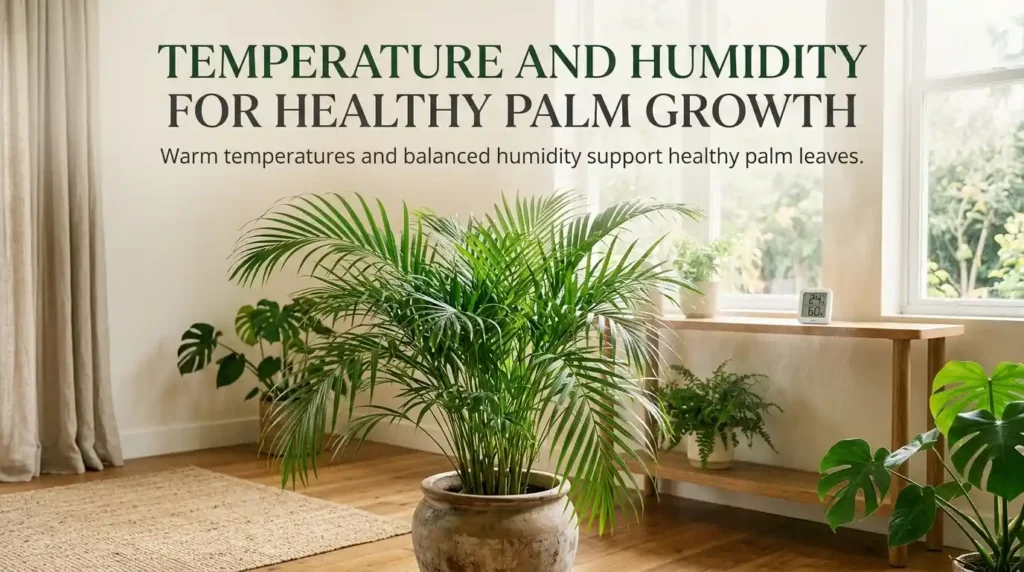
Temperature and Humidity for Healthy Palm Growth
Most popular tropical indoor palms grow well in ordinary, comfortable household temperatures. Many prefer approximately 65–80°F (18–27°C), although individual species differ.
Protect indoor palms from:
- Cold drafts near frequently opened exterior doors.
- Direct airflow from air conditioners.
- Hot air from heaters.
- Sudden temperature changes.
- Prolonged exposure to temperatures below the plant’s tolerance.
Warm, stable conditions generally support better growth than repeated temperature fluctuations.
How much humidity do indoor palms need?
Many tropical palms appreciate moderate to high humidity, but their tolerance varies. Dry indoor air can contribute to brown leaf tips and may encourage spider mite infestations.
To improve humidity:
- Group plants together while maintaining good airflow.
- Use a room humidifier if the air is consistently dry.
- Keep palms away from heaters and strong air-conditioning vents.
- Monitor the room with a basic hygrometer if humidity problems persist.
A humidity level around 40–60% is a reasonable starting target for many common indoor palms, while some species may benefit from higher humidity. Do not assume that every palm needs tropical greenhouse conditions.
Misting leaves provides only a temporary increase in surface moisture and is not a reliable way to maintain room humidity. Good airflow remains important because persistently wet foliage can encourage certain leaf diseases.
Fertilizing Indoor Palm Plants
Palms need nutrients for new fronds, healthy roots, and normal growth. However, more fertilizer does not mean faster or healthier growth. Excessive feeding can cause root damage, brown tips, and mineral salt buildup.
Which fertilizer should you use?
Choose a balanced fertilizer labeled for indoor foliage plants or palms. A palm-specific product may contain nutrients such as potassium, magnesium, and manganese in suitable proportions.
Follow the product label rather than applying a stronger dose in the hope of improving growth.
A practical feeding routine is to:
- Fertilize during active growth, generally spring and summer.
- Use the labeled dilution and frequency.
- Apply fertilizer to appropriately moist soil unless the product directions specify otherwise.
- Reduce or stop feeding during periods of slow winter growth.
- Avoid fertilizing a severely stressed palm until the underlying problem is addressed.
Common nutrient-related symptoms
Yellowing between leaf veins, unusually pale new growth, or changes in leaf development can sometimes indicate nutrient deficiencies. However, similar symptoms can result from poor roots, inappropriate watering, unsuitable pH, or insufficient light.
Check the growing conditions before adding extra nutrients. Fertilizer cannot correct damage caused by waterlogged soil or a failing root system.
Pruning and Cleaning Indoor Palm Leaves
Routine maintenance helps keep indoor palms attractive and allows you to notice pests and other problems early.
How to prune an indoor palm
- Remove completely brown, dead, or severely damaged fronds using clean, sharp pruning shears.
- Cut the frond close to its base without injuring the trunk or nearby healthy growth.
- Remove yellowing leaves only when they are substantially declining or fully dead, unless a specific problem requires earlier removal.
- Never cut off the central growing point or emerging spear of a single-trunk palm.
- Avoid removing too many green fronds at once because healthy leaves support the plant’s growth.
Brown tips can be trimmed for appearance, but leave a narrow brown margin rather than cutting into healthy green tissue. If many leaves develop brown tips, investigate the cause instead of repeatedly trimming them.
Keep leaves clean
Dust can accumulate on broad palm fronds and make them look dull. Wipe the leaves gently with a soft, damp cloth or rinse the plant with lukewarm water when appropriate.
Allow the foliage to dry with good airflow. Avoid using leaf-shine products unless they are specifically suitable for the plant, as some products can leave unwanted residues.
Repotting Indoor Palm Plants
Indoor palms generally do not need frequent repotting. Many are slow-growing and can remain in the same container for several years when their roots have enough room and the soil remains healthy.
When should you repot?
Consider repotting when:
- Roots densely fill the pot or emerge through drainage holes.
- Water passes through unusually quickly because the root ball is crowded.
- Growth declines despite appropriate light, watering, and feeding.
- The potting mix has broken down, compacted, or developed persistent drainage problems.
- Root inspection reveals that the current mix needs replacement.
Choose a new pot only about 1–2 inches (2.5–5 cm) wider than the existing container for many small to medium palms. Larger plants may require a somewhat bigger increase, depending on their root structure.
A simple repotting method
- Water the plant lightly if the root ball is extremely dry.
- Slide the palm out of its container carefully, supporting the root ball.
- Inspect the roots and remove any clearly rotten, soft, or dead sections with clean tools.
- Place the plant at the same depth in fresh, suitable potting mix.
- Water thoroughly and let excess water drain.
- Keep the palm in suitable indirect light while it adjusts, avoiding unnecessary additional stress.
Some palms dislike substantial root disturbance. Handle the roots gently and avoid breaking apart a healthy root ball more than necessary.
Common Indoor Palm Pests and How to Control Them
Indoor palms can attract spider mites, mealybugs, scale insects, and occasionally fungus gnats. Early detection usually makes management easier.
Spider mites
Look for tiny pale speckles, dull foliage, and fine webbing, especially on the undersides of leaves. Isolate the palm, rinse the foliage thoroughly, and use an appropriate labeled treatment if necessary.
Mealybugs
These pests look like small white, cottony clusters around leaf bases and stems. Remove visible insects carefully and inspect nearby plants. Apply a suitable labeled product if the infestation persists.
Scale insects
Look for small, fixed bumps on stems and leaf surfaces. Remove accessible insects carefully and monitor the plant for new activity. Persistent infestations may require repeated treatment.
Fungus gnats
Small black flies around the pot often indicate consistently moist growing media. Allow the appropriate upper soil layer to dry between waterings, improve drainage, and use suitable biological or other labeled controls if needed.
Inspect new plants before bringing them indoors. Check the undersides of leaves, leaf joints, and the soil surface, and isolate affected plants while managing an infestation.
Seasonal Indoor Palm Plant Care
Indoor conditions change throughout the year, even when plants remain inside.
Spring and summer
During active growth, many palms need more frequent watering because light levels and temperatures are higher. Check soil moisture regularly, feed according to the plant’s needs, and inspect for pests.
If moving a palm outdoors during warm weather, acclimate it gradually. Sudden exposure to direct sunlight can scorch leaves that developed indoors.
Autumn and winter
As daylight decreases, growth often slows. Your palm may use less water and require less fertilizer.
- Check soil before each watering rather than following a summer schedule.
- Move the plant closer to a suitable light source if natural light becomes insufficient.
- Protect it from cold windows and heating vents.
- Avoid heavy pruning or unnecessary repotting while growth is slow.
Do not assume that every palm must stop growing in winter. Warm rooms with supplemental lighting can support continued growth, although the plant’s natural growth rate still depends on its species.
Troubleshooting Common Indoor Palm Problems
When a palm looks unhealthy, change one or two conditions at a time and monitor the response. Several symptoms can have overlapping causes, so avoid treating every yellow or brown leaf as a fertilizer problem.
| Problem | Likely causes | What to check and do |
|---|---|---|
| Brown leaf tips | Dry air, salt buildup, irregular watering, or root stress | Check humidity, water quality, soil moisture, and fertilizer use |
| Yellow leaves across the plant | Overwatering, insufficient light, nutrient problems, or pests | Inspect soil, drainage, light exposure, and leaf undersides |
| Pale or stretched growth | Insufficient light | Move the plant to brighter indirect light gradually |
| Dry, crispy fronds | Underwatering, excessive sunlight, or heat | Check the root ball and move away from harsh sun or hot airflow |
| No new growth | Low light, cool conditions, natural slow growth, or root issues | Review seasonal conditions and root health |
| Wilting despite wet soil | Possible root damage or root rot | Check drainage and inspect roots if symptoms persist |
A useful troubleshooting rule is to examine the whole plant, not just the most visible symptom. For example, brown tips alongside consistently wet soil and a sour smell may indicate root trouble, while brown tips on an otherwise healthy plant in dry air may point toward humidity or water-quality issues.
Common Indoor Palm Care Mistakes to Avoid
Even a suitable palm variety can struggle if its basic needs are overlooked.
Watering too frequently: Check soil moisture before watering. A weekly schedule may work in one room but cause problems in another.
Choosing a pot without drainage: Standing water reduces oxygen around roots and raises the risk of root rot.
Assuming all palms tolerate low light: Some tolerate shade better than others, but very low light can still weaken growth.
Overfertilizing: Excess fertilizer can damage roots and contribute to mineral buildup.
Cutting healthy green fronds: Green leaves help the plant produce energy. Remove them only when there is a sound horticultural reason.
Ignoring pests until damage spreads: Regular inspection makes it easier to catch spider mites, scale, and mealybugs before they become widespread.
Changing several conditions at once: If you move the plant, repot it, increase fertilizer, and alter watering simultaneously, it becomes difficult to identify what helped or worsened the problem.
A Simple Indoor Palm Plant Care Routine
A consistent routine is easier to maintain than frequent, unnecessary interventions.
Weekly
Check soil moisture, inspect leaves for pests, and look for new yellowing or wilting. Water only when the soil and species indicate that it is needed.
Monthly
Wipe dusty leaves, review light exposure, inspect drainage, and check for fertilizer or mineral buildup.
Seasonally
Adjust watering and feeding as growth changes. Review humidity, temperature, and light as the seasons shift.
As needed
Remove dead fronds, manage pests, refresh deteriorating soil, and repot when root growth or soil condition makes it necessary.
Frequently Asked Questions
1. How often should I water an indoor palm plant?
There is no universal schedule. Check the upper soil layer and water when it has dried to the appropriate degree for your palm. Most tropical palms prefer lightly moist but well-drained soil, while ponytail palms need much longer drying periods.
2. Do indoor palm plants need direct sunlight?
Most popular tropical indoor palms prefer indirect light. Gentle morning sun may suit certain varieties, but intense afternoon sunlight can scorch leaves. Match the placement to the species and acclimate the plant gradually when changing its light conditions.
3. Why are the leaves on my indoor palm turning brown?
Brown tips can result from dry air, inconsistent watering, mineral salts, excess fertilizer, or root problems. Brown patches may also indicate sunburn or pests. Check the plant’s environment and roots before deciding on a treatment.
4. Which indoor palm is easiest to care for?
The parlor palm is a popular beginner option because it tolerates lower light and grows relatively slowly. However, it still needs appropriate watering, drainage, and protection from extreme temperatures.
5. Can indoor palm plants grow in bedrooms?
Yes. Many palms can grow well in bedrooms if the room provides suitable light, temperature, and space. Avoid placing them directly beside heaters, cold drafts, or air-conditioning vents.
6. Should I mist my indoor palm every day?
Daily misting is not necessary for most indoor palms and does not maintain humidity for long. A room humidifier is generally more effective if the air is consistently dry. Ensure that foliage has adequate airflow.
7. Why is my indoor palm not growing new leaves?
Slow growth can be normal, especially in winter or in naturally slow-growing species. Insufficient light, unsuitable temperatures, root problems, and nutrient deficiencies can also restrict growth. Review these conditions before increasing fertilizer.
8. When should I repot an indoor palm?
Repot when the roots become crowded, the soil deteriorates, or drainage problems develop. Choose a modestly larger pot with drainage holes and handle the root system carefully.
9. Are indoor palm plants safe for pets?
Safety depends on the exact species. The true parlor palm and areca palm are generally listed as non-toxic to cats and dogs, but not every plant sold as a palm has the same safety profile. Ponytail palms are also generally considered non-toxic. Verify the botanical name before bringing an unfamiliar plant into a home with pets.
Conclusion
Healthy indoor palm plant care depends on understanding your specific palm rather than following a rigid schedule. Choose a variety that suits your available light, use an airy potting mix, water according to soil moisture, and provide stable temperatures with suitable humidity.
Regular inspections can help you catch pests, drainage problems, and early signs of stress before they become serious. With consistent, species-appropriate care, an indoor palm can remain an attractive part of your home for many years.

Megan Foster is the founder and lead writer of GrowIndoorly.com, where she shares practical, easy-to-follow advice for growing healthy indoor plants. She is passionate about helping beginners and experienced plant lovers build thriving indoor gardens with confidence. Megan writes about houseplants, indoor herbs, succulents, hydroponics, grow lights, plant propagation, watering, soil care, and everyday plant maintenance.
She enjoys researching trusted gardening techniques and transforming them into simple, actionable guides that readers can easily apply at home. Her goal is to make indoor gardening more enjoyable and accessible by providing clear, reliable information that helps people keep their plants healthy throughout the year. Whether you’re caring for your first houseplant or expanding your indoor plant collection, Megan’s practical tips are designed to help you grow with confidence.


