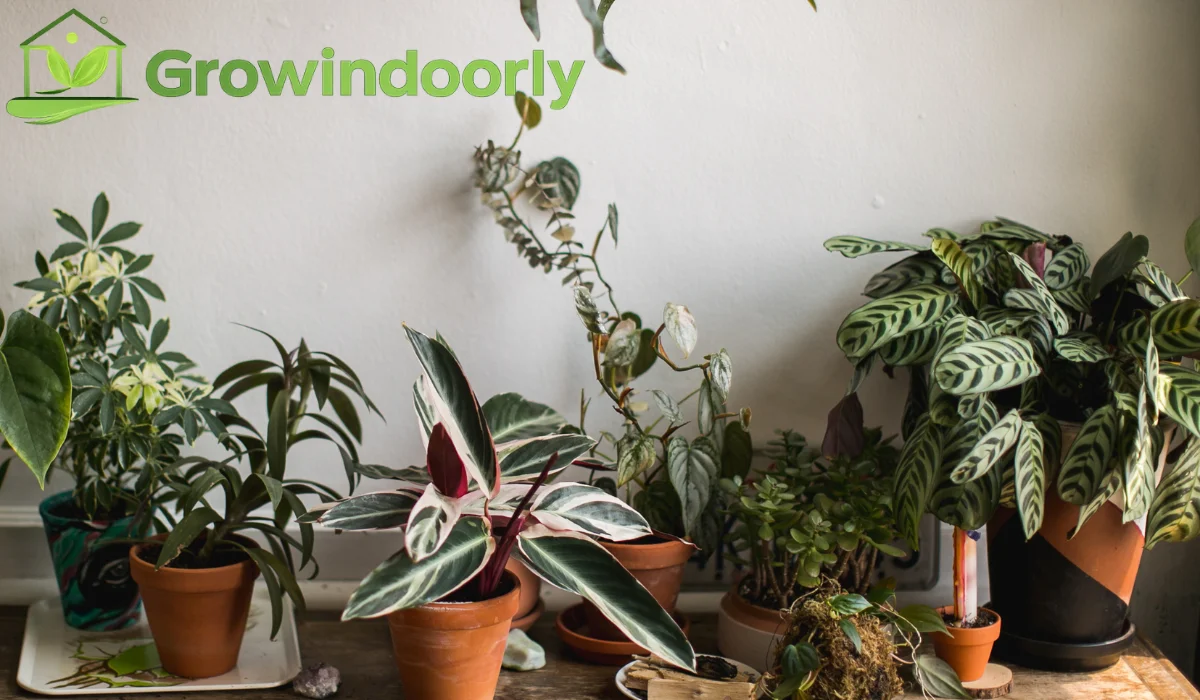
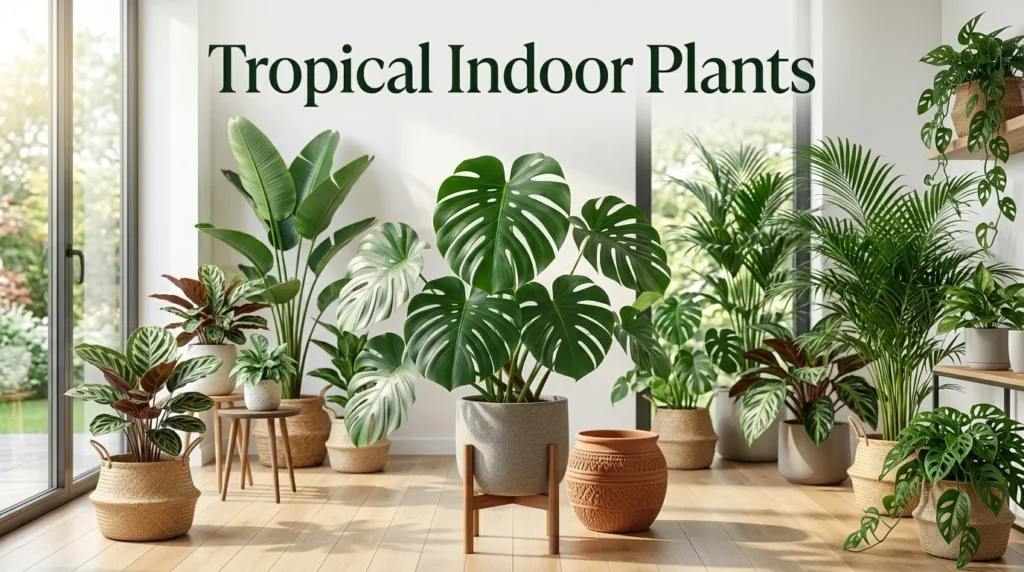
Bringing vibrant green leaves into your home is the fastest way to transform any living area into a peaceful sanctuary. Caring for tropical indoor plants allows you to build a lush jungle right in your own living room.
However, keeping native jungle species healthy inside a modern house can feel challenging at times. Many new plant owners struggle with yellowing leaves, root rot, and dry air during winter months.
Selecting the right tropical indoor plants for your personal environment makes long-term care significantly easier. Understanding basic lighting and moisture needs prevents costly mistakes before they happen.
In this practical guide, you will learn step-by-step methods to grow tropical indoor plants so they stay lush, healthy, and green all year long.
Understanding Tropical Indoor Plants
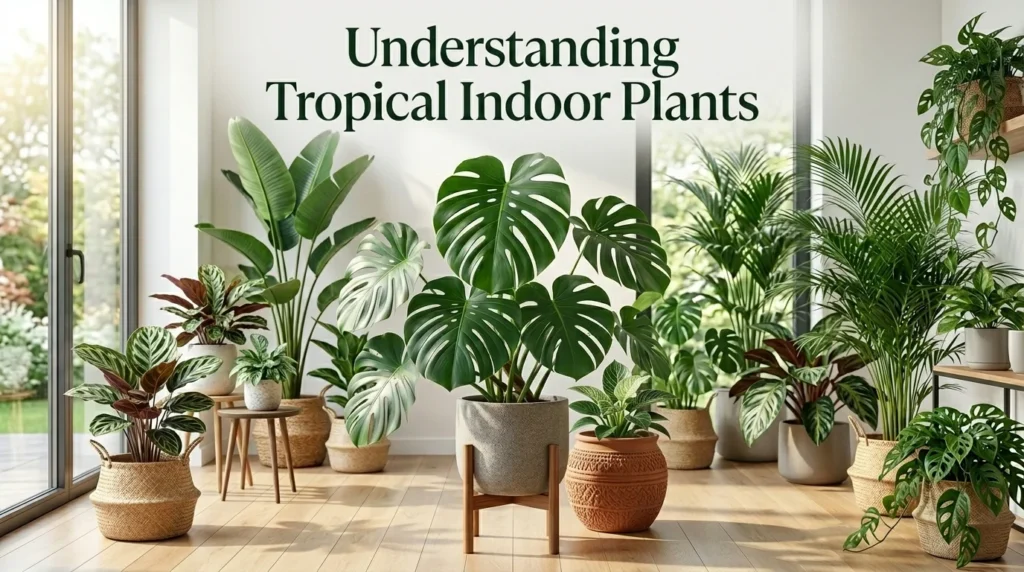
Tropical plants come from warm, humid regions near the equator. In their native environments, they grow under dense rainforest canopies, along riverbanks, or attached to larger trees as epiphytes. These natural conditions provide constant warmth, filtered light, high humidity, and rich, free-draining soil.
When you bring these species indoors, your home becomes an artificial rainforest. Because interior rooms usually have lower light levels and drier air than equatorial jungles, these plants must adapt to survive. Understanding a plant’s original natural habitat explains why it reacts to drafts, dark corners, or dry indoor heating. Give new arrivals a week or two in gentle, indirect light before moving them to their permanent spot so they can acclimate without shock.
Unlike temperate native plants that go fully dormant during harsh freezing winters, most tropical foliage grows continuously when given steady light and heat. Their leaves feature specialized adaptations, such as broad surface areas to capture low forest light, or thick waxy coatings to handle heavy rainfall.
Why Tropical Plants Matter for Your Home
Adding living tropical greenery to your indoor space provides far more than standard visual decoration. It bridges the gap between urban living and nature, creating a calming visual anchor in busy living spaces.
- Architectural Beauty: Large-leafed varieties create stunning focal points in living rooms, bedrooms, and home offices.
- Natural Humidity Boost: Through natural transpiration, large tropical leaves release clean water vapor back into dry indoor air.
- Improved Well-Being: Caring for living foliage reduces everyday stress, supports focus, and creates a relaxing home atmosphere.
- Long-Term Rewards: Unlike temporary cut flowers, well-cared-for tropical houseplants grow alongside you for decades, yielding satisfying growth every spring.
Benefits and Advantages of Indoor Greenery
Growing tropical varieties indoors offers unique advantages over standard garden landscaping. First, interior temperatures remain relatively stable throughout the year, shielding sensitive roots from sudden frost or severe weather shocks.
Second, tropical species are inherently adapted to the shaded understory of deep forest canopies. This natural shade tolerance allows them to flourish inside homes where sunlight filters through standard glass windows.
Finally, indoor setups allow complete control over growing conditions. You control the water schedule, nutrient levels, and light cycles, allowing you to optimize plant health regardless of the weather outside.
Different Growing Methods: Soil vs. Hydroponics
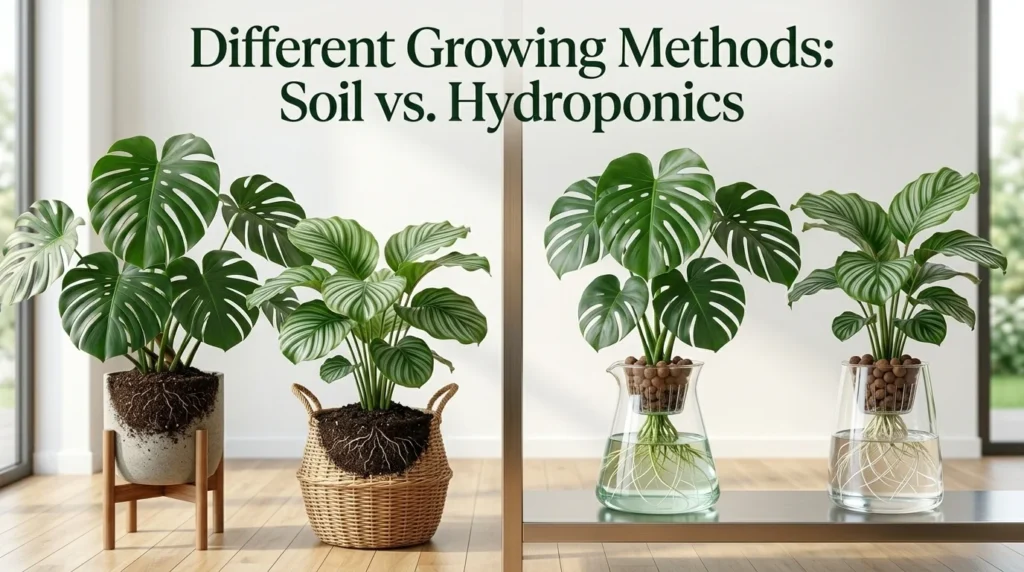
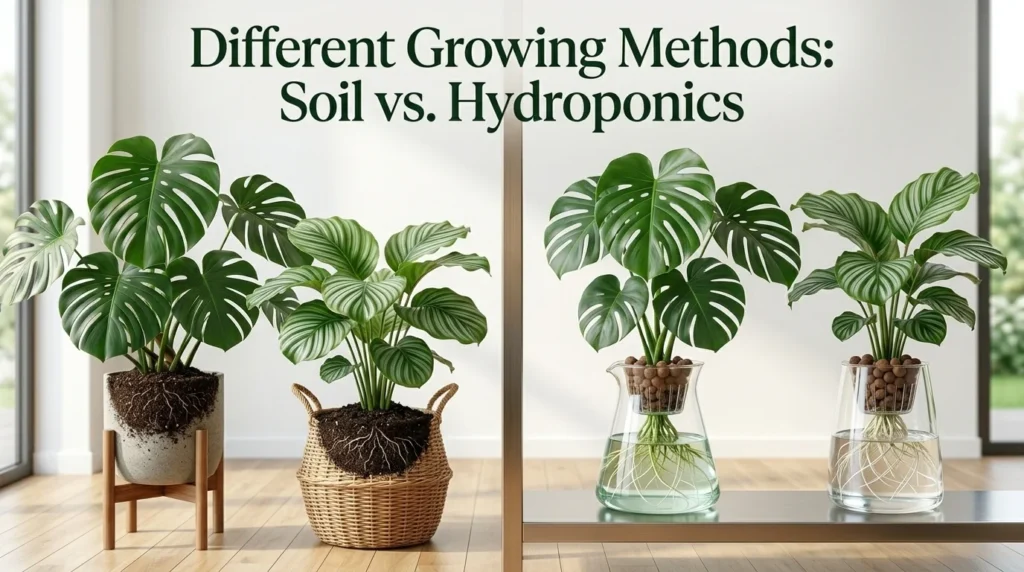
You can grow tropical foliage using traditional soil mixtures or modern soil-free hydroponic systems.
- Soil-Based Growing: The classic approach uses rich, airy potting mixes to anchor root systems. Soil acts as a natural buffer for moisture and nutrients, making it forgiving for beginners who prefer simple, hands-on routine care.
- Semi-Hydroponics (LECA or Pon): Growing in inorganic substrates like Light Expanded Clay Aggregate (LECA) or mineral granules eliminates traditional soil pests like fungus gnats. Roots pull water and nutrients directly from a standing reservoir below.
- Passive Water Culture: Water-loving species like pothos or monstera cuttings can live indefinitely in glass jars filled with clean water and liquid nutrients, offering a low-maintenance, clean setup.
Tools and Equipment Required
Having the right basic tools on hand simplifies routine maintenance and prevents common care mistakes:
- Moisture Meter: A simple probe that measures soil dampness near the root zone, taking the guesswork out of watering schedules.
- Pruning Shears: Clean, sharp shears for cutting away dead leaves or taking stem cuttings for propagation.
- Fine-Mist Sprayer or Humidifier: Essential tools for boosting localized air moisture around sensitive fronds and foliage.
- Watering Can with Narrow Spout: Allows precise water delivery directly to the soil without splashing delicate foliage or crown leaves.
- Full-Spectrum LED Lights: Compact, energy-efficient light sources that supply essential photosynthetic light to dim room corners.
Best Tropical Indoor Plants for Beginners
Choosing hardy species ensures early success. These varieties tolerate common beginner mistakes while delivering stunning foliage:
Monstera Deliciosa (Swiss Cheese Plant)
- Light Needs: Bright, indirect light.
- Why It’s Great: Famous for its large, split leaves (fenestrations). It grows vigorously and tolerates occasional missed waterings.
Snake Plant (Sansevieria)
- Light Needs: Low to bright indirect light.
- Why It’s Great: Features upright, architectural leaves. Extremely tough, requiring minimal water and surviving well in lower light spaces.
ZZ Plant (Zamioculcas zamiifolia)
- Light Needs: Low to medium light.
- Why It’s Great: Stores water in thick underground rhizomes, making it virtually immune to short-term underwatering.
Heartleaf Philodendron (Philodendron hederaceum)
- Light Needs: Medium, indirect light.
- Why It’s Great: Rapidly produces trailing vines with deep green, heart-shaped leaves. Works exceptionally well in hanging baskets or on high shelves.
Peace Lily (Spathiphyllum)
- Light Needs: Medium to low light.
- Why It’s Great: Features glossy foliage and white floral spathes. Visibly droops when thirsty, giving clear visual cues when it needs water.
Lighting Requirements: Natural Sunlight vs. Grow Lights
Light fuels plant energy. Without adequate light, tropical foliage stops growing, loses leaf color, and eventually drops lower leaves. If you are unsure what a spot offers, watch new growth over two to three weeks: stretching stems and small, pale leaves mean the plant wants more light.
Natural Light Categories
- Bright, Indirect Light: Placed 2 to 4 feet away from an East or South-facing window, or behind a sheer white curtain. This mimics the filtered canopy light of natural rainforests.
- Medium Indirect Light: Placed 5 to 8 feet back from a light source, ideal for heartleaf philodendrons and pothos.
- Low Light: Spots far from windows or near North-facing glass. Only hardy plants like snake plants or ZZ plants thrive here long-term.
Using LED Grow Lights
When natural light is limited during short winter days, full-spectrum LED grow lights provide an ideal light solution. Position fixtures 12 to 18 inches above the highest leaves and run them on a timer for 12 to 14 hours daily to maintain steady growth.
Mastering Proper Watering Methods
Overwatering is the primary cause of houseplant failure. Roots need oxygen just as much as they need water; saturated, waterlogged soil smothers roots, leading to fungal rot. When in doubt, wait a day — most tropicals recover from slight dryness far faster than from rotted roots.
The “Bottom-Up” and “Soak-and-Drain” Techniques
- Soak-and-Drain Method: Pour water evenly over the soil surface until excess liquid drains freely out of the bottom drainage holes. Let all extra water drain completely before putting the pot back on its saucer.
- Bottom Watering: Place your potted plant inside a sink or shallow basin filled with 2 inches of water. Let the soil wick moisture upward through the bottom drainage holes for 20 to 30 minutes, then drain thoroughly.
Never allow potted plants to sit directly in standing water saucers for extended periods. After watering, check saucers within 30 minutes and pour off any excess; for heavy pots, a turkey baster makes quick work of trapped water.
Soil and Growing Medium Essentials
Standard outdoor garden soil is too heavy for indoor containers; it compacts quickly, holding excess water and suffocating tender roots. Tropical plants need a loose, chunky, well-aerated potting mix.
Custom DIY Tropical Mix Recipe
Combine these ingredients for an ideal, well-draining soil mix:
- 40% High-quality coco coir or peat moss (holds clean moisture)
- 30% Perlite or pumice (creates vital root aeration spaces)
- 20% Fine orchid bark mini-nuggets (adds chunkiness and drainage)
- 10% Worm castings (supplies slow-release organic nutrients)
Ideal Temperature Requirements
Most tropical houseplants thrive in temperatures that mirror human comfort levels:
- Ideal Growth Range: Maintain daytime temperatures between 68°F and 85°F (20°C–29°C).
- Nighttime Minimums: Ensure temperatures do not drop below 60°F (15°C).
- Draft Protection: Keep delicate leaves away from cold winter window panes, exterior doors, space heaters, and direct air conditioning vents. Sudden temperature swings cause leaf dropping and black spots.
Humidity Control Strategies
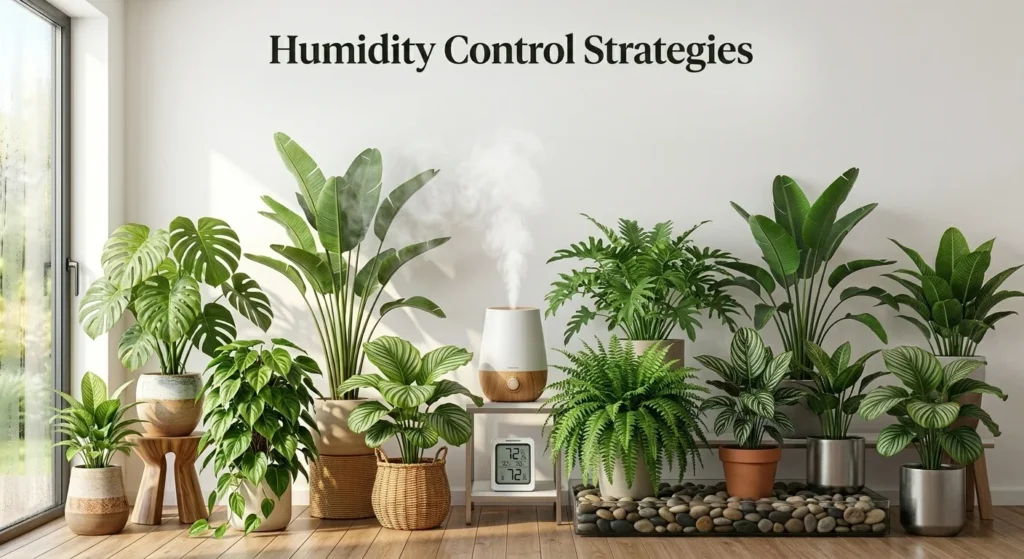
Average indoor air humidity sits around 30% to 40%, especially when winter heating units run. However, jungle plants prefer humidity levels between 50% and 70%.
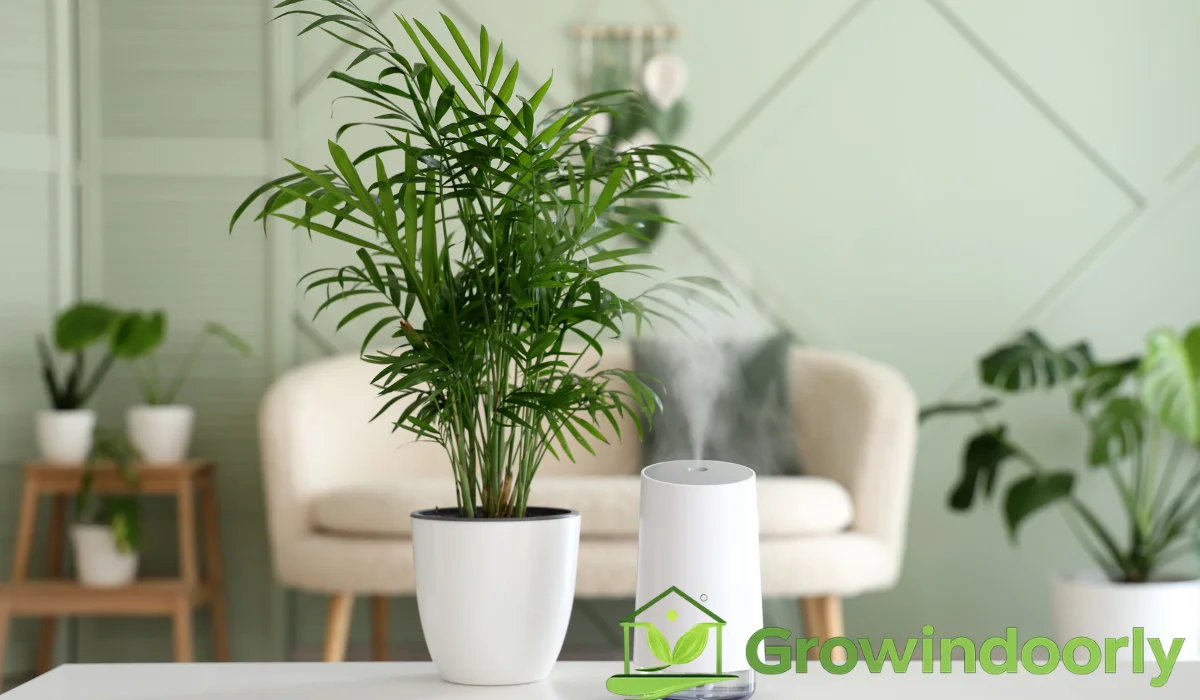
- Use a Room Humidifier: Running a cool-mist ultrasonic humidifier near your plant collection is the single most effective way to prevent dry, brown leaf edges.
- Group Plants Together: Clustering multiple potted plants creates a shared microclimate as leaves naturally release moisture during transpiration.
- Pebble Trays: Set pots on top of a shallow tray filled with pebbles and water. As the water evaporates, it elevates local humidity right around the leaves without soaking the roots.
Fertilizer and Nutrient Application
Indoor foliage requires balanced feeding during active growing seasons to build strong stems and vibrant leaves.
- N-P-K Ratios: Use a balanced liquid indoor plant fertilizer with a 3-1-2 or 1-1-1 N-P-K ratio containing essential micro-nutrients like iron, magnesium, and calcium.
- Spring and Summer Schedule: Feed every 2 to 4 weeks using liquid fertilizer diluted to half the strength recommended on the package label.
- Autumn and Winter Schedule: Stop fertilizing completely during late fall and winter when short days reduce natural growth rates.
Routine Maintenance Routine
Consistent basic care keeps plants looking vibrant and deters pest outbreaks before they spread.
- Dusting Leaves: Dust builds up on broad leaves, blocking sunlight and reducing photo-absorption. Wipe foliage gently once a month using a damp microfiber cloth.
- Pruning and Trimming: Cut away yellowed or damaged lower leaves using sterilized shears. Always prune just above a leaf node to encourage bushier branching.
- Rotating Pots: Rotate your pots a quarter-turn every week so all sides receive equal light, preventing leaning or lopsided growth.
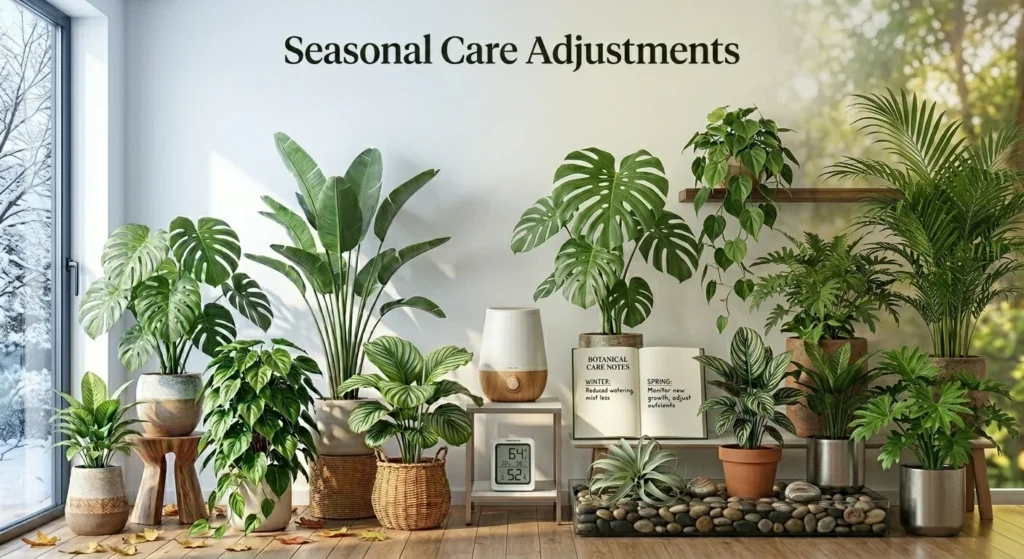
Seasonal Care Adjustments
Plant care changes naturally as daylight hours shift throughout the year. Mark your calendar to reassess light, water, and feeding needs at each equinox so adjustments happen before stress shows on the leaves.
Spring and Summer Care
- Increase watering frequency as warmer days dry out potting soil faster.
- Apply regular fertilizer to fuel rapid stem and leaf production.
- Repot root-bound plants into containers 2 inches larger in diameter.
Autumn and Winter Care
- Reduce watering frequency significantly; allow soil to dry further between waterings.
- Pause all fertilizer applications until spring returns.
- Move plants closer to bright windows to compensate for shorter, cloudier days.
Common Mistakes to Avoid
- Pots Without Drainage Holes: Containers without bottom holes trap water, rapidly causing root rot.
- Following Rigid Water Schedules: Watering on a set day every week causes problems because environmental factors change soil drying rates. Always test soil moisture first.
- Exposing Plants to Direct Sun: Harsh midday sun scorches tropical leaves, creating permanent bleached or burnt patches.
- Repotting into Pots That Are Too Large: Moving a small plant into a massive pot leaves excess soil wet for too long, killing sensitive roots.
Troubleshooting Houseplant Problems
- Yellow Lower Leaves: Typically caused by overwatering or soil staying wet too long. Allow the top two inches of soil to dry out completely before watering again.
- Crispy Brown Leaf Margins: Indicates low ambient air humidity, underwatering, or excessive tap water mineral salts. Increase air humidity and use filtered water.
- Pale or Leggy Stems: Indicates insufficient lighting. Move the plant closer to a bright window or add an LED grow light.
- Pest Webbing or Sticky Residue: Signals spider mites, scale, or mealybugs. Wash foliage with mild soap water and apply organic neem oil or insecticidal spray weekly.
Beginner Tips for Long-Term Success
- Start with Hardy Varieties: Build confidence with low-maintenance options like snake plants, ZZ plants, or pothos before moving to delicate varieties like calatheas.
- Learn the Pot Weight Test: Lift your potted plant when it is bone dry, then lift it right after thorough watering. You will quickly learn to gauge soil moisture simply by picking up the pot.
- Isolate New Additions: Keep newly purchased plants separated from your existing collection for two weeks to prevent unwanted nursery pests from spreading.
Advanced Expert Recommendations
- Flush Soil Quarterly: Once every season, leach out accumulated fertilizer salts by running clean, tepid filtered water through the soil mix for several minutes.
- Soil Aeration: Use a smooth wooden chopstick to poke small holes carefully into compacted soil mix, restoring root aeration without damaging main taproots.
- Use Rainwater or Distilled Water: Sensitive species like calatheas, prayer plants, and delicate ferns react poorly to municipal chlorine and tap fluoride. Switching to clean rainwater prevents tip burn entirely.
Conclusion
Growing tropical indoor plants successfully comes down to understanding their natural jungle roots and matching those conditions inside your home. By supplying bright indirect light, using well-aerated potting mixes, and watering only when the soil demands it, you set every plant up for long-term health. Avoid the urge to overwater, keep air humidity comfortably high, and adjust your routine as the seasons change.
As your collection grows, you will learn to read visual cues quickly, adjusting light and moisture before minor issues become big problems. Stay patient, observe your foliage regularly, and enjoy the process of turning your home into a vibrant sanctuary. Keep exploring GrowIndoorly.com for expert guides, practical care tips, and reliable solutions for all your indoor gardening needs.
Pet Safety
Many beloved tropical houseplants are toxic to cats and dogs, so it pays to plan your collection with pets in mind. Monstera, pothos, philodendron, peace lily, ZZ plant, and snake plant all contain irritants such as calcium oxalate crystals or saponins that can cause drooling, mouth irritation, vomiting, or diarrhea if chewed. Keep these varieties on high shelves, in hanging planters, or in rooms pets cannot access, and reserve floor-level and low-table spots for proven pet-safe choices like Boston fern, calathea, parlor palm, peperomia, and spider plant. If your pet does chew a suspicious leaf, remove any plant material from its mouth, offer fresh water, and call your veterinarian promptly.
Frequently Asked Questions
How do I know when my tropical indoor plant needs water?
Check the top two inches of soil with your finger or a moisture meter. If the soil feels dry and cool, water thoroughly until liquid drains from the bottom holes. If the soil feels damp and clings to your skin, wait a few days before checking again.
What is the best lighting for indoor tropical plants?
Most tropical species prefer bright, indirect sunlight, such as the light near an East-facing window or behind a sheer curtain on a South-facing window. Direct sunlight burns foliage, while low light slows growth significantly.
Why are the leaf tips on my houseplants turning brown and dry?
Dry brown leaf tips are usually caused by low humidity, underwatering, or excess mineral deposits from hard tap water. Boost room air humidity with a humidifier and consider switching to filtered water or distilled water.
How can I increase humidity for my plants without a humidifier?
You can increase local humidity by grouping multiple plants together, setting pots on top of pebble trays filled with water, or keeping plants in naturally humid rooms like bathrooms or kitchens.
Which tropical indoor plants are safe for households with pets?
Pet-friendly choices include the Peperomia, Boston Fern, Parlor Palm, Calathea, and Spider Plant. Always check ASPCA guidelines before bringing new plant species into homes with cats or dogs.
How often should I fertilize my tropical houseplants?
Fertilize every 2 to 4 weeks during the active spring and summer growing season using a balanced liquid fertilizer diluted to half strength. Stop feeding entirely during fall and winter months.
How do I get rid of small flies around my plant soil?
Small flies around soil are usually fungus gnats, which thrive in continuously wet soil. Let the top layers of soil dry out thoroughly between waterings, and apply beneficial nematodes or yellow sticky traps to catch flying adults.
Can tropical houseplants survive in rooms without windows?
Yes, tropical plants can survive in windowless spaces if you provide adequate artificial light using full-spectrum LED grow lights placed 12 to 18 inches above the leaves for 12 to 14 hours daily.

Megan Foster is the founder and lead writer of GrowIndoorly.com, where she shares practical, easy-to-follow advice for growing healthy indoor plants. She is passionate about helping beginners and experienced plant lovers build thriving indoor gardens with confidence. Megan writes about houseplants, indoor herbs, succulents, hydroponics, grow lights, plant propagation, watering, soil care, and everyday plant maintenance.
She enjoys researching trusted gardening techniques and transforming them into simple, actionable guides that readers can easily apply at home. Her goal is to make indoor gardening more enjoyable and accessible by providing clear, reliable information that helps people keep their plants healthy throughout the year. Whether you’re caring for your first houseplant or expanding your indoor plant collection, Megan’s practical tips are designed to help you grow with confidence.