
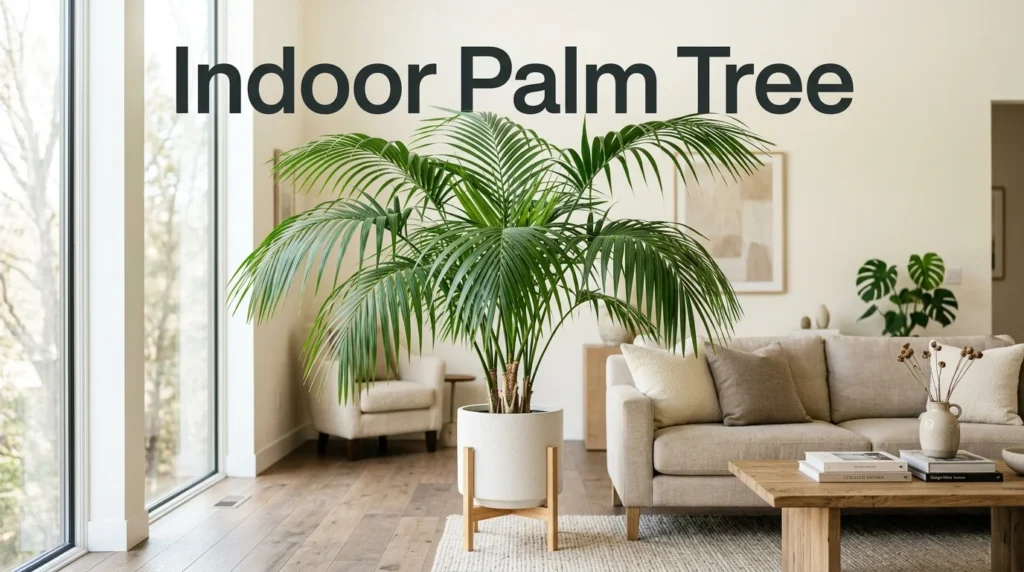
Finding the right palm indoor plant can instantly convert a dreary living area into a peaceful, tropical oasis. Their elegant, fan-like fronds bring soft texture, movement, and incredible visual appeal to bright living rooms, offices, and empty indoor corners.
However, many plant parents struggle to keep their palm indoor plant lush and green over time.
Beginners frequently watch helplessly as vibrant green fronds develop crisp brown tips, turn sickly yellow, or suffer from stubborn pest attacks like spider mites.
This comprehensive guide breaks down everything you need to know about growing a thriving palm indoor plant, from selecting the best indoor species to mastering soil aeration, proper watering, and pest prevention.
Understanding the Indoor Palm Tree
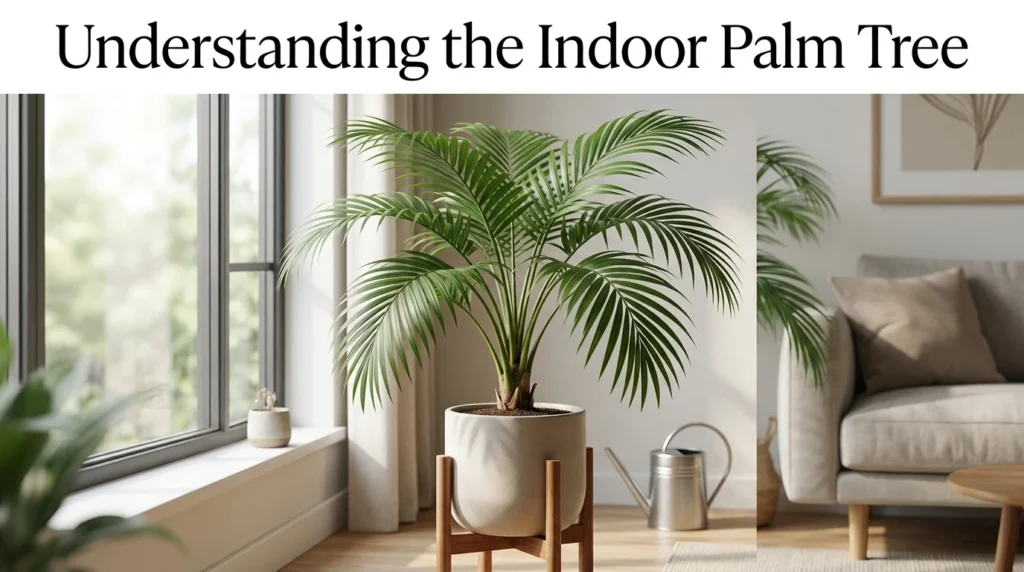
Indoor palms belong to the Arecaceae family, an ancient botanical family comprising thousands of woody monocot species native to tropical, subtropical, and warm temperate regions worldwide. Unlike traditional hardwood trees that produce true wood and lateral branches, palms grow from a central growing point called a apical bud or spear. Leaves, known as fronds, emerge directly from this growing tip in either feather-like (pinnate) or fan-like (palmate) structures.
When cultivated indoors, palms retain the same growth characteristics they developed in rainforest understories, sub-canopies, or coastal environments. Species like the Parlor Palm originated under dense tropical tree canopies, making them naturally adapted to lower light conditions. In contrast, species like the Majesty Palm hail from sunny riverbanks and demand abundant light and high soil moisture to survive.
Understanding where a palm species originates in nature gives you immediate insight into its specific indoor preferences. Matching your home’s natural light levels and humidity to your palm’s native habitat is the true secret to long-term success.
Why It Is Important
Adding palms to your indoor plant collection provides an architectural aesthetic that smaller leafy houseplants simply cannot replicate. Their long, sweeping fronds break up rigid lines in rooms, fill vertical space, and soften empty corners with organic movement and vibrant green texture.
Cultivating indoor palms also teaches gardeners critical skills in moisture management and ambient atmospheric control. Palms react quickly to low humidity and improper watering, offering clear visual feedback through their foliage. Learning to read these signals turns you into an attentive, knowledgeable plant caretaker.
Moreover, caring for large, long-lived greenery provides a deeply relaxing routine. Wiping down delicate fronds, checking soil moisture, and trimming old lower leaves offers a meditative pause from digital screens and daily life.
Benefits and Advantages
- Bold Architectural Impact: Sweeping fronds create height, visual softness, and dramatic tropical style that elevates home interiors effortlessly.
- Natural Air Moisture Transpiration: Large frond surface areas continuously release water vapor into surrounding air, naturally raising humidity in dry rooms.
- Effective Air Filtration: Palms trap dust particles and filter common indoor volatile organic compounds (VOCs) through normal gas exchange.
- Pet-Safe Non-Toxic Options: Popular varieties like Parlor Palms, Areca Palms, and Ponytail Palms are non-toxic and completely safe for homes with cats and dogs.
- Exceptional Longevity: When provided with appropriate root aeration and lighting, indoor palms grow steadily and live for many years.
Different Methods or Approaches
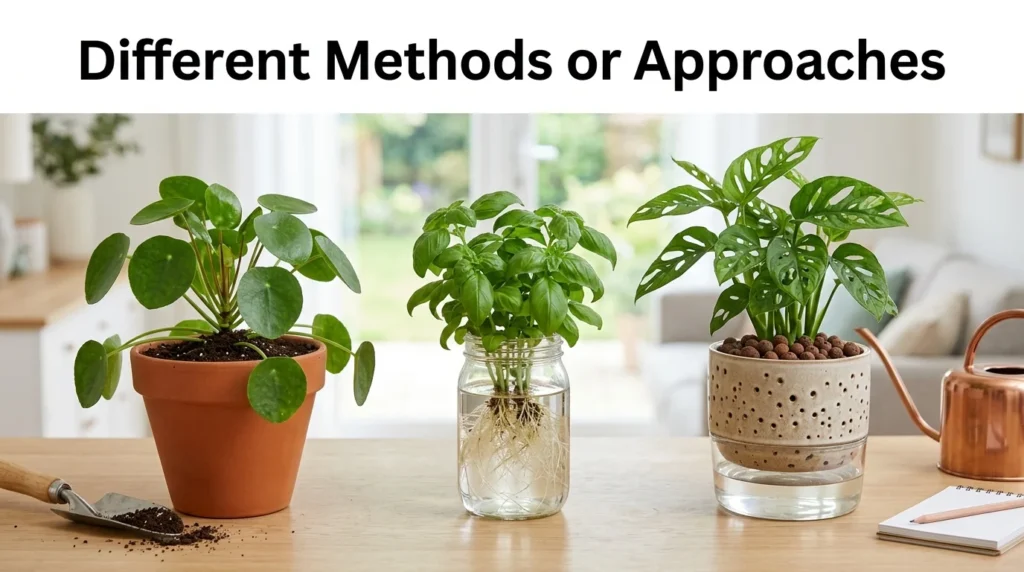
Traditional Potted Soil Cultivation
The standard approach involves planting palms in well-draining potting soil inside containers equipped with bottom drainage holes. Soil provides necessary physical anchoring for tall fronds while retaining a balanced reservoir of moisture and nutrients around delicate feeder roots.
Self-Watering Planters
Self-watering containers utilize sub-irrigation to deliver water from a bottom reservoir directly to the root zone via capillary action. This approach works exceptionally well for water-loving species like the Majesty Palm or Areca Palm, preventing soil from drying out too fast in warm homes.
Semi-Hydroponics with LECA
Growing palms in Lightweight Expanded Clay Aggregate (LECA) is an effective alternative for indoor gardeners wanting to avoid soil-borne pests like fungus gnats. The root system settles into porous clay pebbles over a shallow nutrient solution, receiving maximum root aeration while absorbing consistent moisture.
Tools and Equipment Required
- Chunky Aerated Potting Mix: A loose blend formulated to drain rapidly while holding light moisture around palm roots.
- Precision Moisture Meter: A long-probe tool that measures wetness deep in the root zone, preventing overwatering mistakes.
- Microfiber Dusting Gloves or Cloths: Soft materials used to gently wipe dust accumulation off delicate frond leaflets.
- Bypass Pruning Shears: Clean, sharp shears designed to make precise cuts through fibrous leaf stems without crushing tissues.
- Cool-Mist Ultrasonic Humidifier: An electronic humidifier that maintains steady atmospheric humidity between 50% and 60%.
- Full-Spectrum LED Grow Lights: Supplemental lighting fixtures that deliver necessary photosynthetic active radiation during dark winter months.
Best Plants or Options
Not all palm species thrive in home environments. Selecting a resilient species suited to your light levels prevents frustration and guarantees success:
Parlor Palm (Neanthe Bella / Chamaedorea elegans)
The absolute best choice for beginners. The Parlor Palm tolerates lower light levels, copes well with average home humidity, and grows slowly into a compact, bushy specimen perfect for tabletops or small floors.
Areca Palm (Dypsis lutescens)
Famous for its feathery, arching fronds and bamboo-like yellowish stems. It grows rapidly into a dense, tall focal point but requires bright indirect light and high humidity to prevent brown leaf tips.
Lady Palm (Rhapis excelsa)
A slow-growing, highly durable palm featuring broad, fan-shaped green fronds on fibrous, cane-like stems. It adapts remarkably well to low light and drier indoor air, making it an excellent investment for offices and dim living rooms.
Ponytail Palm (Beaucarnea recurvata)
Though botanically a succulent relative rather than a true palm, it features a swollen trunk base that stores water and a crown of cascading, ribbon-like leaves. It thrives on neglect, requiring bright sunlight and minimal watering.
Kentia Palm (Howea forsteriana)
The gold standard of luxury indoor plants. Featuring elegant dark green fronds on slender stems, the Kentia Palm tolerates low light, cool temperatures, and low humidity better than almost any other palm, though it comes at a higher price tag.
Majesty Palm (Ravenea rivularis)
Widely available in big-box stores, this palm features thick, feathery dark green fronds. It is more demanding indoors, requiring intense bright light, heavy watering, and high humidity to prevent frond yellowing.
Lighting Requirements For Indoor Palm Tree
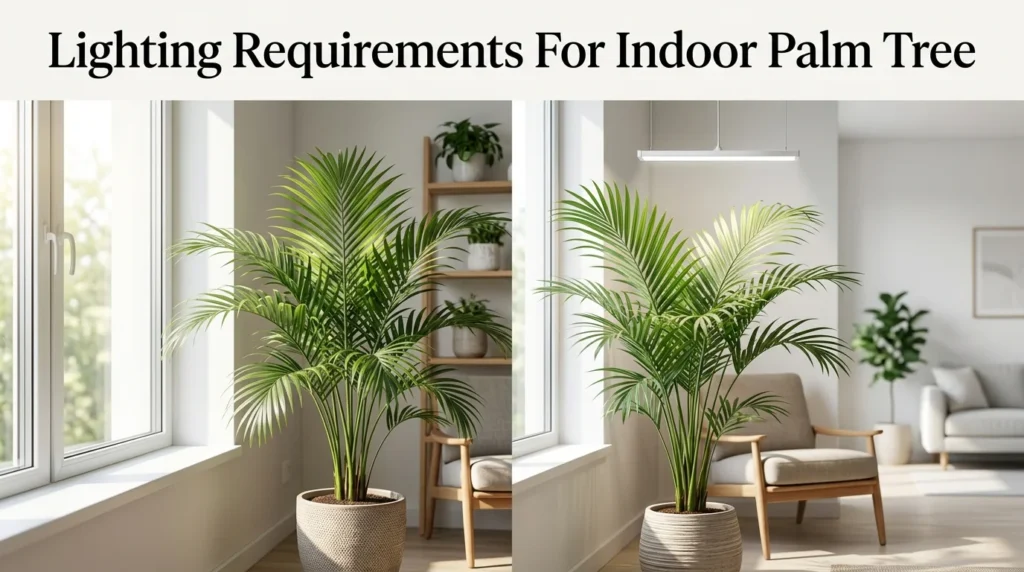
Light drives photosynthesis and dictates how fast your palm uses water from the soil. Placing a palm in the wrong lighting condition is the leading cause of indoor failure.
- Bright, Indirect Light: Most species, including Areca and Majesty palms, prefer 6 to 8 hours of strong, filtered sunlight daily. Place them a few feet away from bright east, south, or west-facing windows.
- Low Light Adaptability: Parlor, Lady, and Kentia palms can maintain healthy green foliage in moderate to low light settings, such as near north-facing windows or set back 10 feet from bright light sources.
- Direct Sun Warnings: Harsh, unfiltered midday sun shining directly through window glass can scorch delicate palm fronds, leaving permanent yellow-white bleach spots and brown crispy edges.
- Grow Light Assistance: In dark homes or during long winters, position a full-spectrum LED grow light 24 inches above the frond canopy, running it on a timer for 12 hours daily.
Watering Methods
Palms possess sensitive, fibrous root systems that suffer quickly from both overwatering and extreme drought. Finding the right balance keeps roots healthy and active.
The Thorough Drenching Method
- Insert your finger or a moisture meter 2 to 3 inches deep into the soil. Water when the top 2 inches feel dry for water-loving palms (Areca, Majesty) or when the top half feels dry for tough palms (Parlor, Kentia).
- Pour room-temperature water evenly over the soil surface until liquid drains freely from the bottom drainage holes.
- Allow the container to drain completely for 15 to 20 minutes.
- Empty the saucer or outer decorative pot. Never allow palm roots to sit in trapped standing water, which starves roots of oxygen and triggers root rot.
Soil or Growing Medium
Standard heavy garden soil or cheap potting mixes compact tightly inside containers, suffocating delicate palm feeder roots and trapping excess moisture for weeks. Palms require a loose, chunky potting mix that drains water rapidly while holding light moisture.
A proven homemade palm potting mix recipe includes:
- Quality Indoor Potting Mix (40%): Delivers a fertile base for nutrient holding and light moisture retention.
- Coarse Perlite or Pumice (30%): Creates aeration, prevents compaction, and allows surplus water to drain rapidly.
- Orchid Bark Chips (20%): Adds chunky organic matter that mimics natural rainforest leaf litter.
- Horticultural Charcoal (10%): Sweetens the soil mix, absorbs chemical buildup, and prevents anaerobic bacteria growth.
Temperature Requirements
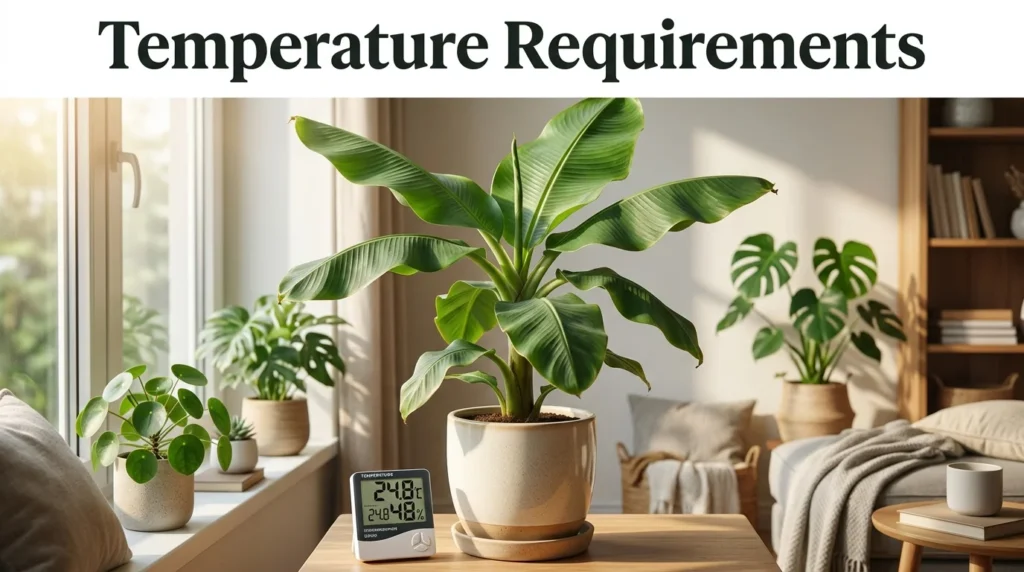
Because indoor palms originate in warm tropical and subtropical zones, they thrive in standard home temperatures ranging between 65°F and 80°F (18°C to 27°C).
Keep palms away from sudden temperature swings. Protect them from cold window drafts during winter, exterior entryways, and direct hot air blowing from central heating vents or space heaters. Temperatures dropping below 50°F (10°C) can cause chill damage, resulting in dark, sagging fronds and root shock.
Humidity Control
Low humidity is the primary cause of crispy brown frond tips on indoor palms. While tough varieties like the Lady Palm tolerate dry indoor air, most feathery palms thrive best when relative humidity stays between 50% and 60%.
- Cool-Mist Room Humidifier: Position an ultrasonic humidifier near your palm display for consistent atmospheric moisture.
- Pebble Trays: Set the container on a wide tray filled with pebbles and water. Ensure the pot base rests above the water level on the stones so roots stay dry while water evaporates upward.
- Plant Grouping: Cluster several tropical houseplants together to create a humid microclimate through collective leaf transpiration.
Fertilizer and Nutrients
Indoor palms are slow to moderate growers that require steady micronutrients especially magnesium, manganese, and iron to maintain deep green fronds. Standard plant fertilizers often lack these essential trace minerals, leading to frond discoloration.
- Spring and Summer Feeding: Apply a specialized palm fertilizer containing extra magnesium and micronutrients, or a balanced 10-10-10 liquid fertilizer diluted to half strength, once a month during active growth.
- Autumn and Winter Pause: Pause fertilization completely during late autumn and winter when daylight decreases and plant growth naturally rests.
- Avoid Dry Soil Application: Always moisten the soil mix with clean water before applying liquid fertilizer to protect sensitive root tips from chemical mineral burn.
Maintenance Routine
- Wipe Down Fronds: Dust buildup blocks sunlight and shelters small pests. Gently wipe frond leaflets once a month using a damp microfiber cloth or give the plant a gentle shower with tepid water.
- Trim Dead Foliage: Trim yellow or brown fronds near the base of the stem using sharp, disinfected pruning shears. Never cut off the top growing spear of a single-trunk palm, as this stops all future growth.
- Flush Soil Quarterly: Flush the potting mix with clean, distilled water every three months to leach out accumulated fertilizer salts and tap water minerals.
- Rotate Container Regularly: Turn your pot a quarter-turn every few weeks so all sides receive equal light, keeping the palm growing upright instead of leaning toward windows.
Seasonal Care
Spring and Summer Strategy
As temperatures warm and natural sunlight increases, palms enter their active growth phase. This is the optimal window for repotting root-bound plants into containers 2 inches larger in diameter. Increase watering frequency as soil dries faster, and maintain your monthly feeding routine.
Autumn and Winter Strategy
Shorter winter days slow down plant metabolism significantly. Soil stays wet much longer, so extend the intervals between waterings to prevent root rot. Stop fertilizing entirely, wipe down windows to maximize incoming winter sun, and keep pots away from chilly glass and heating vents.
Common Mistakes
- Over-Potting: Moving a palm into a pot that is too large surrounds the roots with excess, wet soil that takes weeks to dry out, causing root rot.
- Cutting Brown Tips Irresponsibly: Trimming crispy brown leaf tips deep into live green tissue creates a fresh wound that turns brown again immediately. Always leave a tiny margin of brown tissue when trimming.
- Using Pots Without Drainage: Planting directly into decorative containers lacking bottom drainage holes guarantees trapped water and root decay.
- Overwatering in Winter: Maintaining a summer watering schedule during dark winter months suffocates root systems.
- Ignoring Pest Infestations: Failing to check frond undersides allows sap-sucking pests like spider mites to multiply rapidly in warm, dry indoor air.
Troubleshooting Problems
- Crispy Brown Frond Tips: Caused by low relative humidity, dry soil, or mineral buildup from hard tap water. Boost room humidity and switch to filtered water or rainwater.
- Overall Leaf Yellowing: Usually indicates overwatering, poor drainage, or a severe lack of nitrogen and iron. Check soil wetness and evaluate root health.
- Speckled Yellow Leaves and Fine Webbing: Clear signs of spider mites, which thrive in warm, dry conditions. Treat by washing fronds thoroughly with insecticidal soap or diluted neem oil.
- Browning of Lower Old Fronds: Natural aging process if it happens to one lower frond at a time while new growth emerges from the center. Trim old fronds away cleanly.
- Soft, Brown Stem Base: Caused by advanced root and stem rot from prolonged overwatering. Allow the soil to dry thoroughly and treat roots with a gentle fungicide if possible.
Beginner Tips
- Choose the Right Species First: If you are a beginner or live in a low-light space, start with a Parlor Palm or Lady Palm rather than a demanding Majesty Palm.
- The Touch Test: Never water on a fixed calendar schedule. Always push your finger 2 inches into the potting mix to verify it is dry before adding water.
- Use Room-Temperature Filtered Water: Palms are sensitive to fluoride, chlorine, and minerals in tap water. Let tap water sit out overnight or use filtered water to prevent leaf tip burn.
- Expect Slow Recovery: Palms grow slowly compared to other houseplants. When correcting a care mistake, give the plant several weeks to stabilize and push out fresh new growth.
Advanced Expert Recommendations
Take your indoor palm care to an advanced level with these professional horticultural techniques:
- Foliar Micronutrient Spraying: Spray fronds early in the morning with a diluted liquid kelp or micronutrient spray containing chelated iron and manganese. Leaves absorb trace minerals directly, correcting yellowing foliage faster than root feeding alone.
- Soil Acidification for Mineral Absorption: Most indoor palms prefer a slightly acidic soil pH between 5.5 and 6.5. If your tap water is alkaline, add a few drops of organic lemon juice or apple cider vinegar to your watering can once a month to keep soil pH in the ideal range for nutrient uptake.
- Root-Ball Soak for Hydrophobic Soil: Dry peaty soil can become hydrophobic, repelling water so it runs down the inside of the pot without wetting the roots. Solve this by bottom-soaking the pot in a tub of room-temperature water for 30 minutes until the root ball is thoroughly rehydrated.
Conclusion
Mastering the care of a palm indoor plant comes down to understanding its natural environment and providing consistent, thoughtful care. By selecting a species suited to your home’s light levels, planting in a chunky aerated soil mix, and maintaining proper watering and humidity, you eliminate the common stress factors that lead to brown tips and yellowing fronds.
Remember that stability is essential find a bright, draft-free location, establish a reliable care routine, and allow your palm time to settle in. At GrowIndoorly.com, we are dedicated to helping you build a healthy, vibrant indoor green space. Apply these simple, practical strategies today and enjoy the timeless tropical elegance of your palm for years to come.
Knowledge Check
Which part of a palm tree is the central growing point from which all new fronds emerge?
- A) The lateral cambium
- B) The apical bud or spear
- C) The taproot collar
- D) The aerial node
Why is the Parlor Palm (Chamaedorea elegans) considered one of the best choices for indoor beginners?
- A) It requires full, direct afternoon sunlight to survive.
- B) It tolerates lower light levels and adapts well to average home humidity.
- C) It grows several feet each month and needs daily pruning.
- D) It grows completely without water for six months at a time.
What is the most effective way to prevent root rot when watering a potted indoor palm?
- A) Allowing the container to sit in standing water inside the saucer indefinitely.
- B) Watering strictly on a set calendar schedule every morning.
- C) Ensuring the pot has drainage holes and discarding all excess water after drenching.
- D) Using dense, un-aerated clay topsoil from the garden.
Which combination of soil components creates the ideal chunky, well-draining medium for palm roots?
- A) Potting soil, coarse perlite, orchid bark, and horticultural charcoal
- B) Pure peat moss, fine builder sand, and garden clay
- C) Shredded cardboard, topsoil, and heavy compost
- D) Coarse gravel, crushed limestone, and perlite
What is the primary cause of crispy brown tips developing on palm fronds in home environments?
- A) Excessively high humidity levels above 80%
- B) Low atmospheric humidity, underwatering, or hard tap water mineral buildup
- C) Over-fertilizing with organic compost once a year
- D) Keeping room temperatures consistently around 72°F (22°C)
How should you trim fronds that have turned partially brown at the tips?
- A) Cut deep into the healthy green leaf tissue to ensure all brown cells are removed.
- B) Trim only the brown tip while leaving a tiny margin of brown tissue behind.
- C) Chop the entire main trunk in half to restart growth.
- D) Tear the frond leaflets off using your fingers.
Which essential micronutrient deficiency frequently causes yellowing foliage in palms and is often missing from standard indoor plant fertilizers?
- A) Sodium
- B) Magnesium and Manganese
- C) Aluminum
- D) Chlorine
Answer Key
- B
- B
- C
- A
- B
- B
- B
Frequently Asked Questions
Why are the tips of my indoor palm fronds turning brown?
Brown tips are usually caused by low indoor humidity, underwatering, or mineral buildup from hard tap water. Increase room humidity with a humidifier, keep soil consistently moist, and use filtered water or rainwater when watering.
How much light does a palm indoor plant need?
Most indoor palms thrive in bright, indirect light for 6 to 8 hours daily. However, durable species like the Parlor Palm, Kentia Palm, and Lady Palm can adapt well to low or moderate light conditions away from direct windows.
How often should I water my indoor palm?
Water when the top 1 to 2 inches of soil feel dry to the touch for moisture-loving varieties (Areca, Majesty), or when the top half of the pot is dry for hardier species (Parlor, Kentia). Always ensure excess water drains out completely.
Are indoor palms safe for cats and dogs?
Yes! Popular indoor palm varieties including the Parlor Palm, Areca Palm, Lady Palm, and Kentia Palm are non-toxic and completely safe for households with curious pets.
Can I cut off brown fronds on my indoor palm?
Yes, you can trim off completely dead or brown fronds near the base of the stem using clean, sharp pruning shears. If only the tips are brown, trim away the brown portion while leaving a thin brown border so you do not cut into healthy green tissue.



