
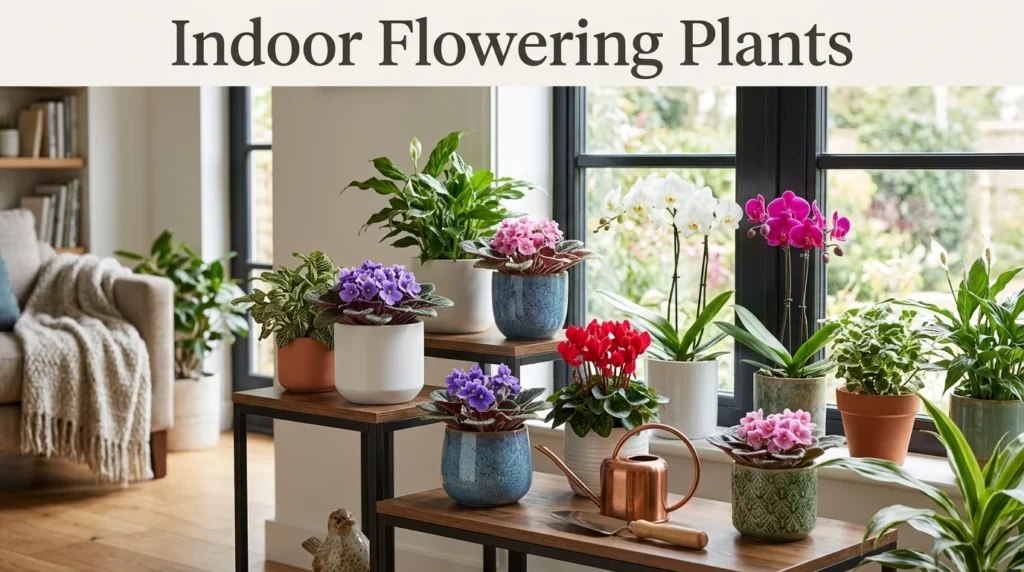
Cultivating an indoor flowering plant brings brilliant color, natural fragrance, and architectural beauty into your home throughout every season of the year.
While traditional foliage houseplants are widely appreciated for their stable green leaves, blooming species introduce dynamic seasonal growth, filling living spaces with vibrant petals when given proper environmental triggers and attentive care.
Successfully keeping your indoor flowering plant blooming repeatedly requires moving beyond basic houseplant maintenance routines. Flower production is an energy-intensive process driven by optimal light intensity, specific nutrient ratios, gentle night temperature drops, and seasonal rest periods. When ambient light levels drop too low or nitrogen levels are too high, plants stall, producing dense green leaves without setting flower buds.
By matching natural light exposure, substrate aeration, phosphorus-rich feeding schedules, and humidity levels to each species’ native origin, even beginner gardeners can maintain long-lasting blossoms. Selecting the ideal indoor flowering plant for your specific home environment ensures consistent flower production while preventing common care mistakes like premature bud drop and root rot.
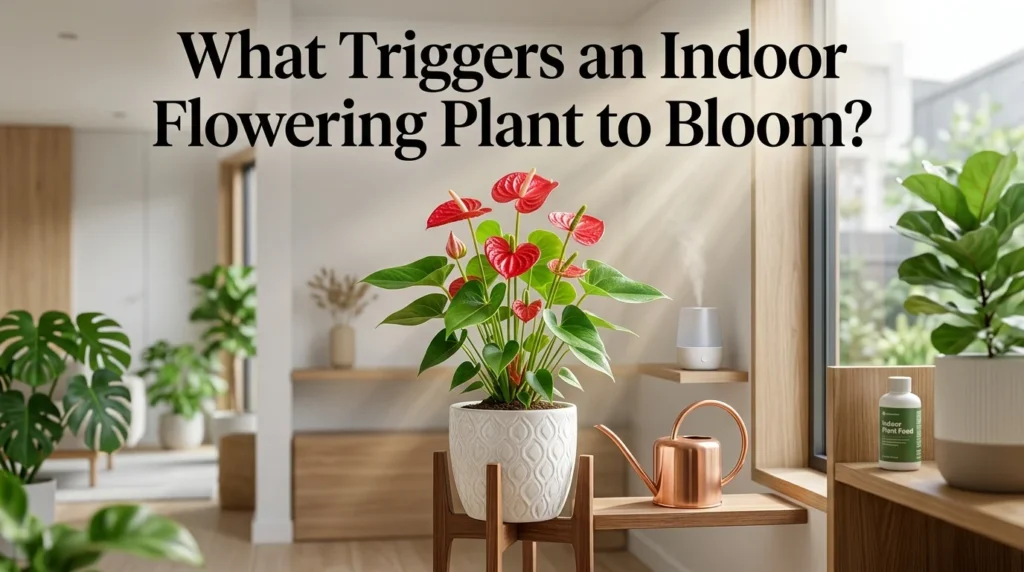
What Triggers an Indoor Flowering Plant to Bloom?
Understanding plant physiology helps indoor gardeners encourage reliable blooming cycles. Unlike outdoor garden plants that respond to natural seasonal changes, an indoor flowering plant relies on controlled indoor environments to trigger flower bud initiation.
Key biological triggers for indoor blooming include:
- Photoperiodism (Day Length): Some species require specific ratios of light and uninterrupted darkness to set buds. Short-day plants like Christmas Cacti (Schlumbergera) and Poinsettias require 12 to 14 hours of continuous darkness in autumn to form buds.
- Light Intensity and Quality: Photosynthesis generates the carbohydrates needed to build and sustain flowers. Without sufficient foot-candles of bright indirect or full-spectrum LED light, plants conserve energy and refrain from flowering.
- Phosphorus and Potassium Ratios: High nitrogen fertilizers promote leafy vegetative growth at the expense of flowers. Higher phosphorus (P) and potassium (K) levels signal the root system to support flower formation.
- Temperature Fluctuations: A slight drop in night temperatures (5°F to 10°F lower than day temperatures) mimics natural forest understories, prompting species like Orchids and African Violets to bloom.
Top Indoor Flowering Plants for Every Experience Level
Selecting the right blooming houseplant depends on your window orientation, home humidity, and available time for plant care.
| Plant Common Name | Botanical Name | Bloom Season / Frequency | Light Requirement | Care Difficulty | Defining Feature |
| Peace Lily | Spathiphyllum | Spring & late summer | Low to medium indirect | Beginner | Architectural white spathes; excellent air purification |
| African Violet | Saintpaulia | Continuous (year-round) | Bright indirect (no direct sun) | Beginner–Intermediate | Velvety leaves with purple, pink, or white flowers |
| Moth Orchid | Phalaenopsis | Winter to early spring | Bright indirect light | Intermediate | Long-lasting blooms that endure for 2 to 3 months |
| Anthurium | Anthurium andraeanum | Continuous under good light | Bright indirect light | Beginner–Intermediate | Glossy red, pink, or white heart-shaped waxy spathes |
| Christmas Cactus | Schlumbergera x buckleyi | Late autumn to winter | Medium to bright indirect | Beginner | Cascading flattened stems with vibrant tubular flowers |
| Clivia | Clivia miniata | Late winter to spring | Medium indirect light | Intermediate | Bold clusters of trumpet-shaped orange or yellow flowers |
| Begonia (Elatior/Reiger) | Begonia x hiemalis | Autumn through winter | Bright indirect light | Intermediate | Rose-like colorful flower clusters on compact foliage |
| Kalanchoe | Kalanchoe blossfeldiana | Winter to spring | Bright direct to indirect | Beginner | Thick succulent leaves topped with dense colorful blooms |
Microclimate Optimization
Unlike traditional garden advice designed for outdoor climate zones, indoor gardeners face unique artificial microclimates created by HVAC units, window orientation, radiator heat, and seasonal indoor air dryness.
- Zone-Specific Window Placement: Clearly mapping out distance from South-, East-, North-, and West-facing windows across different seasons.
- Airflow & Stagnation Control: Explaining how micro-currents from small USB fans prevent fungal spores (like powdery mildew and botrytis) on delicate flowering buds and dense climbing vine canopies.
- Humidity Buffering: Demonstrating how grouping plants with similar transpiration rates creates a natural self-sustaining humidity pocket within living rooms and office spaces.
This microclimate angle reinforces GrowIndoorly.com’s brand promise: delivering practical, indoor-first horticultural expertise tailored specifically for modern home environments.
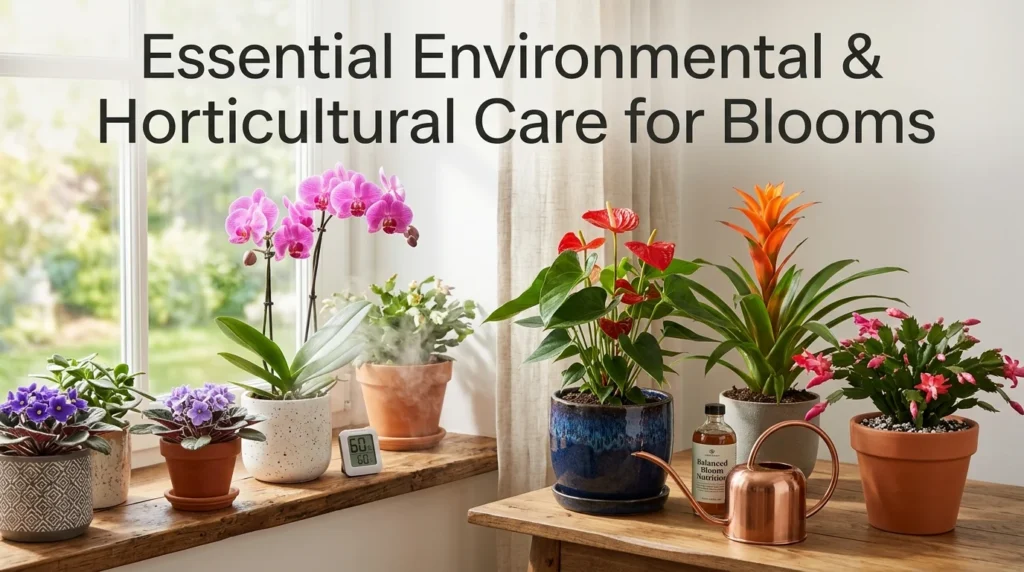
Essential Environmental & Horticultural Care for Blooms
Keeping a flowering houseplant healthy requires attention to five core horticultural pillars.
1. Light Requirements & Placement
Light is the main fuel source for flower development. Placing a flowering plant in a dark hallway almost guarantees it will stop blooming.
- Bright Indirect Light: Position plants within 2 to 4 feet of an East-facing window or slightly set back from a West- or South-facing window. Target 1,500 to 3,000 lux for optimal bud development.
- Grow Lights: Full-spectrum LED grow lights positioned 10 to 18 inches above the canopy for 12 to 14 hours daily work exceptionally well for African Violets and Anthuriums.
2. Custom Soil Mixes and Root Aeration
Flowering plants require excellent root aeration. Dense, waterlogged soil causes root rot, which destroys delicate feeder roots and causes developing buds to blast (drop off before opening).
- Standard Blooming Foliage Mix: Combine 50% high-quality peat coir potting soil, 30% perlite, and 20% orchid bark.
- Orchid Substrate: Use 80% coarse fir bark, 10% sphagnum moss, and 10% horticultural charcoal for epiphytic roots.
3. Balanced Hydration and Water Quality
- Moisture Levels: Most flowering species prefer consistent, light moisture during active blooming. Allow the top 1 to 2 inches of soil to dry between waterings, but never let root balls dry out completely while holding buds.
- Avoid Wetting Foliage & Petals: Water directly onto the soil or bottom-water using saucers. Water trapped on fuzzy leaves (like African Violets) or delicate petals causes fungal leaf spots and flower rot.
4. Humidity and Temperature
- Humidity: Maintain 50% to 60% relative humidity. Dry indoor air from winter heating vents causes flower buds to brown and drop off prematurely.
- Temperature: Ideal daytime temperatures range between 68°F and 78°F (20°C–26°C). Avoid placement near drafty exterior doors or direct air conditioner streams.
5. Specialized Blooming Nutrients
- NPK Ratio: Switch from high-nitrogen fertilizers to a balanced or bloom-boosting formula (such as NPK 10-30-20 or 5-10-5) during spring and summer.
- Application: Apply liquid fertilizer diluted to half-strength every 2 to 3 weeks while the plant is actively growing or setting buds. Stop fertilizing during winter dormancy.
How to Trigger Reblooming in Phalaenopsis Orchids
Moth Orchids are popular blooming houseplants that can rebloom annually with a simple post-flower care routine.
1.Prune the Old Flower Spike:Wait until all flowers naturally fade and drop off.
Using sterilized pruning shears, cut the spent flower spike back to 1 inch above the node closest to the base, or just above the second node from the bottom to encourage a secondary branch.
2.Provide Bright Indirect Light:Move to a spot near an East or South window with sheer curtains.
Ensure the plant receives high-quality indirect light so the thick leaves remain firm and medium-green.
3.Introduce Autumn Temperature Drops:Expose the plant to cooler night air in early autumn.
Expose the orchid to night temperatures around 55°F to 65°F (13°C–18°C) for 3 to 4 weeks. This temperature shift signals the plant to produce a fresh flower spike.
4.Feed with Orchid Fertilizer:Use half-strength bloom fertilizer every two weeks.
Apply a specialized orchid fertilizer weekly during active leaf growth to rebuild carbohydrate reserves for the upcoming bloom.
Diagnostic Troubleshooting Table for Blooming Plants
Use this diagnostic chart to identify stress symptoms, address root causes, and restore flower production:
| Problem | Cause | What to Check | Solution |
| Plant produces lush green leaves but zero flower buds | Excess nitrogen fertilizer or insufficient light intensity | Fertilizer NPK ratio; distance from nearest window or grow light | Switch to a high-phosphorus bloom fertilizer; move plant to a brighter location |
| Flower buds turn brown and drop off before opening (bud blast) | Low humidity, cold drafts, or root drying during bud formation | Nearby heating vents; room humidity; soil dryness depth | Boost humidity using a cool-mist humidifier; avoid drafts; keep soil evenly moist |
| Yellowing lower leaves and mushy, rotting stem base | Overwatering or compacted potting mix causing root rot | Soil wetness 2 inches down; pot drainage holes and tray water | Stop watering; allow soil to dry; repot into a chunky, airy substrate with good drainage |
| Flowers fade very quickly and leaves show brown crispy edges | Direct sun exposure or high room temperatures | Direct sunlight hitting foliage; proximity to radiators | Move plant out of direct sunlight; diffuse window light with a sheer curtain |
| Sticky sap or white cottony spots on stems and flower stalks | Pest infestation (mealybugs or scale insects) | Stem joints, leaf undersides, and flower stalks with a lens | Dab pests with a cotton swab dipped in rubbing alcohol; spray with insecticidal soap |
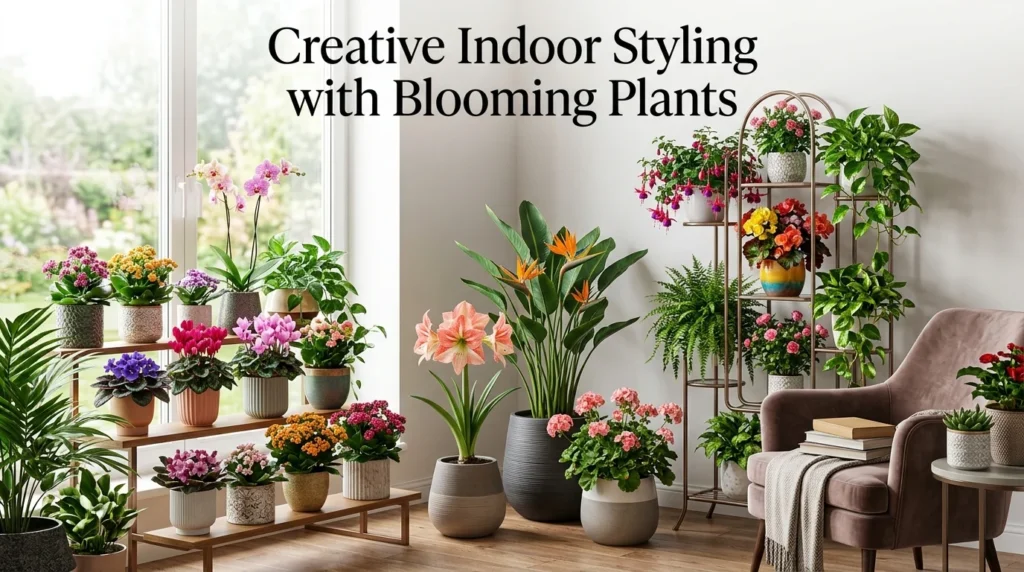
Creative Indoor Styling with Blooming Plants
Incorporating flowering plants into home design adds life and focal points across living spaces:
- Dining Table Centerpieces: Use a low ceramic bowl planted with pink or red Anthuriums as a lasting alternative to cut flower arrangements.
- Vertical Bathroom Shelves: Position Peace Lilies or Boston Ferns on open bathroom shelving to take advantage of natural shower humidity.
- Desk and Office Accents: Place small African Violets or Kalanchoes in decorative pots near office windows for daily color.
Conclusion
Cultivating an indoor flowering plant is one of the most rewarding ways to bring dynamic seasonal color, natural fragrance, and living beauty into your indoor environment. By understanding the core environmental triggers that drive flower bud formation such as sufficient light intensity, balanced phosphorus-rich nutrients, consistent humidity, and subtle temperature variations you can easily guide your plants through repeat blooming cycles year after year.
Success with indoor floral displays relies on balancing both the root system and the canopy. Pairing an airy, well-draining substrate with proper watering practices and routine deadheading prevents common issues like root rot and premature bud drop, allowing your plants to direct maximum energy toward flower production.
At GrowIndoorly.com, our mission is to empower plant enthusiasts with practical, science-backed horticultural guidance. Whether you are encouraging an African Violet to bloom continuously on a windowsill or triggering a Phalaenopsis Orchid to produce fresh autumn spikes, mastering these bloom care fundamentals will ensure your indoor flowering plants remain vibrant, health-filled focal points in your home.
Test Your Knowledge:
Question 1
Which primary plant nutrient is most responsible for supporting strong flower bud development and blooming?
- A) Nitrogen (N)
- B) Phosphorus (P)
- C) Calcium (Ca)
- D) Iron (Fe)
Question 2
What is the main cause of “bud blast,” where flower buds turn brown and fall off before opening?
- A) Giving the plant too much indirect light.
- B) Sudden environmental stress like low humidity, cold drafts, or dry roots.
- C) Pruning dead leaves from the stem base.
- D) Using clay pots instead of plastic pots.
Question 3
Why should you avoid getting water on the leaves of African Violets when watering?
- A) Water causes fuzzy leaves to turn into roots.
- B) Cold water on foliage causes unsightly leaf spotting and fungal fungal rot.
- C) Leaf contact makes the flowers turn blue.
- D) Water dissolves the chlorophyll instantly.
Question 4
What environmental change is necessary to trigger a Phalaenopsis Orchid to produce a new flower spike in autumn?
- A) Keeping the plant in complete dark for 24 hours.
- B) Exposing the plant to a 3 to 4 week drop in night temperatures (55°F–65°F).
- C) Submerging the pot in ice water every day.
- D) Stripping all leaves off the stem.
Question 5
What type of plant light exposure is best suited for most tropical indoor flowering plants?
- A) Harsh, direct midday sunlight for 10 hours.
- B) Complete shade with no light access.
- C) Bright, indirect light near an East or shaded window.
- D) Dark closets with green night lights.
(Answer Key: 1-B, 2-B, 3-B, 4-B, 5-C)
Frequently Asked Questions
Why did my indoor flowering plant stop blooming after I brought it home?
Plants often drop buds when moved from commercial greenhouses to homes due to changes in light intensity, lower humidity, and altered watering routines. Give the plant 2 to 3 weeks to acclimate near a bright indirect window, and maintain consistent moisture.
Are indoor flowering plants safe for households with pets?
Safety varies by species. African Violets and Phalaenopsis Orchids are non-toxic to dogs and cats. However, Peace Lilies, Kalanchoes, and Clivias contain compounds that cause oral irritation or digestive upset if chewed by pets. Keep toxic species out of reach.
How often should I deadhead spent flowers on my indoor plants?
Prune or pinch off faded flowers as soon as they begin to wither. Deadheading prevents the plant from expending energy on seed production, redirecting resources into new leaf growth and secondary flower buds.
Can I use outdoor garden fertilizer for my indoor blooming plants?
Outdoor fertilizers are often too concentrated for container-bound indoor plants and can burn delicate roots with excess salts. Always use a balanced, water-soluble indoor houseplant fertilizer diluted to half-strength.
Why are the flower spathes on my Peace Lily emerging green instead of bright white?
Green spathes occur when a Peace Lily receives insufficient light or excess nitrogen fertilizer. Move the plant closer to a bright, indirect light source and reduce nitrogen feeding to restore white blooms.
How do I increase humidity for flowering plants without causing leaf rot?
Use a cool-mist ultrasonic humidifier placed 3 to 5 feet away from plants, or set pots on a tray filled with pebbles and water (ensuring pot bases sit above the water level). Avoid heavy leaf misting on blooming species.
How long do individual flowers last on indoor plants?
Bloom duration varies by species: Moth Orchid flowers can last 8 to 12 weeks, Anthurium spathes last 4 to 8 weeks, while individual Peace Lily blooms stay vibrant for 4 to 6 weeks.

Megan Foster is the founder and lead writer of GrowIndoorly.com, where she shares practical, easy-to-follow advice for growing healthy indoor plants. She is passionate about helping beginners and experienced plant lovers build thriving indoor gardens with confidence. Megan writes about houseplants, indoor herbs, succulents, hydroponics, grow lights, plant propagation, watering, soil care, and everyday plant maintenance.
She enjoys researching trusted gardening techniques and transforming them into simple, actionable guides that readers can easily apply at home. Her goal is to make indoor gardening more enjoyable and accessible by providing clear, reliable information that helps people keep their plants healthy throughout the year. Whether you’re caring for your first houseplant or expanding your indoor plant collection, Megan’s practical tips are designed to help you grow with confidence.


