Are you struggling to keep your indoor climbing plants vibrant, leafy, and climbing upward instead of looking sparse, leggy, or yellowing? Transforming flat walls into lush green vertical displays seems simple, but these trailing species have specific needs that often trip up home growers.
Caring for indoor climbing plants requires a balance of proper support structures, strategic pruning, and controlled moisture. Without the right setup, even fast-growing vines can quickly lose lower foliage or drop off their trellises.
Beginners frequently face issues like yellow leaves, bare vines near the pot, weak aerial roots, and root rot from poor drainage.
This guide breaks down everything you need to know about indoor climbing plants, covering ideal light levels, custom soil mixes, moss pole setups, and pest prevention.
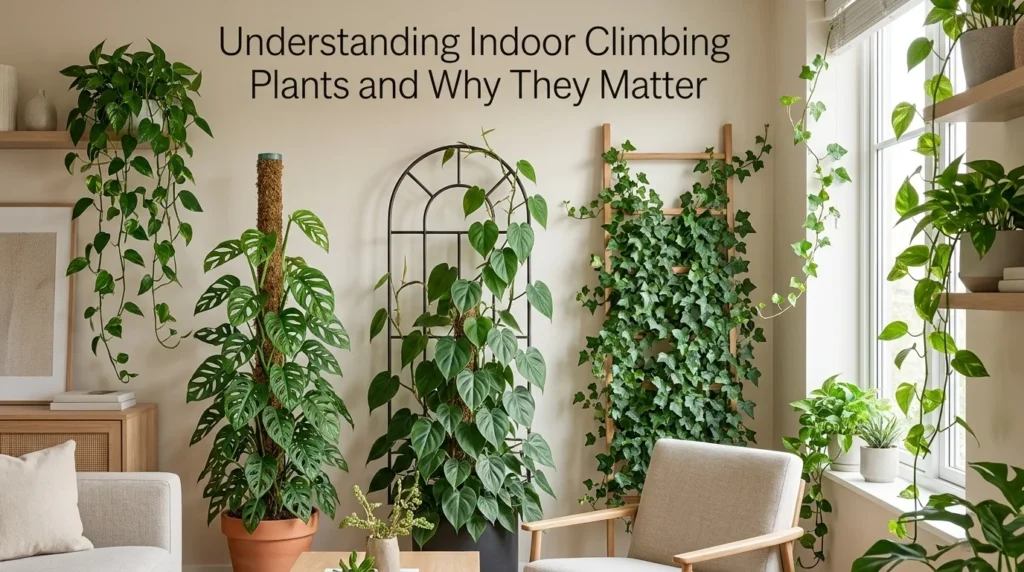
Understanding Indoor Climbing Plants and Why They Matter
Indoor climbing plants are vining or trailing species adapted to climb trees, rocks, and forest structures in their native tropical habitats. Instead of growing stiff, self-supporting trunks, they develop flexible stems and aerial roots or tendrils designed to anchor onto textured surfaces as they reach toward the jungle canopy.
When grown in home environments, these plants maintain their natural climbing habit. Their flexible vines feature node points where both leaves and root initials develop, allowing them to cling to moss poles, wooden trellises, or wall clips. Understanding their forest origins explains why they react poorly to bone-dry indoor air, compact soil, and dark room corners. In nature, their shallow root systems thrive in loose, organic forest debris with excellent airflow.
Adding climbing species to your indoor space is one of the most effective ways to introduce vertical greenery without sacrificing floor area. Their upward growth habit draws the eye skyward, turning bare walls, high shelves, and room dividers into living architectural elements.
Training these plants to climb also yields healthier foliage. As vining tropicals ascend a support structure, their leaves often double or triple in size compared to when they hang downward from a hanging basket. Additionally, propagating climbing vines is remarkably simple. Slicing clean stem cuttings with healthy nodes gives you an easy way to expand your collection or share new starts with fellow plant lovers.
Benefits and Advantages
- Maximizes Vertical Space: Grows upward on trellises or walls, making them ideal for small apartments and compact rooms.
- Larger Leaf Development: Climbing on a solid support encourages species like Monstera and Pothos to produce mature, oversized leaves with dramatic splits or fenestrations.
- Natural Room Dividers: Can be trained across bamboo frames or wire grids to create green privacy screens inside open living areas.
- Simple Propagation: Vine nodes root easily in water or moist moss, allowing for quick multiplication of your favorite plants.
- Low Floor Footprint: Requires small containers relative to the total leafy volume they produce overhead.
Different Methods and Approaches to Growing Indoor Climbers
Moss Poles and Coco Coir Poles
Attaching vines to a central moss pole or coco coir stake mimics the rough bark of forest trees. Moistened sphagnum moss poles provide water and nutrients directly to aerial roots, accelerating leaf maturity and node development.
Wall Trellises and Wire Grids
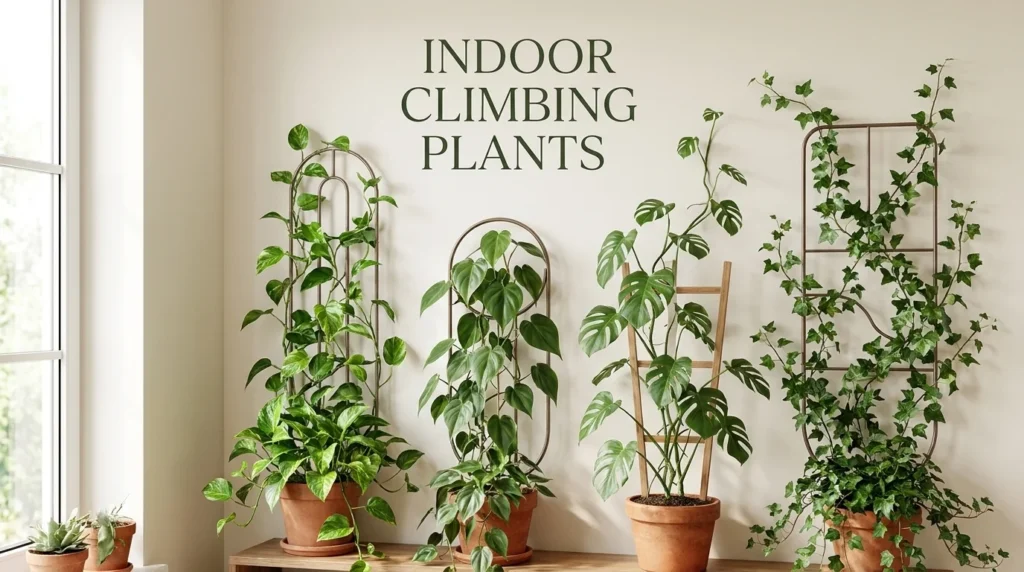
Mounting wooden, bamboo, or metal trellises directly to walls or inside pots creates a flat support surface. Vines are secured using soft plant tape or cable clips, spreading foliage outward to cover large vertical areas.
Self-Adhesive Wall Clips
For minimal structural setups, clear or leaf-shaped plastic wall clips hold individual stems directly against drywall. This approach lets you train vines along window frames, door arches, and ceiling lines.
Semi-Hydroponics with LECA or Mineral Substrates
Growing climbing vines in inert media like Lightweight Expanded Clay Aggregate (LECA) or inorganic mineral blends delivers constant moisture and high oxygen levels to the root system, virtually eliminating soil-borne pests.
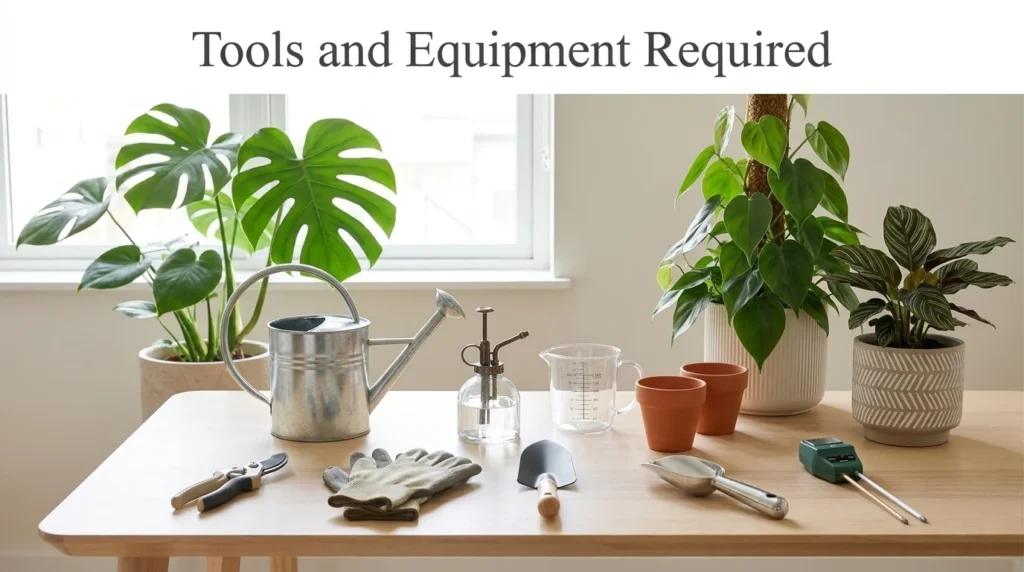
Tools and Equipment Required
- Sturdy Support Structure: Sphagnum moss poles, coir stakes, or wooden trellises sized to match your container.
- Soft Plant Ties or Velcro Tape: Flexible, reusable fasteners that hold stems securely without biting into tender plant tissue.
- Aroid Soil Blend: A chunky, free-draining potting mix packed with orchid bark, perlite, and coarse peat.
- Sterile Shears or Bypass Pruners: Sharp blades for clean pruning cuts and propagation harvests.
- Clear Plant Clips: Small wall-safe guides to direct vines along specific routes.
- Fine-Mist Spray Bottle: Tool for moistening moss poles to encourage aerial root attachment.
Best Indoor Climbing Plants
While many vining plants can trail from shelves, several species truly excel when trained upward on vertical supports:
Golden Pothos (Epipremnum aureum)
The classic beginner vine, featuring heart-shaped green leaves marbled with yellow. Extremely resilient and fast-growing under various light conditions.
Monstera Adansonii (Swiss Cheese Vine)
Famous for its distinct oval leaves filled with natural holes. When given a moist moss pole to climb, leaf size increases dramatically.
Heartleaf Philodendron (Philodendron hederaceum)
Features deep green, velvety heart-shaped leaves on flexible stems. Tolerates lower light levels better than most variegated species.
Rhaphidophora Tetrasperma (Mini Monstera)
Produces small split leaves that resemble a mini Monstera deliciosa. An exceptionally fast climber that quickly fills tall trellises.
Syngonium Podophyllum (Arrowhead Vine)
Starts as a bushy plant before sending out climbing runners. Foliage ranges from deep green to bright pink and cream variegation.
Lighting Requirements
Light intensity determines stem thickness, internode spacing, and leaf coloration in vining tropicals.
- Bright, Indirect Sunlight: Position plants within 3 to 6 feet of an east, west, or shaded south-facing window where they receive strong, filtered light.
- Protection from Direct Sun: Harsh, direct mid-day rays scorch delicate foliage, turning leaf surfaces yellow, brown, or crispy.
- Low Light Symptoms: In dim locations, vines grow “leggy,” producing long bare stems with large gaps between tiny, pale leaves.
- Grow Light Setup: Supplement poor natural light with full-spectrum LED fixtures positioned 12 to 18 inches above the highest leaf, running for 12 to 14 hours daily.
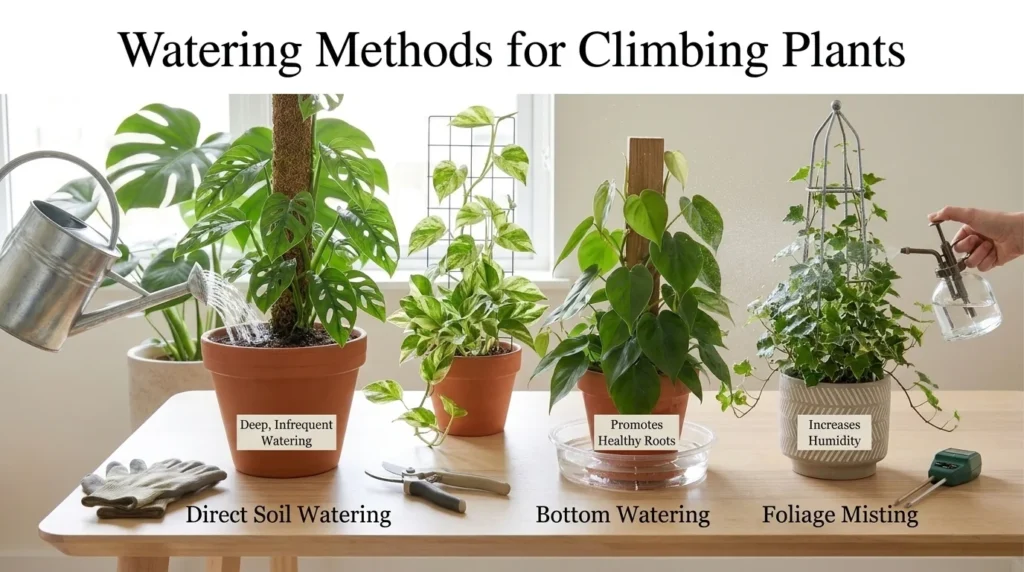
Watering Methods For Climbing plants
Balancing soil moisture is essential for keeping climbing stems fully leafy from base to tip.
The Deep Soak Method
- Check soil depth using a wooden skewer or your finger.
- Water when the top 2 to 3 inches of soil feel completely dry.
- Pour room-temperature water evenly over the soil surface until it flows freely from the bottom drainage holes.
- If using a moss pole, pour water down the top of the pole so the moss absorbs moisture along with the main pot.
- Allow the pot to drain completely for 15 to 20 minutes before returning it to its decorative saucer.
Soil and Growing Medium
Standard houseplant potting soil compacts quickly in deep containers, suffocating aerial and ground roots. Climbing tropicals require a chunky, airy mix that drains excess water instantly while retaining light moisture.
A proven homemade aroid soil recipe includes:
- Chunky Orchid Bark (40%): Creates large air pockets and gives aerial roots textured surfaces to grip.
- Coarse Perlite or Pumice (30%): Prevents soil compaction and ensures rapid drainage throughout the pot.
- Coco Coir or Peat Moss (20%): Holds light moisture and essential nutrients around the base roots.
- Worm Castings (10%): Provides natural organic nutrition and beneficial soil microbes.
Temperature Requirements
Climbing tropicals thrive in warm ambient conditions between 65°F and 85°F (18°C to 29°C).
They are sensitive to cold drafts and rapid temperature drops. Keep pots away from exterior doors during winter, drafty window frames, and cold air conditioning vents. Temperatures below 55°F (13°C) cause dark leaf spots, stunted growth, and sudden leaf dropping along the main stems.
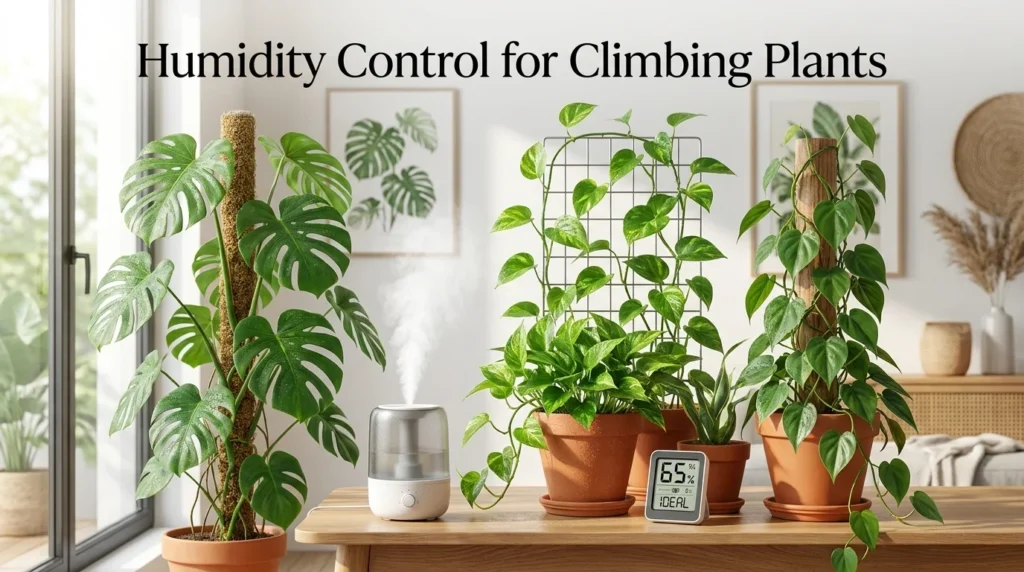
Humidity Control For Climbing Plants
Tropical climbers flourish in elevated humidity levels between 50% and 70%.
Dry indoor air slows growth and causes leaf tips to turn brown and crispy. To boost local humidity:
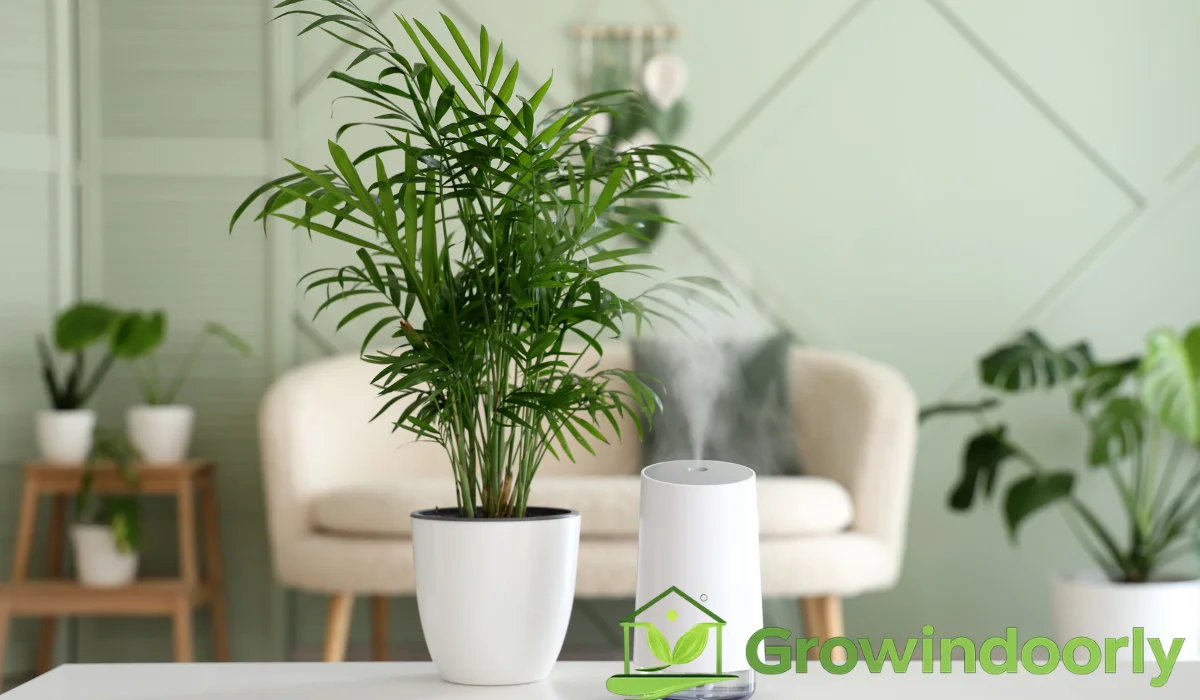
- Position a cool-mist humidifier near your plant display.
- Group multiple tropical plants together to form a microclimate.
- Keep moss support poles damp so aerial roots absorb ambient air moisture.
- Avoid placing climbing setups directly in front of heating vents or radiators.
Fertilizer and Nutrients
Fast-growing vines absorb soil nutrients rapidly during active growth. Regular feeding keeps leaves vibrant and prevents lower foliage drop.
- Spring and Summer Schedule: Feed every 2 to 3 weeks using a balanced liquid houseplant fertilizer (such as 10-10-10) diluted to half strength.
- Autumn and Winter Pause: Reduce feeding to once every 6 to 8 weeks, or stop completely if growth halts during short winter days.
- Flush Soil Periodically: Flush the potting mix with plain water every few months to wash away accumulated fertilizer salts.
Maintenance Routine
- Secure Stems Regularly: As new shoots grow, attach them gently to the support pole using soft plant tape just below a leaf node.
- Prune for Bushier Growth: Snip long, leggy stems just above a leaf node to trigger branching from dormant buds near the base.
- Clean Dusty Foliage: Wipe leaf surfaces monthly with a soft damp cloth to remove dust buildup, optimizing photosynthesis and discouraging pests.
- Repot Upward: Repot every 1 to 2 years, upgrading to a larger container and taller support structure when roots fill the pot or vines outgrow the top of the pole.
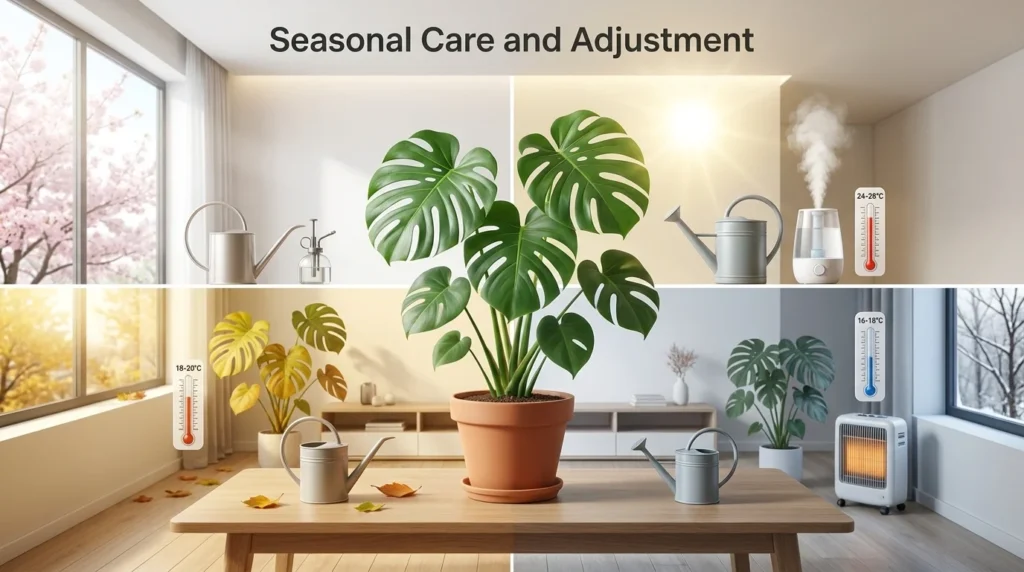
Seasonal Care and adjustment
Spring and Summer Strategy
Warm temperatures and longer daylight trigger rapid vine production. Increase watering frequency as soil dries faster, supply regular half-strength fertilizer, and attach new growth to supports weekly. Spring is also the ideal time to take stem cuttings for propagation or repot root-bound plants into larger containers with taller poles.
Autumn and Winter Strategy
Growth slows naturally as daylight hours drop. Soil takes significantly longer to dry, so extend intervals between waterings. Discontinue high-frequency fertilizing, move plants closer to bright windows to maximize weak seasonal light, and keep foliage away from freezing window panes.
Common Mistakes
- Using Containers Without Drainage: Pots lacking bottom drainage holes hold stagnant water around roots, leading directly to root rot.
- Allowing Vines to Hang Indefinitely: Leaving natural climbing species to dangle without support leads to progressively smaller, un-fenestrated foliage and bare stems.
- Binding Stems Too Tightly: Tying vines tightly with thin wire cuts into soft stem tissue as stems expand, blocking nutrient flow.
- Neglecting Moss Pole Moisture: Allowing moss poles to dry bone-hard prevents aerial roots from embedding, causing the plant to lose structural anchor points.
- Overwatering in Dim Lighting: Combining low light levels with frequent watering keeps soil wet for weeks, suffocating root systems.
Troubleshooting Problems
- Yellowing Lower Leaves: Often caused by overwatering or poor drainage. Check root firmness; trim any mushy, dark roots and repot into fresh, chunky mix.
- Crispy Brown Leaf Margins: Indicates low atmospheric humidity, under-watering, or mineral salt buildup from tap water. Increase local air moisture and soak the soil thoroughly.
- Small, Unsplit Leaves on Mature Vines: A sign that the plant lacks bright light or needs physical vertical support. Mount the vine onto a damp moss pole and move it closer to a bright light source.
- Bare, Leafless Stems Near the Pot Base: Result of low light or natural aging. Cut bare stems back to trigger new basal growth, and propagate the healthy top leafy sections in water.
- Sticky Residue or Webbing on Leaves: Signals sap-sucking pests like spider mites, scale, or mealybugs. Wipe leaves with insecticidal soap or neem oil solution weekly until clear.
Beginner Tips
- Start with a Pre-Made Coir Pole: Coco coir poles are low-maintenance and easy to install, making them ideal for beginners who aren’t ready to keep a live moss pole constantly moist.
- Plant Multiple Cuttings in One Pot: Place 3 to 5 rooted cuttings around the base of a single pole to create a full, bushy specimen right from the start.
- Use the “Node Rule” for Propagation: Ensure every stem cutting includes at least one leaf and one distinct node point where roots can emerge.
- Secure Support Poles Early: Insert your support pole deep into the bottom of the pot during initial planting rather than shoving it into an established root ball later.
Advanced Expert Recommendations
- Construct Self-Watering Moss Poles: Build custom hollow mesh poles filled with live sphagnum moss and an internal wick line to keep support material continuously damp with minimal daily misting.
- Feed Aerial Roots Directly: Spray moss poles with an ultra-diluted foliage fertilizer solution so aerial roots actively absorb water-soluble nutrients as they anchor into the pole.
- Strategic Top-Pruning for Leaf Size: When a vine reaches the top of its pole, prune the growing tip to force energy back into lower nodes, causing emerging side branches to produce even thicker stems and larger foliage.
Conclusion
Mastering indoor climbing plants comes down to providing the physical support, ambient humidity, and root aeration these tropical species enjoy in nature. By mounting vines on moss poles or wall trellises, planting in a chunky aroid mix, and ensuring bright indirect light, you can easily avoid leggy stems and small foliage. These versatile growers reward simple care with bold vertical green displays, lush leaf forms, and easy propagation opportunities. At GrowIndoorly.com, we are committed to providing practical, expert-backed guidance to help your home garden thrive. Apply these climbing plant strategies today and turn your indoor living spaces into vibrant vertical sanctuaries.
Knowledge Check
Question 1:
Why do climbing tropical plants like Monsteras and Pothos produce larger leaves when grown upward on a moss pole?
A) The pole traps excess fertilizer and feeds the leaves directly.
B) Climbing mimics their natural environment, allowing aerial roots to absorb moisture and anchor for support.
C) Vertical growth cuts off water supply to the roots, forcing leaves to swell.
D) Sunlight only reaches plants that are growing vertically.
Question 2:
Which soil component is most essential in an aroid mix to prevent root rot in indoor climbers?
A) Fine garden topsoil to hold maximum moisture
B) Heavy clay to stabilize tall support poles
C) Chunky orchid bark and perlite to ensure rapid drainage and airflow
D) Pure sand to mimic desert conditions
Question 3:
What is the primary cause of long, bare stems with large gaps between tiny leaves (“legginess”)?
A) Insufficient bright light
B) Over-fertilizing during winter
C) Misting the leaves too frequently
D) Using terracotta pots instead of plastic
Question 4:
Which tool is best suited for attaching tender plant stems to a support pole without cutting into stem tissue?
A) Thin metal copper wire
B) Soft velcro plant tape or broad garden ribbon
C) Heavy-duty plastic zip ties pulled tight
D) Standard household adhesive tape
Question 5:
What temperature range is optimal for keeping tropical indoor climbing plants thriving?
A) 40°F to 50°F (4°C to 10°C)
B) 50°F to 60°F (10°C to 15°C)
C) 65°F to 85°F (18°C to 29°C)
D) 90°F to 105°F (32°C to 40°C)
Answer Key:
C
B
C
A
B
Frequently Asked Questions
Why are the leaves on my climbing plant getting smaller as it grows?
Smaller leaves occur when a climbing plant lacks vertical physical support or sufficient bright indirect sunlight. Attaching the vine firmly to a moist moss pole and increasing light levels will encourage larger, mature foliage.
How do I attach my plant stems to a moss pole without damaging them?
Use soft velcro plant tape or broad garden ribbon. Wrap the tie gently around the stem just below a leaf node, securing it to the pole with enough slack for the stem to expand as it grows.
How often should I mist or water a moss pole?
Mist or pour water over your moss pole every 2 to 4 days, depending on your room’s humidity. The goal is to keep the moss lightly damp so aerial roots are encouraged to grow into the material.
Can I train trailing plants to climb wall surfaces directly?
Yes, using clear adhesive wall clips or small wire guides. However, keep in mind that species with strong aerial roots may mark or attach to drywall paint if air humidity is high.
What is the best way to propagate long climbing vines?
Cut long vines into smaller single-node segments, each containing one leaf and one stem node. Root these segments in water or damp sphagnum moss before potting them together around a support pole.