
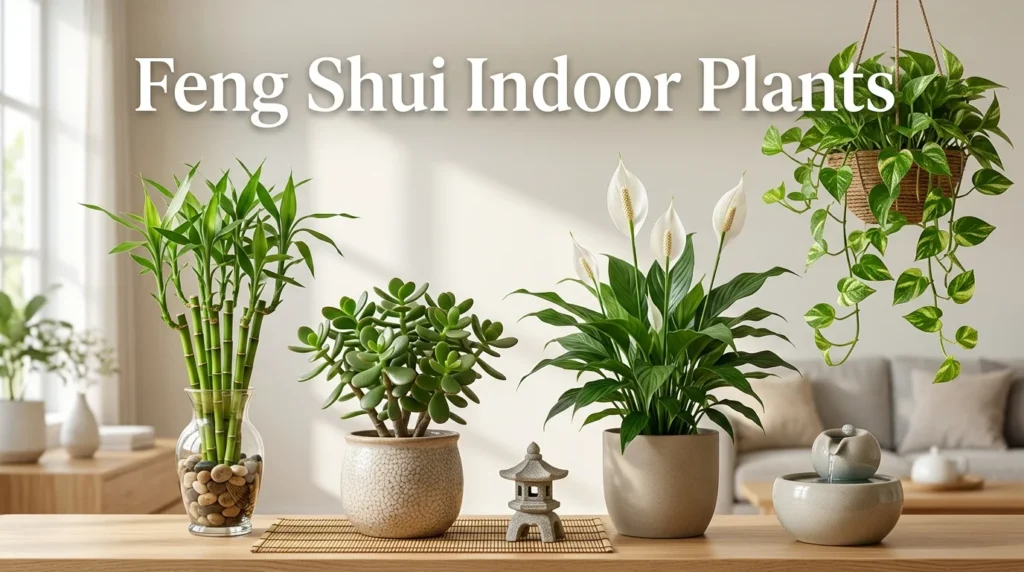
Integrating feng shui indoor plants into your home living space is a traditional method for enhancing natural energy flow, balancing the five environmental elements, and promoting overall well-being. In Classical Feng Shui and Western BTB (Black Sect) traditions, living greenery embodies the Wood element representing growth, vitality, flexibility, and new beginnings.
However, simply buying a vibrant houseplant and setting it on a table is not enough to maximize its positive energy. To enjoy both aesthetic beauty and energetic balance, you must pair the plant’s growth habits with its proper location on the Feng Shui Bagua map while maintaining optimal horticultural care. A dying, dusty, or pest-ridden plant drains energy rather than restoring it.
This comprehensive guide covers the best species for home harmony, Bagua sector placements, practical care routines, and essential troubleshooting tips to keep your indoor garden thriving.
What Defines Feng Shui Indoor Plants?
In spatial design, feng shui indoor plants act as natural energy regulators. They soften harsh architectural angles (known as sha chi or “cutting energy”), purify indoor air, and activate sluggish energy (si chi) in dark corners.
Feng Shui plant selection emphasizes physical form, leaf geometry, and growth direction:
- Round, Soft Leaves: Species with fleshy, rounded, or coin-shaped leaves (Crassula ovata, Pilea peperomioides) attract smooth, harmonizing energy and financial prosperity.
- Upright Growth Habits: Plants that grow vertically toward the ceiling (Dracaena, Snake Plant) lift energy and promote personal growth.
- Smooth Texture over Sharp Spines: Broad, soft foliage is preferred in high-traffic zones like living rooms and entryways. Sharp, spiky plants like desert cacti generate sharp energy and should generally be avoided in relaxing spaces like bedrooms.
Top 10 Feng Shui Indoor Plants and Their Energies
Selecting the ideal plant requires matching its symbolic energy and horticultural needs with your specific indoor environment.
| Plant Common Name | Botanical Name | Feng Shui Meaning & Symbolism | Light Requirement | Best Placement Sector |
| Money Tree | Pachira aquatica | Wealth, prosperity, and financial luck | Bright indirect light | Southeast (Wealth Sector) |
| Jade Plant | Crassula ovata | Abundance, friendship, and steady success | Direct to bright indirect light | Southeast or East |
| Lucky Bamboo | Dracaena sanderiana | Resilience, flexibility, and balance | Low to bright indirect light | East (Health) or Southeast |
| Peace Lily | Spathiphyllum | Tranquility, harmony, and air purification | Medium to low indirect light | North or West |
| Snake Plant | Dracaena trifasciata | Protective boundary energy and vitality | Low to bright direct light | Entryway or Near Windows |
| Rubber Tree | Ficus elastica | Financial growth and clearing sharp energy | Bright indirect light | Southeast or Entryways |
| Boston Fern | Nephrolepis exaltata | Softening sharp angles and vitality | Medium indirect light | South or High Shelves |
| Pothos | Epipremnum aureum | Ease, adaptability, and clearing stagnation | Low to bright indirect light | Dark corners or Top Shelves |
| Chinese Money Plant | Pilea peperomioides | Renewal, clarity, and wealth balance | Bright indirect light | Southeast or Desk Area |
| Orchid | Phalaenopsis | Love, fertility, and noble relationships | Bright indirect light | Southwest (Relationships) |
Bagua Map Placement Guide for Indoor Plants
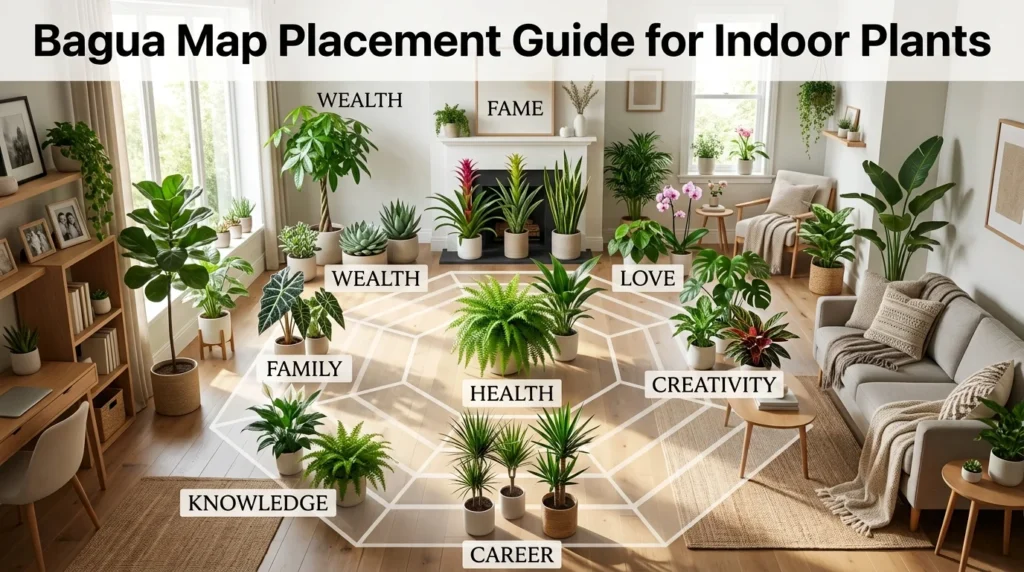
The Bagua Map is the energy grid used in Feng Shui to map out life areas within a home or single room. Aligning plant light requirements with the proper Bagua sector ensures both botanical health and energetic harmony.
1. Southeast Sector (Wealth & Abundance)
- Element: Wood
- Recommended Plants: Money Tree (Pachira aquatica), Jade Plant (Crassula ovata), Chinese Money Plant (Pilea).
- Purpose: Stimulates financial accumulation and personal growth. Place near bright, indirect light sources to keep foliage vibrant.
2. East Sector (Health & Family)
- Element: Wood
- Recommended Plants: Lucky Bamboo (Dracaena sanderiana), Boston Fern, Peace Lily.
- Purpose: Fosters family harmony, physical vitality, and healing energy. Ensure medium indirect light levels to prevent scorched leaf margins.
3. South Sector (Fame & Reputation)
- Element: Fire (Wood fuels Fire in the elemental cycle)
- Recommended Plants: Upright Snake Plant, Fiddle Leaf Fig (Ficus lyrata).
- Purpose: Enhances clarity, social recognition, and self-expression. Position plants where they catch bright, ambient natural light.
4. Entryway & Front Door (The Mouth of Chi)
- Recommended Plants: Pair of Jade Plants or Snake Plants flanking the interior entrance.
- Purpose: Welcomes fresh energy into the home while acting as a protective filter against negative external energy.
Essential Horticultural Care & Maintenance
In Feng Shui practice, an unhealthy plant yields stagnant or negative energy (sha chi). Keeping foliage lush, clean, and vibrant requires strict attention to core plant care principles.
1. Light Quality and Microclimate Placement
Match light demands to room exposure:
- Bright Indirect Light (1,000–2,500 lux): Ideal for Money Trees, Jade Plants, and Orchids. Place within 3 to 5 feet of an East- or South-facing window.
- Low to Medium Diffused Light: Suitable for Peace Lilies, Pothos, and Snake Plants. Ideal for dim corners, hallways, and office desks.
2. Soil Substrate & Aeration
Avoid compacted, poorly draining potting soils that cause root decay.
- Standard Foliage Blend: Combine 60% high-quality potting mix, 20% perlite, and 20% orchid bark for aerated root conditions.
- Succulent Blend (Jade Plants): Combine 40% potting soil, 40% coarse pumice or grit, and 20% perlite for fast drainage.
3. Watering Discipline
- The Dry-Out Check: Check moisture levels 2 inches deep before watering. Water deeply until liquid flows from bottom drainage holes, then discard excess tray water after 15 minutes.
- Preventing Water Stagnation: Stagnant water in drainage saucers attracts pests and creates negative energy. Always use pots with bottom drainage holes.
4. Pruning and Foliage Cleaning
- Leaf Dusting: Dust blocks sunlight absorption and disrupts energy flow. Wipe broad leaves monthly with a damp cloth using clean water.
- Pruning Yellow Leaves: Promptly prune away dead, yellow, or damaged leaves with clean pruning shears. Leaving dead foliage on a plant symbolizes decaying energy.
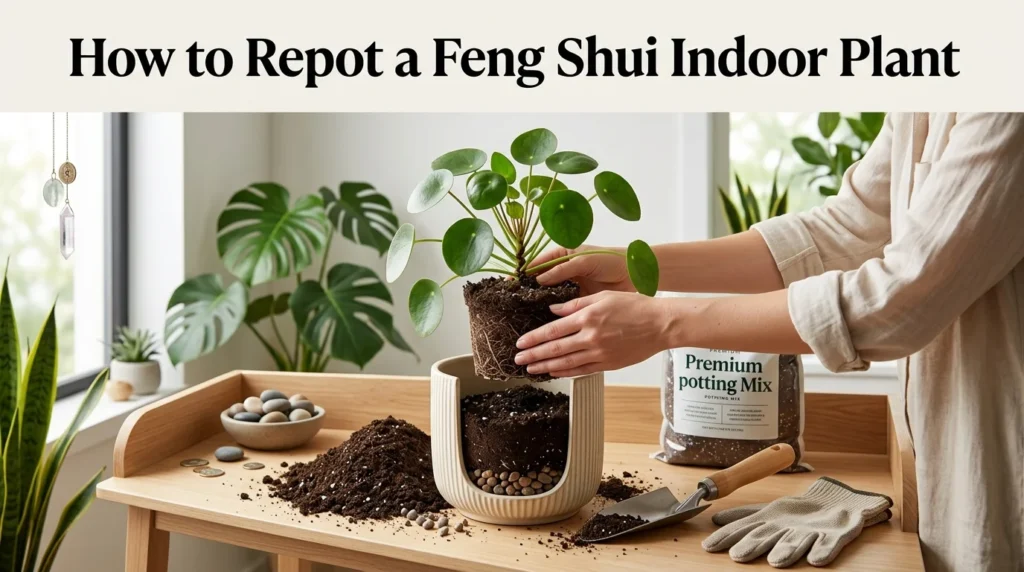
How to Repot a Feng Shui Indoor Plant
Repotting restores root space, provides fresh soil nutrients, and prevents plants from becoming root-bound and stagnant.
1.Identify the Need to Repot:Signs include roots growing out drainage holes or slow growth.
Select a new pot that is 2 inches wider in diameter than the current container, ensuring it has functional bottom drainage holes.
2.Prepare Fresh Substrate:Use a well-draining potting mixture.
Fill the lower third of the new container with fresh, airy potting mix.
3.Transfer the Plant:Handle the root ball gently.
Ease the plant from its old container. Gently loosen bound roots around the outer perimeter without tearing the main root structure.
4.Backfill and Water Thoroughly:Settle the soil and hydrate.
Center the plant in the new pot, backfill with fresh substrate, tap gently to remove air pockets, and water thoroughly until liquid drains completely.
Diagnostic Troubleshooting Table
Use this diagnostic tool to resolve common health issues quickly and keep your indoor plants vibrant:
| Problem | Cause | What to Check | Solution |
| Yellowing lower leaves and soft, mushy stems | Overwatering or waterlogged soil substrate | Check soil moisture 3 inches down; check for blocked drainage holes | Stop watering immediately; let soil dry out; repot into an airy substrate if roots are damaged |
| Brown, crisp leaf tips and leaf curling | Low ambient humidity or dry airflow from heating/cooling vents | Inspect nearby AC or heating vents; check room relative humidity | Move away from drafts; use a cool-mist humidifier or pebble tray to boost humidity |
| Pale, leggy growth with wide spaces between leaves | Insufficient sunlight exposure | Measure distance from window; evaluate daily indirect light hours | Move plant closer to a bright indirect light source or add a full-spectrum grow light |
| Fine webbing or sticky residue on leaf undersides | Insect infestation (spider mites or mealybugs) | Inspect undersides of leaves and leaf-to-stem joints with a magnifying glass | Wipe foliage with a damp cloth; treat thoroughly with insecticidal soap or neem oil |
Conclusion
Integrating feng shui indoor plants into your living space creates a harmonious blend of natural beauty, intentional placement, and practical horticulture. By understanding the symbolic meanings of rounded leaves and upright stems, matching species to the proper sectors of the Bagua map, and providing essential care like airy soil mixes, bright indirect light, and clean foliage you can maintain a vibrant green sanctuary that brings lasting balance and vitality to your home.
At GrowIndoorly.com, we believe that bringing nature indoors should be both rewarding and straightforward. Whether you are placing a Jade Plant in your wealth corner, softening a room’s angles with a lush fern, or simply enjoying the calming presence of a Peace Lily, caring for your plants with purpose ensures they remain healthy, energizing focal points for years to come.
Test Your Knowledge:
Question 1
In Feng Shui theory, what primary element do living indoor plants represent?
- A) Fire
- B) Metal
- C) Wood
- D) Earth
Question 2
Which shape of plant leaf is generally preferred in Feng Shui for promoting smooth, harmonizing energy?
- A) Sharp, spiky needles
- B) Round, soft, or coin-shaped leaves
- C) Jagged, saw-toothed margins
- D) Dry, papery fronds
Question 3
Which sector of the Bagua Map is traditionally associated with wealth, prosperity, and financial growth?
- A) North Sector
- B) West Sector
- C) Southeast Sector
- D) Northwest Sector
Question 4
Why are dying or dead leaves considered detrimental in a Feng Shui indoor space?
- A) They consume too much water from the soil.
- B) They represent declining, stagnant energy (si chi) and should be pruned immediately.
- C) They change the soil pH from acidic to alkaline.
- D) They attract excess sunlight.
Question 5
What is the best watering practice to maintain healthy roots and positive energy flow?
- A) Keeping pots submerged in water trays permanently.
- B) Watering lightly every single morning regardless of soil moisture.
- C) Checking soil moisture depth first and discarding excess tray water after watering.
- D) Watering only when leaves drop off completely.
(Answer Key: 1-C, 2-B, 3-C, 4-B, 5-C)
Frequently Asked Questions
Can I keep plants in the bedroom according to Feng Shui?
While some classical Feng Shui schools suggest keeping plants out of bedrooms due to their active growing energy (Yang), placing one or two air-purifying, low-maintenance species—such as a Peace Lily or Snake Plant—is generally acceptable provided they are kept away from the bed.
Are spiky plants like cacti bad Feng Shui?
Cacti and spiky plants possess sharp sha chi energy. While not inherently “bad,” they are best placed outdoors, on sunny balconies, or near windows to act as protective guards rather than inside relaxing spaces like living rooms or bedrooms.
What should I do if my Money Tree starts losing leaves?
Leaf drop in a Money Tree is typically caused by sudden environmental changes, overwatering, or cold drafts. Move the plant to a spot with stable, warm temperatures and bright indirect light, and allow the top 50% of the soil to dry between waterings.
How many stems of Lucky Bamboo should I grow for good luck?
In traditional Feng Shui, stem counts carry specific meanings: 2 stems represent love and marriage; 3 stems represent happiness, wealth, and long life; 5 stems represent health and balance; and 8 stems represent financial growth and abundance.
Is it better to grow plants in water or soil for Feng Shui?
Both methods work well. Soil represents the Earth element, providing grounding stability. Water culture (like Lucky Bamboo in glass vases) introduces the Water element, which nourishes the Wood element of the plant.
How often should I dust my houseplant leaves?
Wipe broad plant leaves with a damp cloth once or twice a month. Clean foliage improves photosynthesis and keeps energy flowing smoothly throughout your home.
What is the easiest Feng Shui plant for beginners?
The Pothos (Epipremnum aureum) and Snake Plant (Dracaena trifasciata) are the easiest choices for beginners. Both tolerate varying light conditions, recover quickly from occasional missed waterings, and maintain attractive growth with minimal effort.

Megan Foster is the founder and lead writer of GrowIndoorly.com, where she shares practical, easy-to-follow advice for growing healthy indoor plants. She is passionate about helping beginners and experienced plant lovers build thriving indoor gardens with confidence. Megan writes about houseplants, indoor herbs, succulents, hydroponics, grow lights, plant propagation, watering, soil care, and everyday plant maintenance.
She enjoys researching trusted gardening techniques and transforming them into simple, actionable guides that readers can easily apply at home. Her goal is to make indoor gardening more enjoyable and accessible by providing clear, reliable information that helps people keep their plants healthy throughout the year. Whether you’re caring for your first houseplant or expanding your indoor plant collection, Megan’s practical tips are designed to help you grow with confidence.


