
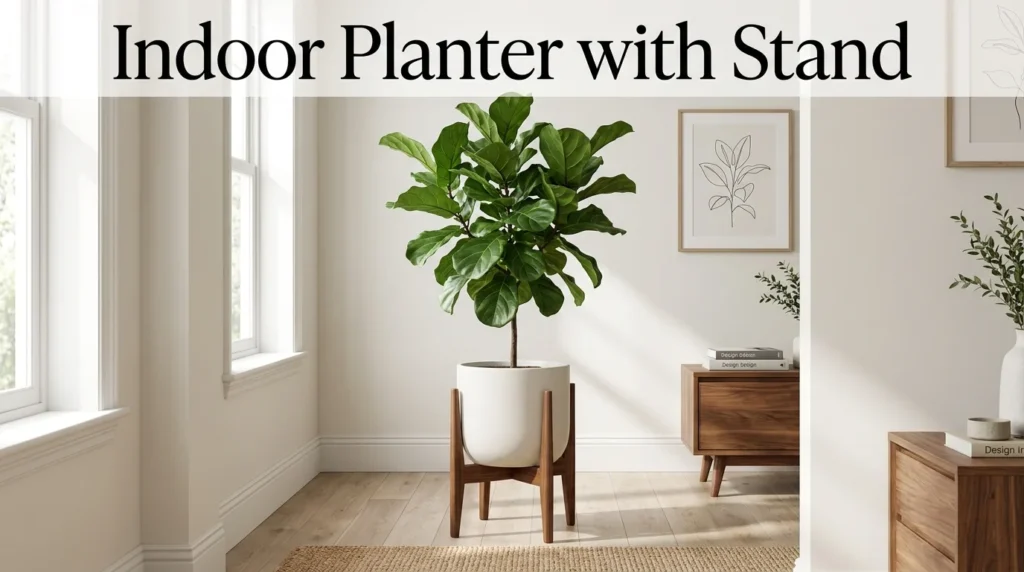
An indoor planter with stand is one of the most effective tools for elevating houseplants both visually and horticulturally. By raising a potted plant off the floor, a stand instantly creates dynamic vertical height, converts trailing foliage or heavy trees into interior focal points, and improves airflow around the base of the pot. Beyond aesthetics, elevating your greenery brings plants closer to windowsill light sources and protects delicate flooring from moisture damage.
Selecting the ideal indoor planter with stand requires balancing design preferences with core horticultural needs. A planter must provide adequate volume, structural stability, and proper drainage, while the stand must match the weight of saturated soil and the growth habit of your chosen plant. From mid-century modern wooden bases and sleek metallic raised pots to multi-tiered plant stands, integrating elevated planters into your home enhances both interior decor and plant vitality.
This comprehensive guide covers material selections, weight stability physics, drainage management, plant pairing strategies, and practical troubleshooting for elevated indoor gardening.
What Is an Indoor Planter with Stand and Why Use One?
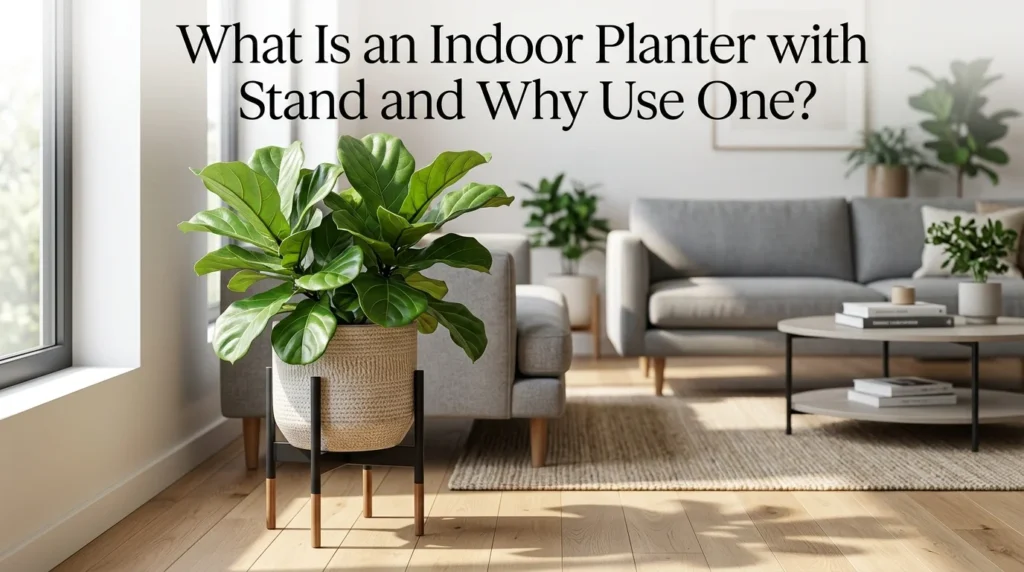
An indoor planter with stand consists of a container (the pot) paired with an elevated support structure (the stand). This combination offers distinct design and plant-health advantages over placing pots directly on the floor:
- Light Optimization: Raising a plant by 12 to 24 inches lifts its canopy into bright window light zones that are often blocked by furniture or low windowsill frames.
- Air Circulation Around the Pot: Elevating the pot permits continuous air movement beneath the base, reducing moisture condensation and preventing cold floor drafts from chilling sensitive root zones during winter.
- Floor Protection: Eliminates direct contact between wet pots and hardwood or carpeted floors, preventing wood warping, water stains, and mold growth beneath saucers.
- Visual Hierarchy & Interior Styling: Adds structural interest by varying plant heights, making small apartments feel roomier and turning trailing vines like Pothos or arching Snake Plants into striking architectural elements.
Types of Indoor Planters with Stands Compared
Choosing the right combination of planter material and stand construction depends on plant size, room aesthetic, and maintenance preferences.
| Stand & Planter Material | Visual Style | Structural Weight Capacity | Ideal Plant Types | Drainage & Water Safety | Pros & Limitations |
| Mid-Century Wood + Ceramic | Natural, warm, Scandinavian / Boho | Medium–High (up to 40 lbs) | Monsteras, Snake Plants, Peace Lilies, Rubber Trees | Use internal nursery pot with saucer | Pros: Timeless aesthetic, stable. Cons: Unsealed wood can warp if exposed to leaks. |
| Metal Frame + Metal Pot | Sleek, industrial, minimalist | High (up to 60+ lbs) | Fiddle Leaf Figs, ZZ Plants, Palms, Dracaenas | Powder-coated metal; check for drainage plugs | Pros: Highly durable, moisture-proof. Cons: Metal can conduct cold; requires internal nursery pot. |
| Rattan / Wicker + Basket | Coastal, organic, tropical | Light–Medium (up to 20 lbs) | Ferns, Pothos, Spider Plants, Calatheas | Requires heavy plastic liner inside basket | Pros: Lightweight, textured finish. Cons: Susceptible to water damage if overwatered. |
| Multi-Tiered Metal Stand | Space-saving, modern vertical | Medium across tiers (10–15 lbs per shelf) | Small succulents, peperomias, trailing vines | Individual drip saucers on each tier | Pros: Holds 3–5 plants in a compact footprint. Cons: Top shelves can become top-heavy. |
| Elevated Terracotta + Iron | Rustic, traditional, terracotta-style | High (up to 50 lbs) | Cacti, Succulents, Herbs, Olive trees | Porous terracotta with bottom drainage hole | Pros: High breathability, prevents root rot. Cons: Heavy; clay salt buildup requires cleaning. |
How to Pair and Assemble an Elevated Planter Setup
Follow this step-by-step assembly process to ensure your elevated planter remains safe, stable, and healthy for your plants:
1.Measure Stand Dimensions and Pot Clearances:Match the pot diameter to the internal width of the stand.
Measure the inner ring or platform diameter of your stand. Ensure your planter pot has 0.5 inches of clearance around the sides so it settles securely without binding or tipping.
2.Use the Cachepot Method (Double-Potting):Avoid double-potting heavy plants directly into stand-only pots.
Keep your plant in its plastic nursery pot with drainage holes. Place a plastic drip saucer at the bottom of the elevated planter, then drop the nursery pot inside.
3.Test Structural Balance and Center of Gravity:Check center of gravity to prevent accidental tipping.
Place the empty planter onto the stand and press down on all edges. Ensure the stand legs rest flat on the floor without wobbling before adding a heavy plant.
4.Attach Felt Pads or Rubber Grips:Prevent floor scratches and dampen vibration.
Apply felt or rubber protective pads to the bottom of the stand legs. This protects hardwood floors, tiles, and carpets while preventing slipping on smooth surfaces.
5.Arrange Plant and Check Light Angle:Position near appropriate window light sources.
Place the assembled setup in its final location. Ensure foliage receives bright, indirect sunlight without resting against hot window panes or heating vents.
Horticultural Care: Substrate, Drainage, and Lighting Balance
Using an indoor planter with stand alters how moisture and light affect your houseplant. Adjust your routine using these fundamental care guidelines:
1. Managing Drainage in Elevated Cachepots
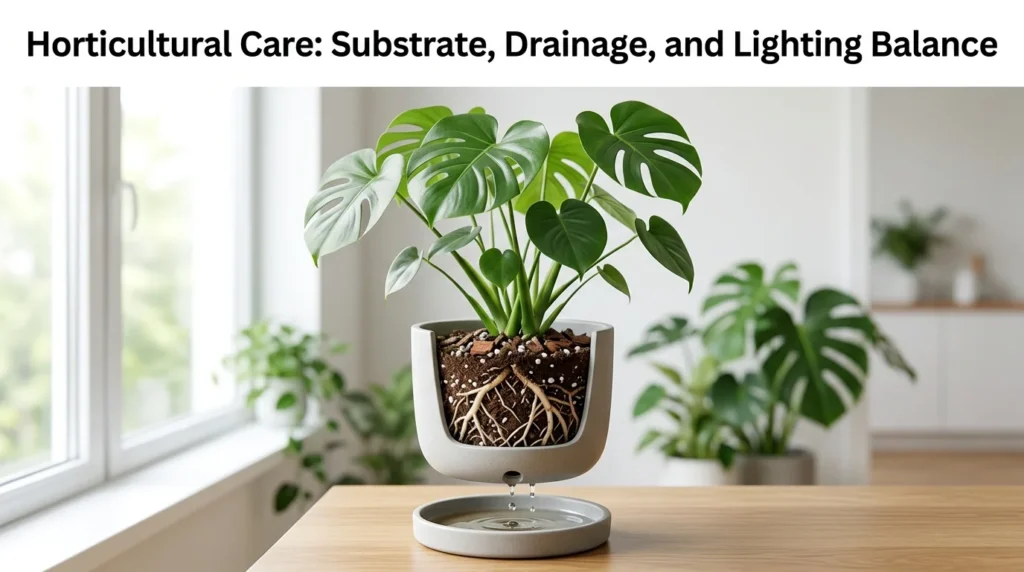
Decorative planters with stands often lack bottom drainage holes to protect floors.
- The Cachepot Solution: Never plant directly into a stand-mounted pot that lacks a drainage hole. Root rot occurs when stagnant water accumulates at the sealed base of the container.
- Watering Protocol: Remove the inner plastic nursery pot, water it thoroughly over a sink or tub, allow all excess water to drain completely for 15 minutes, and then return it to the elevated stand planter.
- Standing Water Check: If you water the plant while inside the stand, check the bottom saucer 30 minutes later and empty any pooled runoff to keep the lower roots aerated.
2. Substrate Aeration and Weight Control
Elevated stands must support saturated soil weight safely without becoming top-heavy.
- Lightweight, Well-Draining Substrate: Mix 40% quality potting soil, 30% coarse perlite or pumice, and 30% orchid bark or coco coir. Perlite and bark reduce overall pot weight compared to heavy garden soil while providing excellent root zone aeration.
- Top-Heavy Prevention: For tall, top-heavy plants like Fiddle Leaf Figs or Palms, add a 1-inch layer of lava rock or coarse gravel to the bottom of the inner nursery pot (below the soil) to lower the center of gravity.
3. Light Placement and Temperature Buffering
- Adjusting Height for Window Light: Raising a plant by 18 inches can move foliage out of deep shadow into bright indirect light. However, ensure top leaves do not end up above the window frame, where light levels drop off sharply.
- Thermal Protection: Elevating plants 6 to 12 inches off cold tile or concrete floors protects sensitive tropical roots from low floor temperatures during winter.
The Microclimate Setup for Elevated Planters
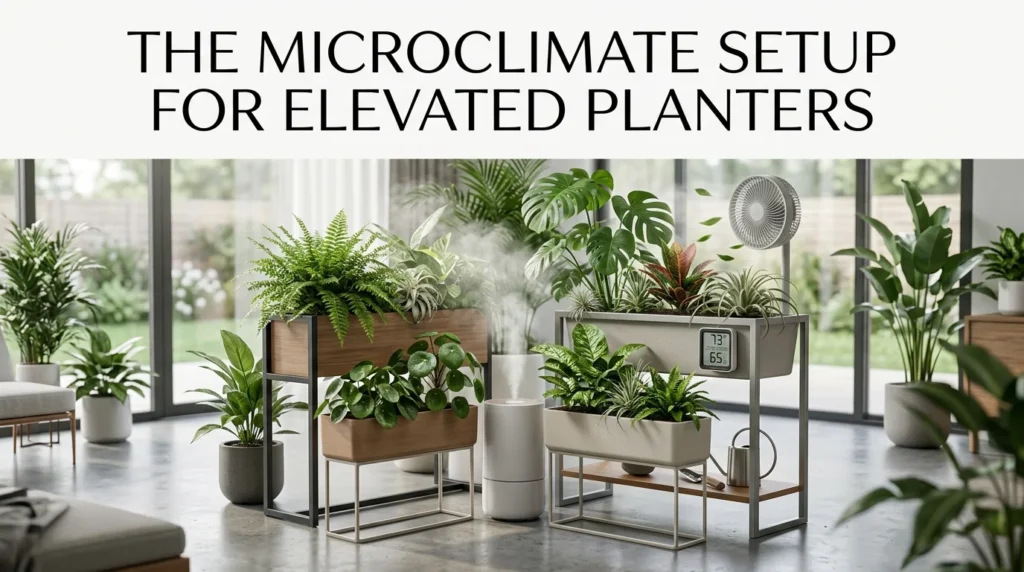
Elevating plants alters their immediate microclimate. Use these strategic adjustments to optimize growth:
- Air Circulation Management: Elevated plants catch more ambient room air movement than floor-level pots. Ensure your setup is not placed directly in the path of cold air conditioning blasts or hot radiator exhausts, which dry out leaf margins.
- Humidity Buffering: Because elevated planters dry out slightly faster due to increased air movement around the pot, group 2 or 3 elevated stands together to build a shared humidity microclimate (45%–60% RH).
- Floor Surface & Load Distribution: Place broad-base wooden or metal stands on sturdy floor surfaces. Avoid narrow, single-stem stands on thick plush carpets where top-heavy plants can easily tip over.
Troubleshooting Elevated Planter & Stand Issues
Diagnose and resolve common setup, stability, and health problems with this reference guide:
| Problem | Cause | What to Check | Solution |
| Plant and stand wobble or tip easily when touched | High center of gravity or uneven stand legs on carpet | Stand leg stability; height-to-width ratio of pot | Switch to a wider, 4-legged base; add heavy gravel to the inner pot bottom |
| Foliage turning yellow with soft stems (Root Rot) | Water pooling in the bottom of a sealed elevated cachepot | Check bottom of outer decorative planter for standing water | Empty pooled water immediately; allow nursery pot to dry out completely before returning to stand |
| Wooden stand legs warping, cracking, or showing white mold | Overflow water leaking from pot onto wood joints | Inspect outer planter base and internal saucer for cracks | Use a seamless plastic liner inside the planter; wipe wooden legs dry immediately after watering |
| Leaves curling or crisping on elevated plant | Increased airflow drying out soil faster than floor-level pots | Soil moisture depth at 2 inches | Increase watering frequency slightly; check that the stand is not near a heating vent |
| Floor scratching or ring stains under stand legs | Unprotected metal or wooden leg bases contacting flooring | Inspect leg bottoms for missing rubber/felt feet | Install thick adhesive felt or rubber furniture pads to the bottom of all stand legs |
Conclusion
Elevating houseplants with an indoor planter with stand enhances room decor while lifting leaves into bright, indirect sunlight.
Using internal nursery pots and saucers inside cachepots prevents standing water accumulation, protecting root systems from decay.
Well-aerated soil blends rich in perlite and bark support stable root growth while keeping elevated containers lightweight and balanced.
Integrating raised planters creates a thriving indoor sanctuary that protects flooring and elevates your home’s natural aesthetic.
Test Your Knowledge:
Question 1
What is the primary horticultural benefit of using an indoor planter with a stand?
- A) It makes the soil turn purple.
- B) It elevates foliage into better window light and improves air circulation around the pot.
- C) It eliminates the need to ever water the plant.
- D) It prevents pests from flying.
Question 2
Why is the “cachepot method” (double-potting) recommended for elevated decorative planters that lack drainage holes?
- A) It allows you to water plants with hot tea.
- B) It prevents water from pooling at the sealed base, protecting roots from rot and keeping floors dry.
- C) It makes the plant grow ten times taller in one day.
- D) It turns plastic pots into ceramic.
Question 3
How can you lower the center of gravity on a tall, top-heavy plant placed on an elevated stand?
- A) Add a 1-inch layer of lava rock or coarse gravel to the bottom of the inner nursery pot.
- B) Fill the top of the pot with heavy water.
- C) Cut off all the upper leaves.
- D) Use a paper stand instead of wood.
Question 4
Which soil amendment helps reduce overall pot weight in elevated planter stands while improving aeration?
- A) Heavy outdoor clay.
- B) Fine builder’s sand.
- C) Coarse perlite or pumice.
- D) Crushed concrete.
Question 5
What should you do before placing a wooden planter stand on hardwood flooring?
- A) Soak the wooden legs in water for 2 hours.
- B) Attach adhesive felt or rubber pads to the bottom of the legs to prevent floor scratches and dampness.
- C) Glue the stand to the floor.
- D) Paint the floor with oil.
(Answer Key: 1-B, 2-B, 3-A, 4-C, 5-B)
Frequently Asked Questions
Do indoor plant stands fit any pot size?
No. Plant stands are built with specific diameter openings (typically 8, 10, 12, or 14 inches). Always measure the widest exterior point of your planter pot before purchasing a stand, or choose an adjustable width wooden stand that expands to fit different container sizes.
Can I plant directly into a decorative planter on a stand?
Only if the planter has a functional drainage hole and a matching saucer. If the planter lacks a drainage hole, keep your plant in its plastic nursery pot and use the decorative planter as a cachepot to prevent root rot.
Are wooden plant stands safe for heavy plants?
Solid hardwood stands (such as acacia, oak, or teak) with cross-dowel joints can support 40 to 60 pounds easily. However, lightweight bamboo or thin plywood stands should be restricted to smaller pots weighing under 20 pounds.
How do I clean a metal or wooden planter stand?
Wipe wooden stands with a damp microfiber cloth and dry them immediately to prevent wood swelling. Clean powder-coated metal stands with warm water and mild soap, drying thoroughly to prevent rust at joint welds.
Will placing a plant on a stand help it grow faster?
Indirectly, yes. Elevating a plant often places its leaves in areas with higher light intensity and better air movement, boosting photosynthesis and overall growth rates compared to placement in dark floor corners.
What are the best plants for elevated plant stands?
Popular choices include upright architectural plants like Snake Plants, ZZ Plants, and Fiddle Leaf Figs, as well as cascading trailing plants like Pothos, Heartleaf Philodendron, and Boston Ferns whose foliage can spill over the edges.
How high should an indoor plant stand be?
Most indoor plant stands range from 8 to 24 inches in height. Choose shorter stands (8–12 inches) for large floor trees to maintain stability, and taller stands (18–24 inches) for smaller 6-inch to 8-inch pots to bring them up to eye level.

Megan Foster is the founder and lead writer of GrowIndoorly.com, where she shares practical, easy-to-follow advice for growing healthy indoor plants. She is passionate about helping beginners and experienced plant lovers build thriving indoor gardens with confidence. Megan writes about houseplants, indoor herbs, succulents, hydroponics, grow lights, plant propagation, watering, soil care, and everyday plant maintenance.
She enjoys researching trusted gardening techniques and transforming them into simple, actionable guides that readers can easily apply at home. Her goal is to make indoor gardening more enjoyable and accessible by providing clear, reliable information that helps people keep their plants healthy throughout the year. Whether you’re caring for your first houseplant or expanding your indoor plant collection, Megan’s practical tips are designed to help you grow with confidence.


