
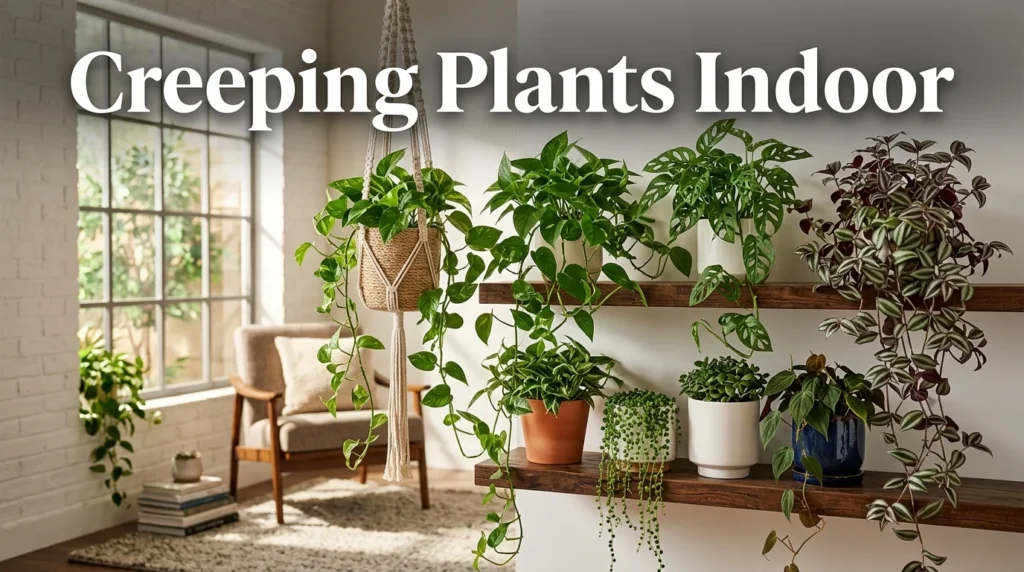
Growing creeping plants indoor is one of the most effective ways to introduce cascading greenery, soften sharp architectural lines, and create dynamic visual height inside your home. Unlike upright houseplants that remain confined to their pots, trailing and climbing vines spill gracefully over shelf edges or climb vertical supports to transform plain walls into living art.
Integrating creeping plants indoor allows plant enthusiasts to maximize vertical space while adding rich organic texture to high ledges, hanging baskets, and bookshelves. Whether you want a low-maintenance trailing vine for a dimly lit corner or a dense mat-forming species for a sunny window sill, these adaptable plants fit effortlessly into various interior design styles.
However, successfully cultivating creeping plants indoor requires an understanding of their unique growth habits, specific lighting thresholds, and structural support needs. Proper pruning, adequate humidity, and suitable drainage are essential to keep trailing stems lush and prevent them from becoming thin, sparse, or leggy over time.
This complete guide covers the top trailing and climbing varieties, essential potting substrates, watering techniques, and practical troubleshooting strategies. By matching the right plant to your home’s environmental conditions, you can easily maintain vibrant, healthy foliage that elevates your indoor living spaces for years to come.
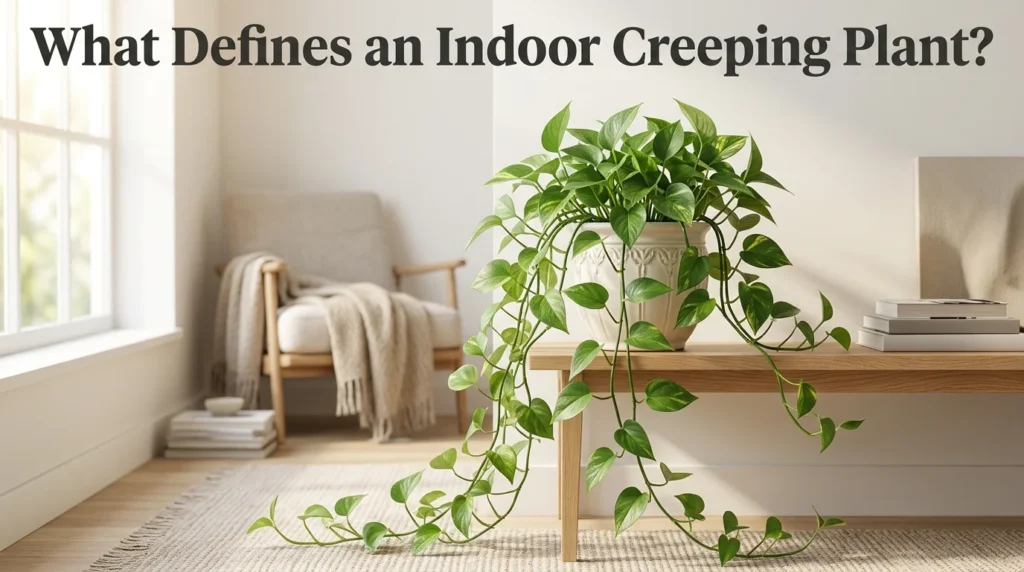
What Defines an Indoor Creeping Plant?
In indoor horticulture, creeping plants are species characterized by flexible stems, stolons (runners), or climbing adventitious roots. In their natural habitat, these plants form living ground covers across tropical forest floors or scale tree trunks to reach canopy light. Indoors, they adapt to three primary growth habits:
- Trailing Spillers: Stems grow outward and cascade downward under their own weight when planted in hanging baskets or placed on high shelves (e.g., String of Pearls, Heartleaf Philodendron).
- Self-Clinging Climbers: Stems produce small aerial roots or adhesive pads that attach directly to textured surfaces like moss poles, coco coir stakes, or wooden trellises (e.g., Creeping Fig, English Ivy).
- Mat-Forming Ground Covers: Stems root at nodes wherever they touch moist soil, creating dense, low-profile carpets across wide planters (e.g., Baby’s Tears, Peperomia prostrata).
Top 10 Creeping Plants Indoor for Every Light Level
Selecting the right creeping plant requires matching your room’s natural lighting with the plant’s physiological needs.
| Plant Name | Growth Habit | Light Requirement | Water Needs | Ideal Placement |
| Creeping Fig (Ficus pumila) | Self-clinging mat/climber | Medium to bright indirect | Keep consistently moist | Moss poles, terrariums |
| Golden Pothos (Epipremnum aureum) | Trailing vine / climber | Low to bright indirect | Top 50% soil dries | High shelves, hanging pots |
| Heartleaf Philodendron (P. hederaceum) | Trailing / climbing vine | Medium to bright indirect | Top 2–3 inches dry | Bookshelves, plant stands |
| String of Pearls (Senecio rowleyanus) | Trailing succulent | Bright direct to indirect | Soil dries completely | Sunny windows, macramé |
| Baby’s Tears (Soleirolia soleirolii) | Mat-forming ground cover | Medium, diffused light | Keep evenly moist | Dish gardens, pot toppers |
| String of Turtles (Peperomia prostrata) | Compact trailing vine | Medium to bright indirect | Top 50% soil dries | Small hanging pots |
| English Ivy (Hedera helix) | Clinging vine / trailer | Bright indirect to cool low | Top 1–2 inches dry | Cool rooms, Wire trellises |
| Satin Pothos (Scindapsus pictus) | Semi-climbing trailer | Medium, indirect light | Top 50% soil dries | Wall sconces, high ledges |
| Creeping Charlie (Pilea nummulariifolia) | Creeping mat / spiller | Bright indirect light | Keep moderately moist | Pedestal planters |
| Tradescantia (T. zebrina) | Fast-spreading trailer | Bright indirect light | Top inch dries | Bright hanging baskets |
Detailed Profiles & Horticultural Requirements
1. Creeping Fig (Ficus pumila)
- Best For: Creating dense green walls or scaling moss stakes.
- Care Overview: Creeping Fig features small, heart-shaped leaves that press flat against climbing surfaces. Unlike hardier vines, Ficus pumila has thin, delicate foliage that browns quickly if the soil dries out completely. Maintain high humidity (above 50%) and keep the potting media uniformly damp.
2. Golden Pothos (Epipremnum aureum)
- Best For: Beginners and lower-light interior rooms.
- Care Overview: Pothos is one of the most adaptable creeping plants indoor options. Its thick stems store water, making it resilient against occasional underwatering. When trained upward on a moss pole, its leaves increase in size; when left to hang, it forms long, slender foliage trails.
3. String of Pearls (Senecio rowleyanus)
- Best For: Bright, dry sunny windows.
- Care Overview: A succulent adapted to arid environments, this plant features spherical, pea-like leaves that store water efficiently. It requires bright light (including 2–3 hours of direct sun) and a gritty, fast-draining cactus mix. Overwatering quickly leads to root rot and squishy foliage.
4. Baby’s Tears (Soleirolia soleirolii)
- Best For: Moist terrariums and soil-covering accent mats.
- Care Overview: Baby’s Tears forms a dense, cushion-like carpet of tiny round leaves. It requires high humidity and consistently moist soil. Never allow the root zone to dry out, and avoid pouring water directly into the center of the crown to prevent stem rot water from the bottom instead.
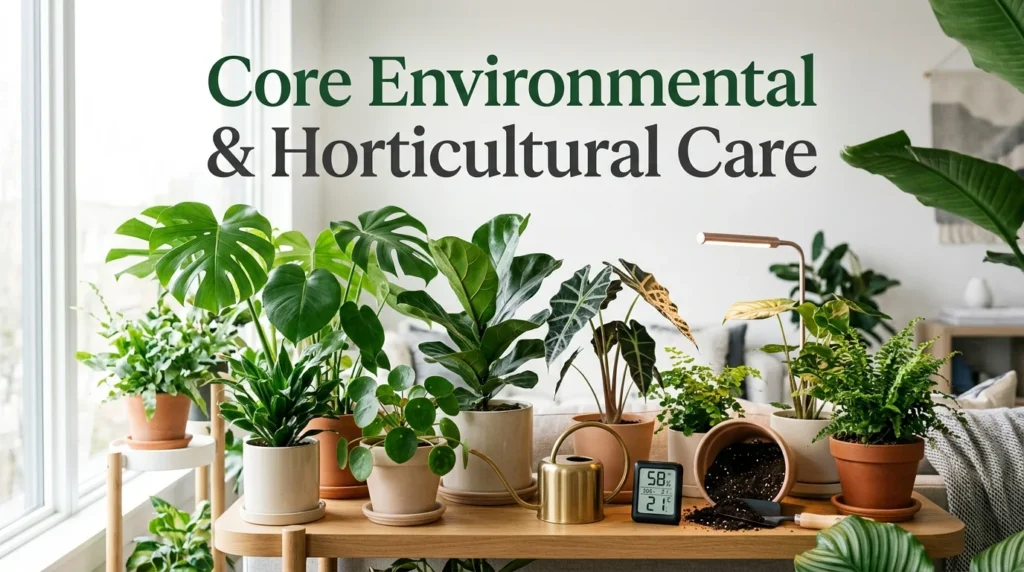
Core Environmental & Horticultural Care
Maintaining vigorous indoor creeping plants requires balancing potting media, moisture, light quality, and nutritional intake.
Light Quality & Placement
- Bright, Indirect Light: Ideal for variegated varieties (Tradescantia, Satin Pothos). Placed within 3 to 5 feet of an unshaded East- or West-facing window.
- Medium, Diffused Light: Suitable for heartleaf philodendrons and creeping figs. Placed 6 to 8 feet back from South/West windows.
- Low Light Tolerant: Golden Pothos and English Ivy survive in dimmer spots, though growth rates slow down and variegation may fade to solid green.
Potting Substrates & Drainage
Creeping plants thrive in light, airy potting mixes that hold moisture without becoming waterlogged.
- Standard Vine Mix: 60% high-quality potting mix, 20% perlite, 20% orchid bark.
- Succulent/Trailing Pearl Mix: 40% potting soil, 40% coarse pumice or grit, 20% perlite.
- Pot Selection: Always choose containers with functional bottom drainage holes. Shallow pots are often better for creeping species, as many have shallow root systems that rot in deep, damp soil cores.
Watering Techniques: The Moisture Gradient
Because creeping vines often run long distances from their root base, hydration must reach all stem tissue efficiently:
- Check Moisture at Depth: Use a wooden dowel or moisture meter inserted 2 to 3 inches into the root zone before watering.
- Avoid Crown Soaking: For dense mat-forming species (Baby’s Tears), bottom-water by placing the pot in a shallow tray of water for 20 minutes to prevent leaf decay.
Pruning, Propagation, and Structural Support
Routine maintenance keeps trailing and climbing vines full, bushy, and structurally sound.
Pruning for Canopy Density
Over time, long trailing vines can become leggy at the top near the soil level as older leaves drop.
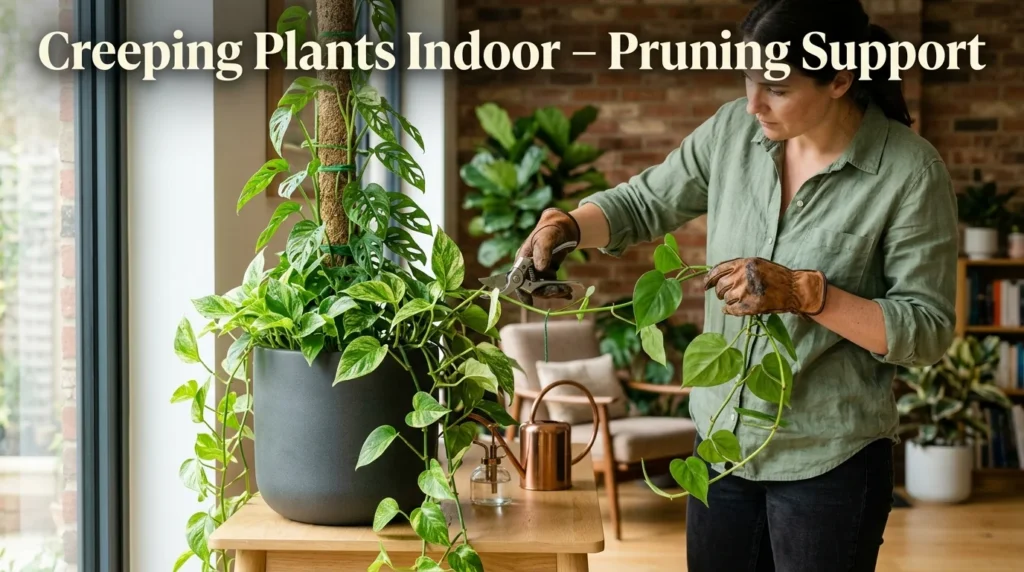
- Leggy Vines: Snip long, thin stems just above a leaf node using sterilized bypass pruners during spring or early summer.
- Node Stimulation: Trimming the terminal tip removes apical dominance, forcing the plant to produce two or more new side shoots near the base.
1.Take Stem Cuttings:Spring or summer recommended.
Select a healthy stem section containing 3 to 5 leaves and at least two visible leaf nodes (where leaves join the main stem).
2.Prepare for Propagation:
Trim off the bottom 1–2 leaves to expose the bare nodes.
3.Rooting Media Placement:
Place the stem in clean water or moist sphagnum moss, ensuring the bare nodes remain submerged or covered.
4.Potting New Growth:
Once roots reach 1 to 2 inches in length (typically 3–4 weeks), plant multiple rooted cuttings back into the top of the parent pot to create a fuller, bushier look.
Vertical Support Structures
Training creeping plants up vertical supports changes both their growth habit and leaf size:
- Moss Poles & Coco Coir Poles: Ideal for aerial-rooting species (Pothos, Philodendron, Creeping Fig). Keep the pole lightly misted so aerial roots penetrate and anchor firmly.
- Wire Trellises & Wall Clips: Ideal for twining vines (English Ivy, Heartleaf Philodendron). Guide stems along clips to frame windows or archways without damaging wall paint.
Troubleshooting Common Creeping Plant Issues
Use this quick troubleshooting reference to diagnose and treat health issues in your creeping houseplants.
Problem: Leggy, sparse stems with wide gaps between leaves
Cause: Insufficient natural light exposure
Check: Distance from nearest window or light source
Solution: Move plant closer to a bright, indirect light source; prune back thin growth

Problem: Yellowing leaves near the soil base
Cause: Overwatering or compacted, poorly draining potting mix
Check: Soil moisture 3 inches down; check if pot drainage holes are blocked
Solution: Allow top 50% of soil to dry out; repot into a lighter mix with extra perlite

Problem: Crispy, brown, curling leaf tips
Cause: Low atmospheric humidity or dry HVAC airflow
Check: Proximity to heating/cooling vents; room humidity levels below 40%
Solution: Move away from drafts; use a cool-mist humidifier or pebble tray

Problem: Fine webbing on stem joints and leaf undersides
Cause: Spider mite infestation (thrives in dry conditions)
Check: Inspect undersides of foliage under bright light
Solution: Wipe leaves with soapy water; treat with insecticidal soap or neem oil
Creative Styling & Interior Design Ideas
Creeping plants indoor offer versatile styling opportunities that go far beyond standard windowsill placement:
- Floating Wall Shelves: Place trailing species like Satin Pothos or Tradescantia on high shelves, allowing green vines to frame books and wall art naturally.
- Living Room Dividers: Train creeping vines up a floor-to-ceiling vertical wire grid to divide open-plan living areas without blocking natural daylight.
- Kokedama Hanging Balls: Wrap root balls of creeping figs or ivy in moss and twine, suspending them at varying heights near bright window frames.
- Plant-Topped Furniture: Position mat-forming ground covers like Peperomia prostrata around the bases of tall indoor floor trees (e.g., Fiddle Leaf Fig) as a living, moisture-retaining mulch layer.

Conclusion
Growing creeping plants indoors offers an exceptional way to bring dimension, movement, and vibrant biophilic texture into your home. By utilizing hanging planters, floating shelves, and vertical climbing supports, these versatile trailing and mat-forming vines turn unused vertical spaces into breathtaking natural focal points. Their unique growth habits allow you to design dynamic interior layouts that standard upright houseplants simply cannot achieve.
Unlocking long-term success with creeping houseplants comes down to matching each species’ growth mechanisms with your home’s natural environment. Providing proper light levels, well-draining soil, deep watering routines, and regular pruning ensures your vines remain dense, healthy, and full from root to tip.
At GrowIndoorly.com, we believe that every home can become a thriving, beautiful green sanctuary with the right guidance. Whether you are cascading a resilient Pothos over a bookshelf or training a Creeping Fig up a moss pole, incorporating trailing greenery into your living space creates a deeply rewarding connection to nature. Embrace the art of growing creeping plants indoors and enjoy the lasting beauty they bring to your space.
Test Your Knowledge: Creeping Plants Care Quiz
Question 1
Why do mature Golden Pothos leaves grow larger when trained upward on a moss pole compared to hanging downward?
- A) Aerial roots receive more fertilizer from the air.
- B) Climbing mimics its natural wild habitat, triggering mature leaf development.
- C) Hanging leaves receive too much gravity, stunting growth.
- D) Water travels faster downward than upward.
Question 2
What is the best watering method for dense, mat-forming species like Baby’s Tears (Soleirolia soleirolii)?
- A) Spraying the foliage with heavy mist twice daily.
- B) Bottom-watering by placing the pot in a shallow water tray to keep foliage dry.
- C) Pouring ice cubes directly into the middle of the stem cluster.
- D) Allowing the soil to dry out completely for two weeks between waterings.
Question 3
Which creeping plant indoor species is a true succulent that requires bright direct light and minimal water?
- A) Creeping Fig (Ficus pumila)
- B) English Ivy (Hedera helix)
- C) String of Pearls (Senecio rowleyanus)
- D) Heartleaf Philodendron (Philodendron hederaceum)
Question 4
How does pruning long, leggy vines help make a creeping plant fuller near its base?
- A) It removes apical dominance, encouraging new side stems to branch out near leaf nodes.
- B) It reduces the plant’s need for sunlight completely.
- C) It forces the plant to shed its remaining leaves.
- D) It changes the plant’s color from green to variegated.
Question 5
What type of pot is generally best for creeping plants with shallow root structures?
- A) A very deep, narrow container.
- B) A container without any drainage holes.
- C) A shallow, wide pot with bottom drainage.
- D) A completely sealed glass jar.
(Answer Key: 1-B, 2-B, 3-C, 4-A, 5-C)
Frequently Asked Questions
Which creeping plant indoor variety is best for low light rooms?
Golden Pothos and Heartleaf Philodendron are the most reliable choices for low-light conditions. While their growth rate will slow down and foliage variegated patterns may become less pronounced, both species maintain their structural health better than most creeping houseplants.
How do I prevent my creeping plants from becoming thin and leggy?
Ensure your plant gets adequate bright, indirect sunlight and prune trailing vines regularly. Pruning trimmed ends forces the plant to break dormant buds near the base of the soil, resulting in a denser canopy.
Can creeping plants damage indoor walls?
Yes, self-clinging vines with strong adhesive roots or tendrils (such as Ficus pumila or English Ivy) can strip paint or leave residue on drywall and wood paneling. Use removable wall clips or a free-standing wooden trellis instead of letting vines attach directly to walls.
How often should I fertilize creeping houseplants?
Feed creeping plants once every 2 to 4 weeks during their active growing season (spring through early autumn) using a balanced liquid houseplant fertilizer diluted to half-strength. Do not fertilize during late autumn and winter when growth naturally slows down.
Why are the leaves falling off the top of my trailing pot?
Top leaf loss is usually caused by inadequate light reaching the top surface of the pot (common when pots sit high on shelves), or overwatering that causes root decay. Ensure light hits the upper soil surface and allow the potting mix to dry properly between waterings.
Is Creeping Fig easy to grow indoors for beginners?
Creeping Fig (Ficus pumila) requires consistent soil moisture and higher humidity than most beginners expect. If the soil dries out even once, it often drops crisp leaves rapidly. Beginners may prefer starting with a Golden Pothos or Heartleaf Philodendron.
How do I report a trailing creeping plant without damaging long vines?
Gently bundle and tie the long vines together with a soft ribbon or hair tie before repotting. Slide the root ball out carefully, place it in the new container with fresh potting mix, untie the foliage bundle, and arrange the vines as desired.

Megan Foster is the founder and lead writer of GrowIndoorly.com, where she shares practical, easy-to-follow advice for growing healthy indoor plants. She is passionate about helping beginners and experienced plant lovers build thriving indoor gardens with confidence. Megan writes about houseplants, indoor herbs, succulents, hydroponics, grow lights, plant propagation, watering, soil care, and everyday plant maintenance.
She enjoys researching trusted gardening techniques and transforming them into simple, actionable guides that readers can easily apply at home. Her goal is to make indoor gardening more enjoyable and accessible by providing clear, reliable information that helps people keep their plants healthy throughout the year. Whether you’re caring for your first houseplant or expanding your indoor plant collection, Megan’s practical tips are designed to help you grow with confidence.


