
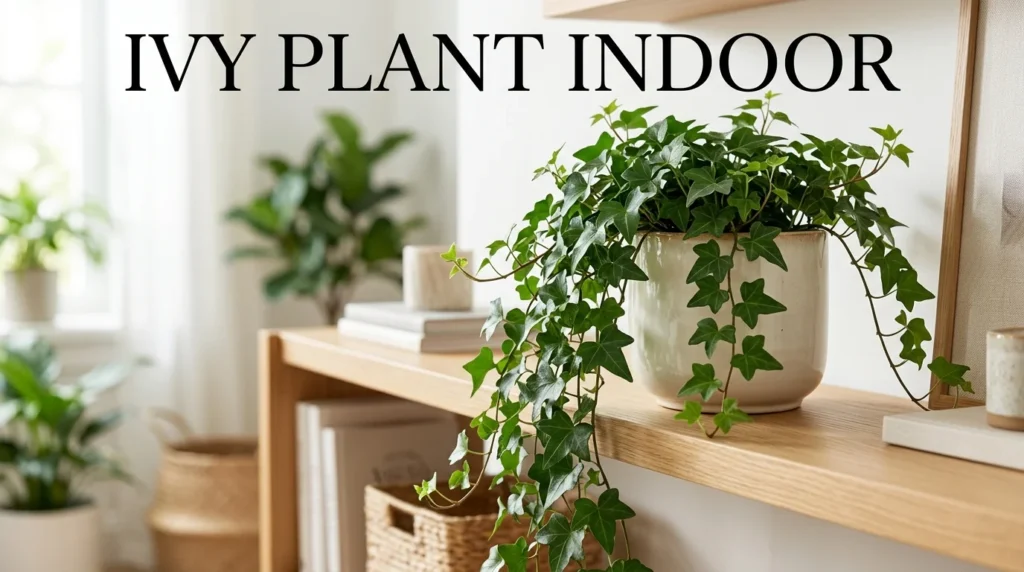
Growing an indoor ivy plant brings timeless elegance, classic trailing foliage, and versatile greenery into homes and offices. Known botanically as Hedera helix (English Ivy) alongside related cultivars, these woody evergreen vines are prized for their adaptability.
While ivy grows vigorously outdoors, keeping an indoor ivy plant healthy requires specific indoor environmental management. Unlike tropical houseplants that thrive in warm, high-humidity air, true ivies prefer cooler temperatures, bright indirect light, moderate humidity, and well-aerated soil.
Proper care for your indoor ivy plant centers on balanced moisture levels and proper foliage maintenance. Allowing the top few inches of soil to dry out between waterings protects delicate root systems from rot, while periodic shower rinses remove dust and keep pests at bay.
This master guide covers cultivar selections, microclimate requirements, watering protocols, propagation steps, pest management, and troubleshooting strategies to keep your vines thriving year-round.
Top Indoor Ivy Varieties and Cultivars
Selecting the right cultivar determines leaf shape, color patterns, and growth rate for your indoor setup. True ivies (Hedera genus) offer diverse options:
| Cultivar Name | Foliage Characteristics | Growth Rate | Best Indoor Placement | Light Requirement |
| ‘Glacier’ (Hedera helix) | Medium lobed leaves with cream-white margins and silver-gray centers | Moderate | Hanging baskets, shelf edges | Bright, indirect sunlight |
| ‘Needlepoint’ (Hedera helix) | Small, sharp, deeply 5-lobed dark green leaves | Fast | Wall trellises, topiary wire frames | Medium to bright indirect light |
| ‘Goldchild’ (Hedera helix) | Grey-green centers bordered by bright yellow to lime-green edges | Moderate | Desk planters, plant stands | Bright indirect light (maintains gold edge) |
| ‘Duckfoot’ (Hedera helix) | Small, rounded 3-lobed leaves resembling duck feet | Compact / Slow | Small desktop pots, terrariums | Medium indirect light |
| Algerian Ivy (Hedera algeriensis) | Broad, large glossy leaves; red-tinged stems | Fast | Large floor pots with climbing poles | Bright indirect light |
Note: While commonly called “Pothos Ivy” or “Swedish Ivy,” species like Devil’s Ivy (Epipremnum aureum) and Swedish Ivy (Plectranthus verticillatus) are not true Hedera ivies, though they share trailing growth habits.
Environmental Requirements for Indoor Ivy Plants
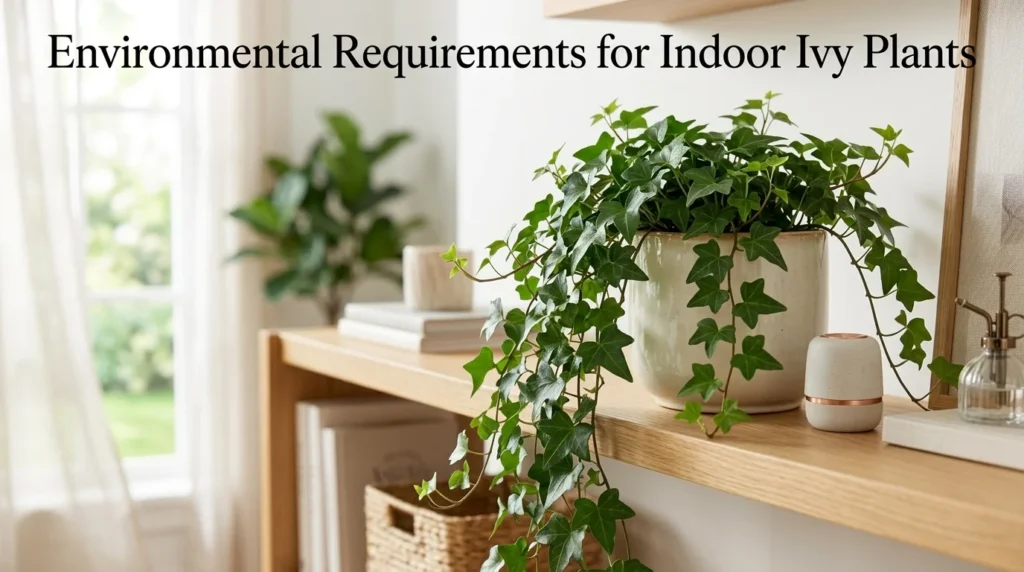
To maintain healthy growth and prevent pest pressure on an ivy plant indoor setup, replicate its natural woodland environment:
1. Light Needs and Placement
- Optimal Light: Bright, indirect sunlight is essential for indoor ivy. A location near an East-facing window or 3 to 5 feet back from a South- or West-facing window provides ideal illumination.
- Variegation Control: Variegated cultivars (‘Glacier’, ‘Goldchild’) require brighter light to maintain their distinct white or yellow leaf patterns. In low light, variegated leaves fade to solid green.
- Artificial Supplemental Light: If natural window light is limited, place ivy under full-spectrum LED grow lights for 10 to 12 hours daily.
2. Temperature and Air Circulation
- Cooler Temperatures: English ivy thrives in cooler indoor temperatures between 50°F and 70°F (10°C to 21°C). It struggles in hot rooms above 75°F (24°C).
- Avoid Heat Vents: Keep ivy plants away from active radiator heating vents, forced-air ducts, and hot appliances. Hot, stagnant air weakens leaf cuticles and attracts spider mites.
- Gentle Airflow: Adequate room ventilation prevents fungal foliar diseases like leaf spot.
3. Humidity Management
- Ideal Range: Indoor ivy prefers moderate to high relative humidity (45% to 65% RH).
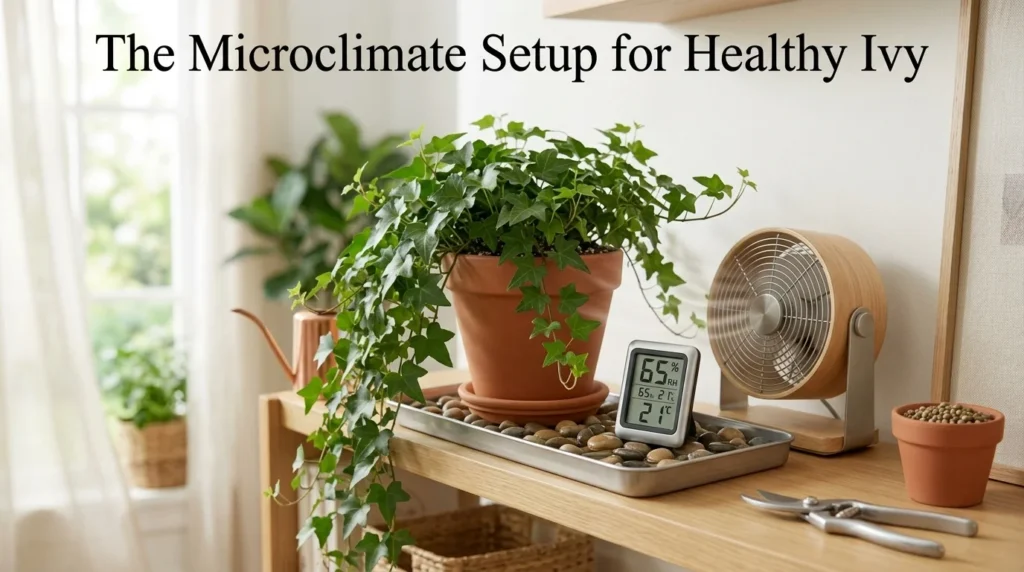
- Preventing Dry Air Stress: Winter indoor heating drops humidity levels drastically. Use a pebble tray with water beneath the pot or run a cool-mist room humidifier nearby. Avoid excessive leaf misting, which can encourage fungal bacterial leaf spots if leaves remain wet for extended periods.
Substrate, Irrigation, and Nutrient Management
Proper soil drainage and watering habits prevent root rot the primary cause of indoor ivy decline.
Potting Mix & Aeration
Indoor ivy requires a light, well-aerated potting media that retains moisture without staying waterlogged:
- Recommended Blend: 50% quality peat or coco coir potting mix, 30% coarse perlite, and 20% orchid bark.
- Container Drainage: Always choose pots with bottom drainage holes. Terracotta or unglazed ceramic pots are ideal because their porous walls allow moisture to evaporate from the root zone.
Watering Protocol
- The Touch Test: Allow the top 1 to 2 inches of soil to dry out completely between waterings.
- Thorough Drenching: Water deeply until excess flows out of the bottom drainage holes, ensuring the entire root ball is saturated.
- Empty Saucers: Never allow the pot to sit in standing water. Empty excess drainage water from saucer trays within 20 minutes to prevent anaerobic root rot.
- Winter Reduction: During winter dormancy, reduce watering frequency significantly as plant growth slows.
Fertilizer Schedule
- Spring & Summer: Feed every 4 weeks with a balanced, water-soluble liquid houseplant fertilizer (e.g., 10-10-10 or 20-20-20) diluted to half strength.
- Fall & Winter: Suspend fertilization completely during late fall and winter when the plant is not actively producing new shoots.
How to Propagate Indoor Ivy Cuttings
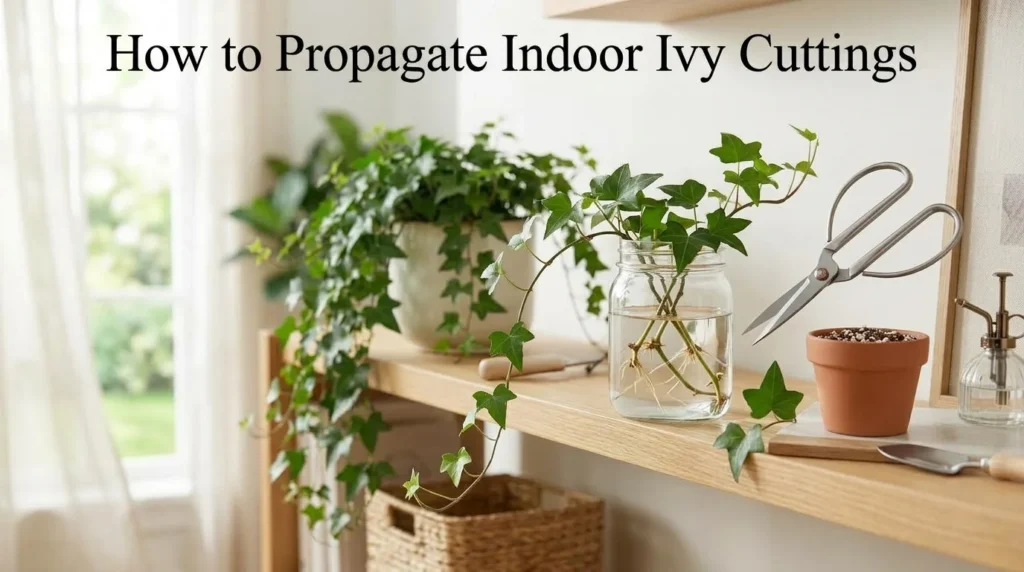
Propagating an ivy plant indoor collection is simple using stem cuttings in water or soil:
1.Select Healthy Parent Vines:Choose vibrant, healthy vine tips with strong leaves.
Locate healthy trailing stems with strong leaves and visible aerial root nodes along the stem.
2.Take 4- to 6-Inch Stem Cuttings:Use clean tools to avoid transmitting plant diseases.
Using sterilized pruning shears or sharp scissors, cut 4- to 6-inch vine segments just below a leaf node.
3.Strip Lower Leaves:Clear the lower nodes where roots will emerge.
Strip off the bottom 2 to 3 leaves, leaving 2 to 4 healthy leaves at the tip of the cutting.
4.Submerge in Water or Soil Mix:Roots form readily in clean water or moist substrate.
Place the stem base in a jar of clean room-temperature water or insert it directly into moist potting mix mixed with perlite. Ensure stripped nodes remain submerged or buried.
5.Provide Bright Indirect Light:Provide indirect warmth and light while roots develop.
Place the cutting in bright, indirect light. Change water weekly. Roots will develop in 2 to 4 weeks, after which water-propagated cuttings can be potted in soil.
The Microclimate Setup for Healthy Ivy
To keep your indoor ivy vibrant and lush, construct a stable microclimate using these three steps:
- Placement Elevation: Hang ivy baskets near bright East-facing windows where cool morning sun warms the foliage without scorching leaves.
- Air Circulation: Use a low-voltage USB fan operating on a low setting in the room to keep air moving gently around the vine canopy, suppressing fungal spores and pest buildup.
- Routine Foliage Washing: Every 4 to 6 weeks, take your indoor ivy to the shower or sink and rinse the leaves with lukewarm water. Washing removes dust buildup, clears stomata for photosynthesis, and physically dislodges early pest colonies.
Troubleshooting Indoor Ivy Pests and Diseases
Diagnose common issues affecting indoor ivy plants with this practical guide:
| Problem | Cause | What to Check | Solution |
| Leaves turning dry, crispy, and brown at edges | Dry indoor air, low humidity, or underwatering | Soil moisture depth; proximity to heating vents | Relocate away from heat sources; increase ambient humidity using a pebble tray or humidifier |
| Fine webbing under leaves; leaves yellow and speckled | Spider mites (Tetranychidae) | Inspect undersides of leaves with a magnifying glass for tiny crawling specks | Spray thoroughly with insecticidal soap or Neem oil every 5 days for 3 weeks; increase humidity |
| Yellowing lower leaves, mushy brown stems | Overwatering and root rot | Soil moisture levels; drainage holes in pot | Allow soil to dry out; trim rotted roots and repot in fresh, well-draining soil with perlite |
| Variegated white/yellow leaves turning solid green | Insufficient light exposure | Light intensity at plant placement location | Move the plant closer to a bright window or add supplemental grow lights |
| Black or dark brown water-soaked spots on leaves | Bacterial leaf spot (Xanthomonas) | Check for wet foliage from frequent misting or poor air flow | Prune infected leaves; avoid wetting leaves during watering; improve air circulation |
Test Your Knowledge: Indoor Ivy Care Quiz
Question 1
Which light condition is best for maintaining bright yellow or white patterns on variegated indoor ivy cultivars?
- A) Deep, dark shade.
- B) Bright, indirect sunlight.
- C) Intense direct midday sun without shade.
- D) Complete darkness.
Question 2
What environmental factor most commonly triggers spider mite infestations on indoor ivy?
- A) Cool temperatures and high humidity.
- B) Hot, dry air and low ambient humidity near heat vents.
- C) Excessive soil fertilizer.
- D) Cold water showers.
Question 3
How much should the soil dry out between waterings for a healthy indoor English ivy plant?
- A) The soil should stay soaking wet at all times.
- B) The top 1 to 2 inches of soil should dry out completely before watering.
- C) The pot should dry out completely into hard dust for two months.
- D) Water only once a year.
Question 4
Why is it important to prune indoor ivy vines periodically?
- A) It turns the leaves blue.
- B) Pruning encourages side branching, creating a fuller, bushier plant while preventing sparse growth.
- C) It stops the plant from absorbing light.
- D) It removes the roots.
Question 5
What should you do if your indoor ivy develops yellow lower leaves and soft, mushy stems?
- A) Add double fertilizer immediately.
- B) Water the plant twice daily.
- C) Check for overwatering, allow soil to dry out, and ensure proper pot drainage.
- D) Put the plant in a closed plastic box.
(Answer Key: 1-B, 2-B, 3-B, 4-B, 5-C)
Frequently Asked Questions
Is an indoor ivy plant toxic to cats and dogs?
Yes. English ivy (Hedera helix) contains triterpenoid saponins, which are toxic to cats and dogs if ingested. Keep trailing vines hung high in baskets or out of reach on top shelves to keep pets safe.
How fast does an indoor ivy plant grow?
Under bright indirect light and optimal temperatures, indoor ivy grows moderately fast, adding 12 to 18 inches of vine growth per year. Growth slows significantly in low-light conditions or during winter.
Why is my indoor ivy dropping green leaves?
Green leaf drop is usually caused by sudden environmental shock, such as exposure to cold window drafts, drastic changes in light levels, or severe soil drying followed by heavy watering.
Should I mist my indoor ivy leaves every day?
Routine misting is not recommended as a primary humidity source because standing water droplets on leaves in stagnant air can encourage bacterial leaf spot. Instead, use pebble trays, group plants together, or run a humidifier.
How do I train indoor ivy to climb a wall or trellis?
Insert a wooden or wire trellis into the pot and gently wrap young trailing vines around the support frame. Secure stems loosely with soft plant ties until aerial roots attach naturally to textured surfaces.
Can indoor ivy grow in low light rooms?
While dark green cultivars can survive in medium light, ivy generally grows weak, sparse, and leggy in low light. Variegated types lose their bright patterns. Provide bright indirect window light or grow lights for best results.
How often should I repot my indoor ivy plant?
Repot ivy every 1 to 2 years in spring when roots begin crowding the pot or growing out of drainage holes. Move up to a pot 1 to 2 inches larger in diameter with fresh potting mix.

Megan Foster is the founder and lead writer of GrowIndoorly.com, where she shares practical, easy-to-follow advice for growing healthy indoor plants. She is passionate about helping beginners and experienced plant lovers build thriving indoor gardens with confidence. Megan writes about houseplants, indoor herbs, succulents, hydroponics, grow lights, plant propagation, watering, soil care, and everyday plant maintenance.
She enjoys researching trusted gardening techniques and transforming them into simple, actionable guides that readers can easily apply at home. Her goal is to make indoor gardening more enjoyable and accessible by providing clear, reliable information that helps people keep their plants healthy throughout the year. Whether you’re caring for your first houseplant or expanding your indoor plant collection, Megan’s practical tips are designed to help you grow with confidence.


