
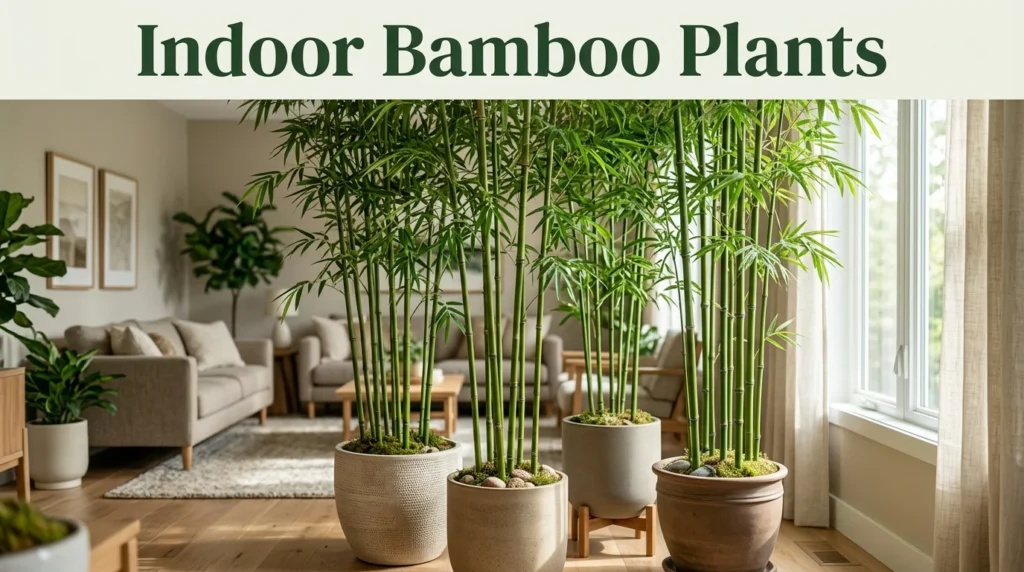
Indoor bamboo plants bring a fresh, natural look to homes and offices. Their upright stems, elegant green foliage, and compact growth habits make them popular choices for desks, living rooms, bedrooms, and bright indoor corners. However, not every plant called bamboo is a true bamboo species, and understanding this difference is essential for choosing the right plant.
Indoor bamboo plants generally fall into two categories: true bamboo species that can grow indoors under suitable conditions and lucky bamboo (Dracaena sanderiana), a popular houseplant that is not botanically bamboo. Both can add greenery to your space, but their lighting, watering, container, and maintenance requirements differ.
This guide explains how to choose, grow, and care for indoor bamboo plants, including light requirements, watering techniques, soil selection, humidity, pruning, propagation, common problems, and practical solutions for beginners.
What Are Indoor Bamboo Plants?
Indoor bamboo plants are plants grown inside homes or offices for their attractive stems, foliage, and decorative appeal. The term commonly refers to true bamboo plants from the grass family (Poaceae) or lucky bamboo, a tropical plant from the genus Dracaena.
Understanding the difference helps you select a plant that suits your space and care routine.
1. Lucky Bamboo
Lucky bamboo is one of the easiest plants to recognize. It has smooth green stalks that may be straight, spiraled, or arranged in decorative groups.
Despite its name, lucky bamboo is not a true bamboo species. It belongs to the asparagus family and is usually grown in water-filled containers or well-draining potting mix.
Its compact size makes it suitable for:
- Office desks and shelves
- Small apartments
- Decorative tabletops
- Bright rooms with indirect sunlight
Lucky bamboo is generally the best option for beginners who want a low-maintenance bamboo-like plant.
2. True Bamboo Species
True bamboo belongs to the grass family and includes numerous species with different growth habits. Some smaller, clumping varieties can adapt to indoor containers, provided they receive sufficient light, root space, and suitable temperatures.
However, many bamboo species grow vigorously and require more space and sunlight than typical indoor conditions provide.
Choose a compact, clumping variety rather than a large running bamboo when growing true bamboo in a container. Running bamboo can spread aggressively through underground rhizomes and is usually better suited to outdoor cultivation.
Best Indoor Bamboo Plants for Your Home
Choosing the right variety is the first step toward successful indoor growing. Consider your available light, room temperature, container size, and willingness to maintain the plant.
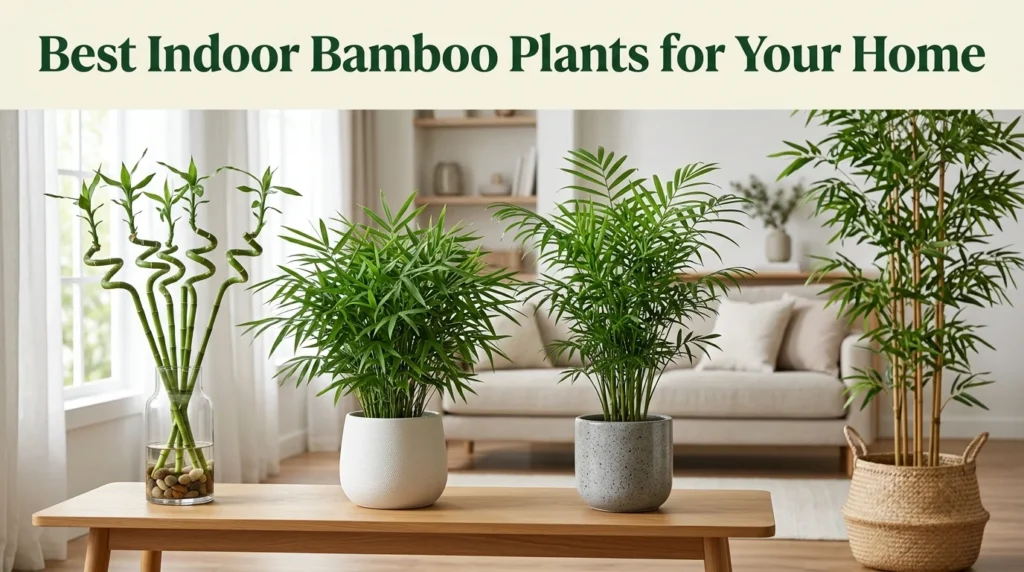
1. Lucky Bamboo
Best for beginners and small spaces
Lucky bamboo grows well in bright, indirect light and can be displayed in water or potting mix. It is a practical choice for desks, shelves, and decorative arrangements. It tolerates moderate indoor light, but very dark corners can lead to weak growth.
2. Compact Clumping Bamboo
Best for spacious, bright rooms
Certain compact clumping bamboos, including suitable cultivars of Bambusa multiplex, may be grown in large containers. They need more light and root space than lucky bamboo and may struggle in dim interiors.
3. Miniature Bamboo-Like Grass
Best for compact decorative displays
Some ornamental grasses sold under bamboo-like common names provide a similar appearance without being true bamboo. Check the botanical label before purchasing because care requirements vary by species.
Buying tip: Always check the botanical name on the plant label. Common names can be misleading, and the correct identification makes it much easier to follow appropriate care instructions.
How Much Light Do Indoor Bamboo Plants Need?
Light is one of the most important factors affecting indoor bamboo growth. The ideal amount depends on the plant species.
Light Requirements for Lucky Bamboo
Lucky bamboo prefers bright, indirect light. A position near an east-facing window or a few feet from a bright window with filtered sunlight often works well.
Direct afternoon sunlight can scorch its leaves, particularly when the plant is close to hot glass.
Look for these signs:
- Yellowing leaves: Could indicate excessive direct sunlight, poor water quality, or watering problems.
- Pale or stretched growth: May indicate insufficient light.
- Brown leaf tips: Can result from mineral buildup, dry air, or inconsistent watering.
Avoid moving the plant abruptly from a dim location into intense sunlight. Increase exposure gradually if you need to change its position.
Light Requirements for True Bamboo
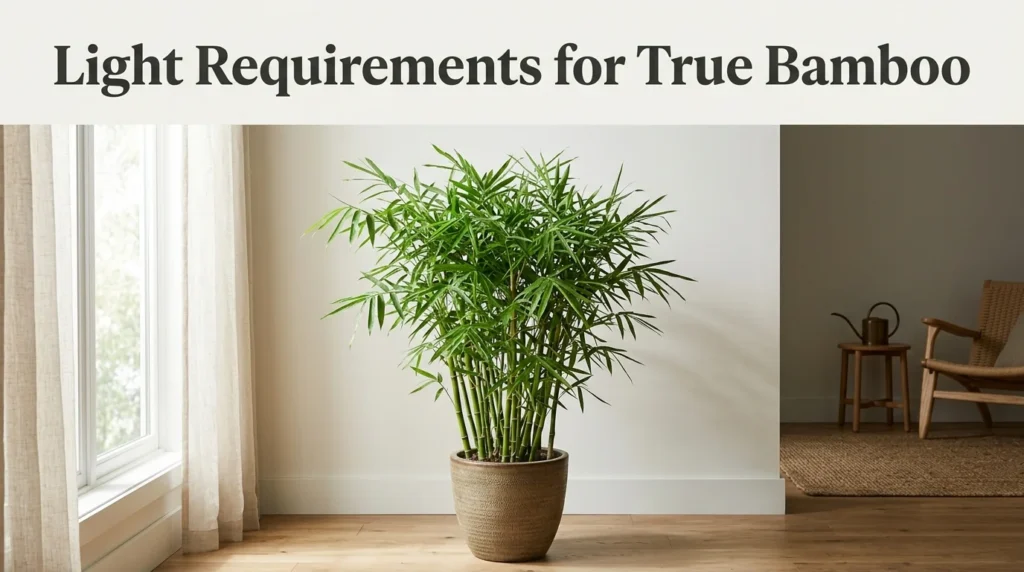
True bamboo generally needs more light than lucky bamboo. Many species grow best with several hours of bright light, and some require direct sunlight to maintain healthy, vigorous growth.
Place a container-grown bamboo near the brightest suitable window and monitor the leaves for heat or light stress.
If natural light is insufficient, a full-spectrum LED grow light can help. Follow the manufacturer’s recommended distance and duration, adjusting the setup according to the species and its response.
How to Water Indoor Bamboo Plants Correctly
Watering requirements depend on whether your plant grows in water or soil.
Watering Lucky Bamboo in Water
Lucky bamboo can grow in a vase with its roots submerged, but its stalks should not be continuously submerged.
Follow these steps:
- Use a clean glass or ceramic container.
- Add enough water to cover the roots.
- Keep the stalk bases and leaves above the waterline.
- Replace the water regularly, typically about once a week, or sooner if it becomes cloudy or develops an odor.
- Rinse the container and roots gently when changing the water.
Filtered water or low-mineral water is often preferable if your tap water contains substantial chlorine, fluoride, or dissolved salts. Distilled or reverse-osmosis water can be useful when recurring leaf-tip damage suggests water-quality problems.
Do not add excessive fertilizer to the vase. Lucky bamboo has relatively modest nutrient requirements, and concentrated fertilizer can damage its roots.
Watering Lucky Bamboo in Soil
When grown in potting mix, lucky bamboo should receive enough water to moisten the root zone without leaving the roots constantly saturated.
Check the upper layer of the mix before watering. If it feels slightly dry, water thoroughly and allow excess water to drain.
Avoid leaving the pot standing in a saucer full of water.
Watering True Bamboo in Containers
True bamboo usually requires more water than lucky bamboo, especially during active growth. Its container should remain evenly moist without becoming waterlogged.
Water when the upper layer of the growing medium begins to dry, then adjust the frequency according to temperature, light, pot size, and growth rate.
During cooler months, growth may slow and water consumption may decrease.
Best Soil Mix for Indoor Bamboo Plants
Soil requirements differ between lucky bamboo and true bamboo, so choose the growing medium accordingly.
Soil for Lucky Bamboo
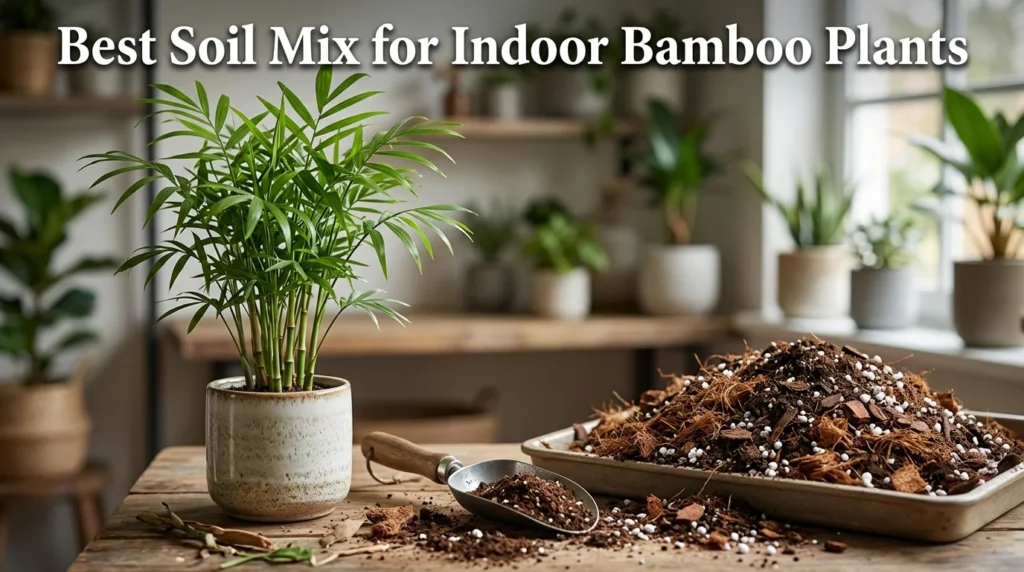
Lucky bamboo grows well in a loose, well-draining houseplant mix. A quality indoor potting mix amended with perlite can improve aeration and reduce the risk of waterlogged roots.
A practical starting mixture is:
- Two parts quality indoor potting mix
- One part perlite
Use a container with drainage holes. Avoid heavy garden soil, which can compact inside pots and restrict airflow around the roots.
Soil for True Bamboo
True bamboo grown in containers needs a moisture-retentive but well-aerated growing medium.
A suitable commercial potting mix amended with perlite, pumice, or fine bark can provide a useful balance of moisture retention and drainage.
Choose a container large enough for the root system, and repot when roots become crowded or growth begins to slow.
Important: Drainage matters more than using a complicated homemade recipe. A suitable potting mix and a container with drainage holes are usually better than a dense mix that stays wet for too long.
Ideal Temperature and Humidity for Indoor Bamboo
Most indoor bamboo-like plants prefer stable temperatures without sudden changes.
Lucky bamboo generally grows well at ordinary comfortable indoor temperatures, approximately 18–29°C (65–85°F). Protect it from cold drafts, freezing conditions, and direct blasts of hot or cold air from heating and cooling equipment.
True bamboo species differ in their temperature tolerance. Select a species appropriate for the conditions you can provide.
Managing Indoor Humidity
Lucky bamboo typically adapts to normal household humidity. True bamboo may benefit from higher humidity, especially in warm rooms where heating or air conditioning dries the air.
To improve the growing environment:
- Keep plants away from heating vents.
- Group compatible plants together.
- Use a room humidifier if the air is consistently dry.
- Maintain good airflow to reduce the risk of fungal problems.
Misting is not a reliable long-term method of increasing room humidity because its effects are temporary.
Fertilizing Indoor Bamboo Plants
Indoor bamboo plants need nutrients for healthy foliage and root development, but excessive fertilizer can cause more problems than it solves.
Feeding Lucky Bamboo
Lucky bamboo is a light feeder. Plants growing in water receive very little nutrition unless a suitable fertilizer is added.
Use a fertilizer specifically appropriate for lucky bamboo or a balanced liquid houseplant fertilizer at a highly diluted concentration according to the product instructions.
Apply sparingly during active growth. Avoid repeatedly adding fertilizer to the water without replacing it, as dissolved salts can accumulate.
For lucky bamboo grown in soil, use a diluted houseplant fertilizer during active growth when needed.
Feeding True Bamboo
Container-grown true bamboo generally benefits from a balanced fertilizer during its growing season. Follow the product’s application rate and reduce feeding when growth slows.
Excess fertilizer can burn roots, cause brown leaf tips, and encourage unhealthy salt accumulation.
If a plant looks unhealthy, first check light, watering, drainage, and root condition rather than automatically adding fertilizer.
Pruning and Maintaining Indoor Bamboo Plants
Regular maintenance helps indoor bamboo plants remain attractive and prevents avoidable problems.
Pruning Lucky Bamboo
Lucky bamboo can be maintained with a few simple steps:
- Remove yellow or dead leaves with clean scissors.
- Trim damaged foliage without cutting healthy leaves unnecessarily.
- Remove dead or rotting roots when repotting or cleaning the plant.
- Wipe dust from the leaves with a soft, damp cloth.
If you want to control the plant’s height, understand that cutting a stalk does not make that same stalk grow taller again. New shoots may develop from nodes below a cut, depending on the plant’s condition.
Maintaining True Bamboo
True bamboo may need more extensive maintenance, especially as its root system expands.
Remove dead or damaged canes at the base using clean, sharp tools. Thin overcrowded growth when necessary and repot before the root mass becomes severely congested.
Avoid excessive pruning, which reduces the plant’s leaf area and can slow growth. When thinning, remove the oldest, weakest canes first to let light reach the younger growth. Always disinfect cutting tools between plants if you suspect any disease.
How to Propagate Indoor Bamboo Plants
Propagation is possible, but the method depends on the type of plant.
Propagating Lucky Bamboo
Lucky bamboo is commonly propagated using healthy stem cuttings.
- Choose a healthy stalk with visible nodes.
- Use a clean, sharp cutting tool.
- Take a cutting with at least one suitable node.
- Place the cutting in clean water so the appropriate node is submerged.
- Keep it in warm conditions with bright, indirect light.
- Change the water regularly and wait for roots to develop.
Rooting time varies according to temperature, cutting condition, and light. Once a healthy root system develops, the cutting can remain in water or be transferred carefully into a suitable potting mix.
Not every cutting will root successfully, so start with a healthy, undamaged stem.
Propagating True Bamboo
True bamboo is generally propagated through division of established clumps or, for suitable species, rhizome sections. These methods require more space and care than rooting a lucky bamboo cutting.
Because species differ, identify your bamboo before attempting propagation. Division is best done when the clump is actively growing and the root ball is large enough to split into sections that each carry several healthy canes. After dividing, keep the new plants evenly moist and sheltered from strong sun until they show fresh growth.
Common Indoor Bamboo Problems and How to Fix Them
Indoor bamboo plants often show visible symptoms when their environment is unsuitable. Diagnose the likely cause before changing several care conditions at once.
| Problem | Possible cause | Practical solution |
|---|---|---|
| Yellow leaves | Poor water quality, overwatering, excess light, or natural leaf aging | Check the growing medium, light exposure, and water quality before making changes. |
| Brown leaf tips | Mineral buildup, dry air, or fertilizer excess | Use suitable low-mineral water, review feeding, and improve humidity if needed. |
| Soft, mushy roots | Prolonged saturation or stagnant water | Remove damaged roots, clean the container, and correct the watering routine. |
| Slow growth | Insufficient light, nutrient shortage, or crowded roots | Assess light levels, root space, and feeding practices. |
| Algae in the vase | Excess light reaching nutrient-containing water | Clean the container, replace the water, and reduce direct sunlight on the vase. |
| Drooping leaves | Water stress, temperature changes, or root damage | Check moisture, drainage, and recent environmental changes. |
Why Is My Indoor Bamboo Turning Yellow?
Yellowing is a symptom rather than a diagnosis. A few older leaves may turn yellow naturally, but widespread yellowing usually deserves investigation.
Check the following in order:
- Water quality: Is the plant exposed to mineral-rich water or accumulated fertilizer?
- Moisture: Are soil-grown roots staying wet for extended periods?
- Light: Is the plant receiving harsh direct sunlight or too little usable light?
- Roots: Are the roots firm and healthy, or soft and discolored?
- Recent changes: Has the plant been moved, repotted, or exposed to a temperature shift?
Correct the most likely cause and monitor new growth rather than expecting damaged leaves to turn green again.
Indoor Bamboo Plants for Home Decor and Feng Shui
Bamboo-like plants work well in many interior styles because of their vertical growth and simple foliage.
Lucky bamboo is especially popular in Feng Shui-inspired arrangements. Some traditions associate the plant with good fortune, prosperity, and harmony, and arrangements may use different numbers of stalks to represent different meanings.
These associations are cultural beliefs rather than scientifically established effects.
For practical placement, consider the plant’s actual growing requirements:
- Living rooms: Place lucky bamboo on a bright shelf or side table away from intense sunlight.
- Home offices: Use a small vase arrangement where the plant receives indirect light.
- Bedrooms: Choose a location with suitable light and enough space to prevent accidental tipping.
- Entryways: Use a bright, protected location rather than a dark corner simply because it is decorative.
For true bamboo, choose a stable floor planter and allow enough space for its mature size.
Are Indoor Bamboo Plants Safe for Pets?
Plant safety depends on the exact species.
Lucky bamboo (Dracaena sanderiana) is considered toxic to cats and dogs if chewed or eaten. It can cause signs such as vomiting, drooling, and reduced appetite. Keep it out of pets’ reach and contact a veterinarian if ingestion occurs.
True bamboo species are different plants, and their safety should be evaluated using their botanical names rather than the general word “bamboo.”
If you have curious pets, verify the identity of any plant before bringing it home. When in doubt, place the plant where pets cannot reach it — on a high shelf or in a hanging planter — until you have confirmed its safety. If a pet chews any plant and shows worrying symptoms, contact your veterinarian promptly rather than waiting to see if it passes.
Common Mistakes to Avoid with Indoor Bamboo
Most indoor bamboo setbacks come from a few avoidable habits. Watch out for these:
- Keeping lucky bamboo stalks submerged below the waterline, which encourages rot.
- Using hard, heavily chlorinated tap water without letting it sit or filtering it first.
- Choosing a running bamboo species for an indoor pot instead of a compact clumping variety.
- Letting the vase water turn cloudy or smelly before changing it.
- Placing the plant in a dark hallway because it fits the decor, then wondering why growth stalls.
Frequently Asked Questions About Indoor Bamboo Plants
1. Are indoor bamboo plants easy to care for?
Lucky bamboo is relatively easy to maintain when provided with indirect light, clean water, and stable temperatures. True bamboo can be more demanding because it generally needs more light and root space.
2. Can indoor bamboo grow without sunlight?
Lucky bamboo can tolerate moderate indoor light, but it still needs light to remain healthy. In rooms without adequate natural light, an appropriate grow light can help. True bamboo is generally unsuitable for persistently dark spaces.
3. Is it better to grow lucky bamboo in water or soil?
Both methods can work. Water makes roots easy to observe and creates a decorative display, while soil provides a more conventional growing environment. Each method requires appropriate maintenance.
4. How often should I change the water for lucky bamboo?
Changing the water about once a week is a useful starting point. Change it sooner if it becomes cloudy or smells unpleasant, and clean the container regularly.
5. Why are the leaves on my bamboo turning brown?
Brown tips may result from mineral buildup, fertilizer excess, dry air, or watering stress. Check the water quality and root condition before deciding on a solution.
6. Can I grow true bamboo indoors in a pot?
Yes, certain compact species can grow in containers indoors, but success depends on adequate light, root space, watering, and temperature. Many species perform better outdoors.
7. Do indoor bamboo plants need fertilizer?
Lucky bamboo needs only modest feeding, while container-grown true bamboo may require more regular nutrition during active growth. Excess fertilizer can damage roots and foliage.
8. Do indoor bamboo plants attract insects?
They are not uniquely prone to pests, but they can develop problems with spider mites, mealybugs, or scale insects. Inspect leaves and stems regularly, isolate infested plants, and use an appropriate treatment if necessary.
9. Can lucky bamboo grow new roots from a cutting?
Yes. Healthy stem cuttings with suitable nodes can develop roots under warm conditions with clean water and indirect light, although rooting success varies.
10. How long do indoor bamboo plants live?
Lifespan varies by species, growing conditions, and maintenance. Lucky bamboo can live for years with appropriate care, while true bamboo longevity depends on its species and whether its roots have enough room to grow.
Conclusion
Indoor bamboo plants can be an attractive addition to a home, office, or small apartment, but choosing the right plant makes all the difference. Lucky bamboo is a practical choice for beginners and compact spaces, while true bamboo is better suited to bright rooms with enough space for a larger root system.
Provide suitable light, maintain healthy roots, use appropriate water and growing media, and adjust care according to the plant’s actual needs. With these fundamentals in place, your indoor bamboo can remain a healthy and appealing part of your indoor garden.
No. Despite its name, lucky bamboo is not a true bamboo species — it belongs to the asparagus family (Dracaena sanderiana), while true bamboo belongs to the grass family.
Changing the water about once a week is a useful starting point. Change it sooner if it becomes cloudy or develops an odor.
Lucky bamboo (Dracaena sanderiana) is considered toxic to cats and dogs if chewed or eaten, so keep it out of reach of curious pets.



