
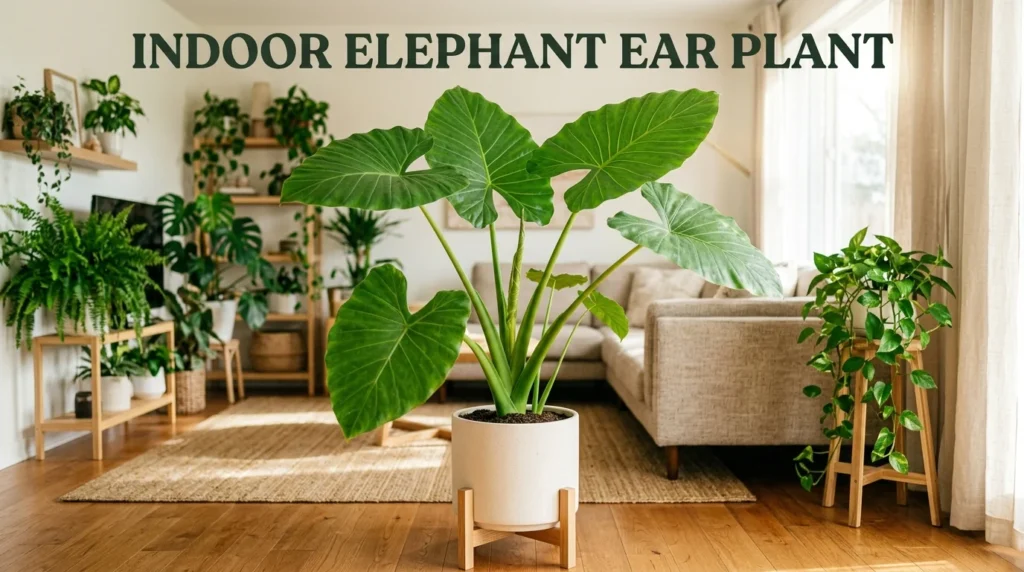
The indoor elephant ear plant is prized for its enormous, heart-shaped leaves, dramatic patterns, and tropical appearance. Popular varieties from the Alocasia, Colocasia, and Xanthosoma groups can bring a lush, jungle-inspired feel to living rooms, bright corners, and indoor plant collections. However, their large leaves also mean they need suitable lighting, consistent moisture, warmth, and humidity to remain healthy.
To grow an elephant ear successfully indoors, choose a variety suited to your space, provide bright indirect light, use an airy potting mix, and water according to soil moisture rather than a fixed schedule. Understanding these basic needs helps prevent yellow leaves, drooping foliage, root rot, and slow growth.
This guide explains how to select, grow, maintain, and troubleshoot indoor elephant ear plants so you can enjoy their impressive foliage throughout the growing season.
What Is an Indoor Elephant Ear Plant?
An elephant ear plant is a tropical foliage plant known for its oversized leaves, which often resemble elephant ears or broad shields. Depending on the species, the leaves may point upward, spread outward, or hang gracefully from long stems.
Many elephant ears grow from underground rhizomes, corms, or tubers. Their growth habits differ by species, so understanding the variety you own helps you provide appropriate care.
Three commonly encountered groups are:
- Alocasia: Often has upright stems and bold, arrow-shaped or shield-shaped leaves. Some varieties feature contrasting veins or metallic-looking foliage.
- Colocasia: Usually has broad leaves that tend to angle downward or outward. Many varieties prefer consistently moist conditions.
- Xanthosoma: Includes tropical foliage plants with large, often arrow-shaped leaves and distinctive growth habits.
Not every elephant ear grows equally well indoors. Compact Alocasia varieties are often more manageable than species that develop enormous leaves and wide root systems.
Important safety note: Elephant ear plants contain calcium oxalate crystals that can irritate the mouth, skin, and eyes. Keep them away from children and pets that might chew the foliage.
Best Elephant Ear Varieties for Indoor Growing
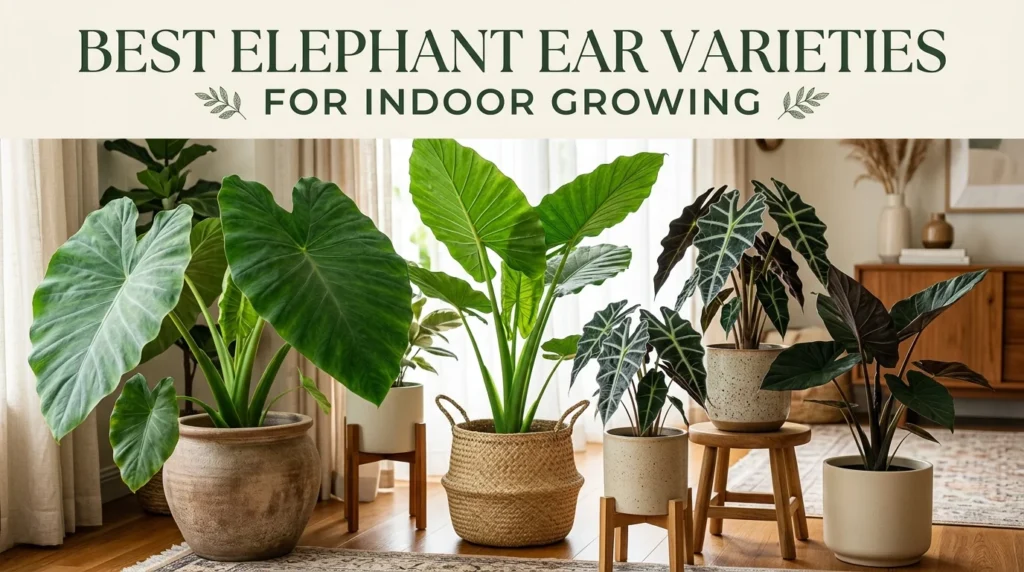
Choosing the right variety is one of the most important steps in growing elephant ears indoors. Consider mature size, lighting conditions, humidity, and the amount of space available.
1. Alocasia Polly
Alocasia Polly is a popular option for indoor collections because of its compact growth and dramatic dark-green leaves with pale, contrasting veins.
- Best for: Desks, plant stands, and bright rooms.
- Light: Bright, indirect light.
- Water: Keep the soil lightly and consistently moist without allowing it to become waterlogged.
- Main challenge: Low humidity and overwatering can cause leaf damage.
Its manageable size makes it a practical choice for people who want a tropical appearance without dedicating an entire corner to a large plant.
2. Alocasia Zebrina
Alocasia zebrina stands out because of its elongated, arrow-shaped leaves and distinctive striped stems.
- Best for: Bright living rooms and decorative plant displays.
- Light: Bright, filtered light.
- Water: Water when the upper portion of the potting mix begins to dry.
- Main challenge: It can become stressed by cold drafts, poor drainage, and abrupt environmental changes.
Its tall stems create a striking vertical effect, although the plant may need more space as it matures.
3. Alocasia Amazonica Types
Plants sold as Alocasia amazonica, including the commonly marketed ‘Polly’ type, have glossy, dark foliage with prominent light-colored veins.
These plants work well as statement foliage plants in bright indoor spaces. They generally benefit from warmth, moderate to high humidity, and careful watering.
4. Colocasia Varieties
Colocasia varieties produce broad, tropical-looking leaves and can become substantially larger than many compact Alocasia types.
They may be suitable for spacious rooms, conservatories, or indoor growing areas with strong light and enough room for mature foliage. Many Colocasia varieties require more consistent moisture than typical Alocasia houseplants.
Before purchasing one, check its mature dimensions and whether it is suited to year-round indoor cultivation.
Light Requirements for an Indoor Elephant Ear Plant
Light strongly influences leaf size, stem strength, and overall growth. Although elephant ear plants originate from tropical environments, many do not perform well in dark indoor corners.
How much light do elephant ears need?
Most indoor elephant ear plants grow best in bright, indirect light for several hours each day. A position near an east-facing window or slightly back from a bright south- or west-facing window can work well, depending on local conditions and window exposure.
Direct sunlight can scorch foliage, especially when a plant has been grown in lower light. However, some varieties can tolerate gentle morning sun after gradual acclimation.
Use these practical placement guidelines:
- East-facing window: Often provides useful morning light with a lower risk of intense afternoon sun.
- South-facing window: Place the plant farther from the glass or use a sheer curtain if the sunlight is strong.
- West-facing window: Protect foliage from harsh afternoon sun, particularly in hot weather.
- North-facing window: May provide insufficient light in many homes, especially during winter.
Can elephant ears grow under grow lights?
Yes. Grow lights can help when natural light is limited or when you want to maintain active growth through darker seasons.
Choose a full-spectrum LED grow light suitable for foliage plants. Position it according to the manufacturer’s recommended distance and intensity, then adjust based on the plant’s response. A starting photoperiod of around 10–12 hours daily may work for many indoor setups, although the appropriate duration depends on light intensity and natural daylight.
Avoid assuming that longer lighting hours always produce better results. Excessive intensity can bleach or scorch leaves, while insufficient light can lead to weak growth. A timer keeps the schedule consistent, and the light should sit above or slightly to the side of the foliage so the large leaves intercept it evenly. If new leaves emerge smaller than older ones, the plant is likely asking for more light rather than more hours.
Signs of incorrect lighting
| Plant symptom | Possible explanation | What to do |
|---|---|---|
| Long, weak stems | Insufficient light | Move gradually to a brighter location |
| Bleached or scorched patches | Excessive direct sunlight | Filter sunlight or increase distance from the window |
| Slow growth | Low light, cold conditions, or seasonal dormancy | Check light, temperature, and root health |
| Smaller new leaves | Insufficient light or inadequate growing conditions | Review lighting, watering, and nutrition |
Light is only one factor. Before increasing exposure, check whether the plant is also experiencing root problems or seasonal dormancy.
Watering Indoor Elephant Ear Plants Correctly
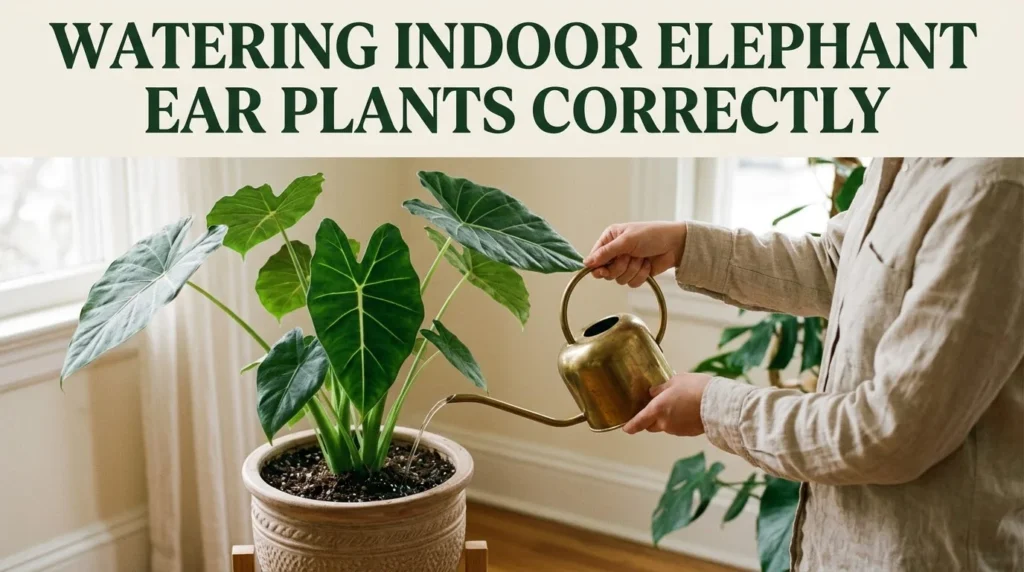
Elephant ear plants often prefer evenly moist soil during active growth, but they are not immune to root rot. The goal is to maintain moisture while allowing excess water to drain freely.
When should you water?
Avoid watering strictly according to a calendar. Instead, check the soil and consider the plant’s growth stage.
For many Alocasia houseplants:
- Check the upper 2–3 cm (about 1 inch) of the potting mix.
- If that layer has started to dry, check deeper to determine whether the root zone is still moist.
- Water thoroughly when appropriate for the variety and pot size.
- Let excess water escape through the drainage holes.
- Empty the saucer or decorative outer pot so the roots are not left standing in water.
Colocasia varieties may prefer more consistently moist conditions, particularly during active growth. However, even moisture-loving plants need adequate oxygen around their roots.
Overwatering versus underwatering
Overwatering may cause yellow leaves, persistently wet soil, unpleasant odors, or soft, dark roots. Cold temperatures and poorly draining soil make the problem worse.
Underwatering can produce drooping leaves, dry soil, and crispy leaf edges. A severely dry root ball may also become difficult to rehydrate.
If the soil is wet and the plant is wilting, do not automatically add more water. Check the roots and drainage first.
Seasonal watering adjustments
During spring and summer, an actively growing elephant ear may use water quickly. In autumn and winter, growth often slows because of reduced light and cooler conditions.
Reduce watering frequency when the plant uses less water, but do not allow a normally evergreen plant to become severely dehydrated. Some Alocasia varieties naturally enter dormancy, during which their water requirements can fall considerably.
Best Soil Mix for Indoor Elephant Ear Plants
The best soil for indoor elephant ears retains enough moisture for their roots while allowing excess water and air to move through the root zone.
Ordinary garden soil is usually unsuitable for containers because it can compact, drain poorly, and introduce unwanted pests or pathogens.
Recommended potting mix
A practical starting recipe for many Alocasia houseplants is:
- 2 parts quality indoor potting mix or coco-coir-based mix
- 1 part perlite or pumice
- 1 part fine orchid bark
This blend balances moisture retention with drainage and aeration. Adjust the proportions if the mix dries too quickly or remains wet for too long.
For moisture-loving Colocasia varieties, you may use a mix that retains slightly more water while still remaining structurally open.
Why soil structure matters
A suitable substrate helps prevent two common problems:
- Compacted soil: Reduces air movement and can leave roots sitting in excess moisture.
- Extremely fast-draining soil: May dry before the plant can access enough water, especially in warm, bright conditions.
Use a pot with unobstructed drainage holes. A decorative pot without holes can serve as an outer cover, but the plant should be removed for watering or placed inside a draining nursery pot.
Do not add a thick layer of gravel to the bottom of a container as a substitute for drainage. The overall potting mix and drainage holes are what matter.
Temperature and Humidity Requirements
As tropical plants, many elephant ears prefer warm, stable indoor conditions. Cold air, sudden temperature changes, and dry heating vents can cause stress.
Ideal temperature
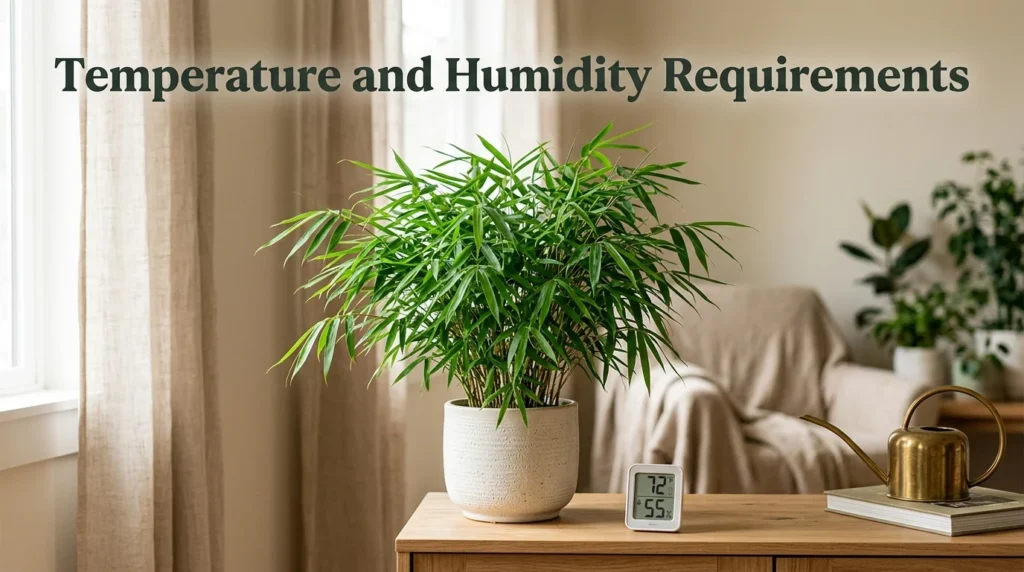
For many common indoor Alocasia varieties, a comfortable range is approximately 18–29°C (65–85°F) during active growth. Avoid cold drafts and prolonged exposure to temperatures below roughly 15°C (59°F), although sensitivity varies by species.
Keep plants away from air-conditioning outlets, exterior doors that open frequently in cold weather, and heating equipment that produces intense dry heat.
How much humidity do elephant ears need?
Many Alocasia varieties appreciate humidity around 50–70% or higher, depending on the species. Average household humidity may be sufficient for some varieties, but others develop brown edges or damaged foliage when the air is too dry.
To improve humidity:
- Use a room humidifier.
- Group compatible tropical plants together.
- Monitor humidity with a small hygrometer.
- Keep foliage away from direct heating airflow.
Misting leaves provides only a temporary increase in surface moisture and is not a reliable way to maintain room humidity. Persistent leaf wetness combined with poor airflow can also encourage disease.
Fertilizing Indoor Elephant Ear Plants
Elephant ears need nutrients to support their large leaves, but excessive fertilizer can damage roots and cause salt buildup.
During active growth, feed many indoor Alocasia varieties with a balanced, water-soluble houseplant fertilizer diluted according to the label. Depending on the product and growth rate, feeding every 2–4 weeks may be reasonable.
Follow these guidelines:
- Apply fertilizer to appropriately moist soil rather than to a severely dry root ball.
- Avoid feeding a plant that is stressed, severely wilted, or suffering from root rot.
- Reduce or stop fertilizing when growth slows significantly.
- Resume feeding gradually when healthy new growth returns.
Yellow leaves do not automatically indicate a nutrient deficiency. Overwatering, low light, cold temperatures, and natural leaf aging can produce similar symptoms.
If the plant has been in the same pot for a long time, inspect the roots and growing medium before increasing fertilizer. Damaged roots cannot absorb nutrients effectively.
Pruning, Cleaning, and Repotting
Regular maintenance keeps elephant ear foliage attractive and allows you to identify problems early.
How to prune an elephant ear plant
Remove leaves that are completely yellow, brown, or damaged using clean, sharp pruning shears.
Cut the leaf stalk near its base without damaging nearby stems or emerging growth. Avoid removing healthy green leaves unnecessarily, because they provide energy for the plant. If a leaf is only damaged at the tip, you can trim away just the brown portion, following the leaf’s natural shape, rather than removing the whole leaf. Always cut back to green tissue so the remaining leaf edge dries cleanly.
Wear gloves when pruning, and wash your hands afterward. The sap can irritate sensitive skin.
Cleaning large leaves
Dust can accumulate on broad foliage and make the plant look dull.
- Wipe leaves gently with a soft, damp cloth.
- Support each leaf while cleaning to avoid tearing it.
- Avoid harsh household cleaners or leaf-shine products.
- Check the undersides for spider mites, thrips, and other pests.
When should you repot?
Repot when roots crowd the container, emerge heavily from drainage holes, or the potting mix deteriorates. A plant that dries unusually quickly may also need a root and substrate inspection.
Choose a container only one size larger than the current pot. An excessively large pot holds more wet soil than the roots can use, increasing the risk of overwatering.
Repotting is generally easiest when the plant is actively growing. If a plant is dormant or severely stressed, correct urgent root problems first and avoid unnecessary disturbance.
Common Indoor Elephant Ear Plant Problems
Elephant ear plants may develop yellow leaves, brown edges, drooping stems, or pest damage. The same symptom can have several causes, so inspect the whole growing environment before treating the plant.
| Problem | Likely causes | Practical solution |
|---|---|---|
| Yellowing leaves | Overwatering, low light, nutrient issues, or natural aging | Check soil moisture, roots, and light; remove fully yellow leaves |
| Brown leaf edges | Low humidity, inconsistent watering, fertilizer salts, or root stress | Review humidity, watering, and feeding |
| Drooping foliage | Dry soil, root damage, cold stress, or heavy mature leaves | Check soil and roots before watering |
| Small new leaves | Low light, limited nutrients, root crowding, or seasonal slowdown | Improve growing conditions and inspect the root system |
| Soft stems or foul-smelling soil | Possible root or stem rot | Remove the plant from the pot and inspect damaged roots |
| Fine webbing or stippled leaves | Possible spider mites | Isolate the plant and inspect leaf undersides carefully |
Troubleshooting example: Yellow leaves with wet soil
Problem: Several leaves are turning yellow while the soil remains wet.
Cause: The roots may be receiving insufficient oxygen because the mix drains poorly or watering is too frequent.
Check: Inspect drainage holes, smell the potting mix, and examine roots if the plant continues to deteriorate.
Solution: Allow the mix to reach an appropriate moisture level before watering again. If roots are soft or dark, remove damaged material with clean tools and repot into a fresh, airy substrate.
Do not assume every yellow leaf signals disease. An older leaf occasionally dying while new growth remains healthy can be normal.
How to Propagate Indoor Elephant Ear Plants
Propagation depends on the plant’s species and growth structure. Many Alocasia plants can be propagated by separating offsets or suitable rhizome sections, while Colocasia is often grown from corms or tubers.
Propagation through offsets
- Remove the plant carefully from its container during active growth.
- Identify a naturally developed offset with its own roots or a suitable growing point.
- Separate it using clean tools, minimizing damage to the parent plant.
- Pot the offset in an appropriately sized container with airy, lightly moist substrate.
- Provide warmth, bright indirect light, and stable moisture while it establishes.
Not every elephant ear produces easily separable offsets. Avoid cutting a healthy main stem and expecting it to root like a typical vining houseplant.
Growing from corms
Some Alocasia varieties produce small corms around the root system. Suitable corms can sometimes be grown separately in warm, humid conditions with an appropriate propagation medium.
Success varies by species, corm maturity, temperature, and moisture management. Keep the medium lightly moist rather than saturated, and provide ventilation to reduce the risk of rot. Firm, plump corms are the best candidates; discard any that feel soft or smell unpleasant. A shallow tray of moist perlite or sphagnum moss makes a suitable starting medium, and gentle bottom warmth can encourage sprouting.
Seasonal Care and Dormancy
Indoor elephant ears do not all follow the same seasonal pattern. Some Alocasia varieties remain evergreen under suitable conditions, while others may lose leaves and enter dormancy after environmental stress or seasonal changes.
During autumn and winter:
- Move the plant to the brightest suitable location.
- Protect it from cold windows and drafts.
- Reduce watering as growth and water use decline.
- Avoid heavy fertilization when the plant is not actively growing.
- Monitor for pests, especially in warm indoor rooms.
If all foliage disappears, do not immediately assume the plant is dead. Check the corm or rhizome for firmness and signs of rot. A firm, healthy underground structure may remain viable, depending on the species and conditions.
Keep any dormant plant in conditions appropriate for its particular variety rather than applying the same watering schedule used during active growth.
Styling Indoor Elephant Ear Plants in Your Home
Elephant ear plants create a strong visual focal point because of their size, texture, and tropical foliage.
Consider these placement ideas:
- Living rooms: Use a larger specimen as a statement plant beside a bright window.
- Bright corners: Position compact Alocasia varieties on stable plant stands.
- Minimalist interiors: Pair dramatic foliage with simple ceramic or neutral-colored planters.
- Tropical plant displays: Combine elephant ears with other plants that share similar light and humidity requirements.
Leave enough space around mature leaves to prevent them from rubbing against walls or furniture. Choose a sturdy, tip-resistant location, particularly for top-heavy plants.
For sustainability, reuse clean pots when appropriate, select durable growing containers, and avoid replacing plants unnecessarily when seasonal leaf loss can be managed through proper care.
Elephant ear plants can contribute to a more inviting indoor environment, but they should not be treated as a replacement for ventilation, cleaning, or other measures that support healthy indoor air.
Common Mistakes to Avoid with Indoor Elephant Ears
Elephant ears are forgiving when their basics are right, but these common habits cause most indoor failures:
- Keeping the soil constantly soggy instead of letting the top layer dry slightly between waterings.
- Placing the plant beside a cold, drafty window in winter.
- Repotting into a much larger container, which keeps the root zone wet for too long.
- Fertilizing heavily right after bringing the plant home, before it has settled in.
- Handling leaves and stems without gloves, then touching skin or eyes, since the sap can irritate.
Frequently Asked Questions
1. Can an elephant ear plant grow indoors year-round?
Yes. Many varieties can grow indoors throughout the year if they receive adequate light, warmth, moisture, and humidity. Some varieties may enter dormancy or lose foliage seasonally.
2. How much sunlight does an indoor elephant ear need?
Most common indoor varieties prefer bright, indirect light. Gentle morning sunlight may be tolerated, but strong direct sun can scorch leaves, especially after a sudden change in exposure.
3. Why are the leaves on my indoor elephant ear turning yellow?
Possible causes include overwatering, poor drainage, low light, nutrient problems, or natural aging. Check soil moisture and root health before changing fertilizer or watering frequency.
4. Should I mist my elephant ear plant?
Misting is not a dependable way to raise room humidity. A humidifier provides more consistent results, particularly for humidity-sensitive Alocasia varieties.
5. What is the best soil for an indoor elephant ear plant?
A loose, moisture-retentive but well-aerated mix works well for many Alocasia varieties. A combination of indoor potting mix, perlite or pumice, and fine orchid bark is a useful starting point.
6. Are elephant ear plants toxic to pets?
Yes. Elephant ear plants contain calcium oxalate crystals that can cause oral irritation, drooling, and discomfort if chewed. Keep them out of reach of pets and children, and contact a veterinarian or medical professional if exposure causes concerning symptoms.
7. Why is my elephant ear plant drooping?
Drooping may result from dry soil, waterlogged roots, cold temperatures, or naturally heavy leaves. Check soil moisture and root health before deciding whether the plant needs water.
8. Can elephant ear plants grow in low light?
They may survive temporarily in lower light, but growth often becomes weaker and slower. A brighter location or suitable grow light generally provides better conditions.
9. How often should I fertilize an indoor elephant ear?
During active growth, many varieties can be fed every 2–4 weeks with a balanced fertilizer diluted according to its label. Reduce feeding when growth slows and avoid fertilizing plants with damaged roots.
Conclusion
Growing an indoor elephant ear plant successfully starts with choosing the right variety and creating conditions that support its tropical growth. Provide bright indirect light, an airy potting mix, appropriate moisture, warmth, and adequate humidity.
Pay attention to changing conditions rather than following rigid watering or feeding schedules. With careful observation, sensible maintenance, and early troubleshooting, elephant ears can become striking focal points in an indoor garden.
Yes. Many varieties can grow indoors throughout the year if they receive adequate light, warmth, and moisture.
Yes. Elephant ear plants contain calcium oxalate crystals that can cause oral irritation, drooling, and related symptoms in pets, so keep these plants out of reach of animals.
Possible causes include overwatering, poor drainage, low light, nutrient problems, or natural aging of an older leaf. Check soil moisture, roots, and light, and remove fully yellow leaves.

Megan Foster is the founder and lead writer of GrowIndoorly.com, where she shares practical, easy-to-follow advice for growing healthy indoor plants. She is passionate about helping beginners and experienced plant lovers build thriving indoor gardens with confidence. Megan writes about houseplants, indoor herbs, succulents, hydroponics, grow lights, plant propagation, watering, soil care, and everyday plant maintenance.
She enjoys researching trusted gardening techniques and transforming them into simple, actionable guides that readers can easily apply at home. Her goal is to make indoor gardening more enjoyable and accessible by providing clear, reliable information that helps people keep their plants healthy throughout the year. Whether you’re caring for your first houseplant or expanding your indoor plant collection, Megan’s practical tips are designed to help you grow with confidence.


