
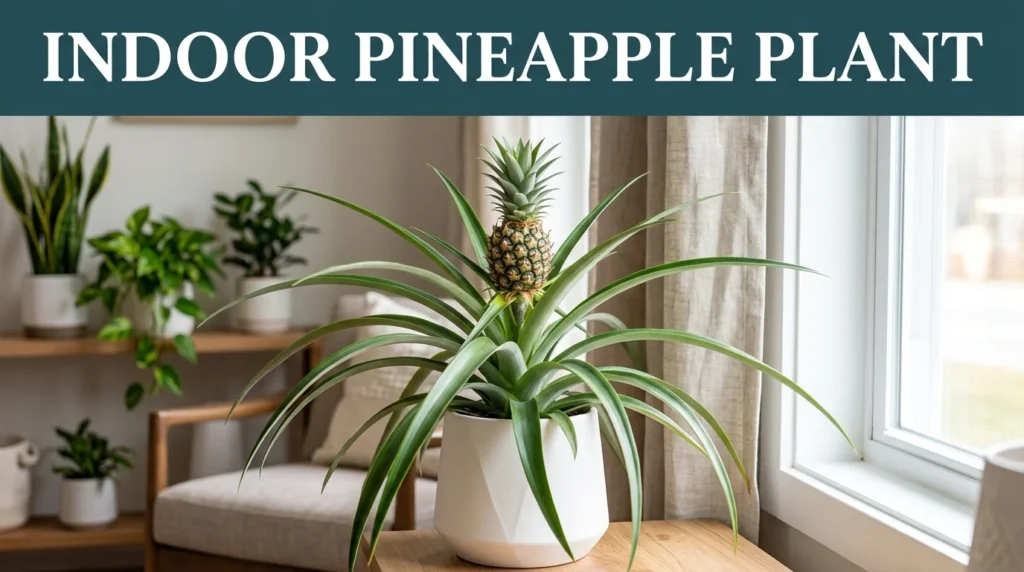
Growing an indoor pineapple plant (Ananas comosus) brings a captivating touch of tropical beauty, architectural flair, and edible horticulture straight into your living space. As a terrestrial member of the Bromeliad family (Bromeliaceae), this unique houseplant features a rosette of stiff, arching, sword-like leaves centered around a central cup. Under optimal indoor conditions, it matures to produce an ornamental mini pineapple fruit elevated on a sturdy central stalk.
Successfully cultivating an indoor pineapple plant requires an understanding of its epiphytic and terrestrial bromeliad nature. Unlike traditional foliage houseplants, pineapple plants possess shallow root systems designed primarily for anchoring, while their tough, waxy foliage and central leaf rosette actively harvest moisture and ambient light. Though growing a fully mature fruit indoors takes patience typically requiring two to three years from a propagated crown the plant serves as an exceptionally low-maintenance, drought-tolerant indoor accent throughout every stage of its growth.
Whether you are starting an indoor pineapple plant by propagating a store-bought fruit crown or caring for a popular ornamental variety like Ananas comosus ‘Variegatus’ or ‘Pygmy’, this master guide covers species selection, lighting requirements, custom substrate blends, fruiting triggers, and practical troubleshooting protocols.
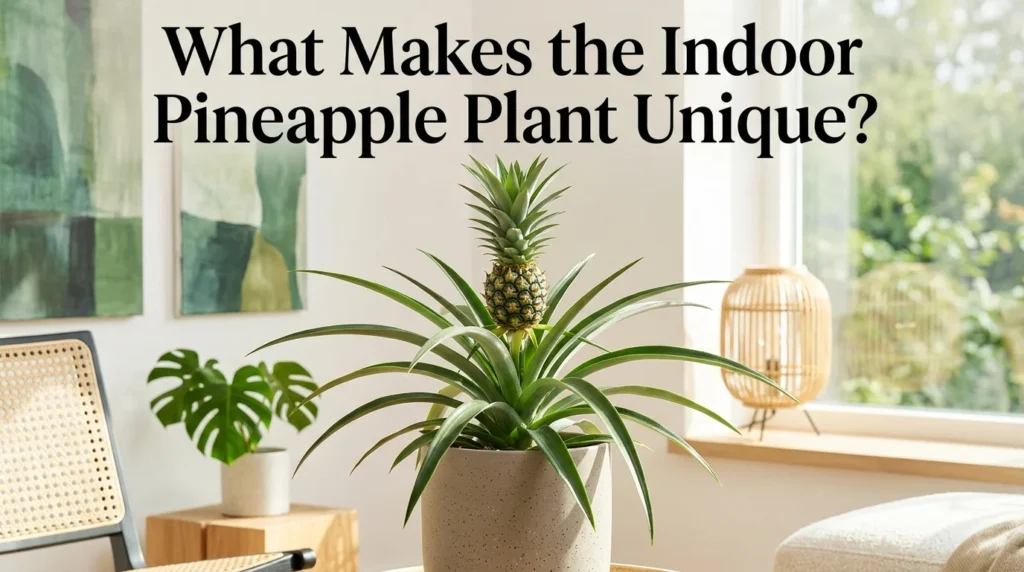
What Makes the Indoor Pineapple Plant Unique?
To care for an indoor pineapple plant effectively, it helps to understand its native physiological adaptations:
- CAM Photosynthesis (Crassulacean Acid Metabolism): Pineapple plants open their stomata at night to absorb carbon dioxide, minimizing water loss during warm daylight hours. This adaptation makes them exceptionally drought-tolerant and resilient against dry indoor air.
- Central Rosette Reservoir: The overlapping arrangement of spiky leaves naturally funnels rainwater and dew toward the central core and root zone.
- Shallow Anchor Root System: Pineapple roots are compact and highly sensitive to waterlogging. They require compact containers with fast-draining, well-aerated media rather than large, heavy pots filled with moisture-retentive soil.
- Monocarpic Growth Cycle: A parent pineapple plant flowers and fruits once in its lifecycle. After fruiting, the main rosette gradually declines while producing clone offsets (known as “pups” or “suckers”) at its base, allowing growers to perpetuate the plant indefinitely.
Top Pineapple Varieties for Growing Indoors
Selecting the right variety depends on whether your primary goal is ornamental interior styling or harvesting edible fruit.
| Plant Variety / Cultivar | Botanical Name | Fruit Characteristics | Foliage & Appearance | Care Level | Best For |
| Edible Store Pineapple | Ananas comosus | Full-sized, edible, sweet yellow fruit | Solid dark green leaves; sharp spiny edges | Beginner | Propagating from grocery store crowns |
| Variegated Pineapple | Ananas comosus ‘Variegatus’ | Medium ornamental fruit; pale pink/yellow tint | Cream-and-green striped leaves; pink margins in bright sun | Beginner–Intermediate | Interior design accents & bold color contrast |
| Dwarf / Pygmy Pineapple | Ananas nanus | Miniature (2–3 inch), non-edible ornamental fruit | Fine, narrow rosette; compact width (12–18 inches) | Beginner | Small apartment spaces & windowsill displays |
| Red Pineapple | Ananas bracteatus | Magenta-red ornamental fruit spike | Bold green leaves with striking pink-red center tones | Intermediate | Colorful tropical collections |
How to Propagate a Pineapple Plant from a Crown
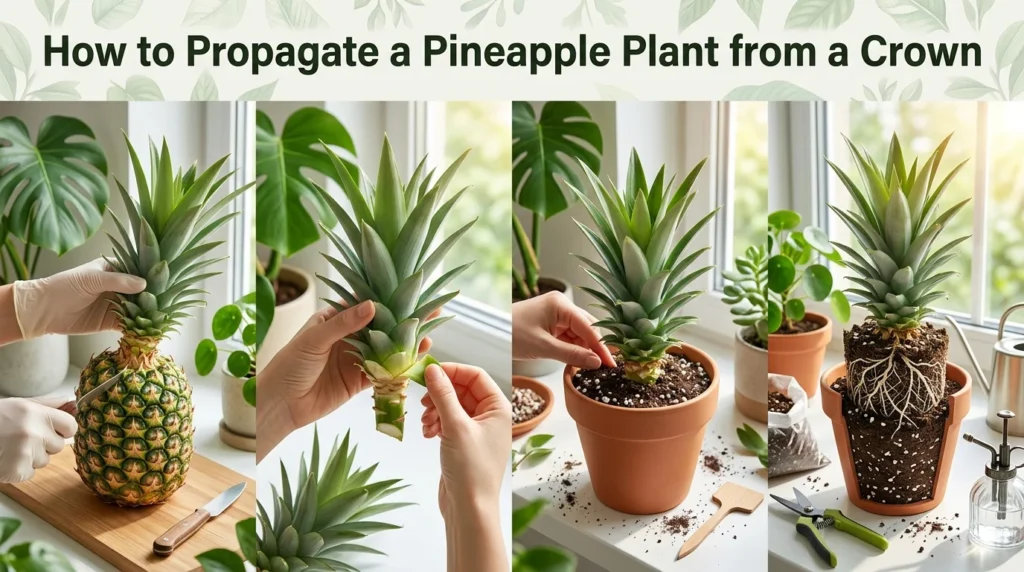
Propagating a fresh fruit top (crown) is one of the most rewarding indoor gardening projects. Follow this detailed procedure to ensure quick rooting without rot:
1.Select and Twist the Crown:Choose a fresh, ripe fruit with vibrant green leaves.
Grasp the base of the leafy top firmly and twist strongly while pulling to separate the crown cleanly from the fruit core, or slice off the top and trim away all sweet yellow fruit flesh.
2.Strip Lower Leaves and Prep:Expose the stem root primordia.
Peel away the bottom 1 to 1.5 inches of small leaves starting from the base. You will see tiny brown bumps along the exposed stem—these are latent aerial root initials ready to sprout.
3.Cure and Dry the Base:Prevent fungal decay during initial callus formation.
Place the trimmed crown upright on a paper towel in a dry, shaded area for 3 to 5 days to allow the cut base to heal and form a dry callus.
4.Initiate Rooting:Root in water or plant directly into substrate.
Suspend the dry base in a jar of clean water (changing water every 3 days) until roots reach 2 inches, or plant directly into a moist, sandy cactus/succulent soil mix.
Environmental & Horticultural Care Guidelines
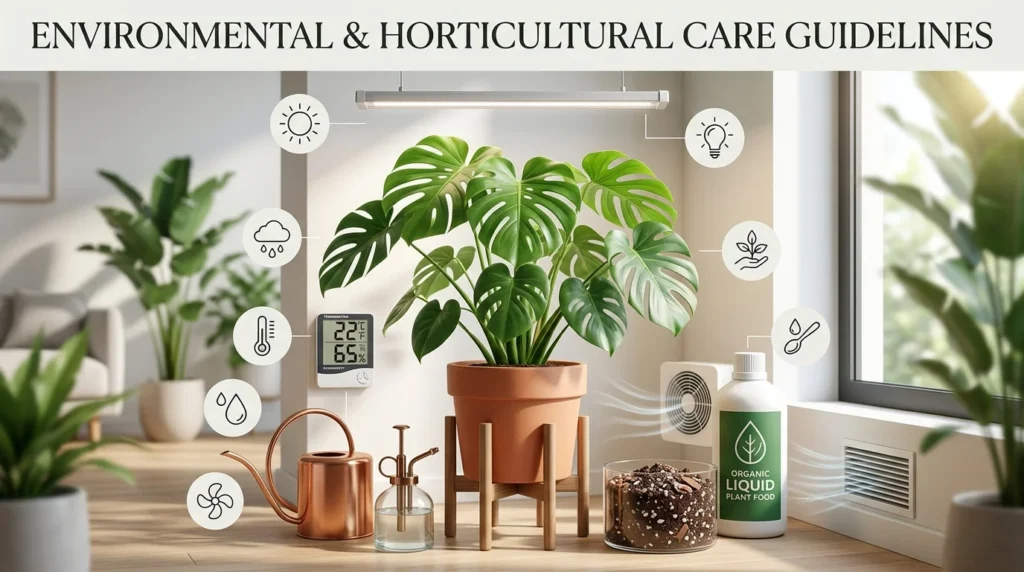
Providing correct lighting, properly aerated soil, disciplined watering, and targeted nutrients ensures steady growth and successful fruiting.
1. Light Requirements & Window Placement
Light is the single most critical factor determining whether an indoor pineapple plant thrives or stalls.
- Bright Direct to Indirect Sunlight: Place your pineapple plant where it receives at least 6 to 8 hours of bright light daily, including 2 to 4 hours of direct sunlight (East-, South-, or West-facing windows).
- Grow Lights: In low-light winter environments, use a full-spectrum LED grow light positioned 12 to 18 inches above the leaf rosette for 12 to 14 hours per day to prevent leaf flop.
- Light Stress Indicators: Pale yellow or scorched leaf patches indicate sunburn from sudden intense light changes. Drooping, dark green, flexible foliage with no central color indicates severe light deficiency.
2. Substrate Aeration and Container Selection
Pineapple plants are extremely prone to root rot if placed in heavy, water-logged potting soil.
- Chunky Bromeliad / Cactus Blend: Combine 40% quality potting soil, 30% coarse perlite or pumice, and 30% fine orchid bark or coarse builder’s sand. The soil pH should remain slightly acidic (5.5 to 6.5).
- Container Choice: Use a 6-inch to 8-inch pot made of terracotta or unglazed ceramic with large bottom drainage holes. Avoid oversized pots; shallow, well-drained volume encourages stronger root development.
3. Hydration & Watering Protocols
- Soil Moisture: Water thoroughly when the top 50% of the potting medium feels dry to the touch. Allow all excess water to drain out completely into a saucer tray, and immediately empty standing runoff.
- Foliar Watering: Occasionally trickle clean, ambient-temperature water directly into the central leaf rosette cup during warm summer months. Flush out the cup monthly to prevent salt build-up or stagnation.
- Winter Reduction: During winter dormancy, reduce watering frequency significantly, allowing the potting mix to dry out almost completely between light waterings.
4. Humidity and Temperature
- Temperature Range: Maintain room temperatures between 68°F and 85°F (20°C–29°C). Pineapple plants stop growing below 60°F (15°C) and suffer damage if exposed to freezing drafts or temperatures below 50°F (10°C).
- Relative Humidity: While tolerant of average home air (30% to 40% RH), pineapple plants thrive in higher humidity (50% to 60% RH). Place near a humidifier or group with other tropical plants during dry winter heating periods.
5. Feeding and Nutrient Management
- Fertilizer Type: Use a balanced, water-soluble indoor plant fertilizer (such as NPK 10-10-10 or 6-6-6) diluted to half-strength.
- Schedule: Apply liquid fertilizer every 3 to 4 weeks during spring and summer active growth. Apply to both the soil and as a mild foliar spray on the leaves. Do not fertilize during autumn and winter.
The GrowIndoorly Microclimate Setup for Pineapple Plants
To optimize growth inside modern living spaces, manage your plant’s immediate microclimate using these three steps:
- Air Circulation & Stagnation Control: Position a low-powered USB fan nearby to keep air moving around the dense leaf rosette. Good airflow prevents fungal spore germination inside the central cup without dropping ambient temperatures.
- Window Distance & Thermal Buffering: Place pots 6 to 12 inches away from cold winter window panes. Radiant cold from glass can drop local root zone temperatures by up to 10°F below room temperature, causing root stagnation.
- Humidity Buffering: Group your pineapple plant alongside other transpiration-heavy tropicals (such as Peace Lilies or Monsteras) to build a localized microclimate with elevated ambient humidity.
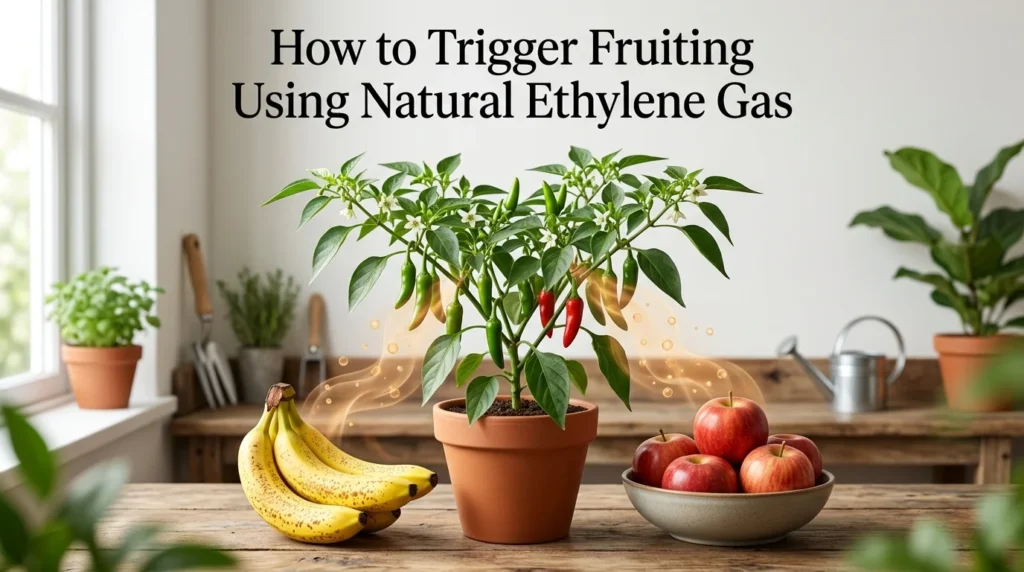
How to Trigger Fruiting using Natural Ethylene Gas
If your indoor pineapple plant is mature (at least 20 to 24 months old with 30+ strong leaves) but has not set fruit naturally, you can force flowering using natural ethylene gas:
- Ensure the plant is healthy, vigorously growing, and settled in bright light.
- Place a fresh, ripe apple (which naturally emits ethylene gas) directly onto the soil at the base of the rosette.
- Cover the entire plant and pot loosely with a clear, lightweight plastic bag for 10 to 14 days. Store in bright, indirect light away from direct midday sun to prevent heat traps.
- Remove the bag and apple. Within 6 to 12 weeks, a bright red or pink floral spike will emerge from the central rosette core.
Post-Harvest Care: Harvesting Pups for Continuous Crops
Once the central fruit matures and turns golden-yellow (or deep pink on ornamental varieties), cut the fruit stem cleanly near the base. Because the mother rosette will gradually yellow and decline over the following months, harvest the basal offsets (“pups”) to continue growing new plants:
- Identify Pups: Look for miniature plant rosettes sprouting between lower leaf axils or from the soil line around the main stem.
- Separate Carefully: Allow pups to grow until they reach roughly one-third the size of the mother plant. Slice them away cleanly at the connection point using a sterile knife.
- Pot Separately: Pot each pup directly into a chunky bromeliad soil blend. They root quickly and reach fruiting size faster than crown-propagated plants.
Troubleshooting Common Indoor Pineapple Plant Issues
Diagnose and resolve care issues using this quick reference chart:
| Problem | Cause | What to Inspect | Solution |
| Leaves turning brown, soft, and mushy at the base | Overwatering or poorly draining soil causing root/crown rot | Check lower stem firmness, soil wetness, and saucer drainage | Stop watering; trim rotten tissue; repot into fresh, chunky succulent/cactus soil |
| Crispy, dry brown leaf tips and margins | Low relative humidity, underwatering, or excessive fertilizer salts | Inspect room humidity levels and check for mineral crusts on soil | Increase humidity to 50%+; flush soil with clean distilled water; keep soil slightly moist |
| Pale, elongated, floppy leaves with no leaf color | Insufficient sunlight intensity | Measure daily direct sunlight; check window direction | Move plant to a sunny South/West window or install a dedicated LED grow light |
| Fine webbing or cottony white specks on leaf axils | Pest infestation (spider mites or mealybugs) | Inspect undersides of leaves and central leaf axils with a lens | Wipe foliage clean with a cloth damp with rubbing alcohol; spray with insecticidal soap |
| Plant stops growing during winter | Normal winter dormancy triggered by low temperatures/light | Check room temperature and daily light duration | Reduce watering frequency; withhold fertilizer until spring returns |
Test Your Knowledge:
Question 1
What biological adaptation allows the indoor pineapple plant to tolerate dry indoor air and conserve water efficiently?
- A) C4 Photosynthesis.
- B) Crassulacean Acid Metabolism (CAM) Photosynthesis.
- C) Nitrogen Fixation.
- D) Epiphytic Carnivory.
Question 2
Which potting substrate blend is best suited for an indoor pineapple plant?
- A) Heavy garden clay mixed with compost.
- B) Pure peat moss without drainage additives.
- C) A chunky mix of potting soil, coarse perlite, and fine orchid bark or sand.
- D) Un-aerated potting soil mixed with fine builder’s sand.
Question 3
How should you prepare a store-bought pineapple crown before planting it into soil?
- A) Boil the crown in water for 10 minutes.
- B) Trim lower leaves, expose root primordia, and let the base callus dry for 3 to 5 days.
- C) Soak the leaves in concentrated liquid nitrogen.
- D) Freeze the crown overnight.
Question 4
Which gas can be used naturally to induce flowering in a mature indoor pineapple plant?
- A) Nitrogen gas from green leaves.
- B) Ethylene gas emitted from a ripe apple.
- C) Methane gas from fresh compost.
- D) Pure helium gas.
Question 5
What happens to the mother pineapple rosette after it finishes flowering and producing fruit?
- A) It turns into a climbing vine.
- B) It grows ten times larger and fruits every month.
- C) It slowly declines while producing basal pup offsets to perpetuate the plant.
- D) It immediately dissolves into liquid fertilizer.
(Answer Key: 1-B, 2-C, 3-B, 4-B, 5-C)
Frequently Asked Questions
How long does it take for an indoor pineapple plant to produce fruit?
A crown-propagated indoor pineapple plant typically takes 24 to 36 months to produce a fruit indoors. Plants started from basal pups grow faster, often fruiting within 16 to 24 months under optimal bright lighting conditions.
Can you eat fruit harvested from an indoor pineapple plant?
Yes, fruit harvested from standard Ananas comosus cultivars grown indoors is completely edible and often exceptionally sweet, though it will be smaller than commercially grown outdoor pineapples. Note that ornamental varieties (like Ananas nanus) produce small, woody fruits that are decorative rather than palatable.
Does an indoor pineapple plant need a large pot?
No. Pineapple plants have compact, shallow root systems. A 6-inch pot is ideal for rooting crowns, while an 8-inch to 10-inch pot provides ample space for a fully mature fruiting plant.
Why are the lower leaves on my pineapple plant turning yellow?
Lower leaf yellowing is often a normal part of leaf aging. However, if multiple leaves turn yellow rapidly while soft at the stem, it indicates root rot from overwatering or poorly draining soil.
Are indoor pineapple plants safe for homes with pets?
Yes. Ananas comosus is considered non-toxic to dogs and cats by the ASPCA. However, keep plants out of pet reach because the sharp, spiny margins on certain varieties can cause mild physical irritation if chewed.
Do pineapple plants die after producing a fruit?
The central parent rosette is monocarpic and gradually dies after fruiting. However, before dying, it produces multiple pup offsets at its base that can be detached and repotted to continue growing new plants indefinitely.
Can I move my indoor pineapple plant outdoors during summer?
Yes. Moving your potted pineapple plant outdoors into a bright, sheltered spot during warm spring and summer months accelerates growth. Acclimate the plant gradually over 7 to 10 days to avoid sunscorch, and bring it back indoors before night temperatures drop below 60°F (15°C).

Megan Foster is the founder and lead writer of GrowIndoorly.com, where she shares practical, easy-to-follow advice for growing healthy indoor plants. She is passionate about helping beginners and experienced plant lovers build thriving indoor gardens with confidence. Megan writes about houseplants, indoor herbs, succulents, hydroponics, grow lights, plant propagation, watering, soil care, and everyday plant maintenance.
She enjoys researching trusted gardening techniques and transforming them into simple, actionable guides that readers can easily apply at home. Her goal is to make indoor gardening more enjoyable and accessible by providing clear, reliable information that helps people keep their plants healthy throughout the year. Whether you’re caring for your first houseplant or expanding your indoor plant collection, Megan’s practical tips are designed to help you grow with confidence.


