
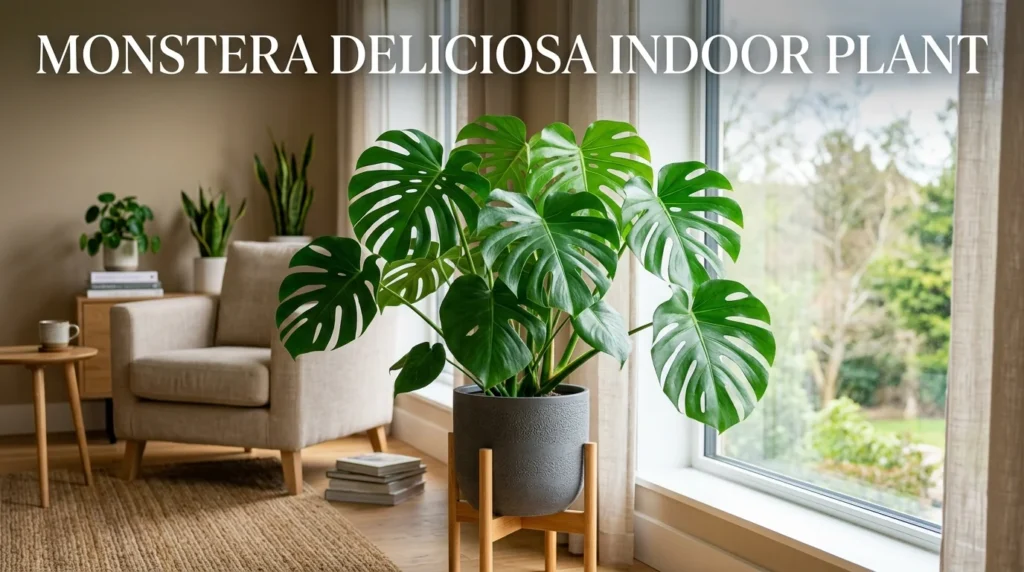
Bringing a monstera deliciosa indoor plant into your home is one of the most satisfying decisions an indoor gardener can make. Its large, split leaves create an instant tropical aesthetic that completely transforms living rooms, offices, and bedrooms.
However, keeping a monstera deliciosa indoor plant looking thick, healthy, and upright requires more than just occasional watering and a bright corner.
Beginners often run into frustrating issues like leggy growth, leaves refusing to form splits, sudden yellowing, and heavy stems flopping over uncontrollably across the floor.
This guide provides everything you need to grow a flourishing monstera deliciosa indoor plant, covering precise lighting needs, soil formulas, moss pole training, and expert troubleshooting.
Understanding Monstera Deliciosa Indoor Plant
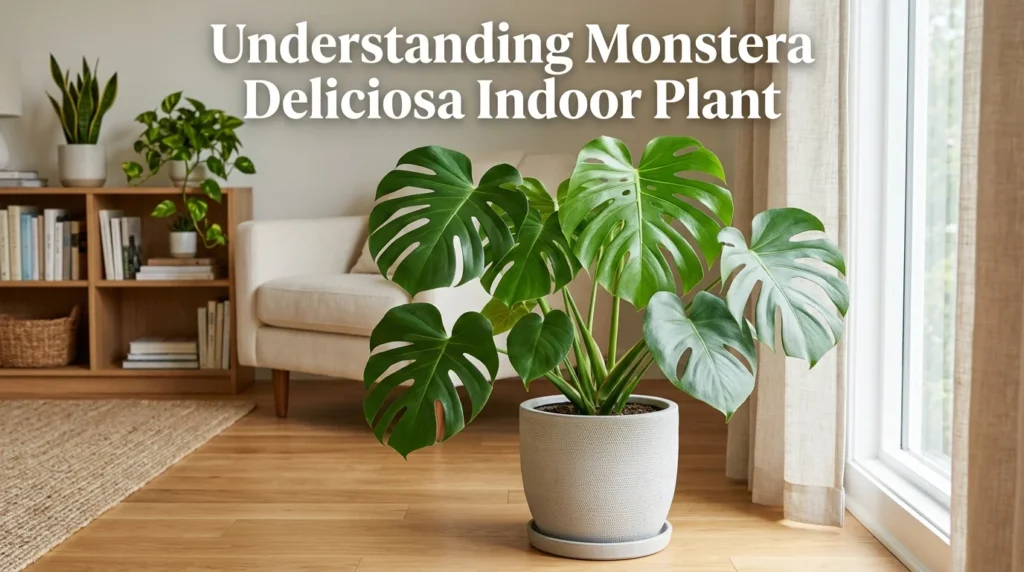
The Monstera deliciosa, often called the Swiss Cheese Plant, belongs to the Araceae (arum) family and is native to the tropical rainforests of Southern Mexico and Central America. In its natural jungle habitat, it grows as an hemiepiphyte. It begins its life on the forest floor, scrambling toward dark tree trunks before climbing upward toward the bright canopy using strong, rope-like aerial roots.
The iconic holes and splits in mature monstera foliage are known botanically as fenestrations. In nature, these natural perforations allow heavy tropical rainfall and wind gusts to pass through leaves without tearing them. Fenestrations also permit sunlight to pass through upper leaves to nourish lower foliage closer to the ground.
When grown inside our homes, the monstera retains its wild climbing instinct. Without a vertical support structure like a moss pole or wooden trellis, the thick stems spread outward horizontally rather than growing upright. Understanding this natural growth habit helps you provide the right support, light, and care to achieve massive, split foliage.
Why It Is Important?
Cultivating a healthy monstera indoors bridges the gap between urban living and nature. Because these plants grow quickly and produce huge leaves, they offer an incredible sense of accomplishment for plant lovers of all skill levels. They serve as living architectural statement pieces that elevate home decor better than almost any non-living accent.
Beyond visual appeal, caring for a monstera teaches you foundational principles of tropical houseplant horticulture. Learning how this species responds to ambient humidity, soil moisture levels, and directional daylight gives you practical skills that apply to hundreds of other popular houseplants, including philodendrons, pothos, and syngoniums.
Taking care of an active, growing plant also creates a grounding daily or weekly routine. Checking soil wetness, wiping down large leaves, and guiding aerial roots onto a support stake provides a relaxing, hands-on escape from screen time and daily stress.
Benefits and Advantages
- Striking Architectural Beauty: Broad, glossy leaves with unique split patterns create a bold tropical focal point in any room.
- Rapid and Rewarding Growth: Under favorable indoor conditions, a single plant can produce a fresh leaf every few weeks during the spring and summer months.
- Air Quality and Humidity Boost: Broad leaf surfaces actively transpire moisture into the surrounding air, helping raise ambient humidity in dry indoor rooms.
- Simple Propagation: Monstera stems feature clear, accessible nodes that root quickly in water, making it easy to share new plants with friends.
- Exceptional Longevity: With proper root care and vertical support, a monstera can live indoors for decades, growing larger and more impressive each year.
Different Methods or Approaches
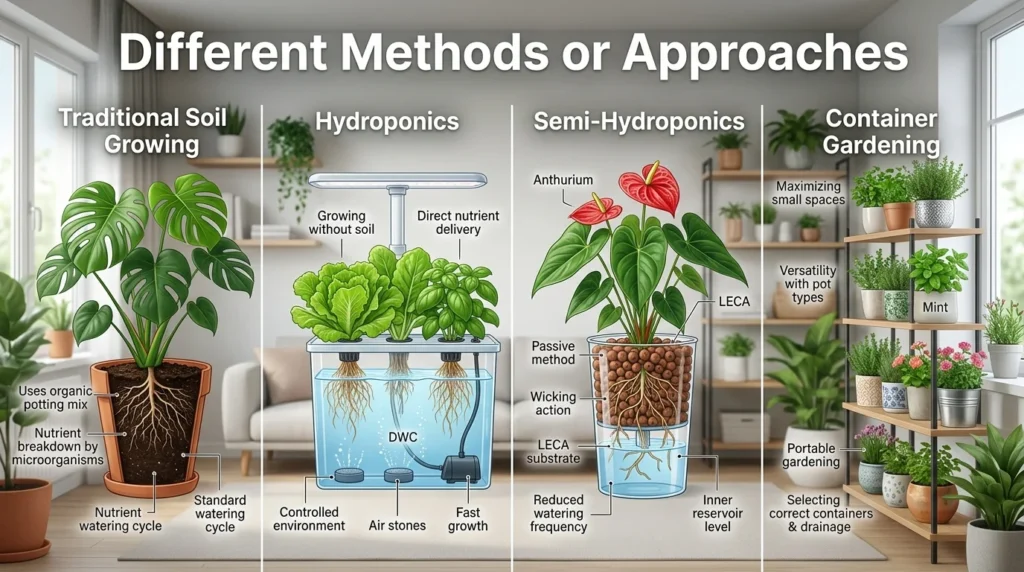
Vertical Moss Pole Training
The recommended approach for growing an upright monstera is securing its main vine to a moss pole, coir pole, or cedar plank. As the plant climbs, its aerial roots grip the support material. This climbing action signals to the plant that it is secure, encouraging it to produce significantly larger leaves with denser fenestrations.
Horizontal Bushy Growth
If you prefer a wide, bushy plant rather than a tall climber, you can allow the main stems to lean naturally in a wide container without a support stake. This approach requires more floor space and results in slightly smaller leaves, but it creates a lush, low-profile green mound that fills empty corners nicely.
Semi-Hydroponic LECA Growing
Transitioning a monstera to Lightweight Expanded Clay Aggregate (LECA) eliminates traditional potting soil entirely. The plant sits in inert clay balls over a shallow nutrient solution. This method drastically reduces the risk of soil-borne pests like fungus gnats while giving roots continuous oxygen and moisture balance.
Tools and Equipment Required
- Porous Moss or Coir Pole: A vertical support stake that gives aerial roots something to cling to for upright climbing growth.
- Soft Plant Ties or Velcro Tape: Gentle binding materials used to secure heavy main stems to support poles without cutting into tender plant tissue.
- Bypass Pruning Shears: Sharp, sterile pruning tools for making clean stem cuts during propagation or when removing dead foliage.
- Soil Moisture Meter: A long-probe tool that measures moisture deep inside large pots where your fingers cannot easily reach.
- Microfiber Cloth: A damp, soft cloth used to clean dust off wide leaf surfaces so the plant can absorb sunlight efficiently.
- Heavy Well-Draining Pot: A heavy terracotta or ceramic container with drainage holes that prevents top-heavy plants from tipping over.
Best Plants or Options
While the wild-type green Monstera deliciosa is the most popular choice, several distinct varieties and cultivars exist for indoor growers:
Wild-Type Monstera Deliciosa
The classic, fast-growing green species known for its hardiness, massive leaf size, and reliable fenestrations. It is the best choice for beginners due to its forgiving nature.
Monstera Deliciosa ‘Borsigiana’
A smaller, faster-growing subspecies that features shorter internodes (spaces between leaves) and slightly smaller foliage. It is ideal for smaller apartments where space is limited.
Variegated Monstera (Thai Constellation)
A stunning lab-produced cultivar featuring stable, marble-like cream and yellow blotches across its dark green leaves. It grows slightly slower than green varieties but handles normal home conditions well.
Monstera Albo Borsigiana
A rare variety boasting stark, bright white patches across its foliage. It requires higher light levels to support its non-photosynthetic white leaf sections and needs careful moisture monitoring.
Lighting Requirements
Light is the single most critical factor for producing broad leaves with dramatic fenestrations. In low light, a monstera will grow thin, stretched stems (legginess) and produce plain, solid leaves without any splits or holes.
- Bright, Indirect Light: Place your plant 3 to 5 feet away from a bright south- or west-facing window, or directly in front of an unobstructed east-facing window.
- Filtered Morning Sunlight: A few hours of gentle early morning sunlight helps fuel rapid growth and deep fenestrations without damaging leaf tissue.
- Direct Afternoon Sun Protection: Harsh, unfiltered midday rays shining through glass can permanently scorch and bleach dark green leaves, turning them yellow or brown.
- Grow Light Setup: If natural window light is limited, position a 24-watt to 36-watt full-spectrum LED grow light 18 to 24 inches above the top foliage for 12 to 14 hours daily.
Watering Methods For Monstera Deliciosa Indoor Plant
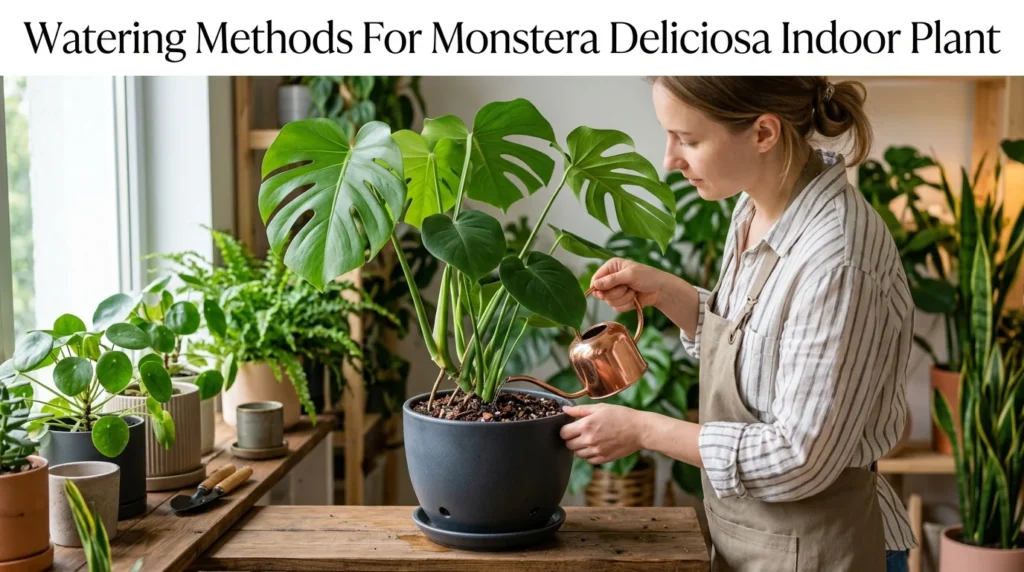
Monstera roots need a balance of moisture and air circulation. Saturated, oxygen-starved soil quickly leads to root decay and yellow foliage.
The Deep Soak Technique
- Test the soil moisture by inserting a finger or probe 3 to 4 inches deep into the pot.
- Water only when the top half of the potting mix feels completely dry to the touch.
- Pour room-temperature water evenly over the entire soil surface until it runs freely out of the bottom drainage holes.
- Allow the container to drain thoroughly for 20 minutes, then discard any standing water collected in the saucer.
Soil or Growing Medium
Standard commercial potting soils are often too dense for monstera roots, holding onto excess water and compacting over time. A chunky, airy mix mimics the naturally loose rainforest floor, allowing roots to breathe while draining freely.
A proven homemade chunky aroid soil recipe includes:
- Quality Indoor Potting Soil (30%): Provides an organic base for moisture retention and base nutrients.
- Orchid Bark Chips (30%): Creates large air pockets and gives roots coarse structure to grip onto.
- Coarse Perlite or Pumice (20%): Prevents soil compaction and speeds up water drainage.
- Horticultural Charcoal (10%): Absorbs impurities and keeps the root environment fresh.
- Coco Coir or Sphagnum Moss (10%): Holds light, even moisture without getting soggy.
Temperature Requirements
Monsteras thrive in warm, stable environments similar to their native tropical home. Maintain ambient room temperatures between 65°F and 85°F (18°C to 29°C) during the day.
Avoid placing your plant near cold drafty doors, single-pane winter windows, space heaters, or direct air conditioning vents. Temperatures dropping below 55°F (13°C) cause growth to stop entirely, while exposure to sudden freezing temperatures turns leaves black and damages cell tissue.
Humidity Control
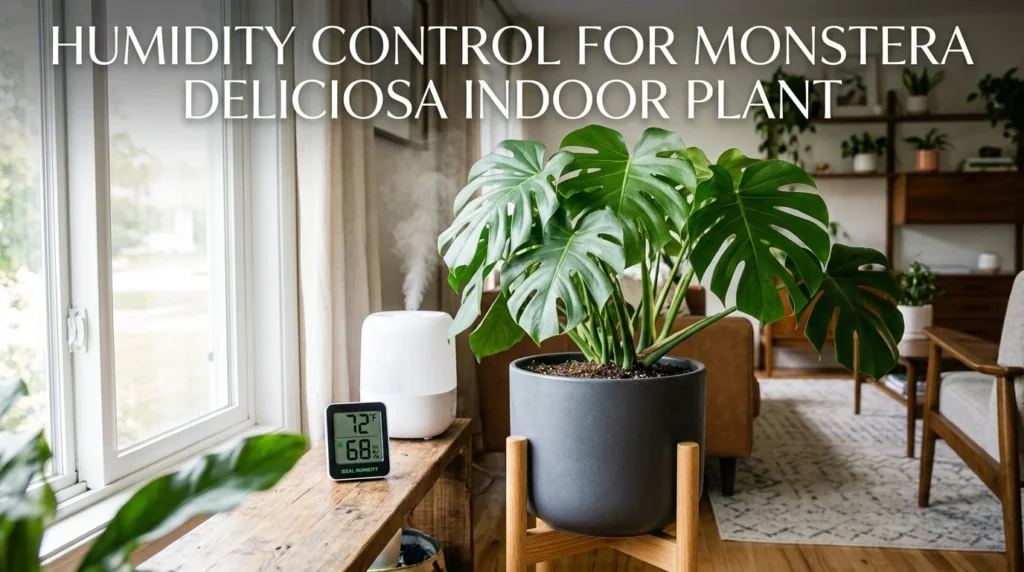
While a monstera can adapt to average home air, it reaches its full potential when relative humidity stays between 50% and 70%. In dry air below 40%, fresh leaves can struggle to unroll smoothly, often expanding with torn or brown edges.
- Ultrasonic Humidifier: Running a cool-mist humidifier near your plant display is the most effective way to maintain consistent atmospheric moisture.
- Pebble Trays: Place your pot on a wide tray filled with pebbles and water, keeping the bottom of the pot above the water line so roots do not absorb standing water.
- Grouping Houseplants: Cluster your monstera together with other broad-leafed houseplants to create a humid microclimate through collective transpiration.
Fertilizer and Nutrients
As fast growers, monsteras consume significant amounts of nitrogen, potassium, and micro-nutrients during the spring and summer months to build large leaves and thick stems.
- Active Growth Feeding: Apply a liquid 3-1-2 or 10-10-10 N-P-K balanced fertilizer once every 2 to 4 weeks from April through September. Dilute the fertilizer to half the strength recommended on the bottle.
- Resting Period: Reduce or pause fertilization entirely during late autumn and winter when natural daylight decreases and plant growth naturally slows down.
- Moist Soil Application: Always apply liquid fertilizer to pre-moistened soil. Feeding a completely dry plant can cause chemical mineral burns on tender root tips.
Maintenance Routine
- Wipe Leaf Surfaces: Dust blocks light absorption and clogs leaf pores. Wipe both sides of broad leaves once a month using a soft, damp microfiber cloth.
- Manage Aerial Roots: As long aerial roots drop from nodes, gently tuck them down into the potting mix or wrap them around your moss pole to absorb extra nutrients and water.
- Prune Damaged Foliage: Use sterile pruning shears to cut off old, yellowing lower leaves near the base of the main stem to direct energy into healthy new growth.
- Rotate the Pot: Rotate your container 180 degrees every few weeks so all sides receive balanced light exposure, preventing the plant from leaning permanently in one direction.
Seasonal Care
Spring and Summer Strategy
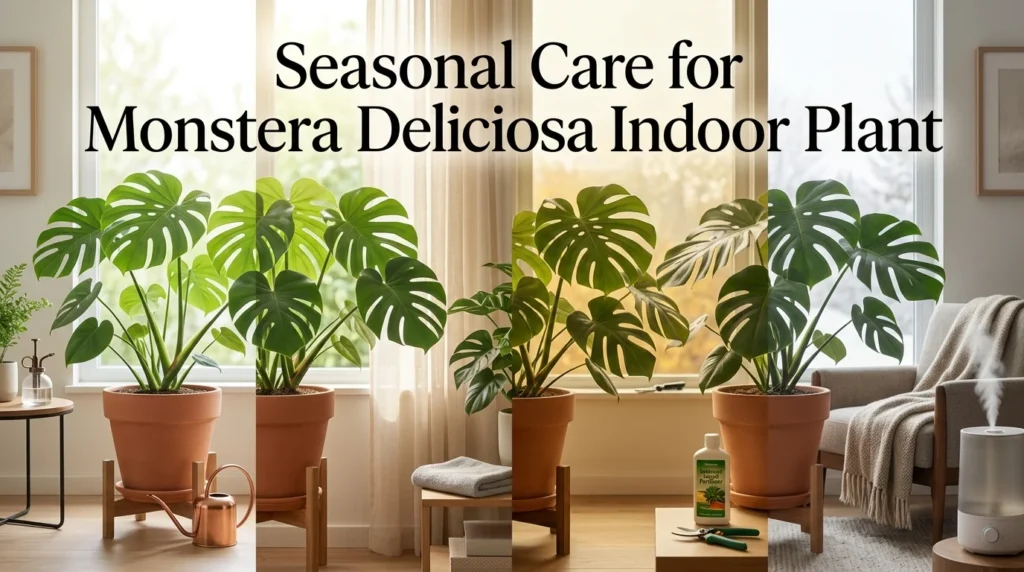
Spring marks the start of active growth. This is the ideal window for repotting root-bound plants into containers 2 inches larger in diameter, taking stem cuttings for propagation, and starting your monthly feeding routine. Increase watering frequency as higher temperatures and longer daylight hours dry out the soil faster.
Autumn and Winter Strategy
Cooler temperatures and shorter winter days trigger a semi-dormant resting phase. Extend the time between waterings significantly, allowing the soil to dry out deeper into the pot. Stop fertilizing, move the plant closer to bright windows to capture weak winter sun, and keep it away from cold glass and warm heater vents.
Common Mistakes
- Overwatering in Dense Soil: Using heavy potting mix that retains water leads to oxygen starvation and fungal root rot.
- Ignoring Vertical Support: Allowing heavy vines to spread out without a moss pole results in floppy stems and smaller, plain leaves without splits.
- Placing in Dim Dark Corners: Expecting a monstera to thrive in a dark room leads to leggy stems, pale color, and a total loss of leaf fenestrations.
- Using Potting Containers Without Drainage: Pots lacking bottom drainage holes trap water at the base, creating a toxic environment for roots.
- Burying Stem Petioles Deep in Soil: Planting the flexible leaf stems (petioles) below the soil line causes them to rot and collapse quickly. Only root nodes and lower main stems belong under the soil.
Troubleshooting Problems
- Yellowing Lower Leaves: Usually a sign of overwatering or poor drainage. Check soil moisture levels at the bottom of the pot and reduce watering frequency immediately.
- Crispy Brown Leaf Tips: Caused by low relative humidity, underwatering, or mineral buildup from hard tap water. Boost room humidity and switch to filtered or rainwater.
- New Leaves Lack Splits or Holes: Caused directly by insufficient sunlight or a lack of vertical support. Move the plant closer to a bright light source and secure main stems to a moss pole.
- Drooping or Wilting Foliage: Can indicate severe underwatering or root rot caused by overwatering. Check the roots: healthy roots are firm and white/tan, while rotted roots feel mushy and smell sour.
- White Webbing or Sticky Spots: Signs of common pests like spider mites or scale. Treat the plant by thoroughly spraying foliage with dilute neem oil or insecticidal soap.
Beginner Tips
- The 3-Inch Rule: Never water on a fixed calendar schedule. Always insert your finger 3 inches deep into the soil to confirm it feels dry before adding water.
- Secure the Main Stem, Not the Leaves: When attaching your plant to a moss pole, tie only the thick main vine. Leave the leaf stems (petioles) free to move toward the light.
- Be Patient with Unfurling Leaves: Fresh, light-green leaves are soft and delicate as they unroll. Avoid touching or forcing them open manually, as this causes permanent scarring.
- Use Tap Water Wisely: If your tap water contains heavy minerals or chlorine, let it sit in an open watering can overnight at room temperature before watering your plant.
Advanced Expert Recommendations
Take your monstera care to the next level with these expert techniques:
- Hydrate Moss Poles Directly: Keep your moss pole damp by trickling water slowly down the top of the pole during routine waterings. This encourages aerial roots to grow directly into the pole, increasing leaf size dramatically.
- Notching for Branching: Make a small, shallow cut through the bark 1/4 inch above a dormant stem node using a sterile razor blade. This interrupts hormone flow and prompts the plant to produce a brand-new side shoot.
- Root Pruning for Size Management: If your monstera has reached the maximum pot size for your room, trim the outer 15% to 20% of the root ball every two years and repot it in fresh chunky mix to keep it healthy without upgrading pot size.
- Air Layering High-Value Cuttings: Wrap a damp ball of sphagnum moss around a node on an upper stem, securing it with plastic wrap. Once thick roots fill the moss ball after a few weeks, cut below the node for an instant, fully-rooted specimen plant.
Conclusion
Mastering the care of a monstera deliciosa indoor plant comes down to understanding its rainforest roots and providing consistent, thoughtful care. By giving your plant bright indirect sunlight, planting it in a chunky, well-aerated soil mix, and supporting its climbing stems with a moss pole, you create the exact conditions it needs to produce massive, split foliage. Avoid common traps like overwatering and dark placement, and always pay attention to the signals your plant gives through its leaves. At GrowIndoorly.com, we are here to support every step of your indoor gardening journey. Apply these simple, practical solutions today and watch your monstera thrive for years to come.
Knowledge Check
Instructions: Choose the best answer for each question below.
What is the botanical term for the natural holes and splits found in mature Monstera Deliciosa leaves?
- A) Stomata
- B) Fenestrations
- C) Node breaks
- D) Petioles
Why does a Monstera Deliciosa produce significantly larger leaves when trained to climb a vertical moss pole?
- A) The pole traps heat around the top canopy.
- B) Climbing signals to the plant that it is structurally secure, mimicking its natural tropical habit.
- C) The moss chemical composition acts as a replacement for light.
- D) Upright stems stop producing aerial roots completely.
Which potting mix formula provides the ideal chunky, well-draining environment for monstera root systems?
- A) Pure garden clay mixed with fine builder sand
- B) Heavy potting soil combined with dense peat moss
- C) A mixture of potting soil, orchid bark, coarse perlite, and charcoal
- D) Standard lawn topsoil with fresh compost
How deep should you check the soil moisture before deciding to water a Monstera Deliciosa?
- A) Only check the top 1/4 inch of soil surface.
- B) Check deep into the top 3 to 4 inches of potting mix.
- C) Never check soil moisture; water on a strict daily schedule.
- D) Check only the bottom drain tray.
What is the primary cause of long, thin, stretched stems and fresh foliage growing without any splits or holes?
- A) Low atmospheric humidity
- B) Over-fertilization during winter
- C) Insufficient bright indirect light
- D) Excessively large pot size
When attaching a heavy Monstera Deliciosa to a moss pole for support, which part of the plant should be secured?
- A) The thick main central vine
- B) The broad leaf surfaces
- C) The flexible leaf petioles (leaf stems)
- D) The delicate uncurling leaf tips
Answer Key
- B
- B
- C
- B
- C
- A
Frequently Asked Questions
Why is my monstera deliciosa indoor plant not getting splits in its leaves?
Leaves lack fenestrations primarily because the plant is not receiving enough bright indirect light or lacks a vertical climbing support like a moss pole. Immature juvenile plants also produce plain leaves until they reach 1 to 2 years of age under good lighting.
How often should I water my indoor monstera deliciosa?
Water only when the top half (top 3 to 4 inches) of the potting mix feels completely dry to the touch. This usually means watering every 7 to 10 days in the spring and summer, and every 14 to 21 days during the winter resting season.
Should I cut off the long aerial roots on my monstera?
It is best not to cut them off, as they help absorb oxygen and moisture. Instead, gently guide aerial roots back down into the potting soil or wrap them around a damp moss pole to support upright growth.
Is the monstera deliciosa toxic to cats and dogs?
Yes, all parts of the plant contain insoluble calcium oxalate crystals. If chewed or ingested by pets, it can cause mouth irritation, swelling, drooling, and digestive distress. Keep the plant out of reach of curious animals.
How do I make my monstera grow bigger leaves?
To grow larger foliage, secure the main stem firmly to a damp moss pole, provide 6 to 8 hours of bright indirect light daily, use a chunky aerated soil mix, and feed regularly with a balanced liquid fertilizer during the active growing season.

Megan Foster is the founder and lead writer of GrowIndoorly.com, where she shares practical, easy-to-follow advice for growing healthy indoor plants. She is passionate about helping beginners and experienced plant lovers build thriving indoor gardens with confidence. Megan writes about houseplants, indoor herbs, succulents, hydroponics, grow lights, plant propagation, watering, soil care, and everyday plant maintenance.
She enjoys researching trusted gardening techniques and transforming them into simple, actionable guides that readers can easily apply at home. Her goal is to make indoor gardening more enjoyable and accessible by providing clear, reliable information that helps people keep their plants healthy throughout the year. Whether you’re caring for your first houseplant or expanding your indoor plant collection, Megan’s practical tips are designed to help you grow with confidence.


