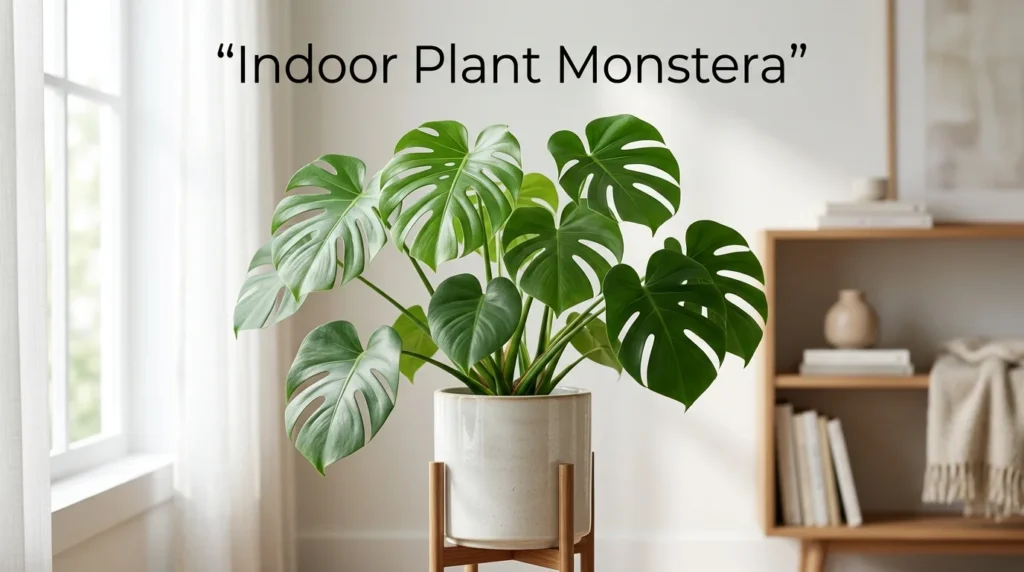
Struggling to transform a bland room corner into a stunning tropical oasis with giant split leaves? Learning to grow an indoor plant monstera setup gives your home instant architectural style and dramatic green foliage.
Many beginner plant owners struggle when their new addition stops producing splits or develops yellow leaves. Bringing an indoor plant monstera home without setting up proper light levels, well-draining soil mixes, and climbing supports leads to weak growth and drooping stems.
Mastering its care takes the uncertainty out of cultivating these iconic Swiss cheese plants indoors. You need straightforward strategies for delivering filtered bright light, preparing chunky aroid soil mixtures, managing moss poles, and preventing root fungal issues.
This comprehensive guide covers everything required to raise a flourishing indoor plant monstera specimen. You will discover popular varieties, lighting requirements, watering routines, stake support training, and troubleshooting methods to keep your plant lush and vibrant.
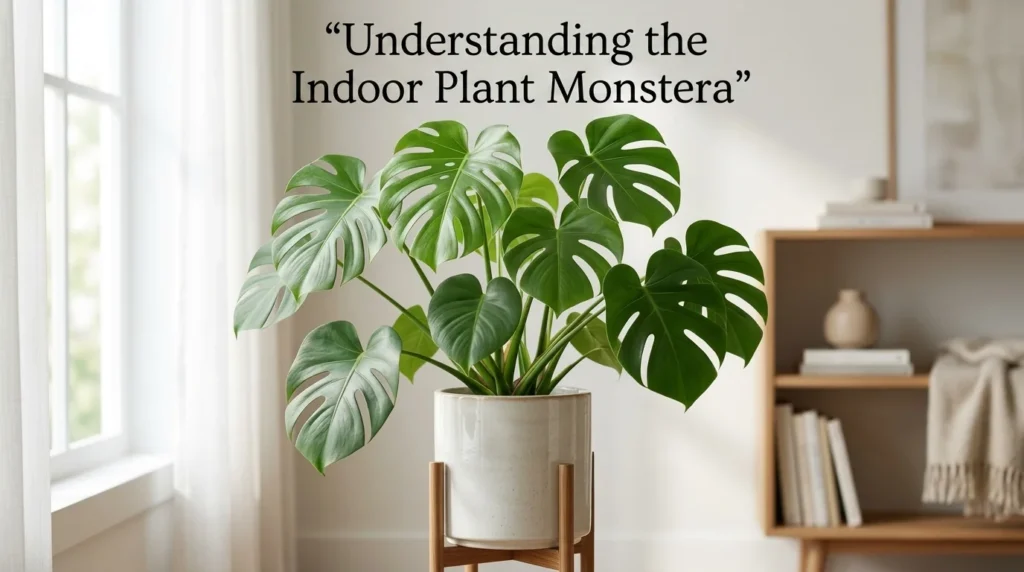
Understanding the Indoor Plant Monstera
Monstera species belong to the Araceae family, native to the tropical rainforests of Central and South America. In their wild habitat, these hemiepiphytic vines begin growing on the forest floor before climbing tall tree trunks using thick aerial roots to reach bright canopy light.
When grown inside containers, these plants adapt remarkably well to living room conditions. Unlike soft herbaceous house plants, monsteras produce thick, leathery leaves that develop natural holes and splits, known scientifically as fenestrations. Understanding their tropical forest floor origin explains why they crave bright indirect sunlight, chunky high-oxygen soil mixes, and vertical climbing structures.
Why Cultivating Monsteras Indoors Matters
Cultivating a monstera indoors brings a bold, living sculpture into your home design while elevating your indoor environment. Its large, glossy green leaves create a striking focal point in living rooms, offices, and bright bedrooms, filling empty spaces better than almost any other houseplant.
Beyond visual appeal, growing monsteras helps refine your plant care skills. Because they grow rapidly during warm seasons and respond clearly to environmental changes, monsteras provide immediate feedback. Learning to handle their aerial root growth, repotting demands, and light needs builds a solid foundation for managing many other tropical houseplants.
Benefits and Advantages of Growing Monsteras
Adding a monstera to your home green space offers several visual and practical advantages:
- Dramatic Visual Impact: Massive split leaves add modern tropical interior style to any room layout.
- Rapid Growth Rate: Under bright conditions, young plants produce new leaves every few weeks during spring and summer.
- Natural Air Cleanliness: Large leaf surface areas catch dust particles and help improve indoor air quality.
- Easy Propagation: Thick stem nodes make taking cuttings and propagating new plants simple for beginners.
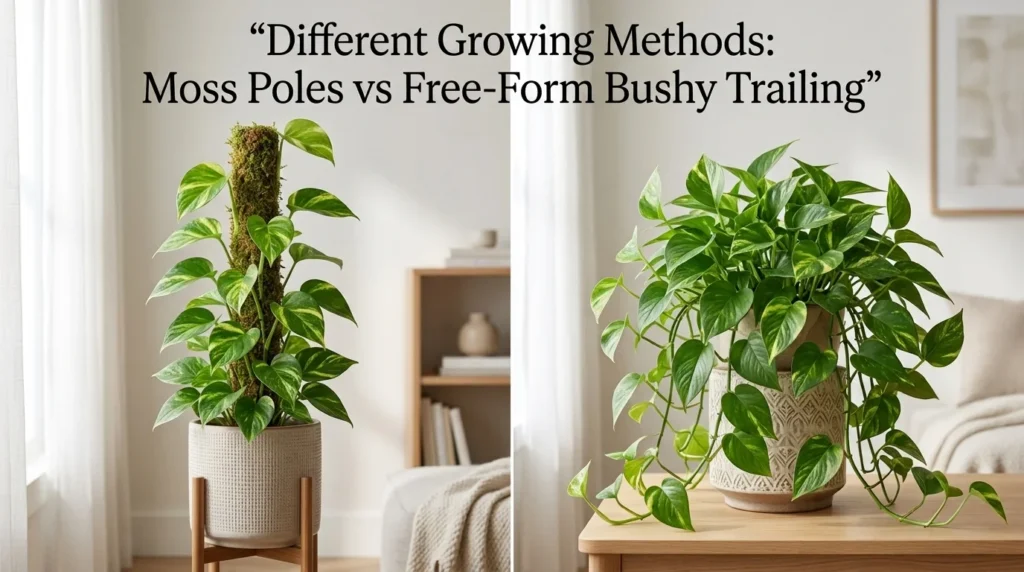
Different Growing Methods: Moss Poles vs Free-Form Bushy Trailing
Indoor gardeners can direct monstera growth using two distinct styling methods:
- Vertical Climbing Support (Moss Poles or Trellises): Securing stems to a central moss pole, coconut coir pole, or wooden plank mimics natural tree-climbing habits. This method yields larger mature leaves with dense, dramatic fenestrations while keeping the footprint compact.
- Free-Form Bushy Sprawl: Allowing thick stems to trail outwards freely over container sides creates a wider, casual bush shape. While easy to maintain, unclipped stems eventually grow wild and produce smaller leaves without vertical support.
Essential Tools and Equipment Required
Having appropriate specialized tools on hand makes monster care simple and clean:
- Heavy Terracotta or Ceramic Pot with Large Drainage Holes: Heavy containers prevent top-heavy mature plants from tipping over, while drainage holes protect roots from standing water.
- Sphagnum Moss Pole or Coir Totem: Gives aerial roots a textured surface to grab onto as the central vine climbs upward.
- Chunky Aroid Soil Blend: A loose mix containing orchid bark and perlite that supplies root oxygen and drains excess moisture quickly.
- Soft Plant Tape or Velcro Ties: Secures thick heavy stems gently to support poles without cutting into plant tissue.
- Precision Pruning Shears: Delivers clean cuts when trimming leggy growth or harvesting node stem cuttings.
- Full-Spectrum LED Grow Light: Provides supplementary light in dark indoor spaces to encourage natural leaf splitting.
Best Monstera Varieties for Indoor Spaces
Selecting the right species or cultivar helps you match your plant to your available room size and lighting conditions:
Monstera deliciosa
The classic Swiss Cheese Plant featured in home design. It produces massive, glossy green leaves that develop double fenestrations and deep splits as it matures. It grows vigorously and needs plenty of vertical space.
Monstera adansonii
Known as the Swiss Cheese Vine, this smaller variety features heart-shaped leaves filled with enclosed, oval-shaped holes. It stays compact and works brilliantly in hanging baskets or climbing up small indoor trellises.
Monstera borsigiana
A compact subspecies of Monstera deliciosa that grows faster with slightly smaller leaves and smoother stem petioles. It handles indoor room boundaries exceptionally well.
Monstera ‘Thai Constellation’
A popular variegated variety boasting stable, creamy-yellow marble flecks across broad green leaves. It grows slightly slower than standard green types and requires high indirect light levels.
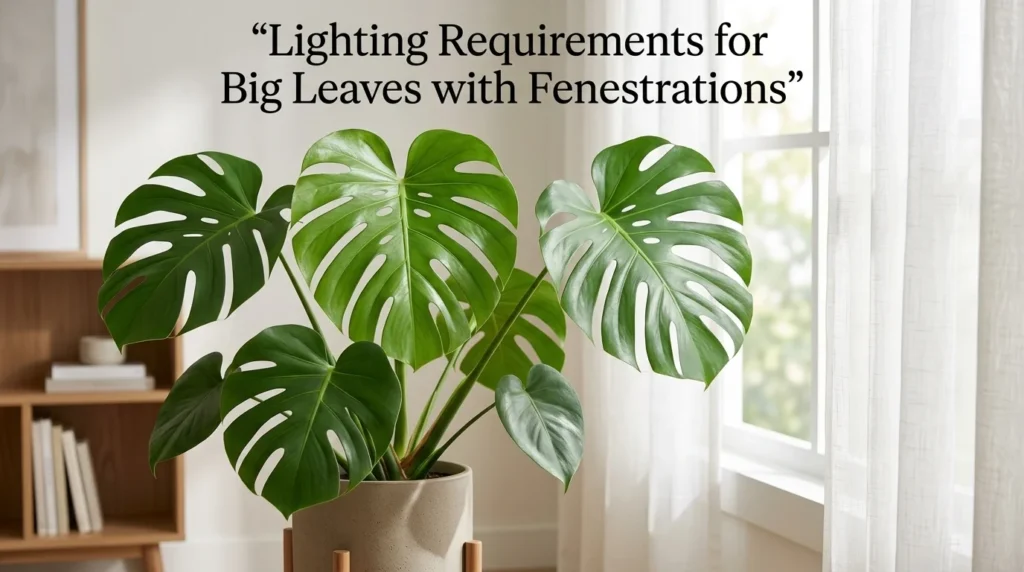
Lighting Requirements for Big Leaves with Fenestrations
Light level dictates leaf size, stem thickness, and hole development on your plant foliage.
- Bright, Indirect Sunlight: Position your plant near a large east-facing window or a few feet back from a bright south or west window. Strong filtered sunlight powers rapid growth and deep leaf fenestrations.
- Low Light Drawbacks: In dark corners, new leaves grow small, pale, and solid without any natural splits. Stems become weak, long, and stretched out toward light sources.
- Direct Sun Burn: Avoid harsh, midday direct sun hitting leaf surfaces through glass, which scorches leaves with black burn patches.
- Grow Light Setup: Place a full-spectrum LED light 18 to 24 inches above the leaf canopy for 12 hours daily in dim rooms.
Proper Watering Methods
While monsteras like consistent moisture during active growth periods, their fleshy roots rot easily in waterlogged soil.
- The Soil Moisture Check: Insert your finger three inches deep into the potting mix. Water only when the top 50% to 75% of the soil feels completely dry.
- Deep Drenching Technique: Slowly pour room-temperature water over the entire soil surface until liquid drains out bottom openings. Allow all excess runoff to drain out completely, and empty catch trays within 20 minutes.
- Winter Rest Reduction: Cut back watering frequency significantly during autumn and winter when cooler temperatures and lower light levels slow plant metabolism.
Soil and Growing Medium Essentials
Standard peat-based potting soil packs down too tightly inside pots, suffocating thick roots. Monsteras require a chunky, airy, free-draining aroid mixture.
Mix an ideal custom substrate using:
- 40% Quality Indoor Potting Soil or Coconut Coir: Supplies a lightweight organic base that retains gentle moisture.
- 30% Coarse Orchid Bark Chips: Creates large air pockets around roots and mimics fallen tree bark.
- 20% Perlite or Pumice: Ensures quick water drainage and prevents soil compaction over time.
- 10% Horticultural Charcoal or Compost: Keeps the soil fresh, absorbs impurities, and delivers gentle organic nutrients.
Temperature Control for Tropical Foliage
Originating in warm tropical rainforests, monsteras prefer warm home temperatures to maintain continuous leaf growth.
Maintain indoor room temperatures between 65°F and 85°F (18°C to 29°C). Keep pots away from cold window glass, entry doors, and air conditioner vents, as temperatures below 55°F (13°C) cause dark leaf damage and stop growth entirely.
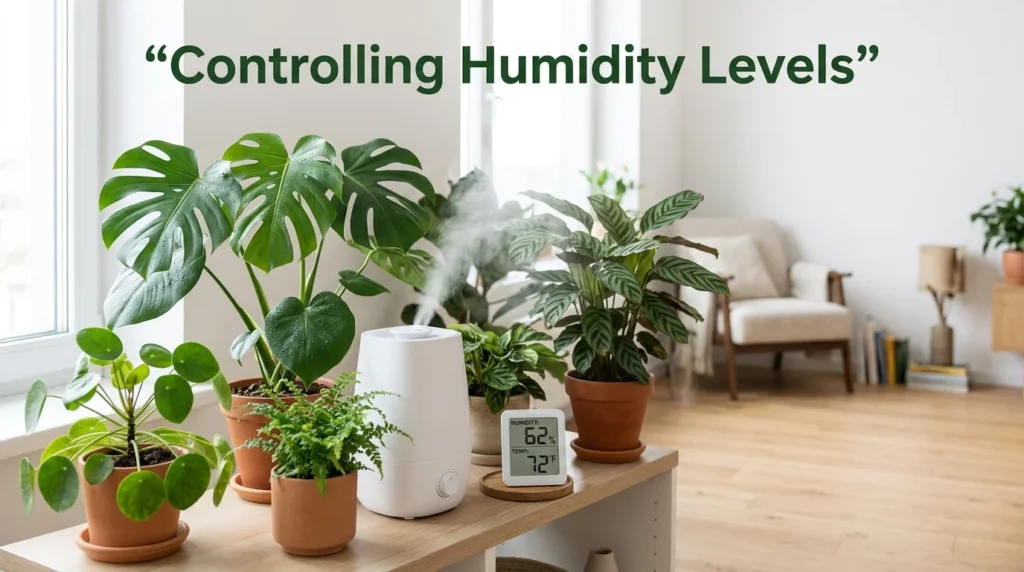
Controlling Humidity Levels
While monsteras adapt to standard home humidity better than thin-leaved tropicals, higher air moisture encourages larger leaves and faster aerial root attachment.
Aim for ambient indoor relative humidity between 50% and 70%. If your home air gets dry during winter heating seasons:
- Group Tropical Plants: Group your monstera alongside other leafy houseplants to create a localized humid microclimate.
- Use a Cool-Mist Humidifier: Run a humidifier nearby to maintain steady ambient moisture levels.
- Avoid Constant Leaf Misting: Misting leaves with spray bottles does not raise humidity long-term and can encourage fungal leaf spots on stagnant foliage.
Fertilizer and Nutrient Application
Monsteras are heavy feeders during spring and summer when producing big leaves and thick stems.
Feed every two to four weeks during active spring and summer growth using a balanced 10-10-10 water-soluble houseplant fertilizer diluted to half strength. Apply fertilizer only to damp soil to protect delicate root tips from burn. Stop feeding completely through late fall and winter months.
Maintenance Routine and Supporting Climbers
Routine maintenance keeps monsteras looking neat, upright, and structurally balanced:
- Attaching Stem Poles: Insert a moss pole behind the main stem where aerial roots sprout. Secure stems gently to the pole using soft plant tape.
- Managing Aerial Roots: Guide long aerial roots down into the potting soil mix to act as extra nutrient anchors, or trim them neatly at the main stem with sterile shears if they look untidy.
- Cleaning Dust off Leaves: Wipe broad leaf surfaces monthly using a soft cloth dampened with clean water. Removing dust layers keeps leaf pores open for efficient photosynthesis.
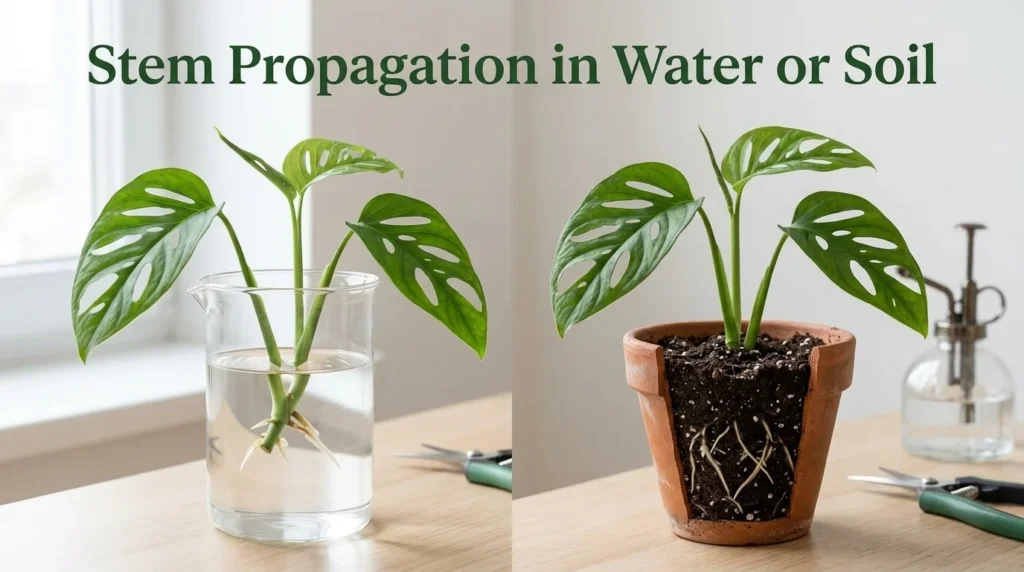
Stem Propagation in Water or Soil
Propagating monsteras is simple using node cuttings taken from healthy stems:
- Locating Nodes: Identify a stem node the swollen ring along the stem where leaves, aerial roots, and petiole branches meet.
- Making Cuts: Cut one inch below a node using sharp, disinfected shears, making sure your cutting includes at least one node and one healthy leaf.
- Rooting Process: Place the node in a clear jar of fresh water or press it into damp perlite-sphagnum moss. Put the container in bright indirect light; fresh roots will sprout within three to four weeks.
Seasonal Care Shifts
Adjust your care routine as natural daylight and room temperatures change throughout the year:
- Spring & Summer Care: Active growth period. Move pots into bright indirect light, water when topsoil dries, feed twice monthly, and secure new vine growth to support poles.
- Autumn & Winter Care: Resting period. Move pots closer to bright windows, decrease watering frequency by half, stop fertilizer applications, and protect plants from dry heat vents.
Common Mistakes Beginners Make
Avoid these frequent beginner mistakes to keep your plant healthy:
- Potting in Overly Large Containers: Planting small roots in huge pots holds excess wet soil, leading to root rot.
- Burying Petioles Deeply: Burying leaf stems under soil traps moisture around petiole bases, causing stems to rot and break off.
- Ignoring Light Requirements: Placing pots in dark room corners starves plants of energy, stopping natural leaf fenestration.
- Binding Leaf Petioles Tight: Tying leaf stems directly to poles instead of central vine stems restricts leaf movement toward light.
Troubleshooting Common Problems
Diagnose and resolve common indoor monstera issues with these simple solutions:
- Yellowing Lower Leaves: Indicates overwatering, poor pot drainage, or dense soil. Allow the top half of soil to dry out before watering again.
- Brown, Crispy Leaf Tips: Caused by low humidity, underwatering, or mineral buildup from hard tap water. Increase room humidity and water deeply with filtered water.
- Solid Leaves Without Holes: Signals insufficient sunlight exposure or young plant age. Move the pot closer to bright indirect window light or add a grow light.
- Drooping, Wilting Stems: Results from severely dry soil or root damage caused by overwatering. Check root health: brown mushy roots mean root rot, while dry firm roots indicate underwatering.
Beginner Tips for Quick Success
Build growing confidence with these practical suggestions:
- Start with Terracotta Pots: Breathable clay pots allow soil to dry evenly, protecting against root rot.
- Secure Main Vines, Not Leaves: Always secure central stem vines to climbing poles, leaving leaf stems free to flex toward light.
- Check Soil Before Watering: Always test soil dryness using your finger or a moisture meter before pouring water.
Advanced Recommendations for Experienced Growers
Ready to take your monstera care to the next level?
- Air-Layering Stems: Wrap damp sphagnum moss inside plastic around stem nodes on parent plants to sprout thick root clusters before making propagation cuts.
- Custom Chunky Mixes: Blend pumice, charcoal, tree fern fiber, and pine bark into specialized aroid substrate mixtures for optimal root respiration.
- Hydroponic LECA Systems: Transition root systems into expanded clay pebbles (LECA) with semi-hydroponic water reservoirs for clean, soil-free growth.
Conclusion
Growing a thriving indoor plant monstera brings bold tropical beauty, impressive split leaves, and vibrant greenery into your living space. By providing bright indirect light, using chunky well-draining soil mixes, supporting climbing stems with moss poles, and allowing soil to dry between waterings, you construct an environment where these tropical vines flourish.
Pay attention to soil moisture, keep leaf surfaces clean, and adjust care routines as natural daylight shifts through seasons. With a little consistent attention, your monstera will reward you with massive glossy foliage for years to come. For more step-by-step growing guides, repotting tutorials, and indoor plant tips, explore our full library at GrowIndoorly.com.
Knowledge Check
Test your understanding of indoor monstera care with these questions:
Question 1
Which light condition is best for encouraging large leaves with natural split fenestrations on an indoor monstera?
A) Total darkness
B) Bright, indirect sunlight
C) Low shadow light
D) Harsh direct midday sun behind glass
Question 2
What is the primary cause of root rot in indoor monstera containers?
A) Using chunky perlite soil
B) Bright indirect sunlight
C) Overwatering and poor pot drainage
D) Attaching stems to a moss pole
Question 3
How much of the potting soil mix should dry out before watering an indoor monstera plant?
A) Soil should remain soaking wet constantly
B) Top 50% to 75% of soil mix
C) Soil must stay bone dry for six months
D) Never water soil
Question 4
True or false: Monstera plants are toxic to pets if chewed or ingested.
A) True
B) False
Question 5
Which stem part must be included on a cutting to successfully propagate a new monstera plant in water or soil?
A) Only the tip of a leaf petiole
B) A stem node
C) A leaf edge trim
D) An aerial root tip without a stem
Answer Key
- Question 1: B) Bright, indirect sunlight
- Question 2: C) Overwatering and poor pot drainage
- Question 3: B) Top 50% to 75% of soil mix
- Question 4: A) True
- Question 5: B) A stem node
Frequently Asked Questions
Is an indoor plant monstera easy for beginners to care for?
Yes, an indoor plant monstera is very beginner-friendly because it tolerates occasional forgotten waterings and adapts well to indoor conditions. As long as you provide bright indirect light and chunky fast-draining soil, it grows reliably with minimal fuss.
How often should I water my indoor plant monstera?
Water your monstera when the top 50% to 75% of the potting soil mix feels completely dry to the touch. Pour water evenly over the soil until it drains out the bottom holes, then empty the catch tray completely. Avoid watering on a fixed calendar schedule.
Why are new leaves on my monstera small without any holes?
New leaves grow small without fenestrations or holes when the plant receives insufficient sunlight or lacks vertical climbing support. Move your plant to a brighter window with indirect light and attach climbing stems to a moss pole to encourage larger split leaves.
Does an indoor plant monstera need a moss pole?
While not strictly required, a moss pole helps monsteras grow larger leaves with deeper fenestrations by mimicking natural climbing habits. It also supports heavy stems, preventing top-heavy plants from flopping over in containers.
Why are the leaves on my indoor monstera turning yellow?
Yellow leaves are most commonly caused by overwatering, poor drainage, or compacted soil that holds excess moisture around roots. Check soil moisture levels, make sure your pot has drainage holes, and let the soil dry out more between waterings.
Is an indoor plant monstera toxic to cats and dogs?
Yes, monstera plants contain insoluble calcium oxalate crystals that are toxic to cats and dogs according to ASPCA standards. Chewing or ingesting foliage can cause mouth irritation, excessive drooling, swelling, and vomiting. Keep plants out of reach of curious pets.
How do I make my monstera leaves glossy and dust-free?
Clean leaves monthly by wiping foliage gently with a damp microfiber cloth moistened with plain water. Avoid using commercial oil-based leaf shine products, which can clog leaf pores and interfere with plant respiration.
Can I grow an indoor plant monstera using grow lights?
Yes, monsteras thrive under full-spectrum LED grow lights if natural window sunlight is limited. Position grow light fixtures 18 to 24 inches above the leaf canopy and run them for 12 hours daily to promote healthy leaf growth and split formation.

Megan Foster is the founder and lead writer of GrowIndoorly.com, where she shares practical, easy-to-follow advice for growing healthy indoor plants. She is passionate about helping beginners and experienced plant lovers build thriving indoor gardens with confidence. Megan writes about houseplants, indoor herbs, succulents, hydroponics, grow lights, plant propagation, watering, soil care, and everyday plant maintenance.
She enjoys researching trusted gardening techniques and transforming them into simple, actionable guides that readers can easily apply at home. Her goal is to make indoor gardening more enjoyable and accessible by providing clear, reliable information that helps people keep their plants healthy throughout the year. Whether you’re caring for your first houseplant or expanding your indoor plant collection, Megan’s practical tips are designed to help you grow with confidence.