Are you struggling to keep your indoor house tree plants looking tall, full, and vibrant instead of dropping leaves, yellowing, or leaning sideways? Adding an indoor tree to your living room instantly elevates your home decor, but these large tropical specimens have specific environmental needs that often trip up home growers.
Caring for indoor house tree plants requires a delicate balance of strong overhead light, proper pot sizing, and controlled watering habits. Without the right care routine, even hardy indoor trees can quickly lose lower foliage or suffer from root suffocation.
Beginners frequently encounter frustrating issues like sudden leaf loss, weak stems, pest outbreaks, and root rot caused by heavy soil mixtures.
This complete guide breaks down everything you need to know about growing indoor house tree plants, covering ideal lighting setups, custom soil recipes, pruning techniques, seasonal adjustments, and pest management.
Understanding Indoor House Tree Plants and Why They Matter
Indoor house tree plants are woody or semi-woody tropical and subtropical species that naturally grow into upright, multi-stemmed, or single-trunk forms. Unlike small desktop succulents or trailing vines, indoor trees bring scale, architecture, and living texture into interior spaces. In their native jungle or forest habitats, these trees compete for sunlight by reaching high into the canopy, developing sturdy wood trunks and broad leaf heads to capture filtered sunlight.
When grown indoors, these species retain their natural desire to grow tall and full. Their large root systems require plenty of soil volume, and their woody stems need consistent light to maintain structural strength. Understanding their native environments explains why they react poorly to dark corners, drafty doors, and soggy, compacted potting soils. In nature, their roots breathe easily in loose, nutrient-rich earth that drains rapidly after heavy rains.
Bringing an indoor tree into your home is one of the most effective ways to transform a room’s visual proportion. A mature indoor tree fills empty vertical corners, softens hard architectural lines, and creates a calming natural focal point in living rooms, offices, and dining areas.
Cultivating tall indoor trees also teaches valuable long-term plant care discipline. Because these plants are an investment, learning how to balance light, water, and pruning gives you deep horticultural confidence. Additionally, maintaining healthy indoor trees helps improve indoor air quality, increases room humidity, and creates a peaceful indoor green space for your family.

Benefits and Advantages
- Dramatic Visual Impact: Adds instant height, structure, and architectural elegance to empty room corners and high-ceiling spaces.
- Improved Indoor Environment: Increases indoor ambient humidity through natural transpiration and freshens living spaces.
- Long-Term Home Decor: Unlike smaller plants that may need frequent replacement, a well-cared-for indoor tree can thrive for decades.
- Defined Living Zones: Functions as a natural, soft room divider in open-concept floor plans and large office spaces.
- High ROI for Plant Lovers: Growing a young tree into a mature floor-standing specimen brings immense personal satisfaction and adds lasting value to your home garden.
Different Methods and Approaches to Growing Indoor Trees
Traditional Floor Pot Cultivation
Growing in heavy ceramic, terracotta, or sturdy resin containers filled with an airy tropical soil mix remains the most effective method for indoor trees. Large pots provide the weight and root space needed to anchor tall trunks securely.
Sub-Irrigated Planters (Self-Watering Systems)
Using heavy-duty self-watering containers equipped with bottom water reservoirs helps maintain consistent moisture levels around deep root zones, reducing the risk of underwatering in large floor pots.
Semi-Hydroponics for Young Trees
While mature trees are too large for pure water systems, young tree saplings can be grown in semi-hydroponic setups using Lightweight Expanded Clay Aggregate (LECA). This approach ensures optimal root oxygenation and eliminates soil-borne pests like fungus gnats.
Tools and Equipment Required
- Heavy-Duty Rolling Plant Caddy: A sturdy wheeled base that allows you to rotate and move heavy floor trees easily for cleaning and light exposure.
- Large Terracotta or Ceramic Planter: A thick-walled pot with adequate bottom drainage holes to prevent tipping and ensure fast soil drying.
- Bypass Pruning Shears and Loppers: Sharp, sterile pruning tools designed to make clean cuts through thick woody branches without tearing bark.
- Full-Spectrum Overhead Grow Light: A powerful LED fixture positioned above the canopy to supplement natural light in dim interior rooms.
- Soil Moisture Meter or Wooden Skewer: Simple diagnostic tools to measure moisture levels deep inside large pots before watering.
- Soft Bamboo Stakes or Support Poles: Sturdy structural supports used to stabilize leaning trunks while root systems establish.

Best Indoor House Tree Plants
While many plants can be trained into larger forms, several tree species truly excel when grown indoors:
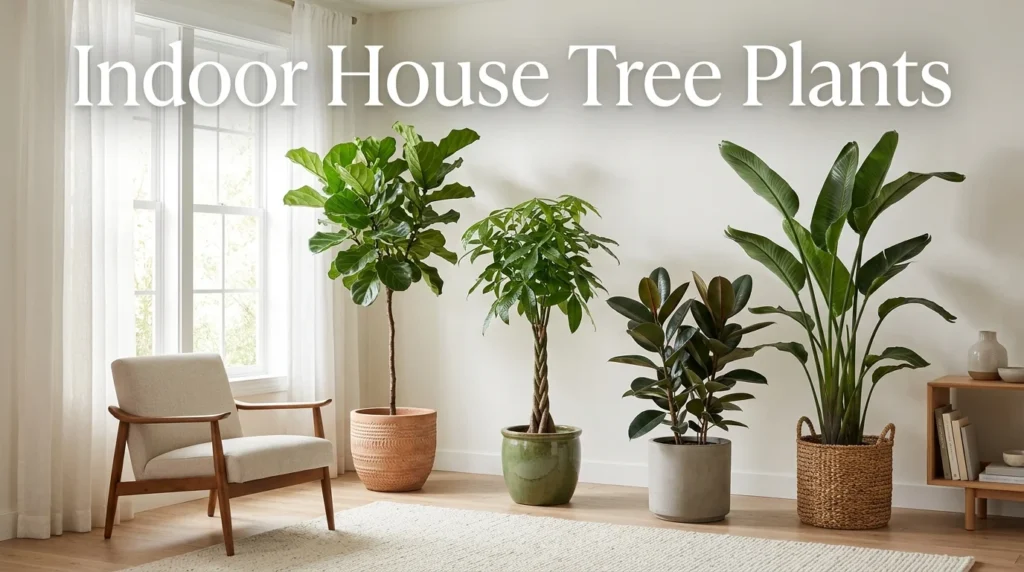
Fiddle Leaf Fig (Ficus lyrata)
Famous for its massive, violin-shaped glossy leaves and upright trunk structure. Thrives in bright, filtered light and requires stable environmental conditions.
Rubber Tree (Ficus elastica)
Features thick, leathery leaves ranging from deep burgundy to striking variegated cream and green patterns. Highly resilient and forgiving for beginners.
Dragon Tree (Dracaena marginata)
A sleek, slender-trunked tree topped with arching, ribbon-like leaves edged in red. Perfect for narrow corners and lower-light living rooms.
Money Tree (Pachira aquatica)
Recognized by its braided stem and palmate green foliage. Symbolizes good fortune and tolerates higher indoor humidity and flexible watering schedules.
Weeping Fig (Ficus benjamina)
A classic indoor tree with fine, graceful branches and dense green foliage. Responds well to pruning and shaping, though sensitive to sudden location changes.
Lighting Requirements
Light intensity determines stem thickness, canopy fullness, and overall leaf retention in indoor trees.
- Bright, Indirect Sunlight: Position trees near large south- or west-facing windows where they receive abundant filtered sunlight throughout the day.
- Rotate Plants Regularly: Turn your floor tree a quarter-turn every week so all sides receive equal sun exposure, preventing the trunk from leaning toward the glass.
- Low Light Symptoms: In dim locations, trees grow leggy, shed lower leaves, and produce small, pale foliage.
- Grow Light Setup: Hang a full-spectrum LED grow light 18 to 24 inches directly above the central canopy, running it for 12 to 14 hours daily in dark winter months.
Watering Methods
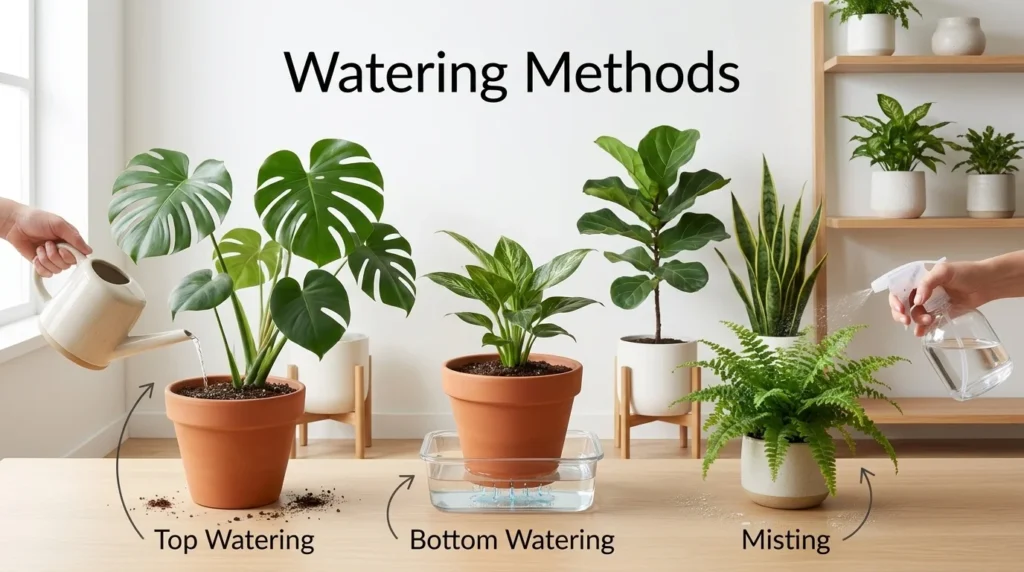
Balancing soil moisture in large containers is essential for keeping indoor trees leafy from base to top.
The Deep Soak Method
- Insert a wooden skewer or moisture meter 4 to 6 inches deep into the soil.
- Water only when the top half of the potting mix feels completely dry to the touch.
- Pour room-temperature water evenly across the entire soil surface until water flows freely from bottom drainage holes.
- Allow the pot to drain completely for 20 to 30 minutes before returning it to its decorative saucer.
- Empty standing water from the saucer immediately to prevent root suffocation and fungal decay.
Soil and Growing Medium
Standard potting soil compacts quickly in deep containers, suffocating tree root systems. Indoor tropical trees require a chunky, airy mix that drains excess water instantly while retaining light moisture.
A proven homemade tree potting recipe includes:
- Commercial Potting Mix (40%): Supplies base organic matter and moisture retention.
- Chunky Orchid Bark (30%): Creates large air pockets and gives root systems textured surfaces and breathing room.
- Coarse Perlite or Pumice (20%): Prevents soil compaction and ensures rapid drainage throughout the pot.
- Worm Castings or Charcoal (10%): Provides natural organic nutrition and absorbs soil impurities.
Temperature Requirements
Indoor tropical trees thrive in warm ambient conditions between 65°F and 85°F (18°C to 29°C).
They are sensitive to cold drafts and rapid temperature drops. Keep pots away from exterior doors during winter, drafty window frames, and cold air conditioning vents. Temperatures below 55°F (13°C) cause dark leaf spots, stunted growth, and sudden leaf drop along main branches.
Humidity Control
Tropical trees flourish in elevated humidity levels between 45% and 60%.
Dry indoor air slows growth and causes leaf tips to turn brown and crispy. To boost local humidity:
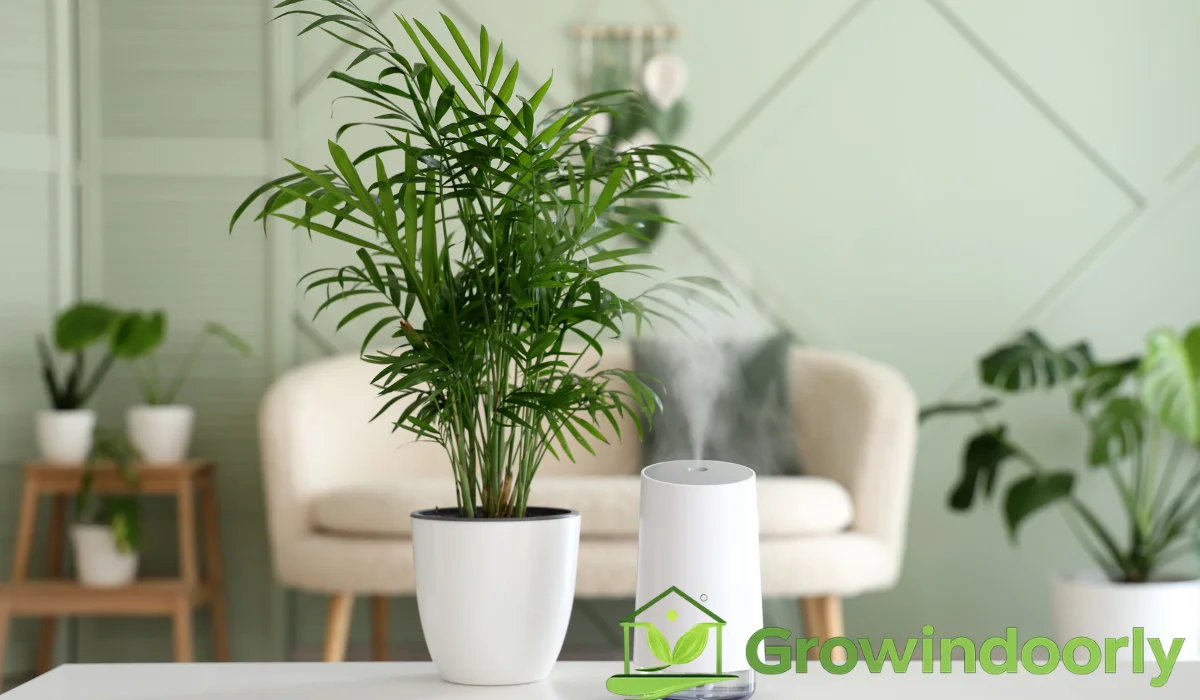
- Position a cool-mist humidifier near your indoor tree display.
- Group multiple floor plants together to form a humid microclimate.
- Dust leaves monthly with a damp cloth to keep stomata open for transpiration.
- Avoid placing tree setups directly in front of heating vents or radiators.

Fertilizer and Nutrients
Fast-growing trees absorb soil nutrients rapidly during active growth. Regular feeding keeps foliage vibrant and prevents leaf drop.
- Spring and Summer Schedule: Feed once a month using a balanced liquid houseplant fertilizer (such as 10-10-10) diluted to half strength.
- Autumn and Winter Pause: Reduce feeding or stop completely during fall and winter when light levels drop and growth halts.
- Flush Soil Periodically: Flush the potting mix with plain water every few months to wash away accumulated fertilizer salts.
Maintenance Routine
- Notching and Pruning: Prune top growing tips in spring to encourage side branching and create a fuller canopy.
- Trunk Wiggling: Gently shake or wiggle the main trunk weekly to simulate wind movement, strengthening woody trunk tissues.
- Clean Dusty Foliage: Wipe leaf surfaces monthly with a soft damp cloth to remove dust buildup and optimize photosynthesis.
- Repot or Top-Dress: Repot every 2 to 3 years into a larger container, or refresh the top 3 inches of soil annually for extra-large floor trees.
Seasonal Care
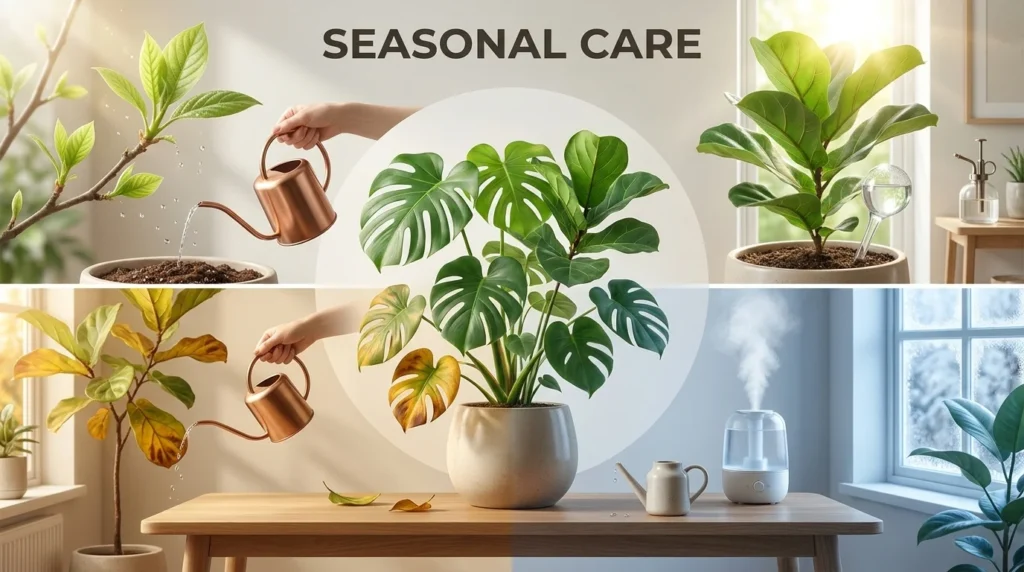
Spring and Summer Strategy
Warm temperatures and longer daylight trigger rapid leaf production. Increase watering frequency as soil dries faster, supply regular half-strength fertilizer, and rotate pots weekly. Spring is also the ideal time to prune overgrown branches or repot root-bound trees into larger containers.
Autumn and Winter Strategy
Growth slows naturally as daylight hours drop. Soil takes significantly longer to dry, so extend intervals between waterings. Discontinue fertilizing, move trees closer to bright windows to maximize weak seasonal light, and keep foliage away from freezing window panes.
Common Mistakes
- Using Containers Without Drainage: Pots lacking bottom drainage holes hold stagnant water around roots, leading directly to root rot.
- Frequent Shallow Watering: Watering only the top inch of soil leaves deep roots bone-dry while keeping the surface wet.
- Placing Trees in Dark Corners: Expecting tropical trees to thrive far from natural light sources results in rapid leaf shedding.
- Moving Trees Frequently: Changing a tree’s spot constantly triggers environmental shock and sudden leaf drop.
- Over-Potting Small Trees: Placing a small tree in a massive container leaves excess soil wet for weeks, suffocating root systems.
Troubleshooting Problems
- Yellowing Lower Leaves: Often caused by overwatering or poor drainage. Check root firmness; trim any mushy, dark roots and repot into fresh, chunky mix.
- Crispy Brown Leaf Margins: Indicates low atmospheric humidity, under-watering, or mineral salt buildup from hard water. Increase local air moisture and soak the soil thoroughly.
- Leggy Growth and Leaf Drop: A sign that the tree lacks sufficient overhead light. Move the plant closer to a bright light source or install grow lights.
- Sticky Residue or Webbing: Signals sap-sucking pests like scale, mealybugs, or spider mites. Wipe leaves with insecticidal soap or neem oil solution weekly until clear.
- Leaning Trunk: Result of uneven light exposure. Rotate the pot weekly and secure the trunk with a soft support stake.
Beginner Tips
- Invest in a Rolling Dolly: Place heavy pots on wheeled bases right away to make rotating and moving your tree effortless.
- Master the Deep Finger Test: Never water on a fixed calendar schedule. Always check soil moisture 4 to 6 inches deep before adding water.
- Keep Extra Soil On Hand: Keep a bag of chunky potting mix ready for topping off settled soil in large containers after waterings.
- Be Patient After Moving: If your tree sheds a few leaves after coming home, do not panic. Give it 2 to 3 weeks to acclimate to its new spot.
Advanced Expert Recommendations
- Notching to Trigger Lateral Branches: Make a shallow horizontal notch in the bark just above a dormant node using a sterile blade to encourage new side branches.
- Annual Top-Dressing for Heavy Trees: When repotting a giant tree is impossible, carefully remove the top 3 to 4 inches of old soil and replace it with fresh, nutrient-rich soil mix.
- Air Layering Propagation: Propagate large overgrown tree branches by creating a small trunk wound, wrapping it in damp moss, and rooting it while still attached to the parent tree.
Conclusion
Mastering indoor house tree plants comes down to providing strong light, proper soil aeration, and deep, disciplined watering habits. By placing your tree near bright windows, planting in a chunky tropical mix, and maintaining good humidity, you avoid common issues like leaf drop and root rot. These majestic floor plants reward simple care with bold architectural beauty, lush foliage, and long-lasting elegance. At GrowIndoorly.com, we are committed to bringing you trustworthy, expert-backed guidance to support your indoor gardening journey. Apply these practical care strategies today and watch your indoor trees thrive for years to come.
Knowledge Check
Which soil blend component is most essential for preventing root suffocation in large indoor tree containers?
A) Fine backyard clay soilB) Chunky orchid bark and perlite for aerationC) Pure builder sandD) Dense peat moss with no drainage grit
How deep should you check soil moisture before watering a large floor-standing indoor tree?
A) Only the top 1/4 inch of soilB) The top 4 to 6 inches of the potting mixC) Soil moisture does not need to be checkedD) The soil must remain 100% wet at all times
What happens when an indoor tree receives insufficient overhead sunlight for long periods?
A) Leaves become thick, dark green, and double in sizeB) The trunk becomes extremely thick and self-supportingC) The plant grows leggy, stems weaken, and lower leaves shedD) The tree flowers continuously throughout the winter
Why is it crucial for a large indoor tree pot to have functional drainage holes?
A) To allow root systems to grow out into the roomB) To prevent stagnant water from causing anaerobic bacterial growth and root rotC) To cool down the bottom half of the soil during summerD) To let beneficial soil insects enter the container freely
What is the most accurate indicator that an indoor tree is receiving uneven light from a single window?
A) The leaves turn uniformly bright yellowB) The plant leans heavily toward the glass and foliage thins on the indoor-facing sideC) The soil dries out twice as fast on the bottom than on the topD) The trunk develops thick outer bark only on the side facing away from the light
How should watering technique be adjusted during the dormant fall and winter months?
A) Increase watering frequency because indoor heaters dry out the airB) Keep the soil continuously saturated to protect roots from cold indoor draftsC) Reduce watering frequency as tree growth slows and water intake decreasesD) Stop watering completely for four months until spring arrives
What is the primary risk of using topsoil or clay dug directly from outdoor garden beds in indoor containers?
A) It drains water too quickly before roots can absorb itB) It compacts heavily, stifles root oxygen, and introduces indoor pestsC) It contains too many structural air pocketsD) It prevents the tree from anchoring its root system
When flushing an indoor tree’s soil with water during routine maintenance, what is the main benefit?
A) It washes excess mineral salts and fertilizer residue out of the root zoneB) It permanently compacts the soil to hold the tree uprightC) It strips all organic nutrients out so the plant stops growingD) It increases the pH level of the soil to make it highly alkaline
Answer Key
B | 2. B | 3. C | 4. B | 5. B | 6. C | 7. B | 8. A
Frequently Asked Questions
Why is my indoor tree dropping green leaves suddenly?
Sudden dropping of healthy green leaves usually indicates environmental shock caused by moving the tree to a new spot, cold air drafts, or drastic light changes. Keep conditions stable and avoid moving the pot.
How often should I water a large indoor tree?
There is no fixed schedule. Water when the top half of the potting mix feels dry, typically every 1 to 2 weeks in summer and every 3 to 4 weeks during winter, depending on pot size and room humidity.
How can I make my indoor tree branch out instead of just growing straight up?
Prune or “pinch” the top growing tip of the main trunk in spring. Removing the dominant tip forces plant hormones to activate lower dormant buds, creating lateral side branches.
Do indoor trees need grow lights during winter?
Yes, if natural window light drops significantly during short winter days, installing an overhead full-spectrum LED grow light for 12 hours daily prevents leggy growth and leaf shedding.

Megan Foster is the founder and lead writer of GrowIndoorly.com, where she shares practical, easy-to-follow advice for growing healthy indoor plants. She is passionate about helping beginners and experienced plant lovers build thriving indoor gardens with confidence. Megan writes about houseplants, indoor herbs, succulents, hydroponics, grow lights, plant propagation, watering, soil care, and everyday plant maintenance.
She enjoys researching trusted gardening techniques and transforming them into simple, actionable guides that readers can easily apply at home. Her goal is to make indoor gardening more enjoyable and accessible by providing clear, reliable information that helps people keep their plants healthy throughout the year. Whether you’re caring for your first houseplant or expanding your indoor plant collection, Megan’s practical tips are designed to help you grow with confidence.